From their earliest days, babies possess a remarkable ability to tune into their parents’ emotional states, particularly negative ones like anger. This sensitivity helps them navigate social interactions and build secure attachments. Research shows infants detect subtle anger cues and often respond in ways that aim to de-escalate tension, promoting harmony in the family dynamic.
Early Detection of Emotional Signals
Infants begin recognizing basic emotional expressions around 6 months of age, with some evidence of sensitivity even in newborns. This skill is crucial for social referencing, where babies look to caregivers’ faces to interpret ambiguous situations. Studies using methods like peek-a-boo games and matching faces to voices demonstrate that babies quickly learn to associate facial and vocal tones with emotions such as happiness, fear, and anger.
By 4 months, babies express their own anger when needs go unmet and use body language to communicate. They track people with their eyes and calm crying upon hearing a familiar voice, indicating growing emotional attunement. This bidirectional process—where parents’ emotions influence infants and vice versa—strengthens over time.
How Infants Recognize Subtle Anger
Infants aged 6-7 months show high sensitivity to subtle anger faces in static images, suggesting an innate alertness to potential threats. In one study, babies distinguished these expressions from neutral ones, highlighting their perceptual acuity for danger signals. Dynamic displays proved harder, likely due to limited real-life exposure to moving angry faces.
Maternal recognition of anger also plays a role. Stable maternal sensitivity to angry expressions predicts infants’ later attention patterns to such faces, with links from 5 months to 14 months. Infants’ dwell time on angry faces at 5 and 7 months correlates with sustained attention at 14 months, indicating developmental continuity in threat processing.
| Age Milestone | Anger Recognition Ability | Source Insight |
|---|---|---|
| Birth-3 Months | Responds to voice tones; calms to familiar sounds | Early social signaling via cries and smiles |
| 4 Months | Expresses anger; tracks emotional cues | Body language for interaction |
| 6-7 Months | Detects subtle static anger faces | High sensitivity to threats |
| 7-14 Months | Preferential looking to anger; bidirectional with maternal cues | Stability in attention patterns |
Infants’ Calming Responses to Anger
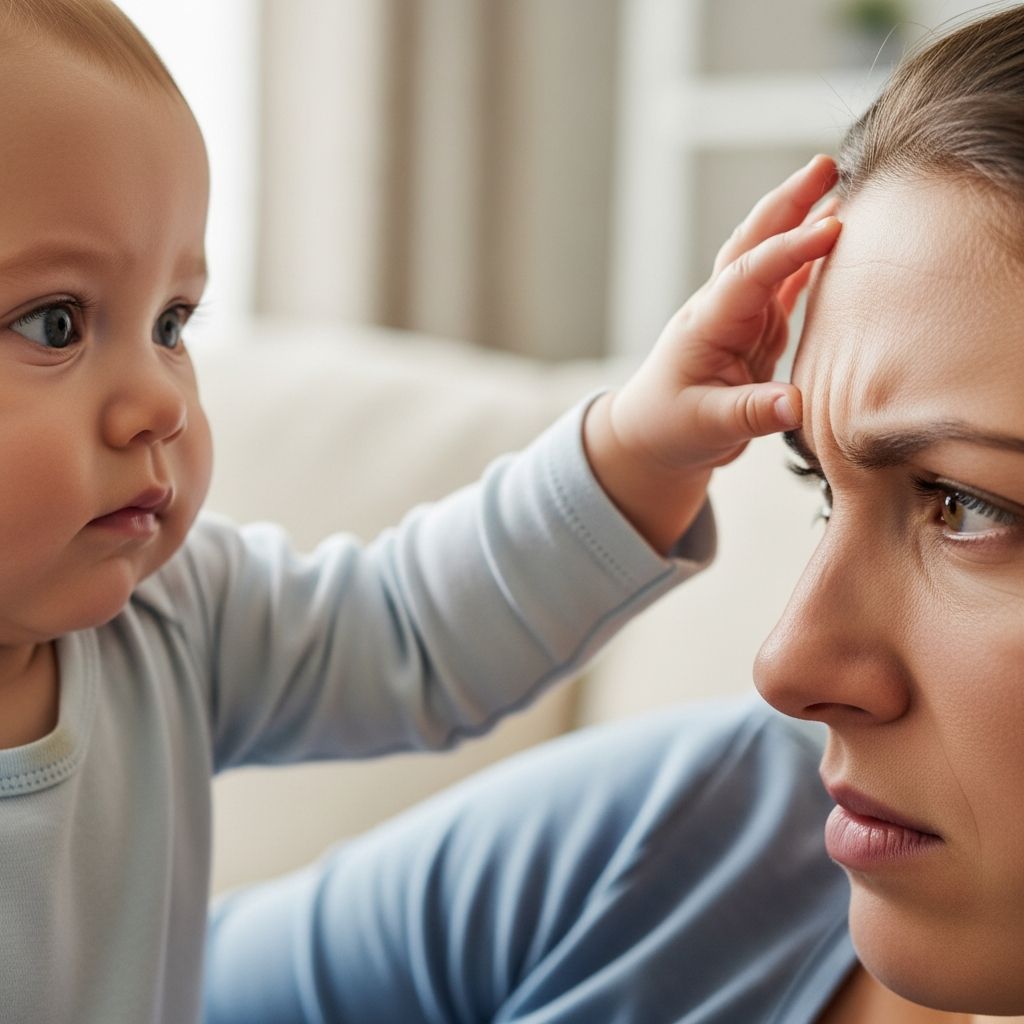
When sensing parental anger, babies often engage in appeasement behaviors like smiling, cooing, or reaching out. These actions stem from an evolutionary drive to maintain caregiver proximity and security. By the end of the first year, infants express joy, sadness, anger, and fear, using these to regulate interactions.
Longitudinal data reveals that early attention to negative emotions predicts later patterns. For instance, quicker fixation on fearful faces by 14 months evolves from 5-month baselines, while anger processing shows trait-like stability in mothers, potentially passed to infants. Babies’ preferential looking to angry faces at 5 months links to maternal recognition, underscoring interactive emotional learning.
The Role of Parental Expressions in Bonding
Parental emotional displays shape infant development profoundly. Consistent facial expressions reflecting joy, anger, or fear by 6-9 months help babies build emotional vocabularies. Caregivers who respond sensitively—offering comfort during distress or space during tantrums—support emotion regulation.
Secondary emotions like empathy emerge around 18 months, requiring self-awareness, but primary emotions drive earlier interactions. Infants’ emotional awareness grows through labeling by caregivers, aiding self-regulation. Mothers with strong threat bias may influence infants toward similar vigilance, evident in 14-month processing akin to adults.
Practical Strategies for Parents
- Model Calmness: Babies mirror parental moods; practice deep breathing to manage anger visibly.
- Use Positive Reinforcement: Respond to baby’s calming attempts with smiles to encourage secure attachment.
- Observe Cues: Note infant’s gaze shifts or cries as signals of emotional overload.
- Encourage Regulation: Offer soft toys or rocking during tense moments to teach self-soothing.
- Seek Balance: Alternate play with quiet time to prevent overstimulation leading to tantrums.
These steps foster resilience, as infants learn emotions are manageable through responsive caregiving.
Developmental Stages of Emotional Awareness
Emotional growth unfolds predictably:
- 0-3 Months: Basic signaling via cries; social smiles emerge.
- 3-6 Months: Joy and distress intensify; anger when frustrated.
- 6-12 Months: Full emotion range; recognition of others’ feelings.
- 12+ Months: Complex emotions; early empathy.
By recognizing these stages, parents can tailor support, enhancing emotional intelligence.
Long-Term Impact of Emotional Interactions
Early emotional exchanges influence lifelong patterns. Infants with attuned parents develop better regulation, reducing later behavioral issues. Threat-biased processing, if unmoderated, may heighten anxiety, but positive interventions mitigate this.
Research emphasizes multimodal cues—faces, voices, bodies—in recognition. Infants integrate these for robust understanding, vital for social navigation.
Frequently Asked Questions
At what age do babies recognize anger?
Babies start recognizing emotional expressions around 6 months, with sensitivity to subtle anger by 6-7 months in static forms.
Do babies try to calm angry parents?
Yes, through smiles, coos, and touches, aiming to restore harmony and security.
How does maternal anger recognition affect infants?
It predicts infants’ attention to angry faces up to 14 months, suggesting bidirectional influence.
Can babies express anger early?
By 4 months, they show anger via cries and body language when needs are unmet.
What helps babies regulate emotions?
Caregiver responsiveness, predictable routines, and soothing objects build self-regulation skills.
Challenges and Considerations
Not all infants respond identically; temperament varies. Some fixate longer on negatives, linked to later attention biases. Parents under stress may inadvertently heighten infant arousal, perpetuating cycles. Professional guidance, like from pediatricians, aids navigation.
Cultural differences in expression recognition exist, though core emotions like anger are universal. Ongoing research explores dynamic vs. static processing evolution.
References
- Infants’ recognition of subtle anger facial expression — Ichikawa. 2014-01-01. https://onlinelibrary.wiley.com/doi/10.1111/jpr.12025
- Infant and Maternal Responses to Emotional Facial Expressions — NIH/PMC. 2023-06-01. https://pmc.ncbi.nlm.nih.gov/articles/PMC10257770/
- 4 months old: Emotional development — Naître et grandir. 2023-01-01. https://naitreetgrandir.com/en/step/0-12-months/development/4-months/baby-4-months-emotional-development/
- 4.3 Emotional Development in Infants and Toddlers — OpenStax. 2023-01-01. https://openstax.org/books/lifespan-development/pages/4-3-emotional-development-in-infants-and-toddlers
- Infants’ Recognition of Emotions in Others — American Academy of Pediatrics. 1998-11-01. https://publications.aap.org/pediatrics/article/102/Supplement_E1/1268/28157/Emotions-and-Social-Development-Infants
- Emotional & Social Development in Babies: Birth to 3 Months — HealthyChildren.org (AAP). 2023-01-01. https://www.healthychildren.org/English/ages-stages/baby/Pages/Emotional-and-Social-Development-Birth-to-3-Months.aspx