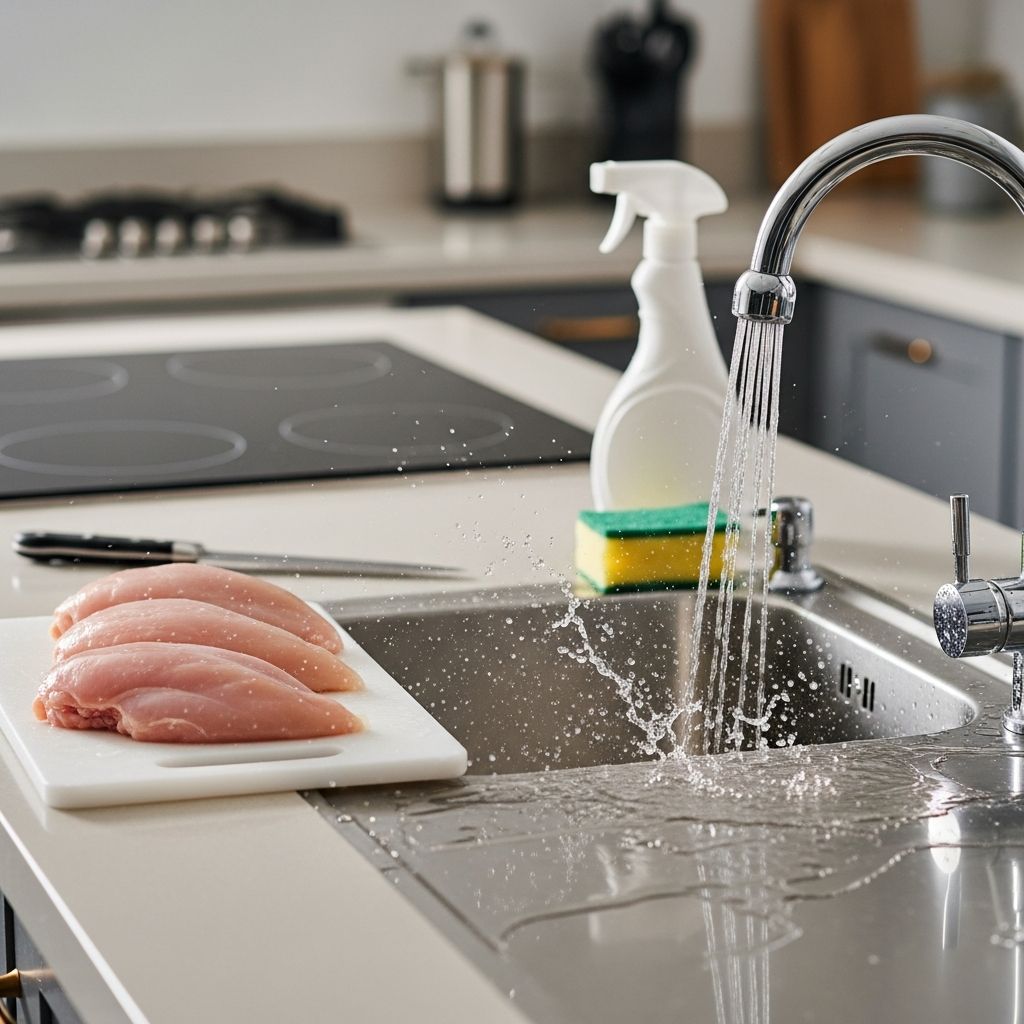
Handling raw chicken properly is crucial to avoid foodborne illnesses that affect millions annually. Health authorities unanimously advise against rinsing poultry under water, as it disperses bacteria across kitchen surfaces rather than eliminating them.
The Hidden Dangers of Rinsing Poultry
Raw chicken often harbors pathogens such as Salmonella and Campylobacter, which cause severe gastrointestinal distress including diarrhea, vomiting, and abdominal pain. When you rinse it, the water mixes with contaminated juices, creating aerosolized droplets that contaminate sinks, countertops, utensils, and nearby foods.
A USDA study observed that 60% of people who washed raw poultry had bacteria lingering in their sinks afterward, with 14% still detecting it post-cleaning attempts. Even careful rinsing under a low stream splashes germs onto unprepared items like salads, elevating cross-contamination risks.
- Splashing sends bacteria up to 3 feet away from the sink.
- Sink faucets and handles become reservoirs for pathogens if not sanitized properly.
- Undetected spread leads to 93 million Salmonella-related illnesses yearly from poultry.
Why Modern Chicken Doesn’t Need a Rinse
Today’s poultry processing includes thorough cleaning at facilities, removing visible debris, feathers, or dirt before packaging. Any residual moisture or thin protein film evaporates during cooking or can be dabbed away safely without water. Rinsing adds unnecessary moisture that promotes bacterial travel, not removal.
Health experts like those from the Cleveland Clinic emphasize that water does not kill bacteria; only heat does. Pat dry with paper towels instead, disposing of them immediately to contain juices.
Safe Alternatives to Washing Raw Chicken
Adopt these evidence-based practices to minimize risks without introducing water:
- Pat Dry Technique: Use single-use paper towels to absorb surface moisture. Discard towels straight into an open trash bin, avoiding lid contact.
- Hand Hygiene Priority: Scrub hands with soap for 20 seconds after any poultry contact.
- Surface Sanitization: Wipe counters, sinks, and tools with hot soapy water followed by a disinfectant solution.
- Prep Order: Handle ready-to-eat foods like vegetables before raw meat to prevent transfer.
Avoid brining for safety; while it tenderizes meat, it doesn’t neutralize bacteria and requires extra cleanup. Refrigerate chicken during any soaking.
Mastering the Correct Cooking Temperature
The definitive way to eliminate bacteria is cooking chicken to an internal temperature of 165°F (73.9°C), measured at the thickest part with a food thermometer. This heat destroys Salmonella and Campylobacter reliably.
| Meat Type | Safe Internal Temperature |
|---|---|
| Whole Poultry | 165°F |
| Ground Poultry | 165°F |
| Beef/Pork Steaks, Roasts | 145°F (with 3-min rest) |
| Ground Meats | 160°F |
Undercooked chicken remains hazardous, so always verify doneness this way rather than by color or texture.
Preventing Cross-Contamination in Your Kitchen
Cross-contamination occurs when bacteria jump from raw chicken to other foods via hands, surfaces, or tools. A USDA experiment found 26% of washers transferred pathogens to salad lettuce, compared to 31% of non-washers—highlighting poor hygiene as a bigger culprit overall.
Key prevention strategies include:
- Using separate cutting boards for raw meats and produce.
- Storing raw chicken in leak-proof containers on the bottom fridge shelf.
- Cleaning utensils in hot, soapy water or a dishwasher cycle.
Children, seniors, and immunocompromised individuals face higher risks, making vigilance essential.
Common Myths About Poultry Preparation
Many believe acidic solutions like vinegar or lemon juice kill bacteria during a soak, but USDA confirms they do not. Soap is equally unsafe, as residues render meat inedible.
Another misconception: visible cleanliness equals bacterial absence. Pathogens are microscopic and thrive in juices, undetectable without lab testing.
Real-World Impact: Statistics and Studies
Poultry-related Salmonella causes significant public health burdens. Research from Drexel University notes persistent consumer habits despite education efforts, with videos and programs shifting behaviors effectively. CDC animations demonstrate splash risks vividly.
Minnesota Department of Health warns that even slow streams propel germs onto counters. These insights underscore the need for habit change.
Building a Food-Safe Kitchen Routine
Incorporate poultry handling into a broader hygiene protocol:
- Unpack chicken directly onto a dedicated board.
- Pat dry, season, and cook immediately.
- Sanitize workspace post-prep.
- Use thermometer for every batch.
This routine maximizes nutrition from chicken—a lean protein source—while sidestepping illness.
Frequently Asked Questions (FAQs)
What if my chicken looks dirty?
Modern processing ensures cleanliness. Wipe residues with a paper towel and cook thoroughly.
Is brining safe?
It’s optional for flavor but not for safety. Discard brine and sanitize containers.
How do I clean my sink after handling chicken?
Use hot soapy water, then sanitizer. Avoid using the sink for rinsing produce post-poultry.
Can I wash frozen chicken?
No—thawing under water risks the same spread. Thaw in fridge or cold water in sealed bags.
What’s the best thermometer for home use?
Digital instant-read models for accuracy at thickest meat sections.
Empowering Families with Knowledge
By ditching the rinse, families reduce illness risks dramatically. Consistent safe practices turn everyday cooking into a health safeguard. Share these tips to protect loved ones.
References
- Should You Wash Raw Chicken? — Cleveland Clinic. 2023-05-15. https://health.clevelandclinic.org/should-you-wash-raw-chicken
- Don’t Wash Your Chicken: It’s Risky, It’s Unnecessary and There’s a Better Way — Drexel University. 2022-08-15. https://drexel.edu/news/archive/2022/August/Dont-Wash-Your-Chicken-Its-Risky-Its-Unnecessary-and-Theres-a-Better-Way
- Washing Raw Poultry: Our Science, Your Choice — USDA. 2019-08-20. https://www.usda.gov/about-usda/news/press-releases/2019/08/20/washing-raw-poultry-our-science-your-choice
- Video: Washing Chicken Spreads Germs — CDC. 2023-01-10. https://www.cdc.gov/food-safety/communication-resources/washing-chicken-spreads-germs.html
- Don’t Wash Your Chicken — Minnesota Department of Health. 2024-02-20. https://www.health.state.mn.us/people/foodsafety/clean/dontwashchix.html
- Should I wash chicken or other poultry before cooking? — USDA AskUSDA. 2023-11-05. https://ask.usda.gov/s/article/Should-I-wash-chicken-or-other-poultry-before-cooking