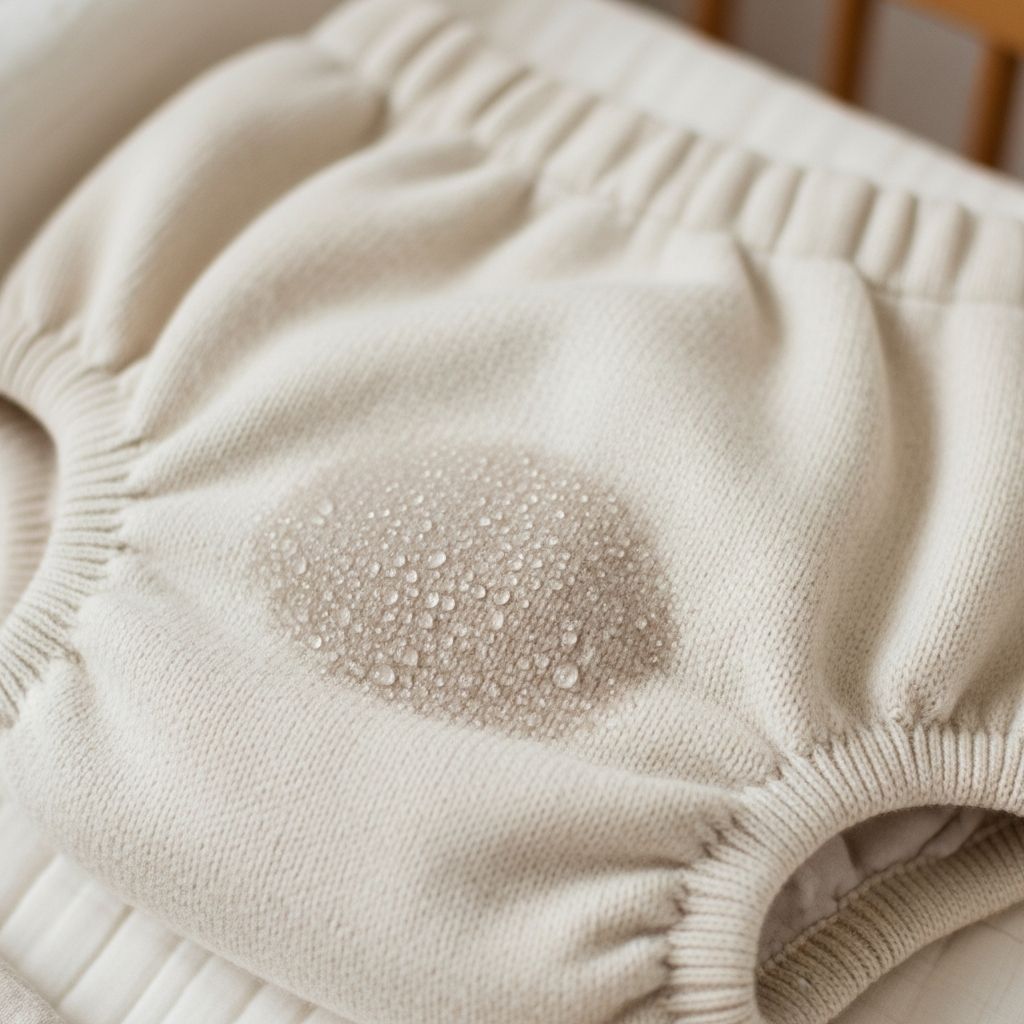
Wool diaper covers have a devoted following among cloth-diapering families, but they also create one of the most confusing experiences: a cover that feels damp even when it is technically doing its job. If you are wondering whether your wool is leaking, failing, or just behaving normally, this guide will walk you through what is happening and how to respond.
How Wool Diaper Covers Actually Work
Wool covers do not function like plastic or synthetic waterproof fabrics. Instead of blocking moisture with a solid barrier, they manage moisture through absorption and evaporation. This creates a very different experience in your hands and on your baby’s skin.
- Absorbing and dispersing moisture: Wool fibers can hold a substantial amount of liquid relative to their weight while still feeling only slightly damp to the touch.
- Allowing airflow: The open, breathable structure of wool lets moisture slowly evaporate into the air instead of trapping it inside the diaper.
- Working with lanolin: Lanolin, the natural waxy substance associated with wool, helps repel some moisture and break down urine into more neutral substances.
This combination means that a wool cover may never feel bone-dry if the diaper underneath is heavily used, especially overnight. A slight sense of dampness can be part of normal function rather than an automatic sign of failure.
“Wet” vs. “Leaking”: Learning the Difference
Before giving up on wool, it helps to distinguish between a cover that feels damp and a cover that is truly leaking. These situations call for different responses, so clarity up front saves frustration later.
| Sign | Likely Situation | What It Usually Means |
|---|---|---|
| Cover feels cool or slightly moist to the touch but clothing is dry | Normal moisture transfer | Wool has absorbed and is holding some moisture while still protecting clothes |
| Outer clothing has small damp spots near leg or waist | Localized leak | Fit or leg/waist gaps may be allowing wicking onto clothing |
| Clothes are clearly wet over a wide area | True leak | Insufficient absorbency, exhausted lanolin, or severely saturated wool |
| Cover smells strongly even after airing | Lanolin depleted or buildup present | Time for a proper wash and re-lanolizing session |
A mildly damp inner surface of the cover, with dry clothes and a comfortable baby, is generally acceptable. The priority is whether moisture is transferring beyond the diapering system, not whether the wool itself feels perfectly dry in your hands.
Common Reasons Wool Covers Feel Wet
There are several overlapping causes behind a wool cover that feels wetter than you expect. Addressing the right factor will restore performance without unnecessary extra work.
1. The Absorbent Diaper Is Maxed Out
Wool is designed to work in partnership with absorbent layers such as fitted diapers, prefolds, or flats. When the diaper underneath is fully saturated, excess liquid seeks somewhere else to go, and wool steps in as a backup sponge. At that point, your cover will naturally feel more damp and may start to pass moisture outward.
- Nighttime stretches, long naps, or car rides are classic times when a diaper reaches its limit.
- Heavy wetters or older babies often outgrow the absorbency levels that worked during earlier months.
2. Insufficient or Worn-Out Lanolin
Lanolin offers gentle water-resisting properties and helps transform urine into less odorous residues. Over time, regular use and mild rinsing gradually dilute or remove that lanolin coating from the wool fibers. Once the lanolin level drops low enough, wool behaves more like a regular fabric and less like a water-managing cover.
- Frequent use without periodic re-lanolizing is a common reason a once-reliable cover begins to feel soggy.
- New-to-you covers that were previously washed in detergents not suited for wool can also start out under-lanolized.
3. Fit Gaps and Compression
Even when absorbency and lanolin are ideal, a poor fit can cause the sensation of a wet cover and actual leaks. Small gaps at the legs or waist may allow dampness to wick onto clothing. Likewise, compression from tight pajamas, car seat straps, or snug baby carriers can push moisture out of the diaper and into the wool.
- Bulky outfits that squish the diaper and cover tightly may lead to localized damp spots.
- Loose leg holes or low-rise covers increase the chance that damp inserts will touch clothing directly.
4. Fiber Type and Fabric Weight
Not all wool covers are made the same way. Some are thinner and more elastic, while others are dense, felted, or double-layered. Lighter fabrics reach their moisture-holding limit faster and can feel wet sooner, especially for overnight use. Thicker options hold more moisture and feel more stable but may be warmer or bulkier.
Practical Fixes for Damp Wool Diaper Covers
Once you understand why your cover feels wet, you can apply simple, targeted solutions. Often, a small change in absorbency or care routine makes an immediate difference.
Boosting Diaper Absorbency
If the core of the diapering system is flooded, the wool cover will always be under pressure. Addressing absorbency first often solves the problem with minimal effort.
- Add an extra insert, booster, or doubler in the diaper for naps and nights.
- Experiment with different fibers (such as cotton, bamboo, or hemp) that handle heavy wetting more efficiently.
- Check that absorbent layers lie flat without folds that concentrate moisture in one spot.
Refining the Fit
A well-fitting cover creates a gentle seal without squeezing. This reduces both wicking and compression leaks, helping moisture stay where it belongs.
- Make sure the diaper is fully tucked inside the cover at the legs and waist.
- Choose a size that allows coverage of the entire diaper while still sitting comfortably at the waist.
- Test pajamas and pants over the cover to ensure they are not overly tight or pushing the diaper inward.
When and How to Rest Your Wool
Because wool can absorb and then release moisture into the air, resting a cover between uses is part of its care. Rotating between two or more covers gives the fibers time to dry fully, even if they felt slightly damp at the end of a long stretch.
- Hang the used cover in a well-ventilated space after changing your baby.
- Avoid sealing a damp wool cover in a bin or wet bag unless it is soiled and headed for a full wash.
- Reserve your most robust cover for overnight and keep another lighter one for daytime.
Step-by-Step: Washing and Lanolizing Wool Covers
If your cover has started to feel consistently wet or develop stubborn odor, a wash and lanolizing session can renew its performance. This process sounds more intimidating than it is; think of it as occasional deep conditioning for your wool rather than constant maintenance.
Gentle Hand-Washing Routine
- Fill a basin with lukewarm water. Very hot or cold water can shock the fibers and cause felting.
- Add a wool-safe cleanser designed specifically for natural fibers. Avoid standard detergents, which can strip lanolin and roughen the fabric.
- Submerge the cover and gently press it through the water. Do not wring, twist, or scrub heavily.
- Soak for the recommended time on your wool wash product, usually several minutes.
- Rinse carefully with lukewarm water until the soap is gone, supporting the fabric with both hands.
Lanolizing Basics
Lanolizing replenishes the protective waxy coating that helps wool manage moisture and resist odors. Once you learn the pattern, it becomes a straightforward, occasional task.
- Dissolve a lanolin product in hot water in a separate small container, stirring until it turns evenly milky.
- Add this mixture to a clean basin of lukewarm water and swirl to distribute.
- Place the clean, damp cover into the lanolin bath, gently pressing it down so the fibers can absorb the solution.
- Soak for the suggested time, often 30 minutes or longer, depending on how dry the wool felt before.
- Remove the cover and gently press (not wring) out excess water. Rolling in a dry towel can speed up the process.
- Lay flat to dry away from direct heat or strong sunlight. Drying may take a day or more, depending on thickness and room conditions.
Many families find that once their covers are well lanolized, they can go weeks between washes if the covers are only dampened with urine and are aired properly after use.
When a Damp Wool Cover Is Actually Helpful
There are situations where a slightly damp wool cover can be an asset. Because wool encourages evaporation and allows heat to escape, that subtle dampness may contribute to a more comfortable microclimate around your baby’s skin.
- In warm weather, wool’s ability to move moisture away from the body can help keep skin cooler than a fully waterproof plastic-like shell.
- For babies prone to rashes, the extra airflow and reduced clamminess can improve skin condition over time.
The key is balance: a bit of dampness on the cover with dry outer clothing and a rash-free baby is usually a sign that the system is regulating well, not failing.
Choosing the Right Wool Cover for Your Baby
If you are consistently bothered by how wet your current cover feels, it may be time to reassess what kind of wool works best for your family’s routine. Different styles excel in different roles.
- Pull-on soakers: Great for nighttime or at-home use, often thicker and more absorbent.
- Wrap-style covers: Offer adjustable fit at the waist and legs, which can help fine-tune coverage.
- Upcycled sweater covers: Typically dense and warm, ideal for cool climates and heavy wetters when properly lanolized.
Consider how long your baby goes between changes, whether you need trim daytime outfits, and how sensitive your child’s skin is when selecting a wool piece. Matching the cover’s weight and style to your real-life patterns will reduce both leaks and wet-feeling fabric.
FAQs About Wet Wool Diaper Covers
1. Should a wool diaper cover feel completely dry?
Not always. A wool cover that has just come off a heavily used diaper, especially overnight, may feel slightly cool or damp to the touch. The important question is whether baby’s clothes stayed dry and the skin underneath remains comfortable and rash-free.
2. How often should wool covers be washed?
If a cover is only exposed to urine and is aired thoroughly after each use, many families can go multiple wears or even several weeks between full washes. Wash immediately if the cover is soiled with stool, smells strongly even after airing, or begins to look visibly dirty.
3. How frequently do wool covers need to be lanolized?
Lanolizing schedules vary with usage, but a common pattern is every few weeks for heavily used overnight covers and less often for daytime-only pieces. If your cover starts to lose its odor resistance or feels soggy more quickly, that is a good sign it is ready for another lanolin treatment.
4. Can wool diaper covers work in hot weather?
Yes. Wool is naturally breathable and can help release heat and moisture, making it suitable for warm climates as long as you choose an appropriate weight and avoid overly bulky layers. Many parents find their babies stay cooler in wool than in non-breathable waterproof covers.
5. What if my baby seems uncomfortable when the cover is damp?
If your child reacts to a damp-feeling cover, focus on boosting absorbency in the inner diaper so less moisture reaches the wool. You can also reserve the most absorbent and heavily lanolized cover for night, when your baby is less aware of small sensations and is less likely to be disturbed.
Making Peace With Wool and Moisture
Using wool as part of a cloth diaper routine requires a shift in expectations. Instead of aiming for a perfectly dry shell, you are working with a natural fiber that breathes, absorbs, and gradually releases moisture. When the inner diaper provides enough absorbency, the cover is well lanolized, and the fit is dialed in, the system can keep your baby’s clothes dry and skin comfortable even if the wool occasionally feels a bit damp in your hands.
With realistic expectations and a few simple care habits, a “wet” wool cover becomes less of a mystery and more of a signal. It tells you when the diaper underneath has done all it can, when it is time to increase absorbency, or when your wool is ready for its next lanolin spa day. That understanding turns confusion into confidence and helps you enjoy the benefits of a natural, breathable diapering option.