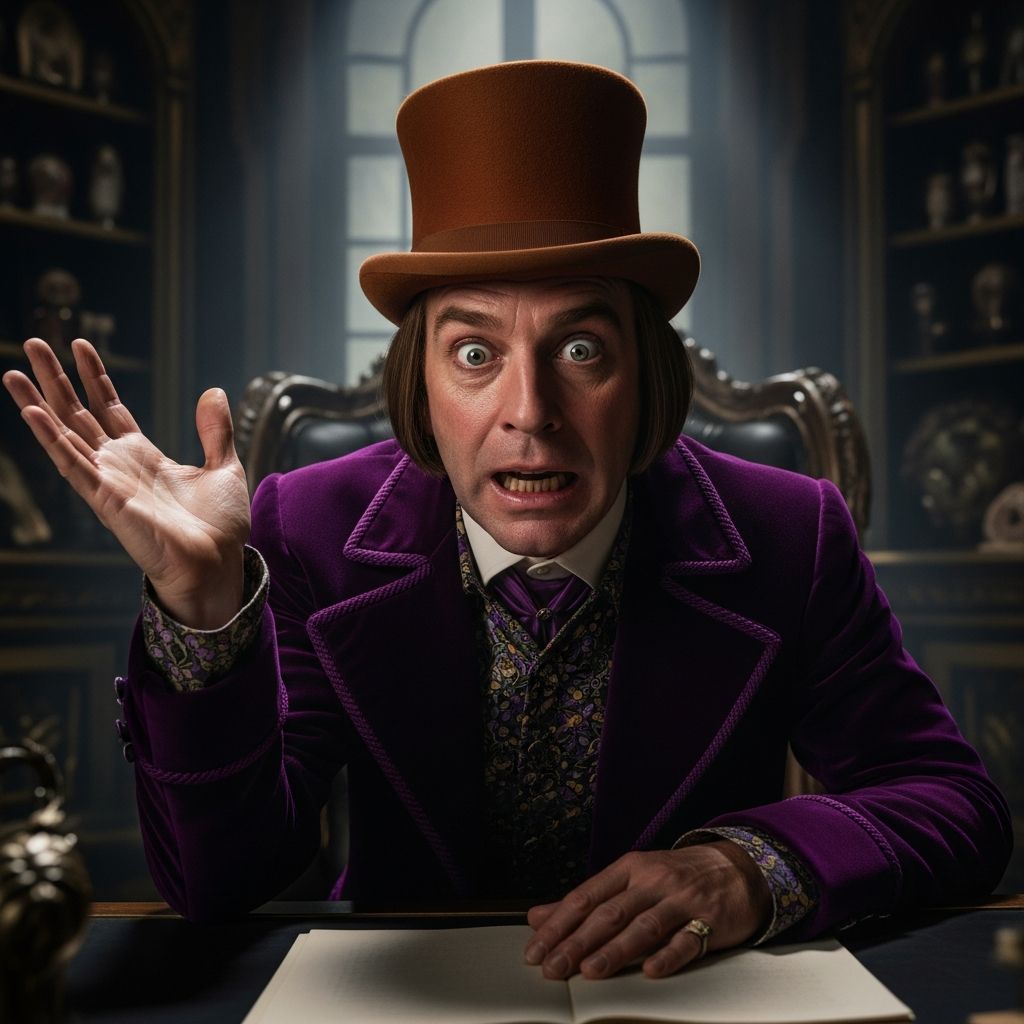
The 1971 film Willy Wonka & the Chocolate Factory is remembered for its candy-colored sets, psychedelic river ride, and unforgettable songs. But the scene that lingers most for many viewers is not sweet or whimsical at all: it is Willy Wonka’s sudden, furious outburst, punctuated by the words, “You get nothing! You lose! Good day, sir!”.
Decades after the film’s release, that moment still shocks new viewers, confuses kids, and sparks debates among adults. Was Wonka justified? Was Charlie really so innocent? And what on earth are children supposed to learn from this?
This article takes a fresh, detailed look at the “You get nothing” scene—its emotional impact, moral logic, and what it reveals about parenting, power, and the uneasy side of so-called “kids’ movies.”
The Scene in Brief: How We Get to “You Get Nothing”
Near the end of the film, after a day of increasingly strange and dangerous mishaps in the factory, only Charlie Bucket and Grandpa Joe remain with Willy Wonka. They expect a triumphant reward: the lifetime supply of chocolate that the Golden Ticket promised.
Instead of congratulations, they find Wonka in his office, acting distant and distracted. When Grandpa Joe presses him about Charlie’s prize, Wonka erupts. He pulls out a microscopic contract clause and accuses them of breaking the rules by sampling the forbidden Fizzy Lifting Drinks earlier in the tour.
- Wonka cites a specific rule in Charlie’s contract.
- He accuses them of stealing and contaminating his factory.
- He declares that the contract is void and Charlie gets nothing.
- Grandpa Joe responds with rage, calling Wonka a cheat and a swindler.
- Charlie quietly chooses to return the Everlasting Gobstopper instead of giving it to Wonka’s supposed rival.
Only after Charlie’s act of honesty does Wonka’s tone change. He softly quotes, “So shines a good deed in a weary world,” a line adapted from Shakespeare, and reveals that Charlie has passed his final test.
Why This Moment Feels So Disturbing
Plenty of children’s films include moral lessons, but few package them in a scene as emotionally jarring as this one. Several elements make the outburst feel uniquely unsettling.
The Sudden Shift from Whimsy to Fury
Throughout the movie, Willy Wonka moves between playful nonsense and calm detachment. He watches other children suffer bizarre, factory-related punishments with unnerving composure and even dry one-liners. By the time we reach the office scene, viewers expect more oddity—but not rage.
Instead, the scene delivers:
- Sharp escalation from quiet conversation to yelling.
- Legalistic language and a harsh reading of the fine print.
- Direct condemnation of a child audience surrogate (Charlie).
For many children watching, this may be the first time they see an adult character they admired suddenly turn on a child so completely. Psychologists note that such abrupt emotional reversals from authority figures can be especially uncomfortable for young viewers, because they challenge a basic expectation of adult consistency and safety.
Mixed Messages About Rules and Fairness
Morality tales for kids traditionally present clear rules and consequences. Yet this movie complicates that formula. The tour repeatedly exposes the other children’s flaws—greed, gluttony, entitlement, and so on—and punishes them dramatically. But the factory itself is chaotic, and Wonka is anything but a model of predictable enforcement.
In the “You get nothing” scene, that tension peaks:
- Charlie did break a rule by drinking the Fizzy Lifting Drink.
- Wonka, however, ignored many other dangerous moments earlier in the tour.
- The contract itself is nearly unreadable fine print, something children are unlikely to understand.
The result feels morally ambiguous: the child is wrong, but the adult wields the rules in a way that seems punitive and unfair. Developmental research suggests that children’s sense of fairness develops strongly between ages 6 and 10, and they are especially sensitive to hypocrisy or uneven enforcement of rules during this period. That helps explain why this scene sticks so powerfully with viewers who saw it when they were young.
Grandpa Joe: The Worst Role Model in the Room?
Although the scene centers on Wonka and Charlie, the character who emerges in the harshest light is often Grandpa Joe. Across the movie, he functions as Charlie’s cheerleader and partner in adventure—but also as a consistently questionable influence.
When revisiting the film, many adults notice patterns they missed as kids:
- Grandpa Joe encourages Charlie to sneak the Fizzy Lifting Drink in the first place.
- He regularly complains, criticizes, and judges other families and children.
- He quickly turns to anger and revenge when Wonka denies the prize.
In the office scene, Grandpa Joe’s response to Wonka’s anger is to escalate further. He calls Wonka a crook and threatens to hand the Gobstopper to a supposed competitor, framing retaliation as the obvious next step. For a child watching, the scene presents a striking contrast:
| Character | Immediate Reaction | Message Modeled for Kids |
|---|---|---|
| Grandpa Joe | Insults, anger, plan for revenge | “If someone hurts you, hurt them back.” |
| Charlie | Quiet reflection, then honest restitution | “Do the right thing, even when no one is watching.” |
| Willy Wonka | Explosive anger, then forgiveness and reward | “Harsh tests can hide deeper intentions.” |
From a parenting perspective, Grandpa Joe’s behavior offers a useful springboard for conversation about how adults influence children’s choices—both positively and negatively. Research on social learning emphasizes that children often imitate not what adults say but what they do, especially in emotionally charged situations.
Charlie’s Choice: A Small Gesture With Huge Moral Weight
The turning point of the scene comes not through a speech, but through a simple, almost wordless act: Charlie placing the Everlasting Gobstopper on Wonka’s desk and walking away.
Why the Gobstopper Matters
Earlier in the film, Wonka’s supposed rival, Slugworth, approaches each winning child with an offer to buy one of these Gobstoppers. Charlie believes that handing one over could secure financial security for his struggling family. Yet after being humiliated and denied his prize, he chooses not to seek revenge or profit. Instead, he returns the candy.
This moment embodies several classic moral themes:
- Integrity: Charlie does what he believes is right when there is no clear reward.
- Forgiveness: He refrains from striking back at someone who just hurt him.
- Autonomy: He acts independently of Grandpa Joe’s anger-filled plan.
Wonka’s response—quoting, “So shines a good deed in a weary world,” adapted from Shakespeare’s The Merchant of Venice—signals that this was always the true test. In stories and films, such moral tests are a common device: a character’s defining moment often comes when they act rightly in private or in apparent defeat.
Is Wonka a Cruel Tyrant or a Flawed Mentor?
Modern viewers often read the scene very differently from earlier audiences. Some see Wonka as a vindictive adult who delights in humiliating children. Others view him as a tough but ultimately benevolent tester of character, similar to mythic or fairy-tale figures who subject heroes to harsh trials before granting rewards.
The Case for Wonka as Too Harsh
- He weaponizes a dense legal contract that no child could read or understand.
- He shows little empathy for Charlie’s poverty and desperation.
- His anger appears disproportionate to the harm done by the Fizzy Lifting mishap.
From this angle, the scene can be read as a satire of corporate cruelty or adult hypocrisy: a powerful figure hiding behind paperwork to punish a powerless child.
The Case for Wonka as a Moral Tester
- Every step of the tour appears designed to expose each child’s flaws.
- The Gobstopper test reveals whether Charlie will choose goodness over greed.
- Wonka ultimately offers Charlie not just a prize, but a life-changing inheritance.
Literary studies of children’s stories often note that “testing” adults—fairy godmothers, kings, mysterious benefactors—use severity to forge and reveal character. Seen this way, Wonka’s explosion is part performance, part trap, and part invitation to Charlie to rise above both his own mistake and his grandfather’s bitterness.
Talking About the Scene With Kids
For parents, caregivers, or teachers watching the movie with children, the “You get nothing” scene can become a rich starting point for discussion rather than a moment to rush past. Educational research suggests that co-viewing and talking through difficult scenes helps children process emotions and values more effectively than watching alone.
Questions to Ask After the Scene
- “How did you feel when Wonka started yelling at Charlie?”
- “Do you think Charlie did something wrong earlier? Why or why not?”
- “Was Wonka fair? Could he have handled it differently?”
- “What do you think of Grandpa Joe’s reaction? What would you have done?”
- “Why do you think Charlie gave the Gobstopper back?”
These questions encourage children to reflect on:
- Fairness and justice versus technical rule-breaking.
- Anger and forgiveness in conflict situations.
- Personal responsibility separate from adult influence.
How the Scene Fits Into the Film’s Larger Themes
Far from being an isolated shock, the office outburst crystallizes many of the film’s major themes:
- Temptation and self-control: Each child faces a temptation linked to their flaw, and Charlie is no exception.
- Economic anxiety: Charlie’s poverty makes his choices more morally complex and emotionally intense.
- Adult failure: Many of the film’s parents fail to guide or restrain their children, making Charlie’s moral clarity stand out.
- Ambiguous authority: Wonka is powerful but morally opaque, asking viewers to think critically about who deserves trust.
Film scholars have argued that Willy Wonka & the Chocolate Factory functions as a kind of modern fairy tale, where ordinary children confront an enchanted, dangerous space and must prove their worth to a strange, rule-making figure. In that context, the “You get nothing” outburst is less a glitch in tone and more the story’s final, harsh trial.
Frequently Asked Questions (FAQs)
Q: Why does Willy Wonka yell “You get nothing!” at Charlie?
Wonka is reacting to Charlie and Grandpa Joe drinking the forbidden Fizzy Lifting Drinks, which broke factory rules spelled out in a tiny-print contract Charlie signed. Within the story, the outburst also functions as a deliberate moral test to see if Charlie will respond with revenge or integrity.
Q: Did Charlie really do anything wrong?
Yes and no. He did sneak the Fizzy Lifting Drink and nearly caused damage, so by the factory’s rules he is guilty. But the movie also shows that he was pressured by Grandpa Joe, and that other children have done much worse with fewer immediate consequences, making Wonka’s reaction feel extreme.
Q: Is Willy Wonka supposed to be a villain in this scene?
The film presents Wonka as morally ambiguous rather than purely villainous. His fury appears cruel, but when Charlie returns the Gobstopper, Wonka instantly softens and reveals that the entire confrontation was part of a larger plan to test Charlie’s character before giving him the factory.
Q: Why does Wonka quote “So shines a good deed in a weary world”?
The line is adapted from Shakespeare’s The Merchant of Venice, where a character praises how a small act of goodness can light up a dark world. By using it here, Wonka signals that Charlie’s quiet honesty has broken through his cynicism and restored his faith in human decency.
Q: How can parents use this scene as a teaching moment?
Adults can talk with kids about fairness, rule-breaking, and emotional reactions after the scene ends. Asking children how they felt about Wonka’s anger, what they think Charlie did right or wrong, and how they might respond in a similar situation helps them build moral reasoning and empathic understanding.
References
- 50 Years Ago, ‘Willy Wonka’ Gave Us This Wonderfully Disturbing Scene — Fatherly. 2021-06-30. https://www.fatherly.com/play/willy-wonka-you-get-nothing-scene
- 9 Iconic ‘Willy Wonka’ Quotes and Their Little-Known Origins — Rebeat Magazine. 2015-08-21. http://www.rebeatmag.com/9-iconic-willy-wonka-quotes-and-their-little-known-origins/
- Willy Wonka’s Delusions of Grandeur — Loco Mag. 2018-03-02. https://locomag.com/willy-wonkas-delusions-of-grandeur/
- The Subversive Lessons of Willy Wonka & the Chocolate Factory — Deva Vega, Dea & Debonair. 2016-10-16. https://debravega.wordpress.com/2016/10/16/the-subversive-lessons-of-willy-wonka-the-chocolate-factory/
- Media and Young Minds — American Academy of Pediatrics. 2016-11-01. https://publications.aap.org/pediatrics/article/138/5/e20162591/60637/Media-and-Young-Minds
- Socialization Values and Parental Mediation of Children’s Media Use — Nathanson, A.I., Journal of Broadcasting & Electronic Media. 2001-06-01. https://doi.org/10.1207/s15506878jobem4503_1