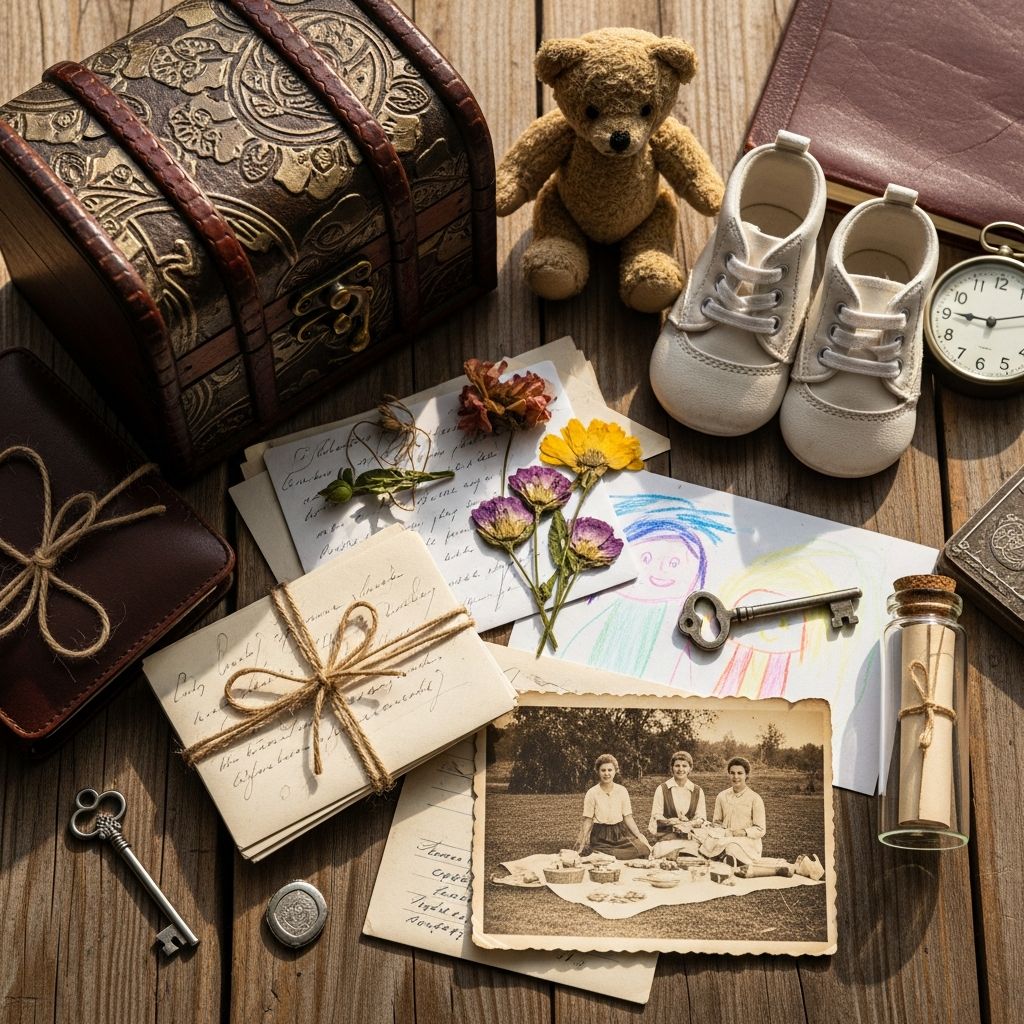
A family time capsule is a simple project that turns everyday life into a keepsake your children can rediscover years from now. Done well, it becomes an annual tradition filled with laughter, reflection, and a deeper sense of connection.
Why a Family Time Capsule Matters
Children grow and change quickly, and many little details of each season of life are easy to forget. A time capsule captures those small moments and everyday favorites that rarely make it into photo albums.
Unlike a scrapbook that looks back on the past, a time capsule invites your family to talk about the present while imagining the future. That mix of memory and anticipation is what makes it especially powerful for kids.
Designing Your Own Family Tradition
Before you start collecting items, decide how this tradition will work in your household. The goal is to make it simple enough to repeat regularly, but special enough that everyone looks forward to it.
- Choose a recurring moment: New Year’s, a child’s birthday, the start of the school year, or the first day of summer vacation.
- Pick a time horizon: Will you open the capsule every year, every five years, or on a specific milestone (like a graduation)?
- Involve all ages: Give even very young children a chance to contribute something, draw, or answer simple questions.
Picking the Right Container
Your container doesn’t need to be fancy or expensive; it just needs to be sturdy, safe, and easy to store. The container you choose can also become part of the story you revisit later.
- For indoor storage: A metal cookie tin, lidded box, or plastic storage container works well.
- For display: A decorative box or clear-lid container can sit on a shelf as a visible reminder of your tradition.
- For long-term storage: Use something watertight and clearly label the outside with what it is and when to open it.
| Container Type | Best For | Pros | Things to Watch |
|---|---|---|---|
| Decorative keepsake box | Short-term, indoor display | Attractive, easy to access, simple for kids to handle | May not protect against moisture or heavy stacking |
| Plastic storage bin with lid | Closets, under-bed, basements | Durable, stackable, protects from dust and spills | Can get heavy; label clearly so it isn’t used for something else |
| Metal tin or box | Longer storage indoors | Strong, nostalgic feel, protects paper items well | May rust in damp areas; avoid storing in humid spaces |
Ground Rules for What Goes Inside
Agreeing on simple ground rules keeps the project fun and manageable. Without limits, kids might try to add half their bedroom instead of a few meaningful items.
- Limit each person to a set number of items (for example, three to five).
- Avoid food or anything that might melt, leak, or attract pests.
- Skip items you’d be heartbroken to misplace, like irreplaceable jewelry or official documents.
Ideas for Personal Keepsakes
Personal items are what make the capsule feel emotional and specific to your family. Encourage each person to choose things that truly reflect their current interests and personality.
- A small toy, trading card, or trinket that feels important “right now.”
- A favorite photo from the year with a quick note on the back explaining why it matters.
- A ribbon, medal, ticket stub, program, or wristband from an event or activity.
- A drawing or mini comic strip that shows something memorable from the year.
Capturing Everyday Life
Some of the most touching items in a future opening will be the things that seem ordinary today. These give context to the time you lived in together.
- Printouts of text messages, family group chats, or funny quotes your kids said.
- A handwritten list of favorite TV shows, songs, apps, or games.
- A quick snapshot of the family car, bedroom, or kitchen as they look this year.
- A small receipt or price tag to show what things cost at the time.
Simple Questionnaires for Everyone
Questionnaires are one of the easiest ways to capture your children’s changing perspectives. You can design a short set of questions and answer the same ones every time you create a capsule.
- “What is your favorite thing to do after school?”
- “What is something you learned this year that made you proud?”
- “What do you hope will be different in five years?”
- “If you could send a message to your future self, what would it say?”
Letters to the Future
Letters can become the most meaningful part of the capsule. They allow family members to share thoughts and encouragement directly with their future selves or with each other.
- Parents can write to each child, describing who that child seems to be at this age.
- Kids can write to their future selves about their current worries and dreams.
- Siblings can exchange short notes about what they enjoy doing together.
Adding a Snapshot of the World
Including a small window into what is happening beyond your home gives your future selves a broader sense of context. It also helps kids connect their personal story to the larger world.
- A brief handwritten summary of a few major news events from the year.
- A list of popular slang, trends, or viral moments that everyone seems to talk about.
- Printouts of headlines or a tiny clipping with dates and a short note.
Making the Capsule With Kids Step-by-Step
Breaking the process into simple steps keeps it from feeling overwhelming. You can complete the entire capsule in a single afternoon or spread it out over a week.
- Announce the plan. Explain what a time capsule is and decide together when you will open it.
- Prepare materials. Set out your container, pens, paper, tape, and any printed prompts or questionnaires.
- Gather items. Give everyone time to look around the house and choose their contributions.
- Write and draw. Fill out questionnaires, write letters, and create any artwork you want to include.
- Review together. Have each person share what they are adding and why it matters to them.
- Seal and label. Close the container, write “Do Not Open Until…” with the future date, and store it safely.
Where and How to Store It
Good storage ensures your hard work doesn’t get damaged or accidentally thrown away. You do not need to bury the capsule to make it meaningful.
- Pick a place that is dry, stable in temperature, and easy to remember.
- Tell at least two adults in the family where it is and write the location somewhere obvious.
- If you have several capsules over the years, keep them together in one designated spot.
Turning Opening Day Into a Ritual
The moment you open the capsule is what turns simple objects into powerful memories. Treat opening day as a small celebration, not just another task.
- Choose a relaxed time when everyone can be present, like a weekend evening.
- Take turns pulling out items and reading letters or answers aloud.
- Pause to reflect on what has changed and what has stayed the same.
What to Do With Old Capsule Items
Once you open a capsule, you may not want to keep everything inside. Decide in advance how you will handle older items as new ones accumulate.
- Pick a few “hall of fame” items to keep in a memory box or album.
- Photograph bulky items so you can remember them without storing them.
- Recycle or donate anything that no longer feels meaningful.
Adapting the Idea for Different Ages
The same basic concept works with toddlers, teens, and even adult children, as long as you adjust the activities to match their stage of life.
- Young kids: Focus on drawings, simple questions, handprints, and photos.
- Older kids: Add more writing, goal-setting, playlists, and reflections on school or friendships.
- Teens and adults: Include deeper letters, future plans, and reflections on big transitions.
Digital vs. Physical Time Capsules
Physical items are tangible and fun to handle, but digital tools can add video, audio, and backups. Many families choose a mix of both approaches.
| Type | Examples | Benefits | Limitations |
|---|---|---|---|
| Physical | Objects, letters, drawings, printed photos | Hands-on, nostalgic, easy for kids to understand | Requires space, can be damaged by moisture or heat |
| Digital | Videos, voice recordings, photo slideshows, digital notes | Easy to duplicate, can store many memories in a small space | Technology changes; files must be backed up and updated over time |
Creative Twists for Your Family
Once you’ve tried a basic time capsule, you can add twists that fit your family’s personality, interests, or cultural traditions. These variations keep the activity fresh from year to year.
- Create a “predictions only” mini capsule where everyone writes what they think life will look like in ten years.
- Make a travel capsule after a big trip with maps, boarding passes, and favorite memories.
- Start a “siblings only” capsule that brothers and sisters create together and open later as adults.
Frequently Asked Questions
How often should we make a family time capsule?
Many families enjoy creating a capsule once a year because it becomes part of a yearly ritual, such as New Year’s or the start of summer. Others prefer a longer time frame, like every three to five years, so the changes between openings feel more dramatic.
Do we have to bury the time capsule?
Burying a capsule is optional and often unnecessary. Indoor storage in a clearly labeled container is usually safer, easier to access, and less likely to be damaged by weather or changing outdoor conditions.
What if my child wants to include something very special?
If a child chooses an item that feels too precious to risk, take a photo of it and place the photo in the capsule instead. You can also write a short note explaining why the original object was important at that time.
How can we make the tradition stick?
Attach the time capsule to a date you already celebrate, like a birthday or holiday, and keep the process short and fun. When kids know they can share, laugh, and be heard, they will be eager to repeat the experience each year.
Can we start if our kids are already older?
Absolutely. Older children and teens can offer deeper reflections and may enjoy helping to design the format, questions, and schedule. Starting later simply means your capsule will reflect a different, equally meaningful chapter of your family’s story.