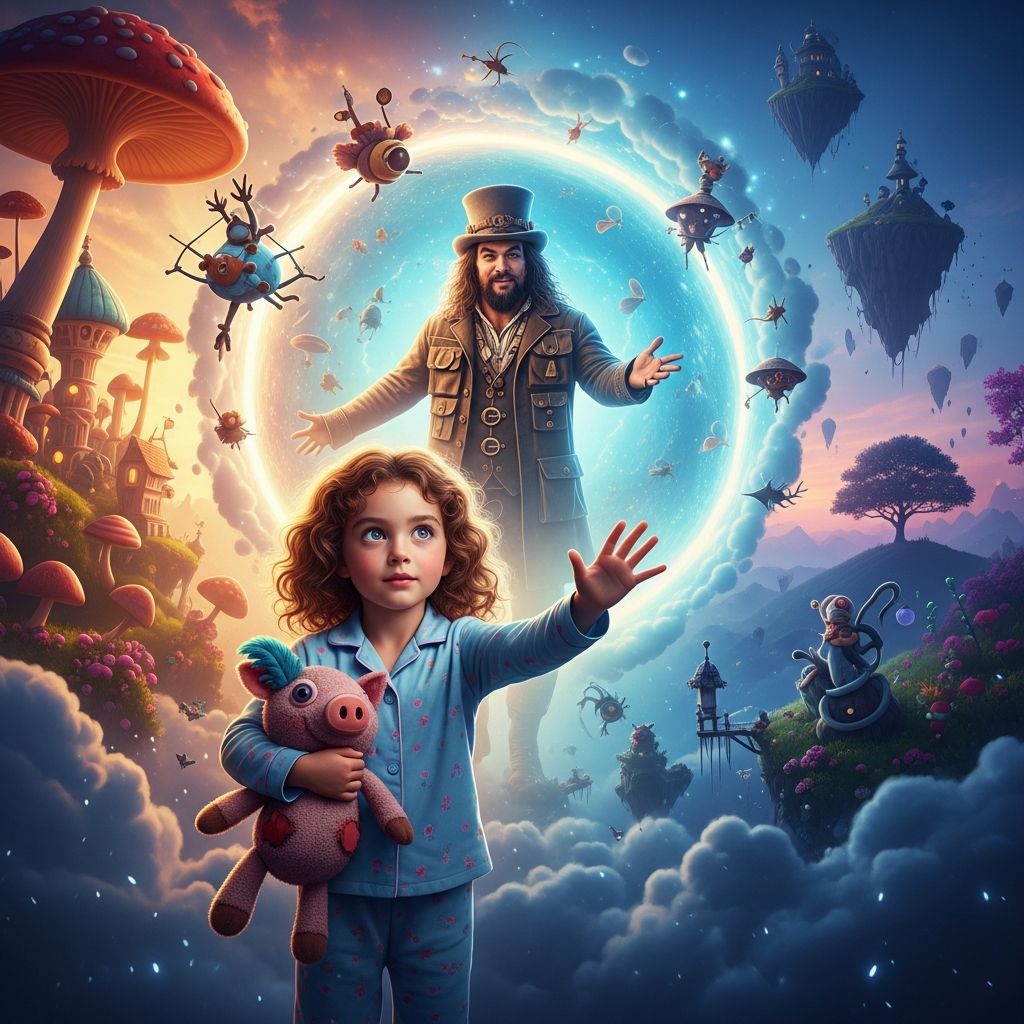
Netflix’s fantasy film Slumberland sends a young heroine into a vivid dream world where grief, imagination, and a horned outlaw collide. Blending high-concept visuals with emotional storytelling, it aims to be the kind of movie that kids can marvel at while parents quietly wipe away a tear.
This guide looks at what Slumberland is about, how it treats loss and healing, why Jason Momoa’s performance stands out, and what families should know before pressing play.
Story in Brief: From Lighthouse to Dream World
At its core, Slumberland follows Nemo, a young girl whose peaceful life in a lighthouse with her father is shattered when he is lost at sea. At night, her dreams open the door to a sprawling fantasy realm called Slumberland, where every person’s sleeping mind creates its own world.
- Nemo: An adventurous, capable girl who is coping with sudden loss.
- Her father: A loving storyteller and lighthouse keeper who fills Nemo’s nights with tales of daring escapades.
- Philip: Nemo’s awkward uncle, more comfortable selling doorknobs and following routines than caring for a grieving child.
- Flip: A larger-than-life outlaw from her father’s stories, played by Jason Momoa, who thrives in the chaos of dreams.
When Nemo discovers a secret map to Slumberland, she teams up with Flip to hunt for wishing pearls hidden in the dangerous Sea of Nightmares—magical objects that can grant a single wish. For Nemo, that wish is simple and heartbreaking: one more chance to see her dad.
The Two Worlds: Waking Life vs. Slumberland
One of the film’s central contrasts is between Nemo’s gray, structured daytime life and the wild, fluid realm of dreams.
| Waking World | Slumberland |
|---|---|
| City apartment, school, and Philip’s office routine | Shifting dreamscapes built from different people’s imaginations |
| Grief, loneliness, and awkward attempts at connection | Outrageous heists, chase scenes, and surreal locations |
| Rules, schedules, and social expectations | Shape-shifting physics, talking animals, and impossible geography |
| Philip claims he barely dreams at all | Flip embodies risk-taking and chaos, literally living in dreams |
This back-and-forth structure lets kids enjoy the spectacle of the dream sequences while gradually understanding how those dreams reflect Nemo’s inner life and fears.
Jason Momoa’s Flip: Chaos, Comedy, and Hidden Heart
Jason Momoa’s Flip is a far cry from his stoic action roles. Here, he’s a swaggering, horned outlaw with sharp teeth, a loud mouth, and a flair for dramatic entrances.
- Comic relief: Flip is impulsive, messy, and frequently wrong—often with slapstick results.
- A reluctant mentor: He wants treasure, not responsibility, but Nemo continually forces him to care.
- A deeper mystery: As the story unfolds, Flip’s true connection to Nemo’s family and to the waking world becomes crucial to the plot.
For kids, Flip is fun and visually striking. For adults, the character carries a metaphor about the side of ourselves that we bury when life becomes all routine and no imagination, an idea consistent with psychological research showing that play and imaginative thinking remain important for adults’ well-being.
Grief, Healing, and Emotional Themes
Although Slumberland is packaged as a fantasy adventure, its emotional engine is children’s grief. Nemo’s journey tracks closely with what child psychologists describe as common responses to loss: searching, bargaining, and finding continuing bonds with the deceased.
Key emotional threads include:
- Denial and bargaining through fantasy: Nemo initially sees the wishing pearl as a way to undo reality and bring her father back.
- Nightmares as anxiety: A shadowy nightmare pursues her across Slumberland, a visual stand-in for overwhelming feelings she cannot yet face.
- Learning to let go: The dream authorities repeatedly warn that trying to control dreams too tightly—or refusing to accept loss—can backfire.
- Re-attaching in the real world: Nemo and Philip’s slowly warming relationship mirrors what grief experts call the creation of a “new normal” after a death.
Parents may find that the movie opens space for questions like “What happens when someone dies?” or “Why do I still dream about them?” The film does not provide a religious answer, but it affirms that love endures in memories and stories.
The Rules and Bureaucracy of Dreams
Slumberland isn’t just unstructured chaos. It has its own institutions and rules, watched over by the Bureau of Subconscious Activities (BoSA). Agent Green—a determined dream official—pursues Flip and Nemo for breaking the rules.
Within that playful setup, the film explores a few ideas that match modern sleep science:
- Everyone dreams, even if they don’t always remember it. Philip’s insistence that he “doesn’t dream” contrasts with evidence that most adults do dream nightly during REM sleep.
- Nightmares often reflect waking stress, especially in children adjusting to major life changes.
- Dream continuity: Many of Nemo’s dream elements are tied to daytime experiences—objects from the lighthouse, her father’s stories—echoing research that dreams often incorporate fragments of waking life.
The movie exaggerates these ideas through fantasy, but it loosely parallels what scientists understand about how emotion and memory show up in dreams.
Visual Spectacle: Why It Feels So Big
Slumberland leans heavily on visual imagination. Families familiar with large-scale fantasy films will recognize the style: expansive CGI worlds, elaborate chase sequences, and grand, fluid camera movements designed to mimic the logic of dreams.
Memorable elements include:
- A runaway bed surfing across a stormy sea of blankets and skyscrapers.
- Ornate, shifting rooms that crumble and rebuild as the dreamer’s mood changes.
- The eerie, swirling Sea of Nightmares where the wishing pearls lie hidden.
For many children, this blend of the absurd and the beautiful matches how their own dreams feel—intense, unpredictable, and full of emotional color.
Is Slumberland a Good Choice for Family Movie Night?
Parents often want to know not just what a movie is about, but whether it will land well with their kids and be worth their own time. Slumberland is squarely aimed at a family audience, balancing heartfelt themes with broad comedy.
Age Suitability
The movie touches directly on the death of a parent and features a recurring nightmare creature. Sensitive younger viewers may find certain scenes intense, but the overall tone remains hopeful.
Based on the film’s approach and typical streaming guidance for similar titles, many families may find it most comfortable for:
- Ages 8–9+ for independent viewing.
- Younger children if an adult is present to pause and talk through the scarier or sadder moments.
Content Notes for Caregivers
- Emotional intensity: Early scenes show a loving relationship abruptly cut short by an accident at sea.
- Scary imagery: A shadowy nightmare entity appears several times but is ultimately manageable and symbolic rather than graphic.
- Peril and chaos: Chases, close calls, and destruction happen often in the dream world, but violence is stylized.
- Language and behavior: Flip’s outlaw style is mischievous rather than cruel, with a focus on heists and rule-breaking that are clearly fantastical.
Overall, the film fits neatly in the growing ecosystem of Netflix family fantasy titles, aiming to be big enough for the big screen while remaining accessible in the living room.
Why Adults Might Get Pulled In Too
Though the premise centers on a child, Slumberland contains several threads that speak more directly to adults:
- Parental guilt: Philip’s struggle to step into a caregiver role, armed mostly with internet advice and self-doubt, will feel familiar to many modern parents.
- The loss of play: The revelation of who Flip really is engages with the idea that adulthood can bury our playful, daring selves under layers of responsibility.
- Letting kids take risks: Nemo constantly pushes past what adults consider “safe,” yet these risks are essential to her emotional growth—an idea supported by research linking manageable risk-taking to resilience in children.
For grown-ups, the movie can act as a reminder that imagination is not just a childhood accessory but a lifelong resource for coping and connection.
Using Slumberland to Talk With Kids
Beyond entertainment, Slumberland can be a springboard for meaningful conversations. After watching, consider asking open-ended questions like:
- “Which dream world was your favorite, and why?”
- “What do you think the big shadowy nightmare really was?”
- “Have you ever had a dream that felt as real as Nemo’s?”
- “How did Nemo change from the beginning of the movie to the end?”
- “What would you wish for if you had a magic pearl?”
For families who have experienced loss, it may also be a gentle way to normalize continuing bonds with a loved one—remembering them, dreaming about them, and talking about them openly—an approach many psychologists now view as healthy rather than “failing to move on.”
Quick FAQ About Slumberland
Is Slumberland based on another work?
The film draws inspiration from the early 20th-century comic strip Little Nemo in Slumberland, but it reimagines the concept with a modern story, new relationships, and updated visuals.
How long is the movie?
Slumberland runs a little over two hours, making it a full evening watch rather than a quick cartoon-style feature.
Is it too sad for kids?
The movie opens with a major loss and revisits grief throughout, but it balances sad moments with humor, adventure, and a hopeful ending. Watching with children and being ready to discuss their reactions can help.
Does Jason Momoa appear only in dreams?
Momoa’s character Flip is rooted in Slumberland, but the film gradually reveals how he is connected to the waking world and to Nemo’s family history.
Will adults enjoy it if they’re not usually into kids’ movies?
Viewers who appreciate visually rich fantasy and character-driven stories about grief, second chances, and imagination will likely find plenty to engage with, even if they do not typically watch children’s fare.
References
- Slumberland (2022) – Plot Summary — IMDb. 2022. https://www.imdb.com/title/tt13320662/plotsummary/
- Slumberland (2022) — IMDb. 2022. https://www.imdb.com/title/tt13320662/
- Slumberland movie review & film summary (2022) — RogerEbert.com. 2022-11-18. https://www.rogerebert.com/reviews/slumberland-movie-review-2022
- Slumberland Review (2022 Movie) — Mama’s Geeky. 2022-11-18. https://mamasgeeky.com/2022/11/slumberland-movie-review.html
- Children’s need for play — American Academy of Pediatrics. 2018-09-01. https://publications.aap.org/pediatrics/article/142/3/e20182058/38618/The-Power-of-Play-A-Pediatric-Role-in-Enhancing
- Children’s reactions to grief and loss — U.S. National Library of Medicine, MedlinePlus. 2023-07-14. https://medlineplus.gov/ency/article/001530.htm
- Brain basics: Understanding sleep — National Institute of Neurological Disorders and Stroke (NIH). 2019-08-13. https://www.ninds.nih.gov/health-information/public-education/brain-basics/brain-basics-understanding-sleep