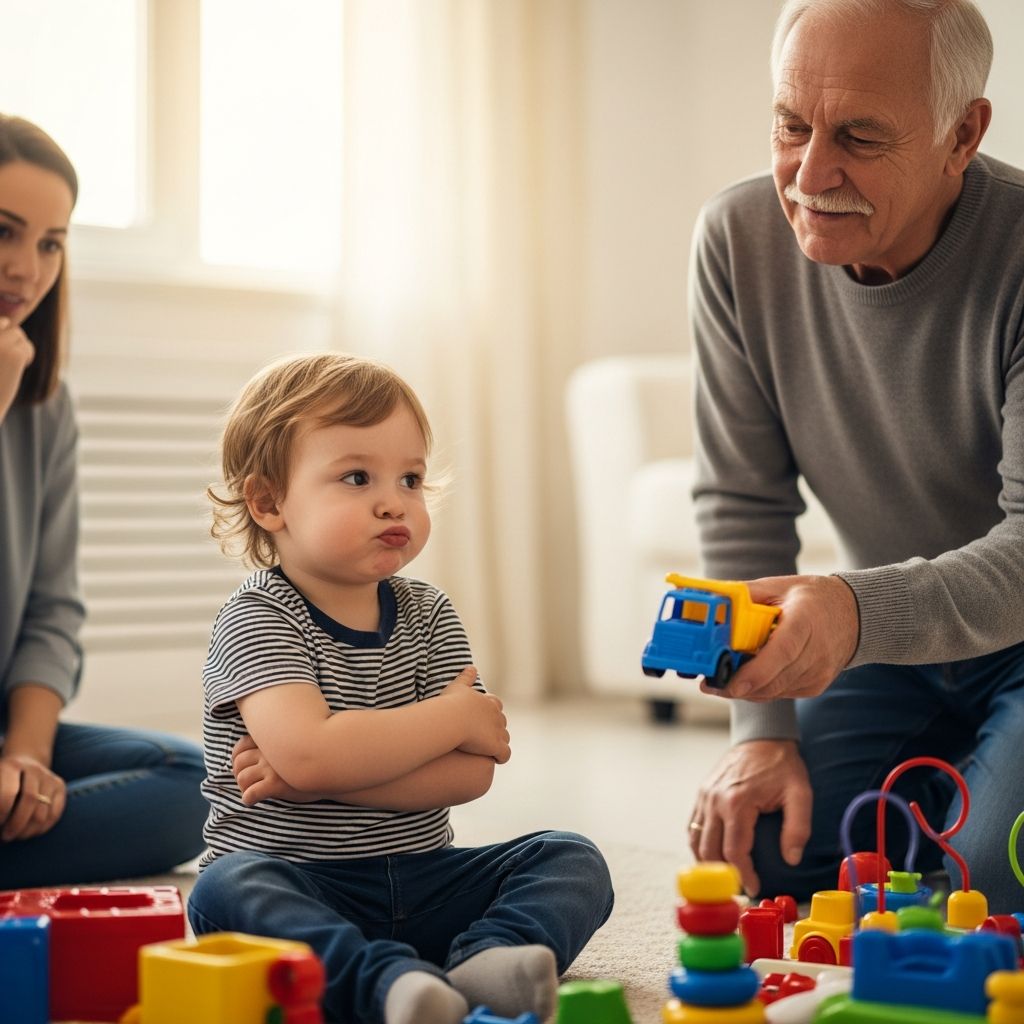
Hearing a small voice announce “I don’t like Grandpa” can feel like a punch in the gut for everyone in the room. Even when the words come from a toddler who barely understands what “like” means, they can stir up guilt, worry, and hurt feelings. This guide explores why young children sometimes reject grandparents, how to respond in the moment, and what you can do over time to support a healthier, more respectful relationship.
Why Toddlers Push People Away
Toddlers are still figuring out that other people have separate thoughts, feelings, and boundaries. In this process, they test their power with language and behavior, including saying they “don’t like” someone or that someone is “mean” or “not nice.” Often, these words reflect frustration, confusion, or a desire for control more than a clear judgment about the person.
Rejection also shows up more often with people who feel emotionally safe. A child who is sure of a grandparent’s love might feel freer to protest, yell, or refuse hugs than with someone less familiar. It can look disrespectful, but at its core, it is often an immature way of expressing strong attachment and strong feelings at the same time.
Common Reasons Kids Say “I Don’t Like Grandpa”
Every family is unique, but there are recurring patterns in how and why conflict shows up between toddlers and grandparents. Looking beneath the words can help you decide what to do next.
Developmental and Emotional Factors
- Control and independence: Toddlers want to decide who touches them, where they sit, and what they do. A grandparent who is very affectionate, directive, or physically close may accidentally trigger pushback.
- Big feelings, small words: Children often use “mean,” “bad,” or “not nice” as catch-all labels for any moment they feel disappointed, scared, or frustrated.
- Stranger or semi-stranger anxiety: If visits are rare, a grandparent may feel unfamiliar, even if the child has met them before. The protest may be more about discomfort with the situation than the person.
Relational and Environmental Triggers
- Different rules in different homes: If Grandpa enforces rules that feel stricter than what the child expects, the child may call him “not nice” or say they don’t want to visit.
- Sensory overload: Loud voices, strong smells, many decorations, pets, or a busy TV can overwhelm a sensitive child, who then blames the closest adult.
- History of conflict with the parent: Tension between you and the grandparent can color the child’s feelings, even if nothing explicitly negative has been said in front of them.
Safety First: When “Not Nice” Might Be a Warning
Most of the time, “I don’t like Grandpa” is about typical toddler emotions. However, children also communicate discomfort and fear in simple language. If a child consistently seems anxious, fearful, or distressed around a grandparent, it is important to take that seriously.
Trust your instincts and look for patterns. Sudden changes in behavior, regression (such as new bedwetting or nightmares), or specific, persistent complaints that something feels “scary” or “hurts” warrant closer attention and, if needed, consultation with a pediatrician or child therapist. Your job is to balance your child’s emotional safety with maintaining family connections, never sacrificing the former for the latter.
Responding in the Moment Without Making Things Worse
When a child blurts out something hurtful in front of a grandparent, everyone looks to the parent to see what happens next. Your reaction sets the tone. Try to model calm, kindness, and clear boundaries at the same time.
Step-by-Step Response
- Stay calm: Take a breath before speaking. Your calm presence tells both your child and the grandparent that the situation is manageable.
- Acknowledge the feeling: Briefly name what your child might be feeling: “You’re upset that Grandpa said no.”
- Set a kindness rule: Add a simple boundary: “We can be upset, but we still speak kindly.”
- Offer better words: Give your child a more accurate phrase to use, such as “I feel mad” or “I don’t want to play right now.”
- Repair with the grandparent: Guide a simple repair moment, like a wave, a smile, or a short apology, without forcing affection.
Correcting the words without shaming the feeling helps your child learn that emotions are valid but hurtful language is not. It also reassures the grandparent that you are attentive to respect and manners, even in early childhood.
Helping Grandparents Handle Hurt Feelings
For a grandparent, especially one who has waited eagerly for grandkids, rejection can feel deeply painful. They may interpret a toddler’s words as a judgment on their worth or as a sign that they are failing in their new role. As the parent in the middle, you can help translate toddler behavior and protect your child while also protecting the relationship.
Private conversations, not corrections in front of the child, are usually more effective. Explain that young children often push away people they are still getting comfortable with, and that consistency and patience matter more than instant closeness. Encourage grandparents to follow your lead on boundaries, especially around physical affection and discipline.
Practical Ways Grandparents Can Respond
- Use neutral, gentle language: Instead of saying “That hurts my feelings,” try “You’re feeling upset. I’ll sit nearby if you change your mind.”
- Offer choices, not pressure: Let the child choose between two activities rather than insisting on hugs or kisses.
- Focus on shared activities: Simple, low-pressure play like coloring, building blocks, or looking at picture books can build connection more quickly than forced conversation.
Building Positive Connections Over Time
Relationships with grandparents do not need to be perfect to be meaningful. What matters most is a pattern of respect, predictability, and warmth. Small, repeated moments of positive interaction gradually replace early resistance with familiarity and trust.
Instead of aiming for instant best-friend status, think of the relationship as something you plant and tend over many seasons. Occasional setbacks—awkward visits, comments like “go away,” or refusals to say hello—are normal parts of that process, not signs that it has failed.
Simple Rituals That Help
- Predictable routines: Start and end visits with the same simple ritual, such as reading a short book together or sharing a snack.
- Shared interests: Match activities to your child’s current obsessions, whether that is trucks, animals, or stickers.
- Low-stakes contact: Short video calls, postcards, or voice messages keep the connection alive between visits without overwhelming the child.
Supporting Your Child’s Autonomy and Boundaries
Wanting a respectful relationship with grandparents should never require teaching a child to ignore discomfort or override their own boundaries. The long-term goal is to raise a child who can say “no” safely and kindly, rather than a child who thinks politeness means never expressing disagreement.
Begin with the basics: your child has a right to decline hugs, sit farther away, or take a break in another room, even with relatives. Your role is to help them exercise that right while still using respectful language and behavior.
Ways to Balance Respect and Autonomy
- Offer alternatives to physical contact: high-fives, waves, or blowing kisses from a distance.
- Teach phrases like “I need space,” “I don’t want to play right now,” or “That is too loud for me.”
- Back up your child’s boundaries in front of others, while also coaching them later on kinder ways to express refusal.
Aligning Parenting and Grandparenting Styles
Conflict between parents and grandparents about rules often spills over onto the child. When expectations differ—about snacks, screen time, bedtimes, or discipline—children may act out or label the stricter adult as “mean” or “not nice.” Quietly working toward more consistent expectations can ease tension for everyone.
You do not need identical rules in every household, but kids do better when the biggest boundaries (safety, respectful talk, physical behavior) stay roughly the same. Specific details (how many cookies, which show to watch) can vary as long as the child understands that “house rules” change from place to place.
Sample Alignment Table
| Area | Parent Approach | Grandparent Approach | Possible Compromise |
|---|---|---|---|
| Snacks | One sweet treat after dinner; mostly healthy snacks. | Frequent cookies and candy during visits. | One special treat per visit plus fruit or yogurt; no candy right before pickup. |
| Screen time | Limited daily, with specific shows only. | TV on in the background most of the day. | Designate a short movie or cartoon block, then switch to music or quiet play. |
| Discipline | Calm, consistent consequences; no yelling. | Raised voice, threats of punishment. | Agree on a few simple consequences (like toy time-outs) and avoid shouting. |
Approaching these topics collaboratively—”What would help our visits go more smoothly?”—keeps the focus on the child’s well-being instead of revisiting old generational conflicts.
When the Relationship Truly Stays Strained
Even with patience and effort, some grandparent–grandchild relationships remain cool or distant. Personality differences, long-standing adult conflicts, health issues, or limited contact can all limit closeness. In these cases, aiming for basic respect and emotional safety may be more realistic than hoping for a deep bond.
It is okay to adjust expectations. A child can grow up healthy and loved even if they are not particularly close to a grandparent, as long as they have other reliable, caring adults in their life and feel safe and supported at home.
Frequently Asked Questions
Should I force my child to hug or kiss Grandpa?
Forcing physical affection generally backfires. It can increase a child’s resistance and send the message that their body is not fully their own when it comes to relatives. Instead, teach and offer alternatives like high-fives, fist bumps, or friendly waves, and make it clear that these still count as polite greetings and goodbyes.
What if Grandpa says “You’re being rude” directly to my toddler?
If a grandparent corrects your child harshly, step in gently but firmly. You might say something like, “We’re working on kind words. I’ll handle it, thank you,” and then guide your child to use better language. Later, you can talk privately with the grandparent about how you want corrections phrased so that they support your parenting style rather than undermine it.
My child behaves perfectly with me but explodes with grandparents. Why?
Children often release their biggest feelings with the adults they feel safest around. They may hold themselves together at home, daycare, or school and then unravel with grandparents, especially if visits involve changes in routine, food, or expectations. Planning for extra downtime, familiar toys, and consistent rules can reduce these flare-ups, but occasional meltdowns are a normal part of early childhood.
What if I secretly agree that my parent isn’t very kind?
Sometimes a child’s dislike touches on truths you have struggled with yourself. While it is important not to burden your child with adult history, it is also important not to dismiss their discomfort. Focus on what you can control: setting clear limits on how your parent interacts with your child, shortening or supervising visits, and seeking professional guidance if you worry about emotional or physical safety.
How can I prepare my child before a visit?
Before seeing grandparents, give a simple preview: who you are visiting, what you might do there, and how long you will stay. Rehearse polite phrases, greeting options, and how to ask for a break if they feel overwhelmed. A short, predictable plan often makes new or tense situations feel safer and more manageable for young children.
Key Takeaways for Parents
- Hurtful toddler comments usually reflect big feelings and limited language, not a final verdict on a grandparent’s worth.
- Your calm response—acknowledging feelings, setting kindness boundaries, and coaching better words—shapes both the child’s skills and the family atmosphere.
- Healthy grandparent relationships grow best when everyone respects the child’s boundaries, works toward consistent rules, and keeps lines of communication open among adults.