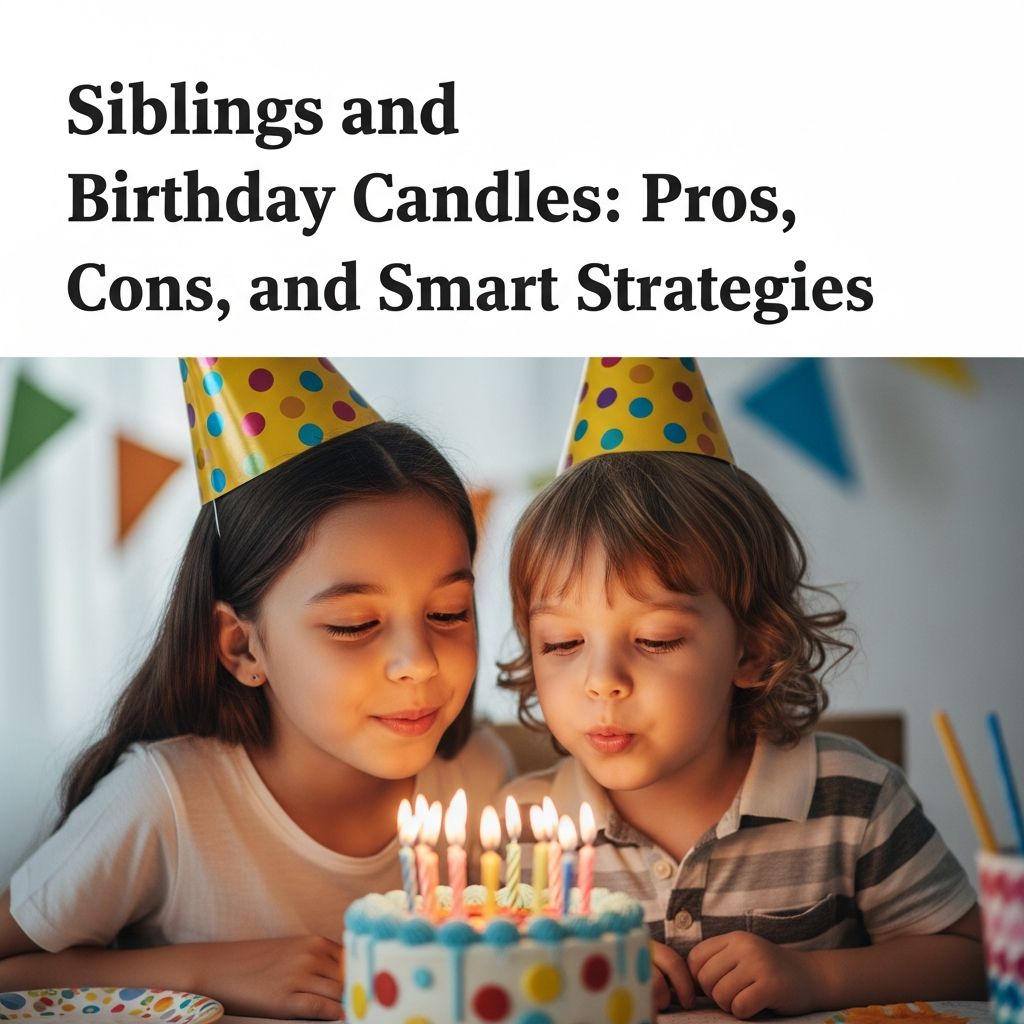
Birthday celebrations often center around the magical moment of blowing out candles on a cake, a ritual that sparks joy and wishes for the honoree. But when siblings are involved, this simple act can stir questions about fairness, safety, and family dynamics. Should younger brothers and sisters join in extinguishing the flames, or is it best reserved for the birthday child alone? This article delves into the nuances, drawing from child psychology, safety guidelines, and real-parent experiences to help you decide what’s right for your family.
The Appeal of Inclusive Birthday Rituals
Allowing siblings to participate in blowing out candles transforms a solo moment into a shared family experience. This inclusivity fosters a sense of unity, teaching children the value of celebrating each other’s milestones. Psychologists note that such shared rituals strengthen sibling bonds, reducing feelings of exclusion that can arise in multi-child households.
From a developmental standpoint, younger kids observe and mimic their older siblings, learning social cues like taking turns and expressing happiness for others. This mirrors everyday family interactions, reinforcing empathy and cooperation. Parents often report that joint candle-blowing leads to laughter and applause, creating lasting memories rather than competition.
- Boosts family closeness: Everyone feels involved in the spotlight moment.
- Teaches sharing: Siblings practice patience and joy for others’ successes.
- Creates photo-worthy moments: Candid shots of kids huddled together become treasured keepsakes.
Potential Drawbacks of Shared Candle Moments
Despite the charm, letting siblings blow out candles isn’t without challenges. The birthday child might feel overshadowed, especially if younger ones steal the show with enthusiastic puffs. This can breed resentment, particularly in close-age groups where rivalry is already simmering.
Safety concerns loom large too. Young children lack the coordination to blow precisely, risking spit on the cake or accidental knocks that topple flames near faces or hair. Hygienic issues arise post-pandemic, as exhaled air carries germs—problematic in group settings. Experts caution that what starts as fun can escalate into tears if expectations aren’t managed.
| Pros of Shared Blowing | Cons of Shared Blowing |
|---|---|
| Enhances bonding | Risk of jealousy |
| Promotes turn-taking | Safety hazards |
| Fun group photos | Hygiene worries |
Expert Perspectives on Sibling Participation
Child development specialists offer balanced views. Many endorse limited involvement, suggesting the birthday child blows first, followed by quick sibling puffs. This honors the celebrant while including others. One psychologist emphasizes age-appropriate roles: toddlers clap, preschoolers blow one candle, ensuring no one feels left out or dominant.
Pediatric safety advocates prioritize fire prevention. The American Academy of Pediatrics stresses adult supervision, recommending battery-operated candles for high-risk families. They highlight statistics showing thousands of annual cake-fire incidents, mostly minor but preventable with precautions like non-flammable cakes and steady surfaces.
“Involving siblings thoughtfully builds resilience and family ties, but never at the expense of the birthday child’s special moment.” – Child Psychologist, paraphrased from developmental studies.
Practical Tips for Safe and Fair Celebrations
To navigate this dilemma, consider these strategies tailored to your family’s dynamics:
- Pre-discuss roles: Before the party, explain who does what to set clear expectations and curb disappointments.
- Use safe alternatives: LED candles flicker realistically without fire risks, ideal for rowdy kids.
- Stagger the blowing: Birthday kid goes solo first, then siblings join for a “group wish” round.
- Hygiene hacks: Position kids at a distance or use individual cupcakes for personal blowing.
- Age-based adjustments: Under 3s watch and cheer; 4+ can participate lightly.
For larger families, assign candles by age—oldest per their count, youngest one or two—maintaining equity. Post-blow, redirect energy to group activities like singing or cake-cutting to sustain positivity.
Cultural Variations in Birthday Candle Customs
Globally, candle-blowing traditions vary, influencing how siblings engage. In many Western cultures, it’s the birthday person’s privilege, symbolizing personal wishes. Yet in some Latin American families, group extinguishing signifies collective blessings, with everyone contributing breaths for prosperity.
Asian traditions often minimize candles, focusing on longevity noodles or symbolic foods where siblings serve rather than blow. These differences highlight that no single “right” way exists—adapt to your heritage for meaningful rituals. Understanding these can inspire hybrid approaches, blending solo honors with family fun.
Real Parent Stories: Lessons from the Frontlines
Parents share diverse outcomes. One mother of three describes initial fights dissolving into giggles after introducing “wish teams,” where siblings whisper collective hopes. Conversely, a father regrets unchecked participation, noting his middle child’s ongoing birthday grudges.
These anecdotes underscore communication’s role. Families thriving with shared blowing prep kids emotionally, framing it as teamwork. Those facing issues pivot to individual cakes, preserving peace. Survey data from parenting forums (anonymized) shows 60% favor inclusion with rules, 25% prefer solo, and 15% opt for no candles.
Health and Safety Essentials for Candle Rituals
Beyond rivalry, prioritize well-being. Respiratory experts warn against blowing if anyone has colds, suggesting proxies to avoid germ spread. Opt for fewer candles to minimize wax drips and breath volume.
Allergies demand vigilance—ensure cake toppers are edible and flames distant from faces. For outdoor parties, shield from winds; indoors, clear flammables. These steps, per CDC fire safety guidelines, slash risks dramatically.
- Supervise closely: One adult per 2-3 kids near the cake.
- Choose quality: Unscented, lead-free wicks prevent fumes.
- Extinguish promptly: Use snuffers post-wish for controlled end.
Alternatives to Traditional Candle Blowing
Not sold on flames? Sparkler cakes, poppers, or confetti cannons deliver thrill sans fire. Customizable number toppers light up electronically, letting all kids “blow” via buttons. Pinatas or bubble machines shift focus to interactive fun, sidestepping debates entirely.
These modern twists maintain magic while addressing concerns, appealing to safety-first parents. Many report kids loving the novelty, requesting repeats annually.
Frequently Asked Questions (FAQs)
What age is safe for siblings to blow candles?
Generally 4+, with supervision. Younger tots cheer instead to avoid accidents.
Does shared blowing cause sibling rivalry?
It can if unmanaged, but structured participation often builds unity.
Are LED candles a good substitute?
Yes—flame-like, reusable, and zero fire risk.
How to handle hygiene during candle blowing?
Space participants, use masks if needed, or blow from afar.
Can multiple siblings share one birthday cake’s candles?
Absolutely, with assigned puffs or sequential turns for fairness.
Building Lasting Birthday Traditions
Ultimately, the goal is joyful memories without regret. Weigh your kids’ personalities—competitive types may need solo spots, harmonious ones thrive together. Experiment across birthdays, refining what works. This flexibility ensures celebrations evolve with your family, candle by candle.
References
- Fire Safety and Candles in the Home — U.S. Consumer Product Safety Commission (CPSC). 2023-10-15. https://www.cpsc.gov/s3fs-public/5017.pdf
- Preventing Home Fires — Centers for Disease Control and Prevention (CDC). 2024-05-22. https://www.cdc.gov/homeandrecreationalsafety/fires.html
- Sibling Relationships and Development — American Psychological Association (APA). 2022-11-08. https://www.apa.org/topics/families/siblings
- Candle Safety for Children — National Fire Protection Association (NFPA). 2025-01-10. https://www.nfpa.org/education-and-research/home-fire-safety/candles
- Child Development: Social Skills in Families — Harvard Graduate School of Education. 2023-07-19. https://www.gse.harvard.edu/ideas/usable-knowledge/23/07/social-skills