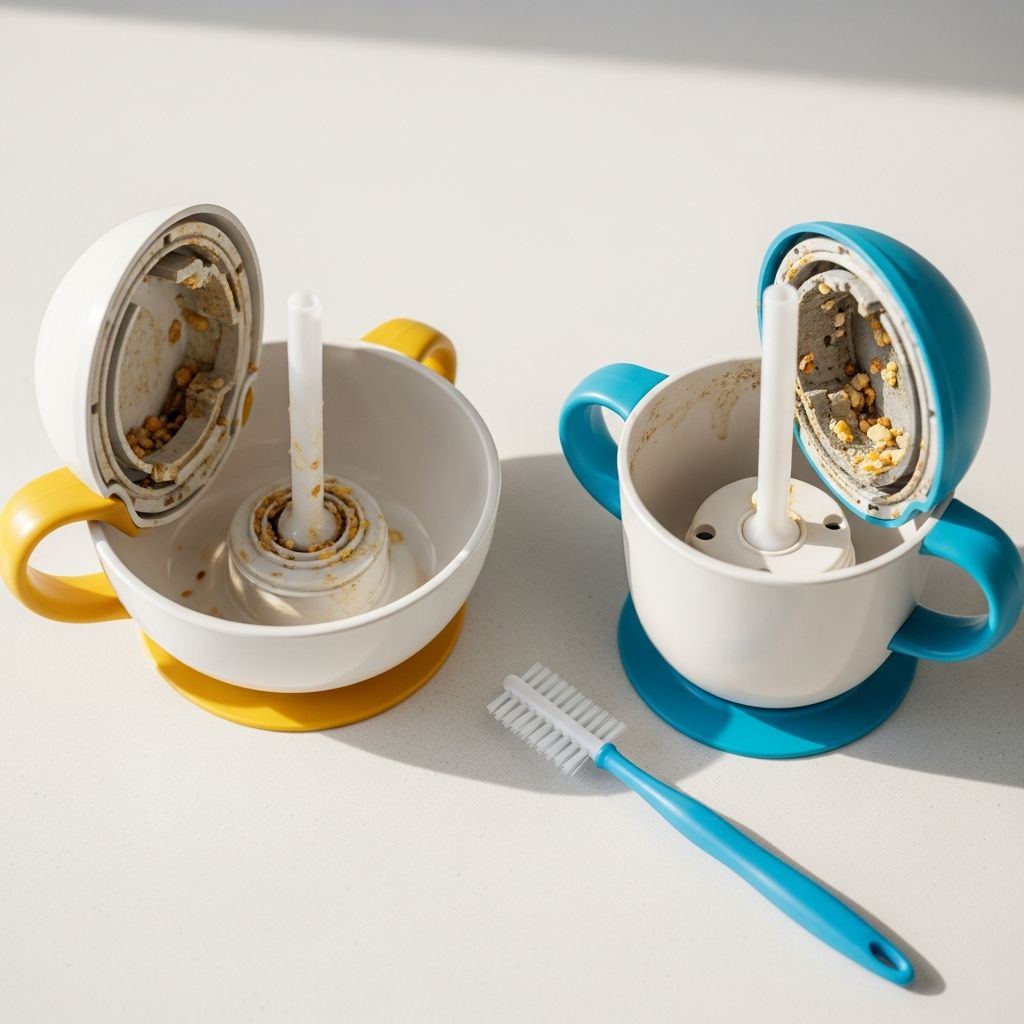
Colorful cereal bowls and cups with built-in straws look like the perfect toddler solution: less mess, more fun, and every last drop of milk or juice happily slurped up. Yet behind the cute designs and convenience, these products can create hygiene issues, encourage unhealthy habits, and cause subtle developmental problems that many parents never consider.
This article explores the main problems with toddler cereal bowls and cups with built-in straws, why they are not as harmless as they seem, and what safer alternatives parents can choose instead. It also includes practical tips, a quick comparison table, and a helpful FAQ section for busy caregivers.
What Are Built-In Straw Bowls and Cups?
Toddler cereal bowls and cups with built-in straws are feeding containers designed with a rigid or flexible straw molded directly into the side or bottom of the bowl or cup. The straw typically reaches the lowest part of the container, allowing a child to drink every last bit of liquid without tipping.
These products are aggressively marketed to parents of toddlers and preschoolers on the promise of fewer spills, easier self-feeding, and more independence at mealtimes. They are often brightly colored, branded with popular characters, and sold as “kid-friendly” upgrades to ordinary bowls and cups.
- Common uses include cereal milk, soup broth, smoothies, flavored milk, and juice.
- They are often made from plastic and advertised as BPA-free, dishwasher-safe, and “perfect for little hands.”
Why Parents Find These Products So Appealing
On the surface, the appeal is obvious: toddlers are notoriously messy, and any product promising less spillage sounds like a lifesaver. Built-in straws seem to offer a neat compromise between open cups and sippy cups, especially when children are in the early stages of independence.
Parents also appreciate the idea that nothing is wasted. The straw reaching the bottom of the bowl or cup allows kids to drink all the milk or liquid, which feels thrifty and satisfying. For a rushed caregiver, a child who sits and happily slurps through a straw looks like an easy win.
- Perceived benefits: fewer spills, faster clean-up, and better toddler cooperation at meals.
- Emotional benefits: parents feel like they are giving kids a fun, child-centered tool that makes eating enjoyable.
Hygiene and Cleaning Concerns
One of the biggest hidden problems with built-in straw bowls and cups is hygiene. The very design that makes them convenient also makes them difficult to clean thoroughly, especially when thick liquids like milk or smoothies are involved.
Unlike a removable straw that can be taken apart, scrubbed, or replaced, a built-in straw is often a narrow, fixed channel. This can trap tiny amounts of liquid, cereal residue, or sugar along its entire length.
- Milk, juice, and soup may dry inside the straw, forming a sticky film that is hard to see but easy for bacteria to grow on.
- Even dishwashers may not fully flush out the entire straw, especially if the water jets do not reach all angles.
Over time, this buildup can create unpleasant odors, discoloration, and potentially unsafe microbial growth. Because toddlers often chew on and mouth the straw, they are exposed directly to whatever is growing or clinging inside.
Mold and Bacteria Risks
Trapped moisture in an enclosed plastic straw is the ideal environment for mold and bacteria. Tiny pockets of liquid may sit in the low points of the straw, especially where bends and curves make drainage difficult.
Parents might assume a quick rinse or a run through the dishwasher is enough, but many designs do not allow for visual inspection of the inside of the straw. This means mold or residue can remain hidden for weeks or months.
- Black or green spots, sour smells, or cloudy film are clear warning signs that bacteria or mold may be present.
- Toddlers with developing immune systems are especially vulnerable to contaminated straws.
Even when the external parts of the bowl or cup look clean, the unseen interior of the straw can remain a long-term hygiene hazard, especially with repeated exposure to milk, juice, or sugary drinks.
Encouraging Excess Sugar and Empty Calories
Another subtle problem with built-in straw bowls and cups is how they encourage children to drink every last drop of sweetened liquid. This can lead to more sugar intake than a child actually needs or would consume if they were drinking from a regular cup.
Toddlers naturally enjoy sweet flavors, and the straw turns finishing the liquid into a game. The sucking action can make it feel like a treat, even when the child might otherwise be full.
- Cereal milk, flavored milk, juice, and sweetened drinks often collect at the bottom of the bowl or cup in a highly concentrated form.
- The straw design encourages children to consume all of that concentrated sweetness, increasing sugar and calorie intake.
Over time, this habit can normalize the expectation that every meal ends with sweetened liquid, making it harder for parents to transition children to water, plain milk, or less sugary options.
Impact on Dental Health
Extended contact between sugary liquids and toddlers’ teeth is a well-known contributor to early childhood tooth decay. Built-in straw bowls and cups can unintentionally prolong this contact by making it easy for children to sip slowly over a long period.
Rather than finishing a drink quickly and moving on, toddlers may carry the bowl or cup around, taking small sips of sugary liquid through the straw while playing, watching TV, or walking around the house.
- Frequent, ongoing exposure to sugar and acid from drinks can weaken tooth enamel and feed cavity-causing bacteria.
- Parents may underestimate how much a child is actually drinking when intake is spread out in tiny, frequent sips.
While any sugary drink can be problematic, the design of built-in straw containers makes “grazing” on drinks easier and more habitual for young children.
Effects on Oral Motor and Feeding Development
Toddlers need practice with a variety of oral motor skills: chewing, swallowing, sipping from open cups, and managing different food textures. When bowls and cups with built-in straws dominate mealtimes, children may miss important opportunities to develop these skills.
Straw drinking itself is not inherently bad; it can be an appropriate skill for some ages. The problem arises when straw use replaces other forms of drinking and eating, especially open-cup practice and proper chewing.
- Over-reliance on straws can delay a child’s comfort and coordination with open cups.
- Children may learn to rely on sucking rather than chewing and swallowing textures properly, especially if meals often end with liquid “fillers.”
Occupational and speech therapists often recommend balancing straw use with regular open-cup practice and encouraging children to eat, not drink, most of their calories. Built-in straw bowls and cups can unintentionally skew this balance.
Behavioral and Mealtime Challenges
Built-in straw containers can also influence behavior at the table. The novelty of the straw and the fun of slurping can distract from actual eating, turning every bowl or cup into an entertainment device rather than a simple feeding tool.
Some toddlers become so attached to their special straw bowl or cup that they refuse to drink from anything else. This can create power struggles when parents try to transition away from the product or offer water in a regular cup.
- Children may demand specific bowls or cups and meltdown if they are unavailable or dirty.
- Parents may find it harder to introduce healthier habits once the straw novelty is firmly established.
This dependence can prolong mealtime battles and add unnecessary stress, particularly when caregivers are already juggling busy schedules and picky eating.
Choking and Safety Considerations
While not all built-in straw products are unsafe, some designs can introduce small but real safety concerns. Straws may become loose, crack, or detach over time, creating potential choking hazards if small fragments break off.
In addition, toddlers may chew aggressively on the straw, especially while teething. This can weaken the material, roughen the edges, or create tiny pieces that could be swallowed or inhaled.
- Damaged or brittle plastic can scratch the lips, gums, or inside of the mouth.
- Children prone to mouthing or chewing on objects may be at higher risk when repeatedly using a single built-in straw over many months.
Because the straw is integral to the product, it may not be easily replaced, leading parents to continue using a worn or compromised item rather than discarding the entire bowl or cup.
Environmental and Cost Downsides
Most toddler bowls and cups with built-in straws are made from plastic. When the straw becomes impossible to clean, discolored, or damaged, the entire unit often gets discarded, contributing to plastic waste.
Unlike simple bowls or cups that can last for many years, these specialized products may have a shorter usable life span because a single, non-removable component becomes unusable.
- Families may end up buying multiple sets as children outgrow characters or as products wear out.
- Over time, this can be more expensive than investing in a small number of durable, basic feeding items.
From both a budget and environmental standpoint, less specialized, more easily recyclable options tend to be a better long-term choice.
Comparison: Built-In Straw Bowls vs. Safer Alternatives
The table below contrasts common toddler feeding options, showing why built-in straw bowls and cups are often less ideal than simpler tools.
| Feeding Option | Main Advantages | Key Drawbacks | Best Use Case |
|---|---|---|---|
| Bowl or cup with built-in straw | Fun for kids; may reduce immediate spills; helps finish all liquid | Hard to clean; mold risk; encourages excess sugary intake; may hinder open-cup skill | Occasional use in controlled settings, not daily routine |
| Regular open cup | Supports oral motor development; easy to clean; encourages mindful drinking | More spills early on; requires supervision and practice | Daily meals and snacks at home with caregiver nearby |
| Bowl with no straw | Simple design; fewer crevices; child learns to drink from bowl edge if needed | Some mess if child tips bowl; may require guidance | Cereal, soups, and snacks at the table |
| Cup with removable straw | Straw can be taken apart and cleaned or replaced; more hygienic than built-in | Still encourages frequent sipping; parts can get lost | Occasional use, especially when traveling |
| Open-top trainer cup | Bridges gap between sippy and regular cups; supports skill building | Requires guidance; may still spill | Transition phase for toddlers learning open-cup control |
Healthier and Safer Alternatives
Parents do not need specialized built-in straw bowls or cups for children to eat well, enjoy meals, or avoid spills. In fact, simpler tools often support better habits and easier clean-up in the long run.
Switching to more straightforward feeding gear helps children develop strong, age-appropriate skills while keeping hygiene and safety easier to manage.
- Use small, sturdy bowls without straws for cereal and soup, paired with a separate cup of milk or water.
- Offer water or plain milk in an open cup or a simple trainer cup, reserving juice or sweetened drinks for rare occasions.
When a straw is truly needed, choose cups with removable straws that can be disassembled and scrubbed, and make a habit of checking inside straws for residue or discoloration.
Practical Tips for Parents Transitioning Away from Built-In Straws
If a toddler is already attached to a bowl or cup with a built-in straw, sudden removal can trigger resistance. A gradual, low-pressure transition tends to work best for both children and caregivers.
Start by reducing how often the straw bowl or cup appears, and introduce alternative options in fun, positive ways so the child does not feel punished or deprived.
- Rotate: Offer the built-in straw product only a few times a week while using regular bowls and cups the rest of the time.
- Make it special: Reserve the straw item for non-sugary drinks like water, while serving milk and juice in regular cups.
- Let kids choose: Provide two safe cup options and allow the toddler to select, giving them a sense of control.
- Model behavior: Drink from regular cups yourself and casually point out how the whole family uses simple dishes.
Over time, the novelty of the straw design often fades, especially when children gain confidence with open cups and enjoy being treated “like a big kid.”
How to Use Existing Built-In Straw Products More Safely
Some families may choose to keep the straw bowls or cups they already own but use them more cautiously. In that case, improved cleaning and thoughtful rules around use are essential.
Parents can take extra steps to minimize hygiene and health concerns while gradually moving towards better long-term habits.
- Rinse immediately after use, especially after milk or juice, to prevent dried-on residue in the straw.
- Use a thin straw brush if accessible, or run hot soapy water through the straw multiple times to flush hidden buildup.
- Avoid letting drinks sit for long periods; discard leftovers promptly instead of allowing repeated sipping throughout the day.
- Inspect regularly for discoloration, cracks, or odors, and discard the item if the straw cannot be cleaned or appears damaged.
Even with these precautions, it is wise to treat these products as short-term tools rather than long-term staples in a toddler’s feeding routine.
Key Takeaways for Busy Parents
Parents are frequently marketed solutions that promise convenience but come with hidden trade-offs. Cereal bowls and cups with built-in straws are a clear example: what appears to be a mess-saving innovation can carry hygiene, health, and developmental downsides.
Focusing on simple, well-cleaned, and developmentally supportive feeding tools usually serves children better than relying on novelty products. With a bit of patience and consistent practice, toddlers can learn to handle regular bowls and cups safely and confidently.
- Simple does not mean outdated; basic bowls and open cups are powerful tools for healthy eating and skill building.
- Reducing dependence on built-in straws helps protect teeth, limit sugar, and keep feeding equipment clean.
FAQs About Toddler Cereal Bowls and Cups with Built-In Straws
1. Are built-in straw bowls and cups always unsafe?
They are not automatically unsafe, but they carry higher risks than many parents realize. The main concerns are hygiene challenges, mold or bacteria buildup inside the straw, and the way they encourage ongoing sipping of sweetened liquids.
2. Can I use these products if I only serve water?
Using built-in straw bowls or cups exclusively for water reduces sugar and tooth-decay risks, but hygiene concerns remain. Water can still leave mineral deposits or residue, so regular deep cleaning and inspection are still important.
3. How often should I replace a bowl or cup with a built-in straw?
There is no fixed timeline, but any sign of discoloration, mold, lingering odor, or visible damage means the product should be discarded. Because the straw cannot usually be removed or fully inspected, it is better to err on the side of caution.
4. What is a good age to move my toddler to an open cup?
Many children can begin practicing with small amounts of liquid in an open cup sometime in the second year of life, under close supervision. Short, daily practice sessions often lead to rapid improvement in control and confidence.
5. Are removable straw cups a better option?
Cups with removable straws are generally easier to clean and inspect, making them a safer choice than built-in straw designs. Still, they should be used thoughtfully, not as a constant source of sugary drinks, and balanced with regular open-cup practice.
6. My child refuses any cup without a straw. What can I do?
Transition slowly by offering tiny amounts of a favorite drink in an open cup while still allowing straw use at other times. Praise any small success, keep practice sessions short, and avoid turning the change into a battle of wills.
7. Are these products okay for travel or special occasions?
Some families choose to reserve built-in straw bowls or cups for travel, eating in the car, or rare outings where spills are especially inconvenient. Occasional, time-limited use is less problematic than daily reliance, especially if cleaning is done promptly afterward.