Allergy skin testing helps identify specific triggers causing reactions in children, such as respiratory issues, skin rashes, or food sensitivities. These tests expose the skin to small amounts of allergens to observe reactions, aiding doctors in creating tailored management plans.
Why Skin Tests Matter for Kids’ Health
Children often experience unexplained symptoms like sneezing, itching, or digestive upset due to allergies. Skin tests provide quick, reliable insights into IgE-mediated sensitivities, confirming if environmental factors like pollen, dust mites, pet dander, or foods are culprits. Unlike blood tests, skin tests offer immediate visual results, making them ideal for pediatric diagnostics.
Early detection prevents complications such as asthma exacerbations or anaphylaxis. For instance, confirming a peanut allergy allows for strict avoidance and epinephrine auto-injector prescriptions. Parents benefit from clear results that guide lifestyle adjustments and immunotherapy options.
Types of Allergy Skin Tests Used in Pediatrics
Several skin test variations exist, each suited to different allergens and sensitivity levels. Understanding these helps parents prepare effectively.
- Skin Prick Test (SPT): The most common first-line method, ideal for airborne and food allergens.
- Intradermal Test: More sensitive for detecting drug or insect venom allergies when SPT is inconclusive.
- Patch Test: Targets delayed hypersensitivity reactions, like contact dermatitis from metals or fragrances.
Selection depends on the child’s symptoms, age, and skin condition.
Skin Prick Testing: The Go-To Diagnostic Tool
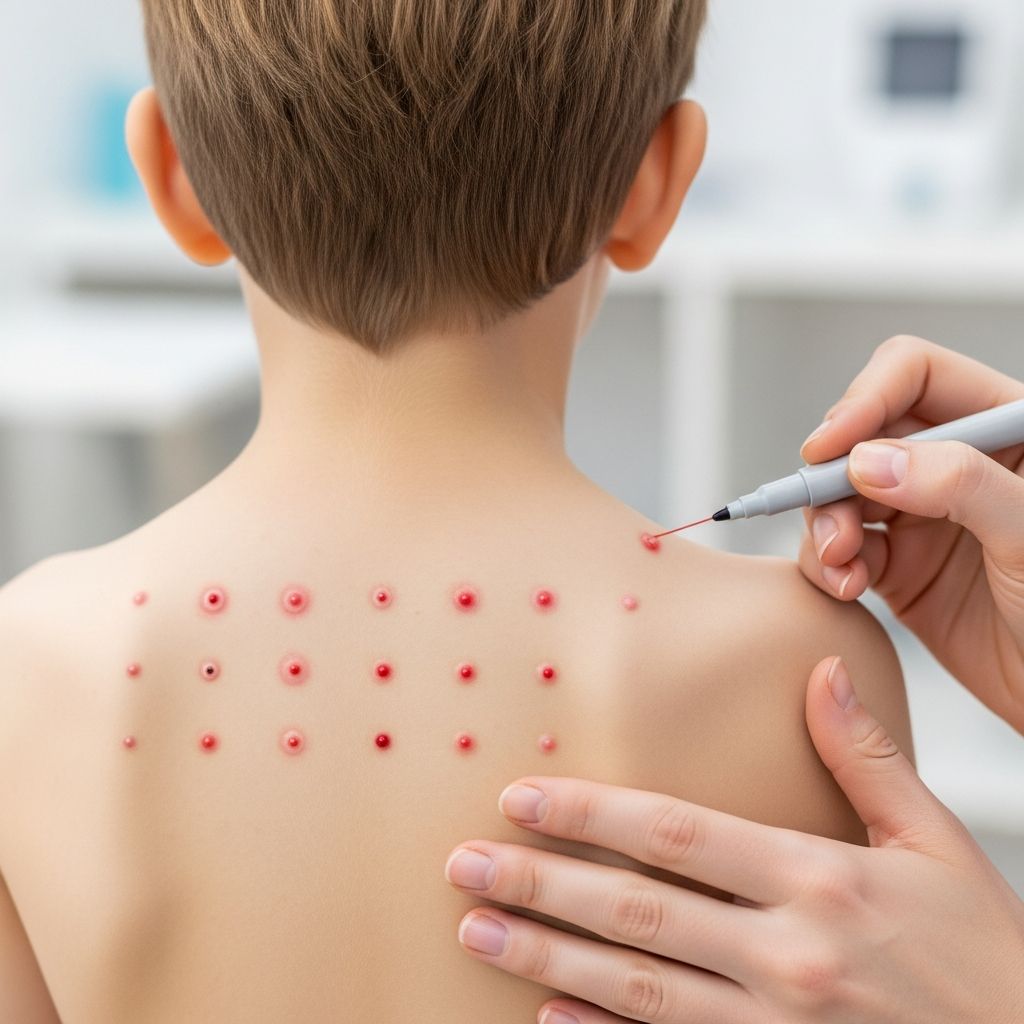
In skin prick testing, a drop of allergen extract is placed on the forearm or back, then pricked with a lancet to introduce it into the epidermis. This triggers mast cell degranulation if IgE antibodies are present, forming a wheal-and-flare reaction within 15-20 minutes.
Procedure details include marking test sites, applying positive (histamine) and negative (saline) controls, and using disposable lancets to avoid contamination. A wheal of 3mm or larger indicates positivity. This test is safe for most children over six months, with minimal discomfort akin to a mosquito bite.
| Reaction Type | Wheal Diameter | Interpretation |
|---|---|---|
| Negative | <3mm | No allergy detected |
| Positive | ≥3mm | Possible sensitization |
| Strong Positive | >8mm | High likelihood of clinical allergy |
Histamine ensures skin reactivity, while saline rules out dermographism (skin writing from pressure).
Intradermal Allergy Injection Testing
When skin prick results are equivocal, intradermal testing injects diluted allergens into the dermis using a fine needle. This amplifies sensitivity for allergens like penicillin or bee venom.
The process involves two stages: initial weak dilutions followed by stronger ones if negative. Reactions are monitored for 15-20 minutes per round, with the entire session lasting 30-90 minutes. It’s slightly more uncomfortable but remains tolerable for children.
Advantages include higher detection rates for subtle allergies; risks involve rare systemic reactions, necessitating on-site emergency readiness.
Patch Testing for Contact Allergies
Patch tests diagnose type IV hypersensitivities, common in eczema-prone kids. Allergens in chambers are taped to the back for 48 hours, then assessed at days 2, 4, and sometimes 7 for redness or vesicles.
This method suits nickel, rubber, or preservative sensitivities, guiding avoidance of irritants in clothing or cosmetics. Children must avoid wetting the area and heavy sweating during wear.
Preparing Your Child for a Skin Test Appointment
Preparation ensures accurate results and comfort. Stop antihistamines 5-7 days prior, as they suppress wheals; consult on other medications like tricyclic antidepressants.
- Schedule morning appointments to minimize fussiness.
- Explain the process simply: “It’s like tiny scratches that show if something bothers your body.”
- Bring distractions like tablets or books; tests last under an hour.
- Ensure clean, lotion-free skin; avoid testing on active rashes.
For infants, back testing may be preferred over arms for better compliance.
Step-by-Step Walkthrough of a Typical Test Day
- Arrival and History Review: Doctor discusses symptoms and family allergy history.
- Skin Prep: Cleanse and mark sites with a pen.
- Application: Drops placed, pricked/injected per type.
- Wait Period: 15-20 minutes observation; child can relax.
- Measurement: Ruler assesses wheals; photos taken if needed.
- Discussion: Immediate preliminary results and next steps.
Post-test, apply soothing cream if itchy; avoid scratching.
Interpreting Results: What Wheals and Reactions Mean
Positive reactions correlate with clinical history for diagnosis. A large wheal to milk doesn’t always mean intolerance if no symptoms occur. False positives from irritation or negatives from medications are possible.
Results inform avoidance strategies, medications, or oral challenges. Repeat testing may be needed as allergies evolve in children.
Risks, Side Effects, and Safety Measures
Skin tests are low-risk; local itching or redness resolves quickly. Systemic reactions (<1%) prompt epinephrine availability.
- Monitor for large local swelling or breathing issues.
- Intradermal carries slightly higher risk due to deeper delivery.
- Contraindicated in severe eczema, uncontrolled asthma, or pregnancy (rare in kids).
Trained allergists perform tests in equipped clinics.
When to Consider Skin Testing for Your Child
Indicated for persistent rhinitis, wheezing, hives, or eczema unresponsive to basics. Not routine for mild hay fever.
Age minimum is typically 6 months; benefits outweigh risks in most cases.
Follow-Up Care and Long-Term Allergy Management
Post-test, implement allergen avoidance: HEPA filters for dust, pet-free zones. Immunotherapy may desensitize over years.
Regular follow-ups track changes; some childhood allergies resolve.
Frequently Asked Questions (FAQs)
Is skin testing painful for young children?
Minimal discomfort, like a light scratch; most kids tolerate it well with distraction.
How accurate are these tests?
High specificity when combined with history; 80-95% reliable for IgE allergies.
Can I give my child antihistamines before the test?
No, stop 5-7 days prior for valid results.
What if the test is negative but symptoms persist?
May need blood tests or challenges; consult specialist.
Are results immediate?
Yes for prick/intradermal; patch requires days.
References
- The skin prick test – European standards — European Academy of Allergy and Clinical Immunology. 2013-02-21. https://pmc.ncbi.nlm.nih.gov/articles/PMC3565910/
- Intradermal Allergy Testing: What It Is, Procedure & What to Expect — AllerVie Health. 2023-01-15. https://www.allervie.com/service/intradermal-allergy-testing/
- Testing for Tuberculosis: Skin Test — Centers for Disease Control and Prevention. 2024-05-10. https://www.cdc.gov/tb/testing/skin-test.html
- Skin prick testing – for the diagnosis of allergic disease — Australasian Society of Clinical Immunology and Allergy. 2016-03-01. https://www.allergy.org.au/images/stories/pospapers/ASCIA_SPT_Manual_March_2016.pdf
- Allergy Skin Test: Purpose, Procedure & Results — Cleveland Clinic. 2024-08-20. https://my.clevelandclinic.org/health/diagnostics/24912-allergy-skin-test
- Skin Prick Tests — Food Allergy Research & Education. 2023-11-05. https://www.foodallergy.org/resources/skin-prick-tests