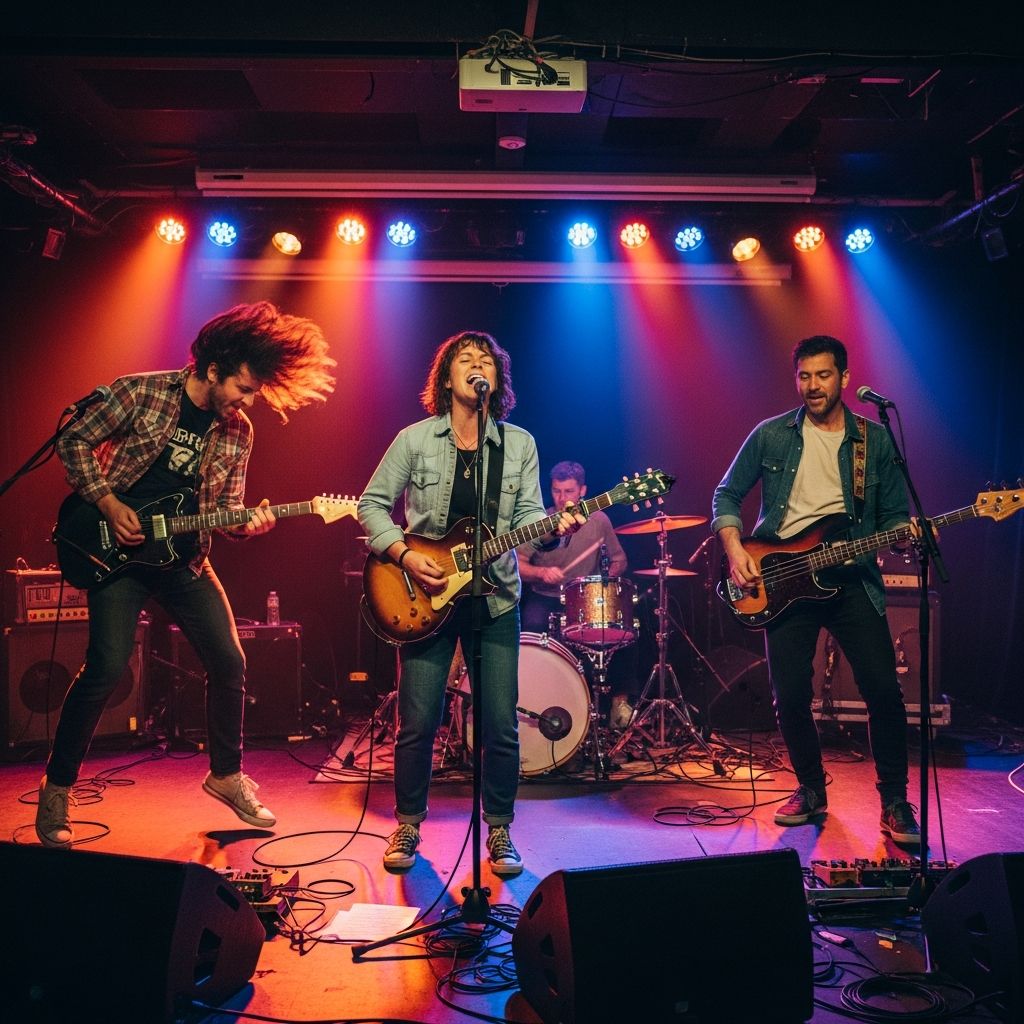
For many millennials, seeing The Postal Service and Death Cab for Cutie perform their landmark albums in full is not just another concert—it feels like stepping into a shared diary that an entire generation accidentally wrote together.
These reunion tours arrive at a moment when the people who first fell in love with Give Up and Transatlanticism are juggling careers, caretaking, bills, and burnout. The shows become a rare space where past and present briefly align, and where the sound of early-2000s indie rock offers an unexpected kind of emotional check-in.
From Bedroom Project to Generation-Defining Albums
The power of these concerts makes more sense when you remember how unlikely these records were in the first place. The Postal Service began as a long-distance collaboration between Ben Gibbard and Jimmy Tamborello, trading digital audio tapes through the mail and crafting what sounded like intimate bedroom confessions over glitchy, shimmering electronics.
Their 2003 album Give Up slowly became a word-of-mouth phenomenon, eventually selling over a million copies and helping shape the sound of 2000s indie pop. That same year, Gibbard’s main band, Death Cab for Cutie, released Transatlanticism, a sprawling, melancholic record about distance and longing that pushed them toward mainstream recognition.
| Album | Artist | Released | Key Themes |
|---|---|---|---|
| Give Up | The Postal Service | 2003 | Digital distance, shy optimism, young adulthood |
| Transatlanticism | Death Cab for Cutie | 2003 | Longing, emotional distance, slow-burning heartbreak |
Two decades later, both albums are touring again in full for their 20th anniversaries, giving fans a chance to inhabit these records front to back, the way they once did with scratched CDs and burned playlists.
Why These Songs Became the Soundtrack of a Generation
Millennial nostalgia for these bands is not just about catchy hooks; it’s about timing, technology, and the emotional atmosphere of the early 2000s.
The Early-Internet Emotional Aesthetic
Both records arrived just as the internet was reshaping how young people met, broke up, and defined themselves. Social media was primitive, message boards were booming, and long-distance relationships became more common as people moved for school and work. The themes of distance—geographical, emotional, and digital—made these albums feel uncannily on point.
- Online and offline blur: Lyrics about missed calls, emails, and faraway cities mirrored the awkward intimacy of early online life.
- Quiet vulnerability: Instead of rock-star bravado, these songs radiated shyness, self-doubt, and tenderness, which resonated with listeners navigating uncertain futures.
- DIY romance: The story of The Postal Service mailing tapes back and forth felt like the musical equivalent of long-distance relationships built through late-night chats and grainy webcams.
Millennials Growing Up with Indie Rock
Researchers describe millennials as the first cohort to reach adulthood alongside widespread internet access and rapid digital change. Indie records like Give Up and Transatlanticism became emotional anchors during years defined by:
- Post-9/11 political anxiety and uncertainty.
- Economic instability, including the 2008 financial crisis hitting just as many were finishing school or starting careers.
- Constant connectivity that never quite translated into feeling understood.
Within that context, the aching patience of Transatlanticism and the hopeful loneliness of Give Up felt less like escapism and more like documentation.
What It Feels Like to See These Albums Live at Midlife
Fast-forward twenty years. The same people who looped these albums in dorm rooms and first apartments now show up to arena and festival dates with aging band T-shirts and someone waiting for them at home. The emotional charge of these shows comes from that collision of eras.
The Setlist as Time Machine
Because these anniversary tours feature both albums in full, the concert experience mimics pressing play on your past in real time. Each track can trigger a specific memory:
- The friend you drove across three states to visit.
- The first breakup that felt like the end of the world.
- The move to a new city that felt impossibly big and impersonal.
Psychologists note that music from adolescence and early adulthood becomes especially “sticky” in memory and can trigger vivid recollections later in life. That’s why hearing these albums straight through hits differently than a random festival set or shuffled playlist.
Looking Around the Room
Part of the nostalgia isn’t just hearing the songs again—it’s seeing who else is there. The crowd at a Postal Service/Death Cab show in 2023 or 2024 looks like a cross-section of millennial adulthood: people in office-casual clothes, parents tired from bedtime routines, creatives juggling side hustles, all singing along to the same lines they once scrawled on notebook covers.
There’s a quiet comfort in realizing:
- You are not the only one who still knows every word.
- Everyone has their own story attached to these tracks, but you are sharing the same soundtrack.
- Aging does not erase your past selves; it layers them.
From Sad Indie Kids to Grown-Ups with Responsibilities
For many attendees, these concerts are a mirror: proof that life moved on, even if certain songs never left rotation.
The Emotional Upgrade
Hearing the same lyrics in a different life stage can change their meaning. Lines about distance and longing once attached only to crushes or college moves. Now they might resonate with:
- Partners working in different cities.
- Friends scattered across states or continents.
- Parents and children you miss when work stretches too late.
Instead of feeling purely nostalgic, the songs can feel like they’ve grown with you—a rare continuity in a world of rapid change.
The Bands Grew Up Too
There’s another layer of resonance: watching the artists themselves age. Ben Gibbard is no longer the soft-spoken indie frontman playing tiny clubs; he is a veteran songwriter revisiting work that effectively launched him into broader fame. Seeing older versions of the musicians performing this material underlines a simple but grounding truth: everyone in the room, onstage and off, has survived a lot of life.
Nostalgia as Comfort in an Unstable Era
Critics sometimes frame nostalgia as a retreat, but for a generation that has weathered recessions, a pandemic, political polarization, and rising costs of living, revisiting an album can feel less like denial and more like emotional maintenance.
Predictability in an Unpredictable World
When so much of adult life demands constant adaptation, the structure of a beloved record offers stability:
- You know what song is coming next.
- You remember where the quiet moments land.
- You can anticipate the line that will make the crowd collectively inhale.
Research on music and wellbeing indicates that familiar songs can reduce stress, evoke positive memories, and create a sense of continuity in identity. Hearing Give Up and Transatlanticism performed front-to-back functions like revisiting a personal chapter you understand completely, in a time when so little feels predictable.
Shared Catharsis Without Small Talk
Millennials often joke about being too tired or overbooked to maintain friendships the way they once did. A reunion show offers a workaround: you and your old friends—or total strangers—get to experience intense, collective emotion without needing to catch each other up on every life detail.
There is something reassuring in:
- Standing in the dark next to people who also carried these songs through breakups, relocations, and existential spirals.
- Belting out choruses with people you might never speak to.
- Letting the band do the emotional heavy lifting while you process in real time.
The Postal Service, Death Cab, and the Millennial Life Timeline
These albums effectively bookend a key stretch of millennial life. Their initial releases overlapped with college years and early jobs for older millennials; their anniversary tours coincide with midlife assessments of what has and hasn’t gone as planned.
| Life Stage | Approx. Millennial Age | How the Albums Fit |
|---|---|---|
| First release era | Late teens to mid-20s | Soundtrack to moves, degrees, first apartments, intense crushes. |
| Post-2008 recession | 20s–30s | Comfort listens while plans shift; songs gain new economic and emotional weight. |
| 20th anniversary tours | 30s–40s | Full-album shows double as reunions with past selves and with peers in similar life stages. |
What makes these concerts special is not only that the songs hold up musically, but that they map so neatly onto the arc of millennial adulthood—its ambitions, disappointments, and quiet victories.
Why This Nostalgia Feels Different from a Throwback Playlist
Streaming services can assemble early-2000s playlists in seconds, but that is not the same as choosing a night, traveling to a venue, and standing in a crowd as a band plays through a record that shaped your emotional vocabulary.
The Value of Choosing to Show Up
Choosing to attend a reunion show is itself meaningful. It says:
- These songs matter enough to rearrange your life for one night.
- Your past self is worth revisiting, not just cringing at.
- Music still deserves your full attention, not just background play while multitasking.
Collective Memory as Resistance to Forgetting
Algorithmic culture tends to flatten time, shuffling new releases with old singles until everything feels interchangeable. A full-album performance restores sequence and context. It reminds you:
- These songs were designed to live together, in this order.
- Your memories are attached not just to tracks but to transitions, intros, and outros.
- There was a time when listening was an activity, not a backdrop.
Frequently Asked Questions (FAQs)
Why do millennials feel such a strong connection to The Postal Service and Death Cab for Cutie?
Their key albums arrived during formative years for many millennials, reflecting themes of distance, uncertainty, and emotional vulnerability that matched early adulthood in a rapidly changing digital world.
Are these reunion tours only about nostalgia?
Nostalgia is a major draw, but the shows also function as a way to process how listeners’ lives have changed. Hearing the same lyrics at a different life stage often reveals new meanings and emotions.
What makes Give Up and Transatlanticism so influential?
Give Up blended intimate indie songwriting with electronic production, helping normalize synth-driven, emotional pop in the indie world, while Transatlanticism became a widely acclaimed documentation of emotional distance and helped propel Death Cab into mainstream visibility.
How do these albums relate to broader millennial experiences?
They overlap with major transitions in millennial life—university, early jobs, economic shocks, and widespread internet adoption—so they tend to be tightly tied to personal and collective memories.
Is nostalgia at these shows unhealthy escapism?
Research on music and memory suggests that revisiting meaningful songs can support mental wellbeing by reinforcing identity and providing emotional regulation, especially when balanced with engagement in the present.
References
- (This Is) The Dream Of Jimmy and Ben: 10 years of The Postal Service — Drowned in Sound. 2013-02-15. http://drownedinsound.com/in_depth/4141050-this-is-the-dream-of-jimmy-and-ben–10-years-of-the-postal-service
- The Postal Service — Wikipedia (summary of band history; used as a pointer to other primary reporting). Accessed 2024-10-01. https://en.wikipedia.org/wiki/The_Postal_Service
- Sound & Vision: The Unusual Story Behind The Postal Service — KEXP. 2020-04-10. https://kexp.org/read/2020/4/10/sound-vision-unusual-story-behind-postal-service/
- The Making of GIVE UP by The Postal Service — Life of the Record. 2023-04-26. https://lifeoftherecord.com/the-postal-service
- Ben Gibbard on Postal Service, Death Cab, love-hate of L.A. — Los Angeles Times. 2024-05-15. https://www.latimes.com/entertainment-arts/music/story/2024-05-15/ben-gibbard-postal-service-death-cab-for-cutie-just-like-heaven
- Music-evoked autobiographical memories — Berntsen, D. et al., in The Oxford Handbook of Music and the Brain, Oxford University Press. 2019. https://doi.org/10.1093/oxfordhb/9780198804123.013.15
- Music listening, music therapy, and mental disorders: a review — Aalbers, S. et al., Psychomusicology: Music, Mind, and Brain. 2017-09-01. https://doi.org/10.1037/pmu0000186