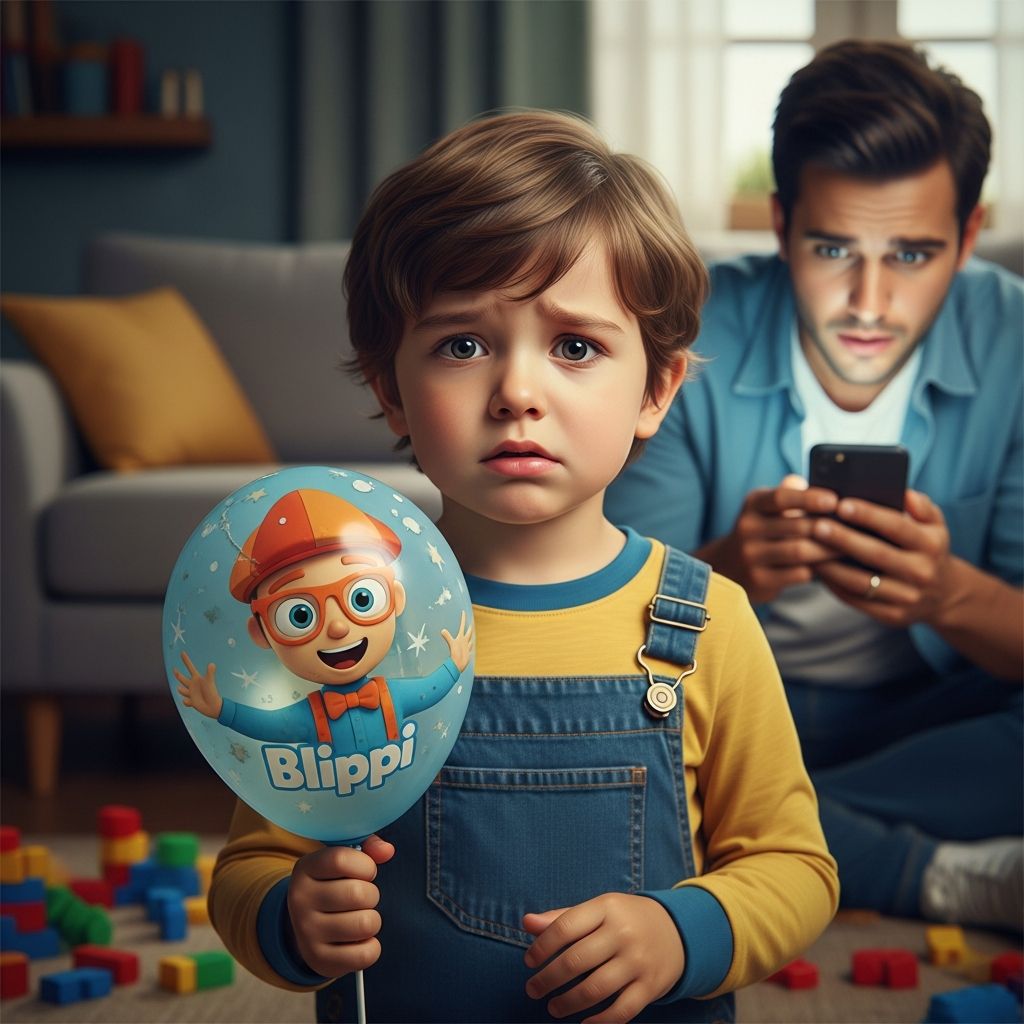
When parents discovered that the beloved children’s character Blippi would be played by a different actor on tour and in some videos, many felt blindsided. Online outrage followed, with accusations of betrayal, bait-and-switch marketing, and concern that kids would be confused or upset. Yet beneath the surface, the controversy reveals something bigger about how families relate to children’s media, how kids form attachments to characters, and what parents expect from the people who entertain their children.
This article looks at why the Blippi switch felt so emotional, what research suggests about how children respond to character changes, and how parents can navigate similar situations with less stress and more perspective.
From One Orange-Hatted Star to a Brand-Managed Character
For many families, Blippi was not just a show but a daily ritual. Stevin John created the character, wrote and produced videos, and embodied the energetic, goofy, question-asking adult who explored garbage trucks, zoos, and museums on YouTube. Over time, the character grew from a one-man project into a full-blown children’s media franchise with tours, licensing, toys, and international distribution.
As that happened, the character increasingly became a brand-managed property rather than a single-performer persona. That shift made an actor change seem nearly inevitable—but for many parents, it still felt deeply personal.
Why the Switch Felt So Personal
- Daily exposure: Many kids watched Blippi every day, so parents heard the same songs and saw the same gestures endlessly. That repetition created the sense that they knew Stevin John.
- In-home intimacy: Unlike TV shows scheduled on networks, YouTube streams directly into bedrooms, kitchens, and tablets in the back seat of the car. The performer feels like an invited guest in the family’s private space.
- Parental gatekeeping: Parents had to actively choose Blippi for their kids, so they often felt an extra layer of responsibility—and ownership—over that choice.
When another actor appeared in the recognizable orange and blue costume, it did not feel like a simple casting decision to many adults. It felt like a relationship had been changed without their consent.
Parasocial Relationships: Why Kids’ Entertainers Feel Like Family
Media researchers use the term parasocial relationship to describe the one-sided emotional bonds people form with media figures—TV hosts, influencers, fictional characters, and even animated figures. The viewer feels like they know the person, but the relationship only goes one way.
Studies show that these bonds emerge early in life. Preschoolers frequently talk about TV characters as if they are friends and may even expect them to behave consistently over time. Children’s attachment to media characters can offer comfort, repetition, and predictability—especially during times of change in real life.
How Parasocial Bonds Affect the Blippi Debate
- Predictability is soothing: Young children thrive on routines and familiar faces. A constant character can feel like a stable friend in a changing world.
- Parents feel protective: When kids are strongly attached to a performer, parents often feel like guardians of that bond, reacting defensively when they perceive a risk of upset.
- Perceived authenticity: Adults often believe that the original performer is the “real” version of the character, which can make any replacement feel fake or deceptive.
However, researchers also note that children’s parasocial relationships can adapt over time, and attachment to a role or character may be more resilient than adults expect.
Do Young Children Notice When a Character’s Actor Changes?
One of the loudest questions in the Blippi controversy was simple: Won’t this confuse kids? Surprisingly, evidence from children’s media suggests that kids may be more flexible than adults assume.
Evidence from Other Kids’ Franchises
Children’s entertainment has a long history of changing actors behind the same character without long-term damage to kids’ enjoyment or understanding:
- Costumed characters: Live mascots like Mickey Mouse or amusement park characters are played by many performers, yet young children usually accept each as the “real” character.
- Animated recasting: Voice actors have changed for characters in long-running series without major drops in young viewers’ attachment.
- Educational programs: Long-running shows such as Sesame Street have changed cast members and even introduced new human hosts while maintaining strong viewer loyalty.
Media psychologists note that children under about age 5 primarily focus on a character’s visual cues, behaviors, and role in the story more than subtle shifts in voice timbre or performance style. As long as key features—clothing, colors, catchphrases, and tone—stay the same, most toddlers and preschoolers will accept a replacement actor without much distress.
| Aspect of the Character | Most Important to Young Kids | Typical Adult Focus |
|---|---|---|
| Visual costume & colors | Very important | Not a major concern |
| Catchphrases & songs | Very important | Moderately important |
| Exact voice and mannerisms | Somewhat important | Very important |
| Actor’s off-screen identity | Mostly irrelevant | Highly salient |
In other words, adults notice almost every difference; children usually notice only changes that affect the story or the character’s reliability.
Why Parents Felt Betrayed Even More Than Their Kids
The intensity of the backlash around the Blippi replacement had as much to do with parents’ expectations as with children’s reactions. Several themes stand out in parents’ complaints.
1. A Sense of Broken Trust
Parents often expect transparency from companies that market directly to children. When a beloved kids’ performer is replaced without clear, front-and-center explanation, many adults interpret it as a breach of trust—especially if they paid for live show tickets or merchandise assuming they would see the original performer.
Consumer protection frameworks emphasize that advertising and ticketing must not be misleading, especially when children are involved. Even if contracts allow substitutions, parents may feel ethically misled if marketing imagery uses one performer while another appears on stage.
2. Emotional Labor and Screen-Time Guilt
Modern parents spend a great deal of mental energy managing screen time, often feeling caught between needing a break and fearing they are making the “wrong” media choices. Professional organizations encourage shared viewing and careful selection of high-quality content. That means parents who landed on Blippi after trial and error often felt that they had done the hard work of vetting one particular performer.
- They invested time in evaluating the show.
- They may have tolerated a style they personally disliked because their child loved it.
- They believed they knew who Stevin John was—both on and off screen.
When the performer changed, it felt to some parents as if their careful decision-making had been casually overridden.
3. The Shadow of Past Controversies
The Blippi brand had already been through public scrutiny when reports surfaced about an earlier gross-out comedy video Stevin John created before becoming a children’s entertainer. Those revelations, amplified by investigative reporting and commentary, led some parents to reassess their comfort level with the performer.
For some families, the actor swap arrived in the context of these prior stories, creating a sense of mounting unease: if the original performer’s past was complicated, and the new performer was not clearly introduced, whom could they trust?
What the Blippi Switch Reveals About the Children’s Media Economy
The controversy also highlights broader trends in the business of kids’ entertainment.
From Creator-Led Channels to Corporate Franchises
Many of the most popular children’s YouTube channels began as small, creator-led projects. Over time, successful channels often become part of larger corporate ecosystems involving licensing, merchandising, and international distribution.
- Scaling requires delegation: One person cannot perform every live show, record every language dub, or appear in every spin-off video worldwide.
- Character ownership: As rights are sold or shared, the character often becomes legally—and practically—separate from the original human performer.
- Brand consistency over personal presence: Companies typically prioritize uniform costumes, colors, and themes over continuity of the specific actor.
Parents may not always be aware of these behind-the-scenes changes, but their effects show up whenever a child’s favorite character is re-cast or reimagined.
Marketing to Families: Lessons from the Backlash
Consumer-oriented regulators and child advocacy groups routinely stress that advertising to families should be clear, honest, and age-appropriate. The backlash around the Blippi change suggests a few practical lessons for companies:
- Be explicit in ticketing and promotional materials when an alternate performer may appear.
- Use language kids can understand if a different person will be “playing” the character.
- Offer refunds or exchanges when expectations are not met, especially for high-cost live experiences.
When families invest emotionally and financially in a character, even technically permissible substitutions can feel unfair if they are not clearly communicated.
Helping Kids (and Parents) Adapt When Favorites Change
For many families, the most practical question is not whether a company made the perfect decision, but how to support children when the face behind a favorite character changes.
Strategies for Talking with Young Kids
Development experts and pediatric organizations encourage open, age-appropriate conversations about media, rather than silently hoping children will not notice changes.
- Use simple explanations: For toddlers and preschoolers, short sentences help: “Blippi is a character. Sometimes different grown-ups put on the costume and play him.”
- Link it to pretend play: Compare the situation to kids taking turns playing the same role in a game: “Sometimes you’re the doctor, sometimes your friend is. Blippi is like that too.”
- Validate feelings: If a child is briefly upset, acknowledge it: “You noticed Blippi looks different. That can feel strange at first.”
- Re-focus on the content: Emphasize that the character is still doing familiar activities—visiting fire trucks, singing songs, or exploring museums.
Managing Our Own Reactions as Adults
Children often take emotional cues from their parents. If adults are furious or loudly critical, kids may become more unsettled than they would otherwise be. A calmer approach does not mean ignoring legitimate concerns; it means separating real issues from symbolic ones.
Parents can ask themselves:
- “Is this mostly about my child’s experience, or about my feelings of being misled?”
- “Can I address the fairness issue with the company while staying reassuring with my kid?”
- “If my child is fine with the new actor, do I want to keep this battle going?”
In some cases, families may decide to step back from a show altogether—and that is valid. In other cases, parents may realize that their child has already accepted the change, and the biggest emotional adjustment is their own.
When Past Behavior of a Kids’ Entertainer Comes to Light
The Blippi discourse also intersected with a broader pattern: parents discovering that the people fronting children’s brands may have complicated adult pasts. Investigations into creators’ earlier content or personal lives often go viral, leaving parents to decide whether to continue supporting a show.
Questions Parents Commonly Ask
- “Does this past behavior make the current content unsafe or inappropriate?”
- “Has the person acknowledged wrongdoing and changed their behavior?”
- “Is my child old enough to understand context, or should I simply switch to something else?”
Experts in child development and media literacy generally suggest focusing on what the child is currently seeing and whether it aligns with the family’s values and the child’s developmental stage. If the content remains educational, age-appropriate, and consistent with professional guidelines, some families choose to continue; others prefer to model strong boundaries by walking away. Both choices can be reasonable, depending on circumstances.
Could the Outrage Lead to Better Children’s Media?
As frustrating as the controversy felt for many families, it also highlighted where children’s media could improve.
Potential Positive Outcomes
- Stronger transparency norms: Companies may become more upfront about when characters are played by multiple performers, especially in live shows and paid experiences.
- Higher accountability for creators: Public discussion about past content can encourage current and future children’s entertainers to maintain clearer boundaries between adult work and kids’ work.
- More media literacy in families: Parents and children who talk openly about what they watch may be better prepared when changes or controversies arise.
Public institutions and pediatric organizations already promote active, reflective media use—choosing high-quality content, watching together when possible, and discussing what children see on screen. The debate around Blippi, while messy, may nudge more families in that direction.
Frequently Asked Questions (FAQs)
Q: Will my toddler be harmed or confused by a new actor playing the same character?
Most young children adjust quickly as long as the character’s costume, colors, and general behavior remain consistent. Research suggests that preschoolers care more about the role the character plays and the predictability of the content than about which adult is inside the costume.
Q: Should I tell my child that there is a different person playing the character?
For very young children, a brief, simple explanation is usually enough: you can say that the character is pretend and that different grown-ups sometimes take turns playing them. If your child does not seem bothered, you may not need a long discussion.
Q: If I feel misled by how a show or tour was advertised, what can I do?
You can contact the organizer or company, explain your expectations, and request clarification, refunds, or accommodations. Consumer protection rules generally require that advertising not be deceptive, especially in family-oriented products and events.
Q: How can I decide whether to keep letting my child watch a creator whose past behavior concerns me?
Focus on what your child is currently seeing: Is the content age-appropriate, safe, and aligned with your family’s values? Consider whether the creator has acknowledged and changed past behavior, and whether continuing to watch helps or undermines the lessons you want to teach about accountability.
Q: What are signs that it might be time to switch shows?
If your child becomes distressed, imitates behavior you find unsafe or disrespectful, or if you no longer feel you can trust the people behind the show, it may be time to choose alternative programs. Many public broadcasters and educational organizations curate age-appropriate content that aligns with evidence-based child development goals.
References
- Advertising and Marketing Basics — U.S. Federal Trade Commission. 2023-03-15. https://www.ftc.gov/business-guidance/resources/advertising-marketing-basics
- Media and Young Minds — American Academy of Pediatrics Council on Communications and Media. Pediatrics, 2016-11-01. https://publications.aap.org/pediatrics/article/138/5/e20162591/60677/Media-and-Young-Minds
- How Kids YouTube Star Blippi Used Copyright Law to Hide His Harlem Shake Poop Video — Vice / Motherboard. 2019-02-14. https://www.vice.com/en/article/how-kids-youtube-star-blippi-used-copyright-law-to-hide-his-harlem-shake-poop-video
- Children’s Relationships with Media Characters — Calvert, S. L. Psychology of Popular Media Culture, American Psychological Association. 2017-01-01. https://psycnet.apa.org/record/2017-04642-005
- Sesame Street and the Reform of Children’s Television — Morrow, R. A. Johns Hopkins University Press. 2008-09-01. https://jhupbooks.press.jhu.edu/title/sesame-street-and-reform-childrens-television