Language shapes perceptions and influences how society views individuals with disabilities. The phrase “special needs” has long been used to describe children and adults requiring additional support, but growing voices in the disability community argue it perpetuates stigma rather than clarity. This article delves into the evolution of this term, its shortcomings, and the push toward more direct, empowering alternatives like “disability.” By understanding these shifts, parents, educators, and allies can foster truly inclusive environments.
The Evolution of Disability Terminology
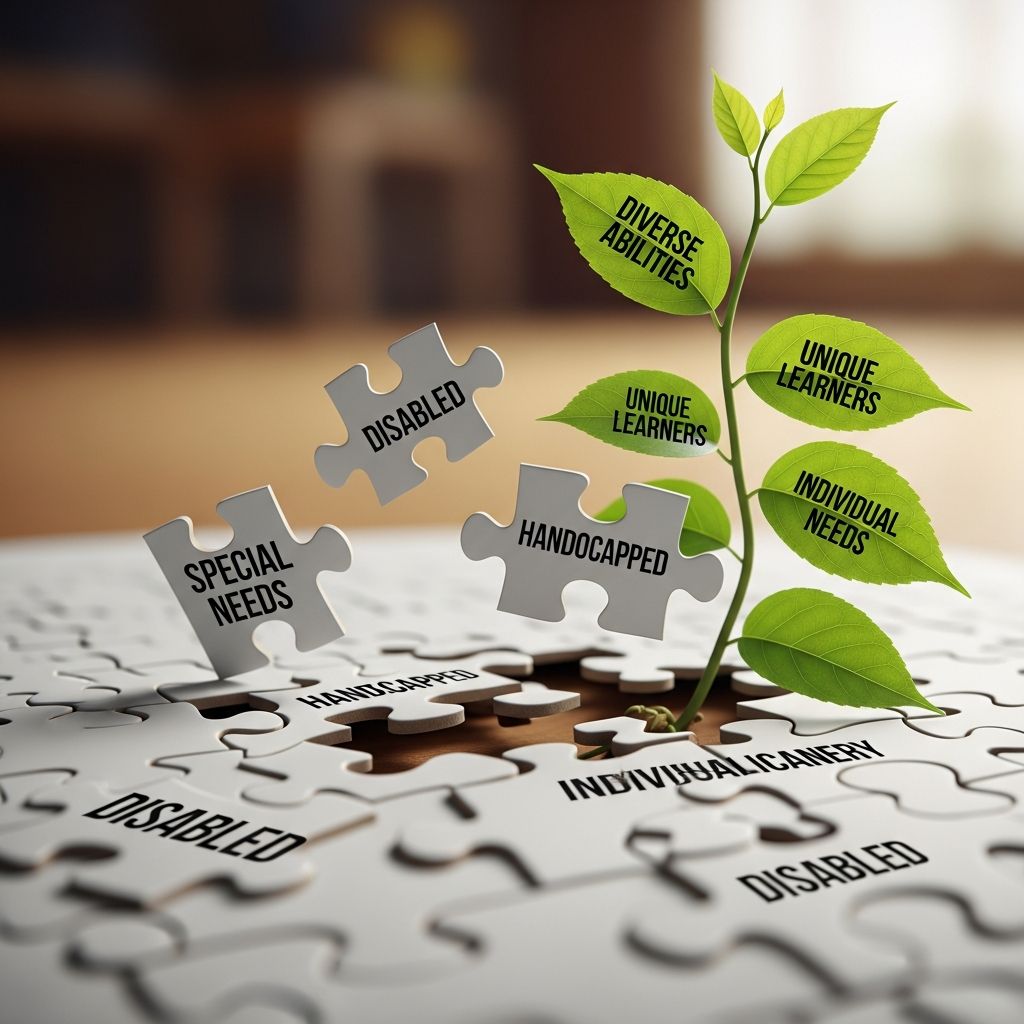
Disability-related language has undergone significant changes over decades, reflecting broader societal attitudes. In the mid-20th century, terms like “handicapped” dominated, evoking images of limitation and pity. By the 1970s, as advocacy for educational inclusion grew, “special needs” emerged as a softer alternative, coinciding with laws like the Education for All Handicapped Children Act of 1975, which aimed to integrate disabled students into mainstream schools.
This shift was intended to humanize the conversation, framing support requirements as unique rather than deficits. However, what began as well-meaning euphemism has been critiqued for masking realities. A 2016 empirical study in Cognitive Research: Principles and Implications analyzed perceptions and found that describing someone as having “special needs” elicited more negative implicit attitudes than direct references to “disability.” Even among parents of disabled children, the euphemism failed to improve views, suggesting it reinforces separation rather than equality.
- 1970s rise: “Special needs” gains traction amid education reforms.
- 2010s critique: Disability advocates highlight its euphemistic nature.
- Today: Preference for identity-affirming terms like “disabled person” or “person with a disability.”
Why ‘Special Needs’ Creates Distance
At its core, “special needs” implies that certain requirements are exceptional or indulgent, positioning disabled individuals as “other.” This framing ignores that accessibility—ramps, captioning, or extended time—is a baseline necessity, much like glasses for vision correction or boats for ocean travel. Labeling these as “special” dichotomizes human experience into normal versus abnormal.
Psychologically, euphemisms like this can backfire. The aforementioned 2016 study tested character descriptions: participants viewed figures with “special needs” more negatively than those with specified disabilities, indicating the term doesn’t soften stigma but amplifies it subtly. Parents might prefer it for comfort, but as disabled youth mature, many reject it, associating it with infantilization.
| Term | Perception Impact | Study Findings |
|---|---|---|
| Special Needs | More negative bias | Increased distancing effect |
| Disability | Neutral/direct | Less stigmatizing long-term |
| Handicapped | Outdated/pity-based | Declined since 1970s |
Legal Perspectives: Precision Matters
Legally, “special needs” lacks teeth. U.S. statutes, including the Americans with Disabilities Act (ADA) and Individuals with Disabilities Education Act (IDEA), consistently use “individuals with disabilities.” Searches of federal code reveal “special needs” appears rarely and never as a protected category. This precision unlocks rights: accessible seating, Medicaid waivers, and educational accommodations hinge on recognized disability status, not vague “needs.”
Advocates like Jamie Davis Smith emphasize that diluting terminology erodes entitlements. Without clear language, systemic support falters, leaving families navigating a patchwork of services.
Generational and Community Divides
A generational gap exacerbates the debate. Older generations, including Gen X and Boomers, often favor “special needs” or person-first phrasing (“person with a disability”) rooted in politeness. Younger disabled voices lean toward identity-first language (“disabled person”), embracing disability as part of identity, akin to “Deaf” community pride.
Within communities, consensus builds against euphemisms. Communications director Lawrence Carter-Long of the Disability Rights Education & Defense Fund notes parents adopt ambient language, sometimes unintentionally perpetuating bias. Disabled adults report “special needs” feels patronizing, evoking charity over equality.
“Parents adopt whatever surrounds them, even if unintentionally bigoted.” — Lawrence Carter-Long
From Slurs to Stigma: Broader Implications
The term’s legacy includes derogatory spin-offs. “SPED” (special education) and “ED” have become slurs, hurled as insults equating stupidity with disability. Urban Dictionary entries link “ED” to mockery, underscoring dehumanization. Media sometimes exploits “special needs” for sympathy in crime stories, further entrenching pity narratives.
In education, it segregates: “special needs” classrooms imply deviation from norm, despite pushes for universal design benefiting all—like curb cuts aiding parents with strollers.
Embracing Better Alternatives
Disability rights groups recommend straightforward terms:
- Disability/Disabled: Clear, legal, and community-preferred.
- Person with a disability: Person-first for those preferring it.
- Autistic/Blind/Deaf: Identity-first for many.
- Avoid: Handicapped, differently-abled, challenged.
Follow the individual’s lead. Resources from the National Center on Disability and Journalism stress asking preferences and defaulting to respected norms.
Practical Tips for Parents and Educators
- Listen actively: Use terms the person prefers.
- Educate yourself: Engage disability-led organizations.
- Advocate universally: Push for designs benefiting everyone.
- Model respect: Ditch euphemisms in daily talk.
Transitioning feels awkward initially, but it signals allyship. Jennifer Drohan, a parent advocate, urges clinicians and families to demand equitable systems without softening language.
Frequently Asked Questions
Why do some parents still use ‘special needs’?
Many parents choose it to avoid harshness, influenced by cultural norms, but evidence shows it doesn’t reduce stigma and may hinder legal advocacy.
What’s the difference between person-first and identity-first language?
Person-first (“person with autism”) emphasizes humanity; identity-first (“autistic person”) integrates disability as core identity. Both valid—honor preferences.
Is ‘special needs’ legally protected?
No, U.S. laws use “disability” for protections under ADA and IDEA.
How can I apologize if I’ve used the wrong term?
A simple “Thanks for clarifying, I’ll use [preferred term]” suffices—no defensiveness needed.
Does this apply to all disabilities?
Yes, broadly, though specifics vary by community (e.g., Deaf culture favors “Deaf”).
Adopting precise language dismantles barriers, promoting dignity and access. As movements like #DisabilityTooWhite and #ActuallyAutistic gain traction, inclusive words pave the way for systemic change.
References
- Is the Term “Special Needs” Going Out of Style? Rethinking the Terminology in Light of the Law — Farr Law Firm. 2016. https://www.farrlawfirm.com/is-the-term-special-needs-going-out-of-style-rethinking-the-terminology-in-light-of-the-law
- Why I don’t use the term ‘special needs’ anymore — Medical Motherhood. Accessed 2023. https://www.medicalmotherhood.com/p/why-i-dont-use-the-term-special-needs
- CALL ME SENSITIVE: There’s Something Off about “Special Needs” — HC Spire. 2023-05-05. https://hcspire.com/2023/05/05/call-me-sensitive-theres-something-off-about-special-needs-or-should-i-say-the-new-r-word/