The COVID-19 pandemic reshaped countless aspects of daily life, including one of the most intimate experiences: childbirth. As hospitals grappled with overcrowding, infection risks, and strict visitor policies, many expectant parents sought alternatives to traditional hospital deliveries. Home births surged, and a novel trend emerged—renting Airbnbs specifically for labor and delivery. This approach offered privacy, comfort, and strategic proximity to medical facilities, blending the intimacy of home birth with practical safeguards.
The Sharp Rise in Non-Hospital Births During COVID-19
Data from reliable health authorities reveals a dramatic uptick in home births coinciding with the pandemic’s onset. In the United States, home deliveries climbed from 38,506 in 2019 to 45,646 in 2020, marking a 19% increase. This shift represented about 1.3% of all U.S. births in 2020, up from 1% the previous year. The trend peaked in May 2020 at 1.5% of total births, following the World Health Organization’s pandemic declaration in March.
Interest in home births spiked immediately after the declaration, as evidenced by Google Trends data analyzed in a peer-reviewed study. Search volume for “home birth” jumped from a median score of 43 pre-pandemic to a peak of 100 by late March 2020, remaining elevated thereafter. This reflected widespread concerns over hospital-acquired infections, separation from newborns if COVID-positive, and limitations on support persons in delivery rooms.
By 2022, the momentum continued, with 46,183 midwife-assisted home births recorded—a 56% rise since 2016. Even high-risk scenarios, like vaginal births after cesarean (VBAC), saw increases, highlighting a broader embrace of out-of-hospital options.
Why Families Chose Airbnb for Birthing
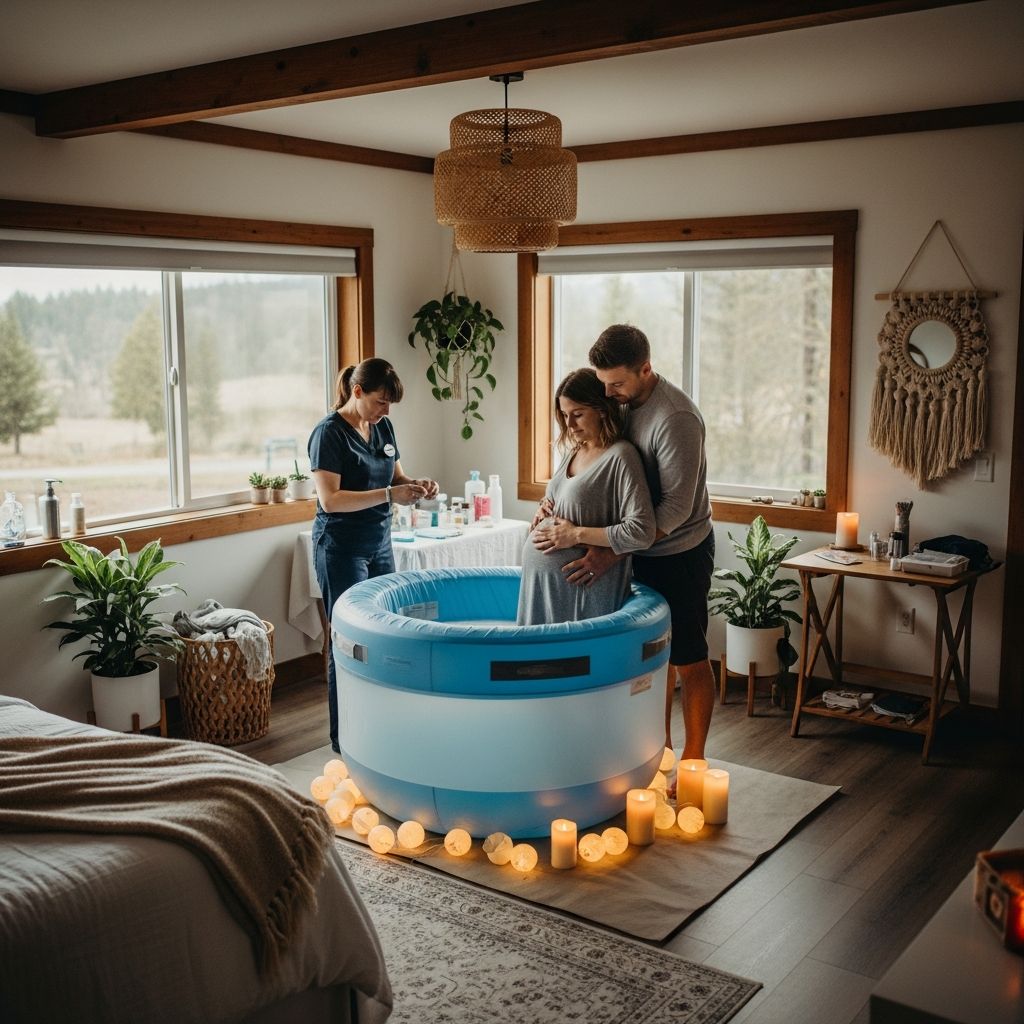
Renting an Airbnb for birth addressed key pain points of traditional home setups. Many homes lack adequate space, such as large bathtubs for water births or open areas for movement during labor. Airbnbs allowed filtering for properties with these features, often near hospitals for quick transfers if needed. Parents valued the temporary nature—no permanent home alterations—and the ability to create a serene, customized environment post-delivery.
- Space and Amenities: Larger tubs, comfortable bedding, and quiet retreats unavailable in apartments.
- Location Strategy: Proximity to emergency care (e.g., 10-15 minutes from hospitals) without hospital chaos.
- Privacy Control: No neighbors or family interruptions; full control over cleaning and guests.
- Cost-Effectiveness: Short-term rentals often cheaper than extended hospital stays or birthing centers.
Personal accounts underscore these benefits. One mother described selecting a rural Airbnb with a deep soaking tub and hospital access, delivering her baby smoothly and extending her stay for recovery without rushing home.
Personal Journeys: Real Stories from Airbnb Births
Expectant parents shared compelling narratives of navigating pandemic uncertainties. Jenna, for instance, chose an Airbnb 15 minutes from a hospital after her small apartment proved unsuitable. With a midwife team, she labored in a spacious tub, birthing her daughter uneventfully and enjoying postpartum days in luxury.
Others highlighted emotional relief. Amid visitor bans, home-like settings allowed doulas, partners, and even older siblings to participate fully. One family rented a lakeside property, transforming it into a birth sanctuary with essential oils, playlists, and midwife oversight, avoiding hospital stress entirely.
Planning was meticulous: advance bookings during peak pandemic months, midwife coordination, and backup transport. Luck played a role too—smooth labors minimized transfers—but preparation mitigated risks.
Medical Perspectives: Benefits and Hidden Dangers
Proponents of home births emphasize autonomy, lower intervention rates (e.g., fewer C-sections), and personalized care. Midwives provide continuous support, fostering natural processes. During the pandemic, this model reduced exposure risks, aligning with public health goals.
However, data warns of elevated risks. A 2020 study found neonatal mortality at planned home births nearly 14 per 10,000 live births—over four times hospital rates. Almost half of planned home births require hospital transfers, often for complications like fetal distress or hemorrhage.
| Aspect | Home Birth | Hospital Birth |
|---|---|---|
| Neonatal Mortality Rate | ~14 per 10,000 | ~3 per 10,000 |
| Transfer Rate | ~50% | N/A |
| Intervention Rates | Lower (e.g., C-sections) | Higher |
| Infection Risk (Pandemic) | Lower exposure | Higher initially |
Experts urge low-risk candidates only: healthy pregnancies without prior complications. High-risk cases, like multiples or pre-term labor, demand hospital settings. Midwife-assisted births fare better statistically, but proximity to care remains crucial.
Logistics of Planning an Airbnb Birth
Success hinges on preparation. Start with midwife or doula consultation to assess suitability. Search Airbnb with filters: pet-friendly (if applicable), pools/tubs, rural/urban balance, and 24/7 host communication. Book 1-2 months ahead, disclosing intentions discreetly to avoid cancellations—some hosts prohibit births.
- Consult professionals: Confirm low-risk status via prenatal checks.
- Scout locations: Use maps for hospital drive times (<20 mins ideal).
- Pack comprehensively: Birth kits, sanitizers, emergency bags.
- Coordinate team: Midwife, partner, backup transport.
- Post-birth protocol: Clean thoroughly, communicate with host.
Costs vary: $200-500/night for suitable spots, plus midwife fees ($3,000-7,000). Insurance rarely covers, but savings from avoided hospital bills can offset.
Beyond the Pandemic: A Lasting Shift?
Post-peak COVID, home births persist above pre-2020 levels, suggesting cultural evolution. Startups eye “birthing Airbnbs,” professionalizing the space. Yet, advocacy grows for hospital reforms: flexible policies, telehealth integration.
Future parents weigh options informed by data. While Airbnb births offer empowerment, safety-first planning is non-negotiable. This trend underscores demands for choice in maternity care.
Frequently Asked Questions (FAQs)
Is an Airbnb home birth safe?
For low-risk pregnancies with skilled midwives and hospital proximity, risks are manageable but higher than hospitals. Always screen with providers.
How much do Airbnb births cost?
Rentals: $1,000-3,000 for 3-5 days; midwives: $3,000-7,000. Total often less than hospital deductibles.
Do Airbnb hosts allow births?
Many do unofficially; disclose politely. Check reviews for family-friendly spots.
What if complications arise?
Transfers happen in ~50% cases; plan fast transport and nearby ERs.
Has this trend continued post-pandemic?
Yes, home births up 56% since 2016, with sustained interest.
References
- The Women Booking Airbnbs for Their Home Births — MEL Magazine. 2021-approx. https://melmagazine.com/en-us/story/home-births-airbnb
- Home births rose 19% in 2020 as pandemic hit the U.S. — Pew Research Center. 2022-07-28. https://www.pewresearch.org/short-reads/2022/07/28/home-births-rose-19-in-2020-as-pandemic-hit-the-u-s/
- A Home Away From Home, Renting Airbnbs for Home Births — The Bump. 2021-approx. https://www.thebump.com/news/home-birth-airbnbs
- Interest in Home Birth During the COVID‐19 Pandemic — PMC / NIH. 2022. https://pmc.ncbi.nlm.nih.gov/articles/PMC9115086/
- Midwife-assisted home births are on the rise. High-risk births — Stat News. 2024-02-23. https://www.statnews.com/2024/02/23/midwife-assisted-home-births-rise-high-risk-births/