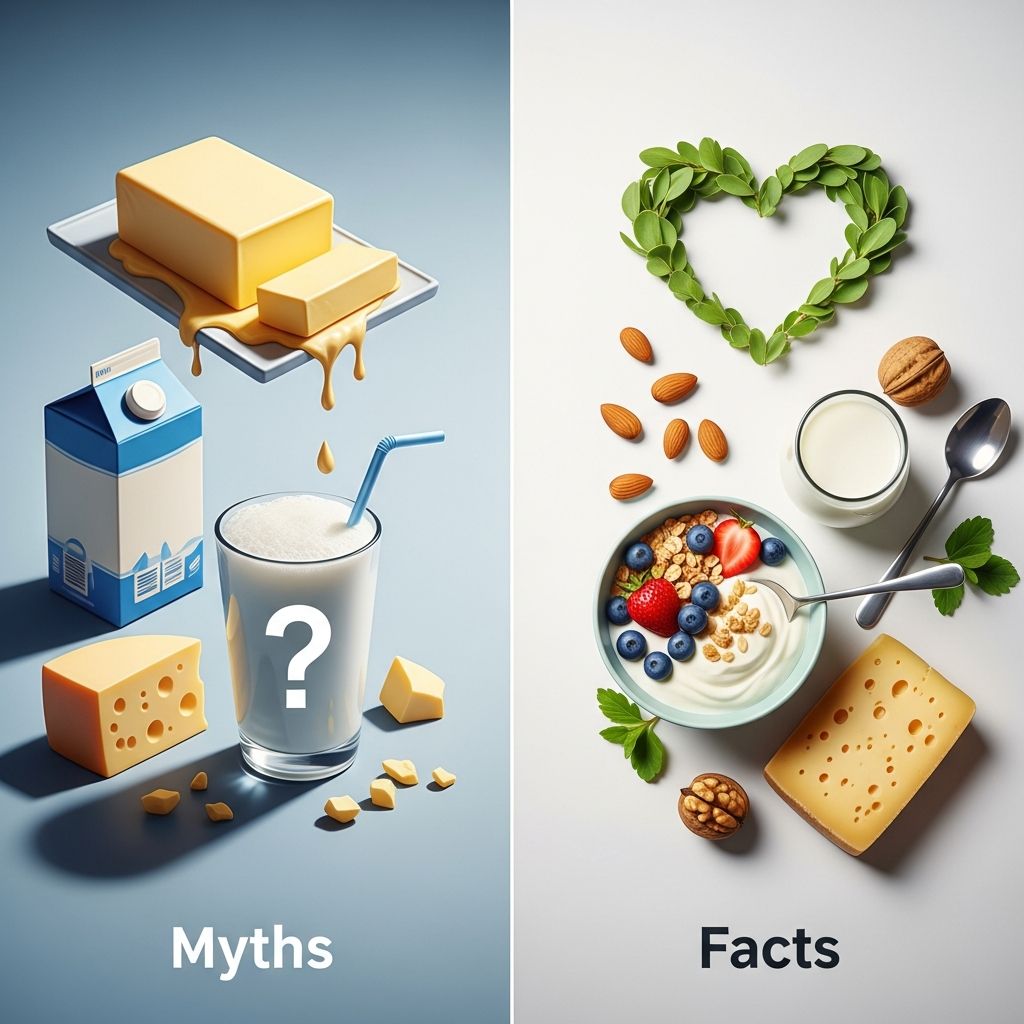
Long-standing dietary guidelines have cautioned against dairy due to its saturated fat content, linking it to heightened cardiovascular risks. However, emerging research paints a more nuanced picture, suggesting that dairy’s impact on heart health varies by product type, processing, and quantity consumed. Moderate intake—up to 200 grams daily—often shows neutral or even beneficial effects on key markers like blood pressure, cholesterol, and arterial calcification.
Understanding the Dairy-Heart Disease Connection
The debate stems from dairy’s high saturated fat profile, traditionally associated with elevated LDL cholesterol and atherosclerosis. Yet, the ‘dairy matrix’—a unique interplay of fats, proteins, peptides, minerals, and probiotics—alters these effects compared to isolated saturated fats from other sources. Recent meta-analyses of cohort studies and randomized trials indicate no overall increase in cardiovascular disease (CVD) incidence or mortality from typical dairy consumption levels.
Key factors influencing outcomes include:
- Fermentation: Yogurt and cheese benefit from bacterial cultures that may reduce inflammation and improve lipid profiles.
- Fat content: Whole-fat options sometimes outperform low-fat in protecting against artery calcification.
- Portion size: Exceeding 200g/day may tip risks toward harm, particularly for milk.
Scientific Evidence: What Large-Scale Studies Reveal
Prospective cohort studies tracking thousands over decades provide robust insights. A University of Minnesota analysis of over 3,100 participants in the CARDIA study found higher whole-fat dairy intake linked to a 24% lower risk of coronary artery calcification (CAC), an early heart disease indicator. Low-fat dairy showed no such protection.
Meta-analyses reinforce this. One reviewing 29 cohorts reported neutral associations between total dairy and CVD or all-cause mortality, with fermented products like yogurt and cheese potentially lowering risks. Another, pooling data from RCTs and cohorts, confirmed up to 200g/day of any dairy (full- or low-fat) poses no CVD threat.
| Dairy Type | Key Finding | Relative Risk (per serving) | Source |
|---|---|---|---|
| Total Dairy (<200g/day) | Neutral for CVD/CHD | HR 1.00 (0.95-1.05) | |
| Whole-Fat Dairy | Protective vs CAC | 24% lower risk | |
| Fermented (Yogurt/Cheese) | Reduced MI/CHD | 18% lower MI risk | |
| Milk (High Intake) | Increased stroke risk | HR 1.13 (1.02-1.27) |
Product-Specific Impacts on Heart Health
Milk: Proceed with Moderation
Milk, especially in higher amounts (50g/1000kcal), correlates with elevated stroke and mortality risks in some European cohorts. Its liquid form may lead to quicker absorption of sugars and fats, potentially straining metabolic pathways. Opt for 1-2 servings daily, preferring fermented alternatives for gut-heart benefits.
Cheese: A Surprising Ally
Cheese stands out with inverse associations to acute myocardial infarction (AMI). Moderate intake (around 50g/day) supports better cholesterol handling, possibly due to conjugated linoleic acid and calcium binding dietary fats. Hard cheeses offer concentrated nutrients without excess liquid calories.
Yogurt and Fermented Dairy: The Gut-Heart Protectors
Fermented dairy shines brightest. High yogurt intake (≥200g/day) links to 18% lower myocardial infarction risk, attributed to probiotics enhancing endothelial function and reducing inflammation. Similar benefits appear for kefir, promoting microbiome diversity tied to lower CVD markers.
Butter and High-Fat Spreads: Use Sparingly
Butter bucks positive trends, associating with higher AMI risk, likely from its isolated saturated fats lacking the protective matrix. Limit to small amounts for flavor, favoring whole products.
Beyond Heart Disease: Broader Metabolic Effects
Dairy influences blood pressure, lipids, and weight—crucial CVD precursors. RCTs show full-fat dairy neutral on LDL, waist circumference, and glucose, sometimes improving systolic/diastolic pressure. Low-fat variants aid hypertension prevention.
- Blood Pressure: Low-fat dairy lowers hypertension risk (moderate evidence).
- Cholesterol: Dairy fats raise LDL less than expected, thanks to matrix effects.
- Weight Management: Protein satiety from dairy aids portion control, countering calorie density concerns.
Practical Recommendations for Heart-Healthy Dairy Intake
Balance is key. Aim for 2-3 servings daily (e.g., 200ml milk, 150g yogurt, 30g cheese), prioritizing fermented, low-sodium options. Pair with plant foods like fruits, nuts, and veggies for synergistic effects.
| Daily Serving Guide | Examples | Heart Benefit |
|---|---|---|
| 1 cup milk/yogurt | Plain Greek yogurt with berries | Probiotics + antioxidants |
| 1-2 oz cheese | Cheddar on whole-grain crackers | Calcium for vessel health |
| Splash of cream | In coffee (limit butter) | Flavor without excess |
Individuals with lactose intolerance or high cholesterol should consult professionals; plant-based alternatives like fortified soy mimic benefits without dairy fats.
Addressing Common Concerns and Myths
Myth 1: All saturated fat is evil. Reality: Dairy’s context matters—matrix blunts harms.
Myth 2: Low-fat is always better. Reality: Whole-fat may protect arteries better.
Conflicting data, like milk-stroke links, underscore product-specific advice over blanket rules.
Frequently Asked Questions (FAQs)
Is dairy safe for heart patients?
Moderate fermented dairy fits most plans; monitor saturated fat if hypercholesterolemic.
How much cheese can I eat daily?
Up to 50g shows benefits; choose low-sodium varieties.
Does plant milk replace dairy benefits?
Fortified options provide calcium/protein but lack full matrix effects.
Whole vs low-fat: Which wins?
Whole-fat edges out for CAC protection; both neutral overall.
Can yogurt lower my heart risk?
Yes, ≥200g/day links to 18% reduced MI odds via probiotics.
Future Directions in Dairy Research
Ongoing trials dissect microbiome roles and long-term outcomes. Personalized nutrition—genetics, microbiome—may refine guidelines. For now, evidence favors including diverse dairy moderately in heart-healthy diets.
References
- Association between dairy intake and risk of cardiovascular disease — European Journal of Preventive Cardiology. 2023-02-01. https://academic.oup.com/eurjpc/article/30/3/219/6711074
- Consumption of Dairy Foods and Cardiovascular Disease — PMC / NIH. 2022-02-22. https://pmc.ncbi.nlm.nih.gov/articles/PMC8875110/
- New study finds a connection between eating whole-fat dairy products and better heart health — University of Minnesota School of Public Health. N/A. https://www.sph.umn.edu/news/new-study-finds-a-connection-between-eating-whole-fat-dairy-products-and-better-heart-health/
- Dairy Foods and Heart Disease: Is There a Connection? — The Foundation for Human Freedom in Dairy. N/A. https://www.tfhd.com/news/dairy-foods-and-heart-disease-is-there-a-connection/
- Dairy’s Counterintuitive Effects on CVD Risk — Milk Genomics. 2017-01-01. https://www.milkgenomics.org/?splash=dairys-counterintuitive-effects-cardiovascular-disease-risk
- What’s the deal with dairy and heart health — Harvard Health Publishing. 2021-09-01. https://www.health.harvard.edu/heart-health/whats-the-deal-with-dairy-and-heart-health
- Dairy and Heart Health — Heart Foundation. N/A. https://www.heartfoundation.org.au/healthy-living/healthy-eating/dairy-and-heart-health