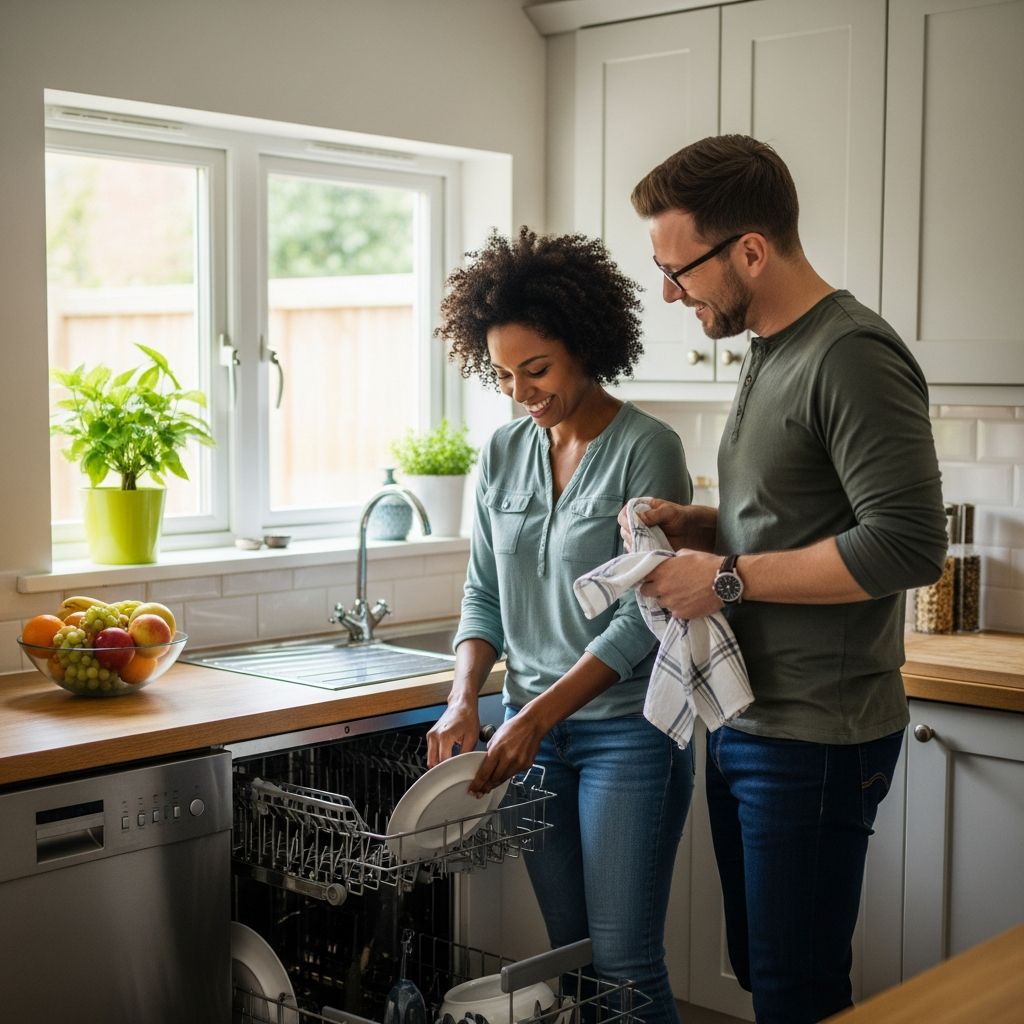
Equitably dividing household responsibilities significantly enhances relationship quality, with research showing that couples who share tasks report higher satisfaction levels than those who specialize in distinct chores. This approach promotes a sense of fairness, improves communication, and even boosts intimacy, transforming mundane duties into opportunities for connection.
The Science Behind Chore Sharing and Relationship Health
Studies analyzing family dynamics reveal that sharing at least three household tasks correlates strongly with marital happiness for both partners. Unlike traditional divisions where one spouse handles cooking and the other cleaning, joint participation in the same activities fosters equity perceptions. For instance, alternating laundry duties or collaboratively managing bills builds coordination and mutual understanding.
University of Utah researcher Daniel Carlson’s analysis of national surveys from the 1990s and 2000s highlights that couples sharing tasks experience amplified benefits in recent cohorts. Nearly all (99%) who equally shared all tasks viewed their relationships as fair, compared to only half of those with 50/50 overall loads but no overlapping duties. This underscores that overlap, not just proportion, drives satisfaction.
Why Task Overlap Beats Specialization
Specializing in chores mimics factory efficiency but falters in intimate partnerships. Sharing tasks encourages ongoing dialogue about schedules and preferences, nurturing communication skills essential for relational success. Carlson notes that this collaboration engenders togetherness, even if partners tackle duties at different times, as it requires planning and empathy.
- Equity Perception: Shared tasks make divisions feel just, reducing resentment.
- Communication Boost: Coordinating efforts hones dialogue, a cornerstone of strong unions.
- Teamwork Mindset: Joint involvement reinforces partnership over individualism.
Supplementary findings link chore-sharing couples to superior communication, though causality remains bidirectional—strong communicators may naturally share more, or vice versa.
Chores and Intimacy: An Unexpected Link
Household equity extends to the bedroom. A 2022 survey of 2,000 U.S. cohabiting adults found 56% believe even chore splits would enhance sex lives, with 53% rating it as vital as sexual frequency itself. Post-pandemic messiness exacerbated disputes, yet balanced duties promised fewer arguments and greater loyalty—60% saw equal sharing as loyalty-boosting.
| Survey Insight | Percentage | Impact on Relationship |
|---|---|---|
| Splitting chores improves sex life | 56% | Higher intimacy |
| Equal chores as important as sex | 53% | Relationship health |
| Balanced chores reduce arguments | ~50% | Less conflict |
| Equal sharing improves loyalty | 60% | Stronger commitment |
One in two respondents equated chore avoidance to infidelity, highlighting stakes. Incentives like sexual favors surfaced in over a third of cases, revealing tension’s depth.
Practical Strategies for Fair Division
Implement chore equity through structured approaches tailored to couple dynamics. Pew Research indicates 61% of married individuals deem shared responsibilities crucial for success, ranking behind only common interests and intimacy.
- Assess Strengths: Assign based on skills—one excels at cooking, the other tidying—then overlap on 3+ tasks.
- Rotate Preferences: Alternate disliked duties weekly to build empathy and prevent burnout.
- Schedule Joint Sessions: Tackle big projects together, like deep cleaning, for bonding time.
- Track and Review: Use apps to log contributions, adjusting quarterly for life changes.
Women often shoulder more despite employment, per studies, but involved husbands report happier homes. Side-by-side work yields dual benefits: efficiency and connection.
Outsourcing as a Modern Solution
When sharing overwhelms, outsourcing frees quality time. Harvard’s Ashley Whillans found couples buying services like meal kits or cleaners report relational gains, especially under stress. Dual-income pairs benefited most, as joint decisions on purchases amplified positivity regardless of who gained time.
A working paper estimates 25% of divorces stem from housework clashes, per Harvard and UBC research. Experts like Dr. Terri Orbuch, tracking 373 couples for decades, confirm chores spark enduring tension. Outsourcing unpopular tasks promotes happiness by prioritizing couple time, advises Dr. Tracey Stulberg.
Overcoming Common Hurdles
Resistance arises from habits or sabotage—34% suspect partners botch chores to evade future ones. Counter with transparent talks framing equity as teamwork. Post-pandemic, 40% argued more over housework, but balance halved fights.
For stay-at-home shifts, adapt loads dynamically while preserving overlap. Special events warrant team efforts, sustaining unity.
Long-Term Benefits for Family Life
Beyond dyads, equitable chores model healthy dynamics for children, teaching responsibility and fairness. Carlson equates women’s satisfaction in non-sharing egalitarian setups to solo-housework burdens, while sharing men rival chore-free peers in joy.
Investing in shared labor pays dividends: resilient communication, erotic equity, and enduring equity perceptions fortify marriages against stressors.
Frequently Asked Questions
How many tasks should couples share for optimal satisfaction?
Sharing at least three tasks markedly improves perceptions of fairness and relationship quality for both partners.
Does outsourcing chores undermine sharing principles?
No—jointly deciding on services enhances bonds by freeing time for connection, per Harvard research.
Can chore equity really boost intimacy?
Yes, 56% of surveyed couples link even splits to better sex lives, viewing it as key to relational health.
What if partners have unequal workloads outside home?
Adjust proportions but prioritize task overlap and periodic reviews to maintain equity sense.
Why do women often feel more burdened?
Traditional norms persist, but sharing alleviates this, matching satisfaction to equitable ideals.
References
- The Best Way to Split Chores to Improve Relationships: Study — TIME. 2022-10-27. https://time.com/6168794/sharing-chores-can-improve-relationships-study/
- Relationships are Messy: American Couples’ Happiness Hinges on an Equal Division of Household Chores — PR Newswire. 2022-02-02. https://www.prnewswire.com/news-releases/relationships-are-messy-american-couples-happiness-hinges-on-an-equal-division-of-household-chores-301473897.html
- Why Outsourcing Chores Is Good for Your Relationship — Harvard Business School Working Knowledge. 2019-11-25. https://www.library.hbs.edu/working-knowledge/why-outsourcing-chores-is-good-for-your-relationship
- Divide and Conquer Household Duties for a Happier Marriage — Focus on the Family. N/A. https://www.focusonthefamily.com/marriage/marriage-success/divide-and-conquer-household-duties-for-a-happier-marriage/
- How Outsourcing Chores May Save Your Marriage — Metro Parent. N/A. https://metroparent.com/parenting/advice/how-outsourcing-chores-may-save-your-marriage/