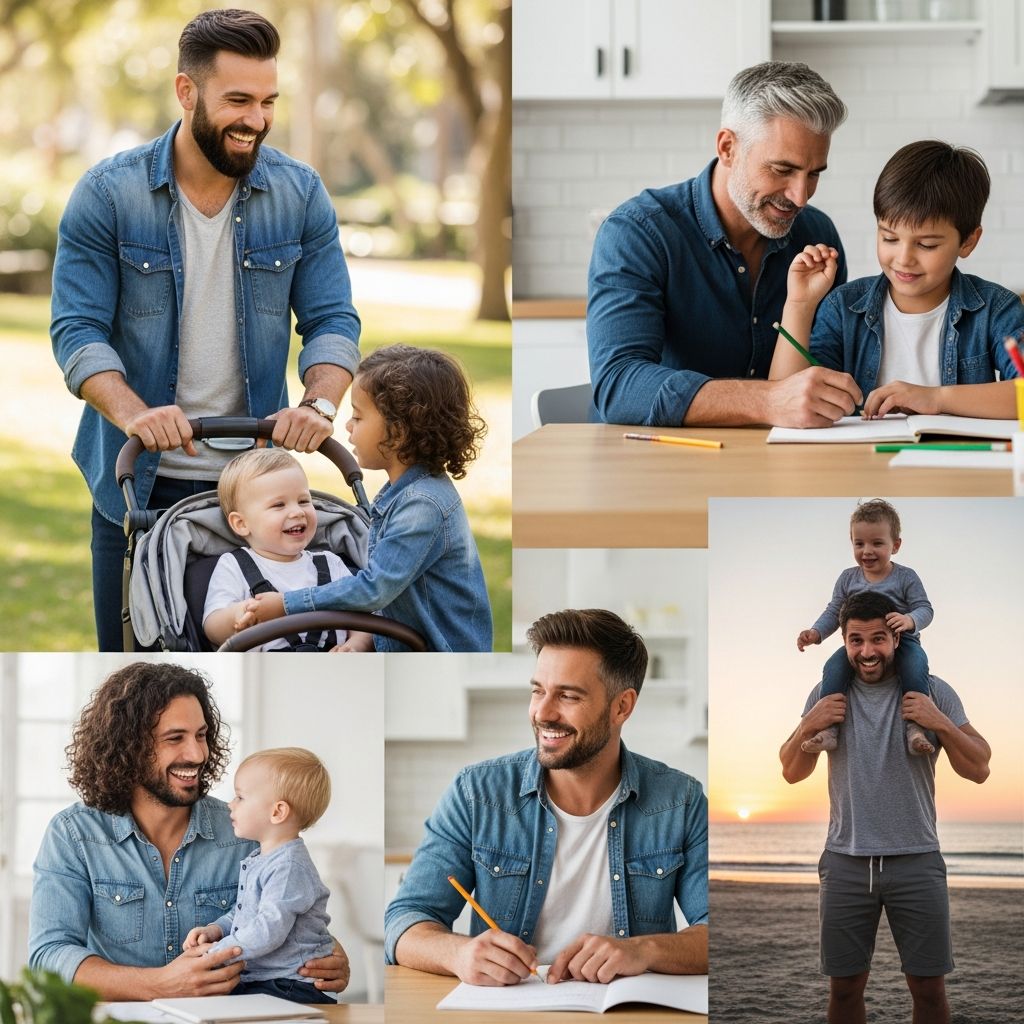
The internet has turned the word DILF into a running joke, but the fascination with sexy dads is rooted in something more meaningful than a meme. When people gush over a dad holding a baby or patiently wrangling toddlers in a grocery store, they are responding to a powerful mix of caregiving, maturity, and commitment that goes far beyond looks.
This article explores why involved fathers are often seen as uniquely attractive, how science backs up the appeal of nurturing dads, and why reducing them to a DILF punchline misses the deeper shift in how we see masculinity, parenting, and partnership.
From DILF Joke to Genuine Desire
The term DILF began as a cheeky, objectifying label. It focused on sexualizing fathers without saying much about who they are as people. But for many, the appeal of a sexy dad is less about fantasy and more about what his behavior signals about him as a human being.
- Reliability: A dad who shows up consistently for his kids hints at reliability in romantic relationships.
- Emotional depth: Comfort with affection, tenderness, and play suggests emotional availability.
- Long-term thinking: Active parenting implies an ability to think beyond the next weekend.
In other words, many people are responding not to the idea of a DILF in isolation, but to the whole package of modern, engaged fatherhood.
The Science Behind Why Good Dads Are Attractive
Research suggests that for many women, a man’s interest in children and willingness to care for them can enhance his attractiveness, especially as a long-term partner.
- In one study, men who showed a stronger visual preference for infant images were rated as more attractive overall by women assessing their photos.
- The same research found that this interest in babies boosted men’s appeal both for short-term and long-term relationships, though its effect was particularly meaningful in the context of long-term partnership.
- Other work suggests that men’s interest in children is still an underappreciated factor in how women evaluate long-term mates, even though it clearly influences judgments of partner suitability.
This doesn’t mean every person is drawn to dads or that everyone wants kids. It does mean that, for many who imagine a future that includes parenting, seeing a man already doing the work of caregiving can be a powerful attraction signal.
How Fatherhood Physically and Emotionally Changes Men
Sexy dads are not just single guys with kids; their bodies and brains often shift in response to fatherhood itself. Scientists have documented real biological changes when men become involved fathers.
- Testosterone often decreases: Multiple studies find that men’s testosterone levels tend to drop when they become active, involved fathers, which may support nurturing behavior and sustained caregiving.
- Oxytocin and bonding: Fathers show elevated oxytocin responses when interacting with their babies, supporting bonding and emotionally responsive caregiving.
- Brain rewiring: Brain imaging studies show that dads develop stronger responses in regions related to empathy, reward, and vigilance when exposed to their own children’s cues, suggesting that caregiving literally reshapes their neural pathways.
These changes can alter how fathers carry themselves in the world: they may be softer in some ways, less preoccupied with dominance, and more tuned in to others’ needs. For many potential partners, that shift away from performative toughness toward warm, grounded presence is deeply attractive.
The Appeal of Soft Power: Why “Dad Energy” Feels Different
When people talk about a man having “dad energy,” they are usually referring to a blend of traits that feel safe and compelling in long-term relationships. These traits can stand in contrast to stereotypes of flashy, emotionally unavailable masculinity.
| Traditional “Player” Stereotype | Modern Sexy Dad Energy |
|---|---|
| Focused on short-term fun | Invested in long-term stability |
| Emotional distance | Visible tenderness and affection |
| Individual freedom first | Family and shared responsibility first |
| Surface-level charm | Reliability and follow-through |
| Image of strength | Comfort with vulnerability |
The sexy dad stands out not just because he’s physically appealing, but because he demonstrates a form of soft power: the ability to soothe a crying child, manage chaos with patience, and show love without embarrassment. For many, this blend of strength and gentleness is far more alluring than a rigid, hyper-masculine persona.
Why the Dad Bod Became Culturally Attractive
The “dad bod” started as another punchline, but it quickly revealed something real about changing beauty standards. Surveys have found that many people view the dad bod—typically defined as a body that is not heavily muscled or extremely lean—as both attractive and approachable.
- In one nationally representative U.S. survey, about 69% of women said they found the dad bod attractive, and roughly 65% went further, calling it sexy.
- Many respondents associated the dad bod with comfort, confidence, and a partner who is more focused on family life than on maintaining a gym-perfect physique.
This does not mean that health is irrelevant or that appearance doesn’t matter. Instead, it highlights a subtle shift: an ideal partner is increasingly seen as someone who balances self-care with family care, rather than centering their entire identity on physical perfection.
Modern Fatherhood and the New Masculine Ideal
The sexiness of dads is tied closely to evolving ideas of what it means to be a man, a partner, and a parent. As expectations change, more men are embracing caregiving as a core part of their identity rather than a side job.
Research on contemporary families suggests that when fathers take on more equitable, hands-on roles at home, relationships tend to benefit.
- Couples who share domestic and parenting work more fairly often report greater relationship satisfaction.
- Some studies indicate that when men lean into caregiving and household support, couples may maintain more active and fulfilling sex lives than popular stereotypes about “married with kids” would suggest.
In this light, the appeal of a sexy dad is not an accident; it reflects a cultural turn toward valuing collaborative partnership over rigid gender roles.
The Father Effect: Attractive to Partners, Powerful for Kids
The traits that make a dad appealing to potential or current partners—engagement, warmth, stability—are also linked to positive outcomes for children. Researchers describe a “father effect” in which close, supportive relationships with father figures are associated with better behavioral and emotional outcomes for kids.
- Children with involved fathers are less likely to engage in certain high-risk behaviors and may delay sexual activity.
- For daughters, low-quality or disengaged fathering has been linked with earlier and riskier sexual behavior, while supportive fathering appears to have a protective role.
When someone is drawn to a man because he is a caring father, that attraction is often intuitively tracking a real pattern: a father who shows up for his kids tends to create a safer, more nurturing environment for everyone in the family.
Why “Sexy Dad” Is Better Than “DILF”
Calling someone a DILF can be playful, but it is fundamentally a term of objectification. It flattens a whole person—his caregiving, anxieties, 3 a.m. feedings, and hard-won emotional maturity—into a quick visual fantasy.
Talking instead about sexy dads leaves more room for what is genuinely compelling about modern fatherhood:
- Depth over surface: Attraction is grounded in visible acts of care, not just in looks.
- Mutual respect: The language shifts from consuming a person to admiring who they are and how they love.
- Role modeling: It highlights that nurturing men are not only desirable but also valuable for children and communities.
Reframing the conversation from DILF jokes to serious appreciation of nurturing fatherhood helps normalize the idea that caretaking is sexy, not just for women but for men as well.
How Dads Can Lean Into This Healthily
Not every father wants to be seen through the lens of sexual attraction, and that’s valid. But for dads who do care about being attractive partners while remaining good parents, certain attitudes and behaviors are especially powerful.
- Show your caregiving publicly and privately: Comfortably changing diapers, reading bedtime stories, or managing school runs signals that you value parenting as real work.
- Share the load fairly: Taking responsibility for both visible and invisible labor at home—planning, logistics, emotional care—builds trust and desire.
- Stay emotionally open: Expressing affection, admitting fears, and listening deeply counters the stale myth that real men are stoic.
- Maintain your own identity: Caring for your health, friendships, and interests models balance, not self-erasure.
These habits are not about performing for admiration; they are about becoming the kind of partner and parent who is naturally magnetic because of how they show up for the people they love.
Frequently Asked Questions (FAQs)
Is it shallow to find dads sexy because they’re good with kids?
No. Being attracted to someone’s caregiving, responsibility, and emotional availability is one of the least shallow forms of attraction. It suggests you value long-term qualities that support healthier relationships and family life.
Do all women (or all people) find dads more attractive?
Absolutely not. Research shows that men’s interest in children can boost attractiveness for many women, especially those thinking about long-term partners, but preferences vary widely based on personal values, life goals, and whether someone wants children at all.
Is the “sexy dad” effect only about straight couples?
No. Many of the qualities that make dads appealing—reliability, nurturance, emotional maturity—are attractive across orientations and family structures. Queer parents, adoptive parents, and step-parents can all embody the same kind of compelling caregiving energy.
Does becoming a dad always make a man more nurturing?
Fatherhood can create hormonal and brain changes that support caregiving, but those effects are strongest when men are actively involved with their children. Simply having a child does not automatically make someone attentive or kind; consistent engagement does.
Can focusing on “sexy dads” put unfair pressure on fathers?
It can, if the trend is treated as another unrealistic standard. The goal is not for dads to perform a perfect image of fatherhood, but to normalize the idea that being caring, imperfect, and fully present is valuable in itself—and yes, often attractive.
References
- What Makes Good Dads Attractive to Women, According to Science — Fatherly. 2019-05-30. https://www.fatherly.com/health/why-good-dads-are-sexy
- Sexy dads: The allure of men who like babies — Parenting Science (G. Gwenn Schurgin O’Keeffe). 2019-08-10. https://parentingscience.com/sexy-dads/
- Do Parents Have Less Sex? In Movies, But Not Reality — Fatherly. 2018-04-09. https://www.fatherly.com/love-money/do-parents-have-less-sex-myth
- Survey Says Men With “Dad Bods” Have Happier Marriages — Fatherly. 2019-04-29. https://www.fatherly.com/news/dad-bod-survey-benefits
- The Encouraging Science of Fatherhood and the “Father Effect” — Fatherly. 2017-06-16. https://www.fatherly.com/health/science-benefits-of-fatherhood-dads-father-effect
- How Fatherhood Changes Men’s Brains and Bodies Forever — Fatherly. 2019-03-15. https://www.fatherly.com/health/fatherhood-changes-mens-brains-bodies