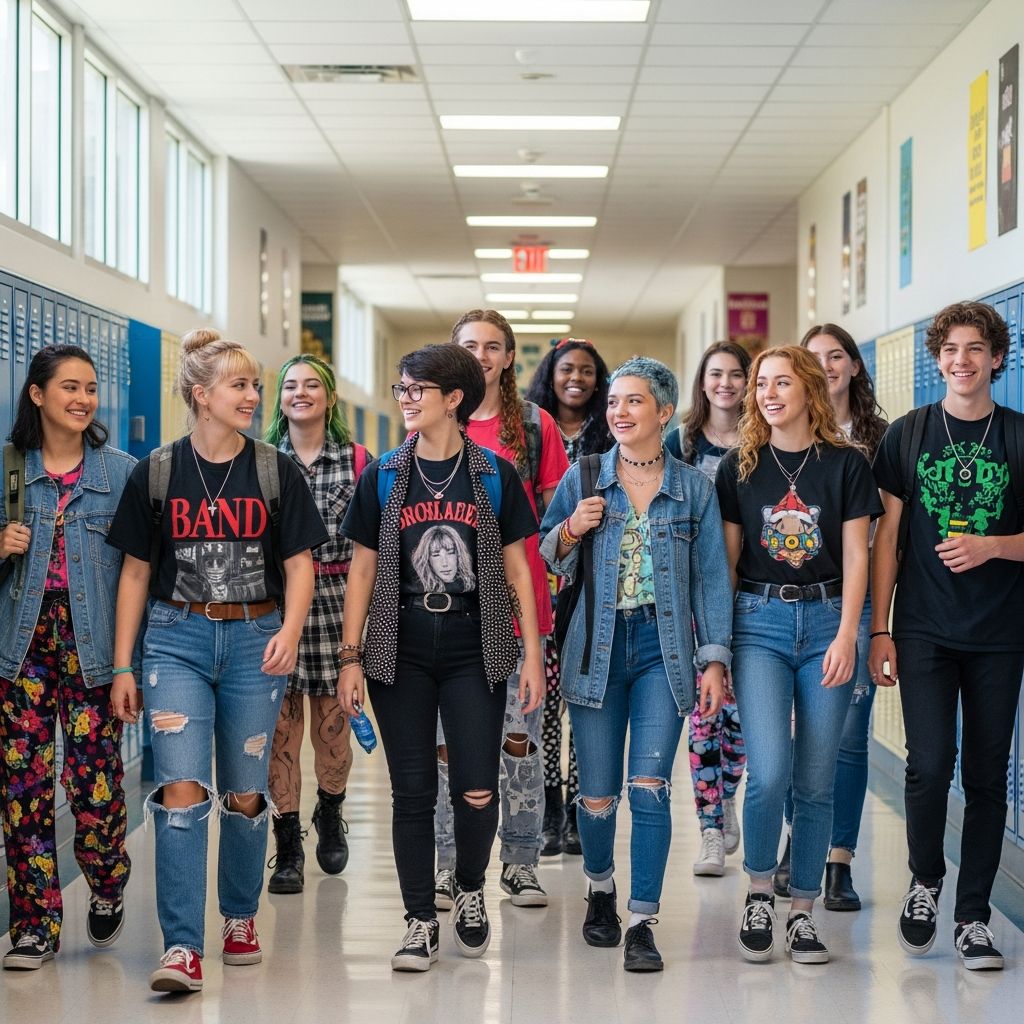
Rigid school dress codes promise order and focus but often deliver discrimination, stifled creativity, and unnecessary conflict. Eliminating them fosters true equity and prepares students for diverse real-world environments.
The Hidden Biases in Dress Code Enforcement
School dress codes frequently target clothing associated with specific genders, body types, or cultural styles, leading to disproportionate punishment of certain groups. Girls, particularly those from minority backgrounds, face harsher scrutiny for hairstyles, leggings, or shoulder exposure, while boys encounter fewer issues. This selective enforcement perpetuates racial and gender stereotypes, turning schools into battlegrounds for outdated modesty standards rather than centers of learning.
For instance, incidents abound where Black students receive suspensions for natural hairstyles deemed ‘distracting,’ echoing broader societal biases against cultural expression. Such policies do not promote safety but reinforce Eurocentric beauty ideals, alienating students who already feel marginalized.
How Dress Codes Stifle Student Identity
Adolescents use clothing as a primary tool for self-expression during identity formation. Mandating specific attire suppresses this vital process, teaching conformity over adaptability. In professional settings, success hinges on context-aware dressing, not rigid uniformity—skills dress codes fail to teach.
- Dress codes prioritize obedience, diminishing individual voice and creativity.
- They hinder preparation for workplaces valuing flexibility and personal branding.
- Students report feeling restricted, with 60% believing uniforms limit individuality.
Research confirms no link between dress codes and behavioral improvements, underscoring their ineffectiveness in fostering positive development.
Questionable Evidence for Dress Code Benefits
Proponents claim dress codes enhance safety, reduce bullying, and boost academics, yet studies reveal mixed or negligible results. A New York Police Department survey post-uniform policy showed crime drops, but broader analyses, like those by sociologist David Brunsma, find no causal connection to achievement or discipline.
| Claimed Benefit | Evidence | Counter-Evidence |
|---|---|---|
| Improved Safety | Some surveys note reduced gang colors. | No direct link; other factors dominate. |
| Less Bullying | Perceived equality among parents. | Uniforms may hide distress signals; bullying persists. |
| Higher Focus | Anecdotal attendance gains. | Studies show no academic impact. |
Administrative time wasted on violations—up to 20% less in uniform schools, but only by shifting focus from education—highlights inefficiency.
Economic and Practical Burdens on Families
Dress codes impose hidden costs, requiring purchases of approved items that strain low-income budgets. Unlike flexible wardrobes, they demand specific fabrics or styles, exacerbating inequality. Critics note added financial hardship without proven returns.
- Low-income families face uniform expenses alongside regular clothes.
- Enforcement diverts resources from teaching.
- Waivers create administrative chaos and stigma.
Legal and Ethical Challenges
Courts uphold dress codes tied to pedagogical goals, but challenges mount over discrimination. Cases overturn rules banning pants for girls or cultural hairstyles, signaling shifting tides. First Amendment concerns arise when codes suppress non-disruptive expression, prioritizing control over rights.
Ethical issues peak when policies embody sexism—e.g., shaming girls’ bodies—or racism, as in hairstyle bans, fostering resentment rather than unity.
Real Student Stories: The Human Cost
Students endure humiliation from dress code checks, missing class for minor infractions like strap width. One Nevada study found most dislike uniforms, with girls noting ironic improvements in treatment yet overall aversion. These experiences erode trust in authority and self-esteem.
Alternatives like community guidelines allow expression while maintaining decorum, proving restrictive codes unnecessary.
Building Inclusive Schools Without Codes
Forward-thinking districts emphasize values over attire: respect, safety, focus. Guidelines co-created with students reduce violations and build ownership. Data supports this—schools ditching codes report no chaos, only empowered learners.
- Involve students in policy-making for buy-in.
- Prioritize behavior over appearance.
- Train staff on bias-free enforcement.
School Dress Codes vs. Uniforms: A Clear Comparison
Dress codes offer illusory flexibility but breed subjectivity; uniforms enforce sameness at higher cost.
| Aspect | Dress Codes | Uniforms |
|---|---|---|
| Flexibility | Moderate, but biased rules. | None; total standardization. |
| Cost | Indirect (specific items). | Direct and ongoing. |
| Enforcement | High conflict, time sink. | Easier but rebellious non-compliance. |
| Expression | Limited by ‘appropriate’ norms. | Eliminated. |
Both fail equity tests; abolition outperforms.
Frequently Asked Questions
What happens if schools remove dress codes?
Evidence shows no surge in disruptions; students adapt, focusing on learning in supportive environments.
Do dress codes really reduce bullying?
No—peer pressure shifts elsewhere; expression curbs bullying rooted in differences.
Are dress codes sexist?
Yes, they disproportionately police girls’ bodies, ignoring boys’ similar infractions.
Can dress codes improve academics?
Studies find no significant correlation; family and teaching quality matter more.
How to advocate for change?
Petition administrators with data, form student councils, highlight biases via stories.
A Call for Educational Freedom
By abolishing dress codes, schools honor student dignity, diversity, and potential. Policies rooted in trust outperform control, yielding engaged citizens ready for life’s complexities. The evidence is clear: it’s time to dress down restrictions for an uplifted future.
References
- Pros and cons of school dress code — Fresno Pacific University News. 2007-11-11. https://news.fresno.edu/article/11/11/2007/pros-and-cons-school-dress-code
- Dress Codes — First Amendment Encyclopedia, Middle Tennessee State University. N/A. https://firstamendment.mtsu.edu/article/dress-codes/
- SCHOOL UNIFORMS AND STUDENT BEHAVIOR: IS THERE A LINK? — National Library of Medicine (PMC). 2022. https://pmc.ncbi.nlm.nih.gov/articles/PMC8775910/
- 17+ Pros And Cons Of School Uniforms (2024) — UniformMarket. 2024. https://www.uniformmarket.com/statistics/pros-and-cons-of-school-uniforms
- Dress Codes | Pros, Cons, Debate — Britannica ProCon. N/A. https://www.britannica.com/procon/dress-codes-debate
- School uniforms: Do they really improve student achievement — Journalist’s Resource. N/A. https://journalistsresource.org/education/school-uniforms-research-achievement/
- School Dress Code/Uniforms — Education Week. N/A. https://www.edweek.org/dress-code-uniforms