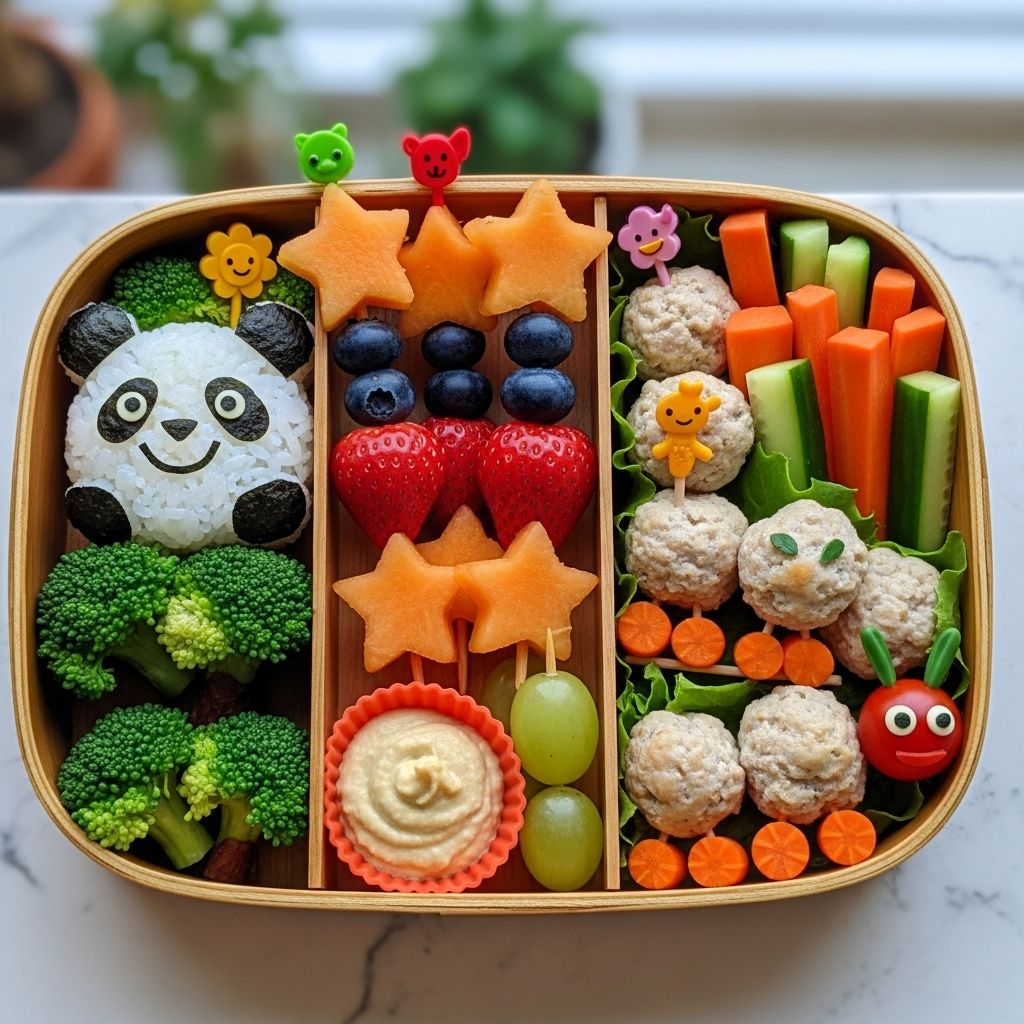
Kids’ bento boxes are an easy way to turn an ordinary lunch into something colorful, balanced, and fun to eat, without adding stress to your morning routine. Instead of one big sandwich and a random snack, you create a little tasting tray of small portions that look inviting and still cover all the major food groups.
This guide walks through everything needed to build kid-approved bento lunches: how to plan them, what to pack, how to keep food safe, and how to add a touch of creativity without spending hours cutting fruit into tiny animals.
Why Bento-Style Lunches Work So Well for Kids
Bento boxes suit the way many children like to eat: they prefer lots of small bites, a mix of flavors, and chances to choose what to eat next. The divided sections naturally encourage variety, making it easier to include fruits, vegetables, protein, and carbs in one compact container.
- Small compartments reduce overwhelm and make meals feel manageable for picky or easily distracted eaters.
- Visible variety in color and texture helps kids feel curious instead of bored by their lunch.
- Pre-portioned spaces gently guide you toward balanced nutrition without measuring or calorie counting.
Planning a Balanced Kids’ Bento Box
A simple way to structure any kids’ bento is to think in four building blocks: energy (carbs), strength (protein), helpers (fruits and veggies), and fun (a little extra that feels like a treat). You do not need to be perfect; consistency matters more than one exact ratio.
| Building Block | Role in Lunch | Kid-Friendly Examples |
|---|---|---|
| Carbs (energy) | Fuel for learning, play, and concentration. | Mini sandwiches, pasta, rice, tortillas, crackers, pita chips. |
| Protein (strength) | Supports growing muscles and keeps kids fuller longer. | Chicken, beans, cheese, yogurt, boiled eggs, hummus, tofu bites. |
| Fruits & Veggies (helpers) | Provide fiber, vitamins, and color. | Berry mix, cucumber coins, carrot sticks, cherry tomatoes, kiwi. |
| Fun Extra | Adds delight and encourages kids to open the box. | Small cookie, a few chocolate chips, popcorn, homemade mini muffin. |
Use this as a loose checklist rather than a rigid rule. If one day you end up with more fruits and fewer veggies or more carbs than usual, that is still perfectly fine.
Choosing the Right Bento Box for Your Child
The container itself can make or break the bento experience. Look for a box that is easy to open, leak-resistant, and sized for your child’s appetite and backpack. Younger kids often benefit from fewer, larger compartments, while older kids enjoy more variety and smaller sections.
- Size: A smaller child may do best with a shallow box that fits a half sandwich, a small fruit portion, a veggie portion, and a treat.
- Compartments: Three to five sections is usually enough for balanced lunches without overcomplicating packing.
- Material: Sturdy plastic or stainless steel are common; choose something lightweight yet durable enough for daily use.
- Ease of cleaning: Check whether the box is dishwasher safe or if the seals and lids come apart for washing.
Starter Food Ideas for Each Section
When in doubt, build your bento from a simple mix-and-match list. Picking one or two options from each category keeps variety high while planning low effort.
Kid-Friendly Carbs
- Mini sandwiches on whole grain bread cut into rectangles, squares, or small circles.
- Leftover pasta tossed with olive oil and a sprinkle of cheese.
- Rice or quinoa formed into small mounds or packed into a silicone cup.
- Whole grain crackers, pita wedges, or tortilla pinwheels.
Simple Protein Options
- Sliced chicken, turkey, or ham rolled into bite-sized spirals.
- Cheese cubes or string cheese pieces.
- Mini meatballs, falafel bites, or tofu cubes.
- Hummus, bean dip, or Greek yogurt as a protein-rich spread or dip.
Colorful Fruits and Vegetables
- Cucumber rounds, snap peas, or bell pepper strips.
- Grapes (halved for younger kids), berries, or orange segments.
- Cherry tomatoes, baby carrots, or lightly steamed broccoli florets.
- Apple slices brushed with lemon juice to slow browning.
Fun Extras in Moderation
- A homemade mini muffin or one small cookie.
- A sprinkle of granola or a few chocolate chips over yogurt.
- Air-popped popcorn in a dry compartment.
- A small handful of trail mix (if nuts are allowed at school).
Easy Visual Themes to Keep Lunch Interesting
You do not need elaborate character art to make a bento feel special. A simple visual idea can tie the whole box together and make planning easier. Think in terms of colors, shapes, or moods rather than intricate designs.
- Rainbow Lunch: Aim for at least five different colors across fruits, veggies, and main items.
- Shape Play: Use a basic cookie cutter to cut sandwiches or cheese into hearts, stars, or circles.
- Picnic Style: Combine finger foods like crackers, cheese, grapes, and cut veggies for a snacky feel.
- Leftover Remix: Turn last night’s chicken into wraps, or transform roasted veggies into a cold pasta salad.
Step-by-Step: Packing a Morning Bento in 10 Minutes
With a touch of prep, you can assemble a kid’s bento in about ten minutes on a school morning. The key is to think ahead about one or two components and keep everything else basic.
- Start with the main item: Place your biggest food first (sandwich, rice, or pasta) in the largest compartment so you can build around it.
- Add protein: Tuck in meat, cheese, beans, or yogurt close to the main item to make that section feel complete.
- Fill in with color: Use fruits and veggies to occupy the remaining sections and corners, aiming for at least two colors.
- Finish with a small treat: Find a dry spot for a small sweet or crunchy extra.
- Check the lid: Close the box and gently tip it from side to side to see if anything might spill or mix too much.
Make-Ahead Prep Tips for Busy Parents
- Cut sturdy veggies (carrots, cucumbers, peppers) and store them in clear containers so kids can see and choose what they want.
- Cook a batch of grains like rice or pasta and portion them into small containers to use over several days.
- Bake a tray of mini muffins or egg bites on the weekend and freeze them; move a few to the fridge the night before.
- Keep a “bento shelf” in the fridge or pantry with ready-to-pack items such as yogurt tubes, cheese sticks, and whole grain crackers.
Food Safety and Practical Considerations
- Use an insulated lunch bag with at least one ice pack for perishable items like meat, dairy, and eggs.
- Choose foods that hold up well at cool room temperature if refrigeration at school is not available.
- Cool down hot leftovers before sealing the box so condensation does not make everything soggy.
- Explain to your child how to keep the lunch bag zipped and away from direct heat sources.
Involving Kids in the Bento-Making Process
- Offer a short list of choices: “Pick one fruit and one veggie from this tray for tomorrow’s lunch.”
- Let older kids spread hummus, layer sandwiches, or fill silicone cups with crackers or trail mix.
- Invite kids to name their bento (“Rainbow Day Box,” “Picnic Lunch”) to boost excitement.
- Use this time to gently talk about balance: how fruits, veggies, and protein help them feel strong and focused.
Handling Picky Eating with Bento Boxes
- Pair one new food with two or three well-loved items so your child does not feel pressured.
- Offer very small servings of new foods at first, even a single slice or bite-sized piece.
- Repeat exposure over time without forcing kids to finish everything; the goal is curiosity, not perfection.
- Ask for feedback after school in a neutral way: “What did you like best in your lunch today?”
Sample Weekly Bento Box Rotation
| Day | Main Idea | Ingredients Used |
|---|---|---|
| Monday | Mini sandwich trio | Small sandwiches, carrot sticks, grapes, yogurt, mini muffin. |
| Tuesday | Pasta snack box | Cold pasta with cheese, cucumber rounds, berries, crackers. |
| Wednesday | DIY cracker stackers | Whole grain crackers, cheese cubes, turkey slices, cherry tomatoes, apple slices. |
| Thursday | Rice bowl bento | Rice, chicken pieces, steamed broccoli, orange wedges, popcorn. |
| Friday | Snacky picnic | Hummus, veggie sticks, pita chips, fruit mix, small treat. |
This kind of rotating structure reduces decision fatigue while still feeling fresh to your child because the shapes and combinations change from day to day.
Small Touches That Make a Big Difference
- Use reusable silicone cups to separate wet and dry foods and to add pops of color.
- Cut cheese or cucumbers with a tiny cookie cutter occasionally for a fun surprise.
- Write a short note or draw a simple smiley face on a napkin now and then.
- Alternate textures, such as crunchy carrots next to soft pasta, to keep each bite interesting.
SEO-Friendly FAQs About Kids’ Bento Boxes
How do I keep a kids’ bento box from getting soggy?
Keep wet and dry foods apart by using divided compartments, silicone cups, and small leak-resistant containers for dips and sauces. Allow hot foods like pasta or rice to cool completely before packing so steam does not create condensation inside the box.
What should I avoid putting in a school bento box?
Skip highly perishable items that spoil quickly without reliable refrigeration, such as raw fish or very soft dairy products. Also consider school allergy policies and avoid foods like nuts if your child’s classroom or school is nut-free.
How can I make a healthy bento lunch my kid will actually eat?
Include at least one favorite food in every box and introduce new foods in very small amounts alongside those favorites. Focus on variety in color and texture, and let your child help choose between a few healthy options so they feel ownership over the meal.
Do bento boxes take more time than regular school lunches?
They can be just as quick once you have a few prep habits in place, such as pre-cut veggies and cooked grains stored in the fridge. Because the compartments guide portioning and variety, planning becomes easier after a week or two of practice.
Can bento lunches work for kids with big appetites?
Absolutely; simply choose a larger container or pack a second small box with extra fruit, veggies, or protein. A bento is a flexible format, not a fixed portion size, so you can expand it to match your child’s needs.
Bringing Joy Back to the Lunchbox
Kids’ bento boxes do not need to be elaborate art projects to be special. With a practical container, a simple approach to balance, and a few colorful touches, you can create lunches that are easy to pack, fun to open, and nourishing enough to carry your child through the school day.
Over time, your bento routine will reflect your family’s preferences and schedule, whether that means quick leftover mash-ups or carefully planned theme days. The goal is not perfection, but a rhythm that makes both you and your child look forward to lunchtime.