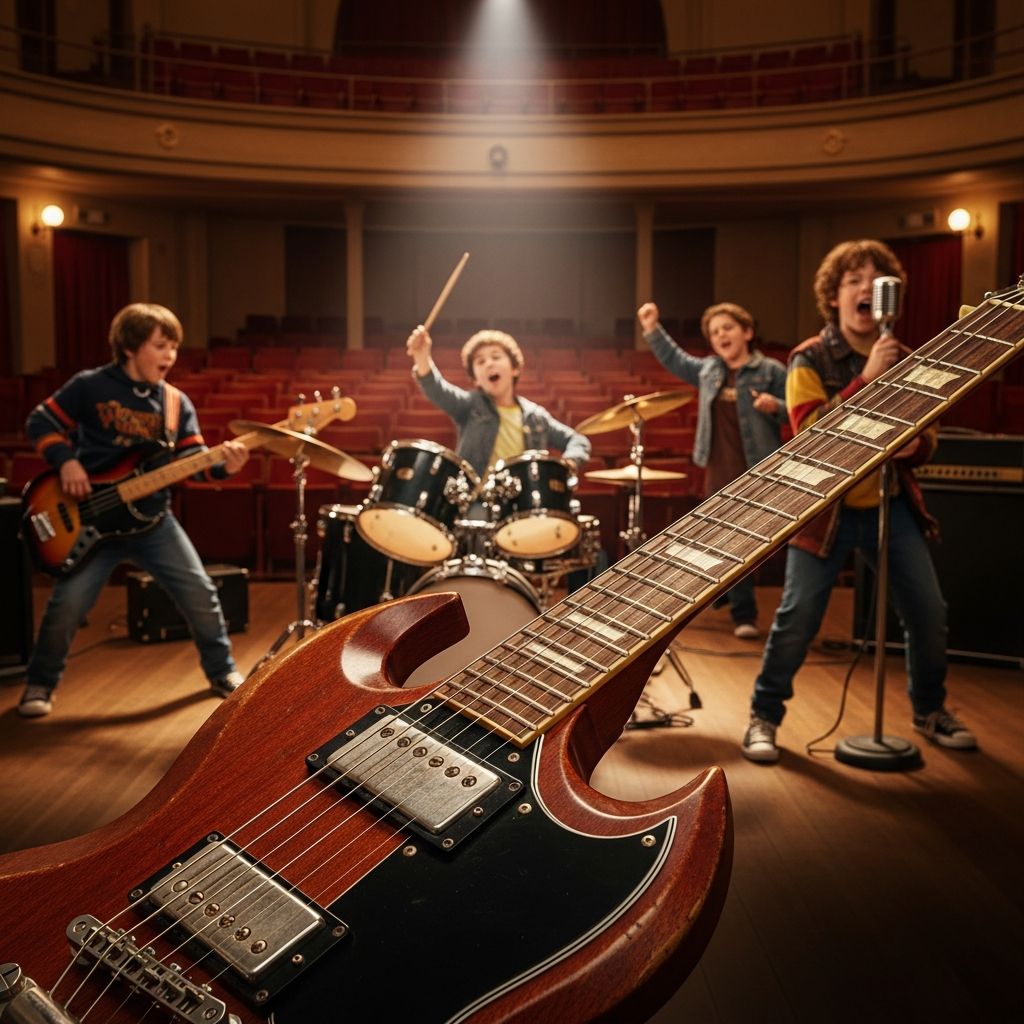
When School of Rock hit theaters in 2003, it looked like a simple Jack Black comedy about a fake teacher turning his class into a band. Two decades later, it stands as one of the most beloved family movies of its era, a film that still feels fresh, funny, and emotionally grounded for both adults and kids.
This retrospective digs into why the movie works so well, how it became an unlikely classic, and what makes its mix of rock and heart continue to resonate with new generations of viewers.
The Movie in a Nutshell: A Rock Fable for Families
Basic premise: Dewey Finn (Jack Black), a failing guitarist recently kicked out of his band, impersonates his roommate to take a substitute teaching job at an elite prep school. Once he discovers his students’ musical talent, he secretly turns the class into a rock band to compete in a local Battle of the Bands.
- Director: Richard Linklater, known for character-driven films like Before Sunrise and Dazed and Confused.
- Writer: Mike White, who also plays Dewey’s timid roommate, Ned Schneebly.
- Star: Jack Black, in what many critics and fans regard as his defining film role.
The plot is simple, but the execution is anything but shallow. The movie blends high-energy slapstick and rock anthems with a surprisingly sincere story about confidence, creativity, and the pressure kids face to be perfect.
Jack Black’s Defining Role: Chaos with a Conscience
Jack Black’s performance is the movie’s engine. Dewey Finn is ridiculous, irresponsible, and often wrong—but he is never mean-spirited. That warmth makes all the difference.
What makes his performance click:
- Physical comedy that feels musical: his movements are like riffs and drum fills—big, rhythmic, and exaggerated.
- Genuine musical skill: Black’s real-life rock background with Tenacious D lets him perform, teach, and joke about music with credibility.
- Emotional honesty: under the bluster, Dewey is a man terrified of failure, clinging to his dream and finally learning to share it instead of hoarding it.
Critics at the time highlighted how rare it was to see such an outsized comic performance that still felt grounded in real emotion. Dewey’s arc—from selfish wannabe rock star to flawed but loving mentor—is what prevents the film from being just a string of gags.
Kids as Real People, Not Just Punchlines
One of the film’s quiet strengths is how it treats the students. They are not there merely to feed jokes to the adults; they have real insecurities, talents, and internal conflicts.
Common pressures the film portrays include:
- Perfectionism and over-scheduling at elite schools, where grades and achievements overshadow creativity.
- Family expectations that define kids by success in academics or classical music, not by what they personally enjoy.
- Self-image issues, like weight and shyness, that affect whether kids feel allowed to step into the spotlight.
Dewey’s teaching style is undeniably reckless and dishonest in setup—but the film’s emotional heart lies in how he listens to his students, sees their potential, and gives them permission to try and fail. That emphasis on psychological safety and experimentation aligns with what educational research identifies as key to fostering creativity in children.
Rebellion with a Safety Net: Why Parents Still Accept It
On paper, School of Rock should have terrified parents: a fraud in a classroom, skipping academics, sneaking kids off-campus. Yet it has become a go-to title for family movie nights. The reason is that its rebellion is framed with care, not nihilism.
| On-Screen Rebellion | How the Film Balances It |
|---|---|
| Dewey lies to the school and parents. | The deception is confronted and condemned; he faces consequences and must rebuild trust. |
| Kids skip conventional academics for rock. | The film shows they gain confidence, teamwork skills, and self-expression—complements, not replacements, for academics. |
| Authority is mocked. | Authority figures (like the principal) are humanized, not demonized, and ultimately collaborate with Dewey and the kids. |
The story lands in a place where parents and teachers recognize that controlled risk and creative outlets can support healthy development—an idea echoed in guidance from child development organizations that stress the value of play, arts, and autonomy.
Rock History 101: A Gateway to the Classics
The movie operates partly as a fun, disguised music appreciation class. Dewey introduces his students to classic rock bands and styles, creating a miniature syllabus of guitar riffs, rhythm sections, and stage presence.
Why this matters beyond nostalgia:
- Intergenerational bridges: Parents who grew up with bands like AC/DC, Led Zeppelin, or The Who can share that music with their kids through the film’s soundtrack and references.
- Cultural literacy: The movie casually introduces concepts like “stage presence,” “lead vs. rhythm guitar,” and “band dynamics,” demystifying how music is made.
- Curiosity spark: For many viewers, School of Rock is a first step into exploring older rock catalogs, similar to how other films have revived interest in older genres.
Because the kids are shown learning, practicing, and improving, the film reinforces that musical ability is not just innate talent—it’s work, collaboration, and persistence, themes widely recognized in music education research.
From Modest Hit to Cultural Touchstone
School of Rock was commercially successful on its original release, earning strong box office returns and critical praise. But its long-term legacy has arguably been even more significant.
Key milestones in its cultural afterlife include:
- A Broadway musical adaptation that translated the story to the stage with new songs, introducing the concept to theater audiences.
- A television series targeted at tweens and teens, expanding the brand and its core message about music and friendship.
- Enduring fan affection reflected in high audience scores on review aggregators and frequent appearances in “best family film” lists.
The film also sits comfortably in discussions of Richard Linklater’s career, demonstrating that a director known for reflective, low-key dramas could craft a family-friendly studio comedy without losing his interest in character and growth.
Why It Still Works for Today’s Kids
Children and families watching the movie now live in a different media landscape—streaming platforms, social media, and a constant flow of content. Yet School of Rock continues to find new viewers each year.
Reasons it remains relevant:
- Screen-free creativity: The movie celebrates instruments, rehearsal, and in-person collaboration rather than digital fame.
- Found family theme: Dewey and the class form a community that feels especially resonant in a time of increasing isolation and academic pressure.
- Humor that ages well: Most jokes come from character and situation, not dated references, helping the film feel surprisingly timeless.
- Empathy for adults: The principal, played by Joan Cusack, is initially a strict authority figure but gradually revealed as a stressed professional who also loves music and isn’t as rigid as she appears.
These elements line up with broader conversations in education and psychology about the importance of social-emotional learning, arts participation, and supportive mentorship.
Watching as a Parent: Conversation Starters
Seen through adult eyes, the film becomes more than a feel-good comedy. It can be a way in to important conversations with kids about honesty, passion, and pressure.
Topics parents and caregivers can discuss after watching:
- Rules vs. growth: When, if ever, is it okay to bend rules? How do we balance safety with exploration?
- Failure and feedback: The band doesn’t win the contest. What does the movie say about success and recognition?
- Identity: Many kids in the class discover parts of themselves—stage managers, costume designers, security, and more. What does that say about roles beyond the spotlight?
- Talking to adults: The students eventually advocate for themselves. How can kids respectfully share what they care about with parents and teachers?
Because the film presents both the kids’ and adults’ perspectives, it provides a relatively balanced platform for these conversations, something family media researchers identify as a key trait of enduring, cross-generational films.
Frequently Asked Questions (FAQs)
Is School of Rock appropriate for children?
The film is generally considered suitable for older children and pre-teens, though it includes mild language, rock culture references, and themes of rule-breaking. Parents and rating boards have noted that its positive messages about teamwork, confidence, and mentorship help balance the edgier elements.
Did the child actors really play their instruments?
Several of the young cast members were selected for their real musical abilities and did play instruments on screen, which contributes to the authenticity of the performances and the concert scenes.
How accurate is the school environment in the movie?
The prep school setting is exaggerated for comedic effect, but it draws on real concerns about academic pressure and limited time for arts education that have been documented in research and policy discussions.
What age group gets the most out of the movie?
Many families find that children around 9–13 years old connect strongly with the students’ experiences, while teenagers and adults appreciate the humor, rock references, and Dewey’s mid-life crisis. Its multigenerational appeal has been noted by critics since its release.
Q: Did School of Rock really influence music education?
A: While it is still a fictional comedy, the film’s popularity coincided with and arguably supported growing interest in extracurricular rock programs, after-school music initiatives, and less traditional approaches to music learning, similar in spirit to project-based and ensemble-focused methods described in music education literature.
References
- School of Rock — Wikipedia. 2024-06-28. https://en.wikipedia.org/wiki/School_of_Rock
- School of Rock (2003) – Plot Summary — IMDb. 2024-01-10. https://www.imdb.com/title/tt0332379/plotsummary/
- The School of Rock — Rotten Tomatoes. 2023-11-15. https://www.rottentomatoes.com/m/school_of_rock
- School of Rock movie review & film summary (2003) — Roger Ebert. 2003-10-03. https://www.rogerebert.com/reviews/school-of-rock-2003
- School of Rock — Dove.org Family Review. 2017-09-01. https://dove.org/review/960641-school-of-rock/
- School of Rock — Plugged In Movie Review. 2014-06-26. https://www.pluggedin.com/movie-reviews/schoolofrock/
- The Arts and Achievement in At-Risk Youth — National Endowment for the Arts. 2012-03-30. https://www.arts.gov/sites/default/files/Arts-At-Risk-Youth.pdf