Understanding the Mechanics of Single-Blade Shaving
The shaving industry has long promoted multi-blade cartridge razors as the gold standard for achieving a close shave. However, this approach often comes at a significant cost to skin health, particularly for men with sensitive or coarse hair types. The fundamental problem with cartridge razors lies in their aggressive cutting mechanism. Unlike traditional safety razors, which cut hair at the skin’s surface, cartridge razors pull hair below the dermis before severing it. This sub-cutaneous cutting creates a sharper point on the hair shaft as it retracts, which can curl back into the skin and cause ingrown hairs, razor bumps, and persistent irritation.
Safety razors operate on a completely different principle. Equipped with a single, precisely positioned blade, these tools remove hair directly at skin level, eliminating the tugging and scraping sensations that plague multi-blade systems. The design philosophy prioritizes precision over aggression, allowing for a gentler yet remarkably effective shaving experience. This fundamental difference in cutting mechanics makes safety razors particularly valuable for individuals with coarse, curly, or sensitive facial hair, where irritation presents a constant challenge.
The Physical Design and Its Impact on Shaving Comfort
A safety razor’s effectiveness extends beyond its blade configuration to encompass its overall construction and weight distribution. The weighted brass handle represents a crucial design feature that transforms the entire shaving experience. Unlike lightweight disposable razors that require constant downward pressure from the user, a properly weighted handle delivers consistent cutting power through gravity alone. This distinction matters significantly for men with sensitive skin, as excessive pressure amplifies friction and irritation against the epidermis.
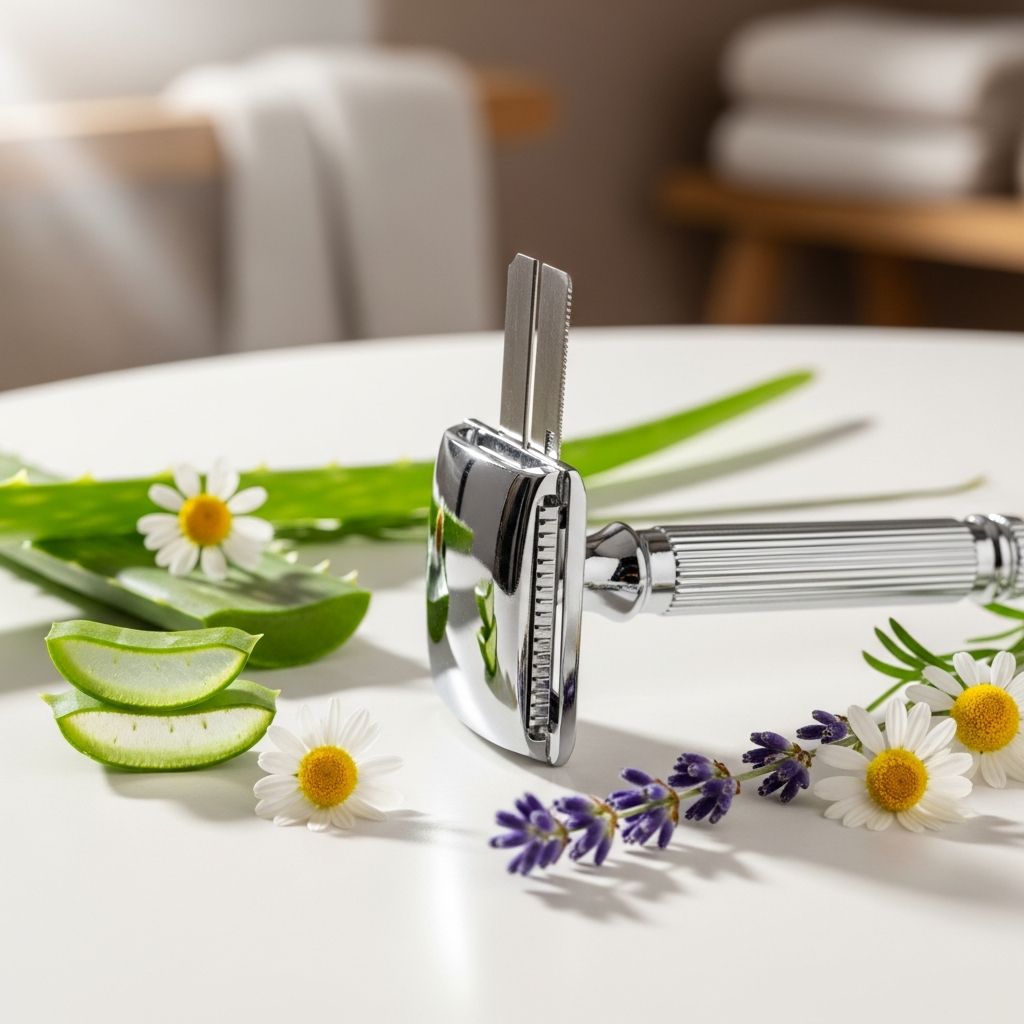
The brass construction provides several tangible advantages beyond mere aesthetics. Brass naturally resists corrosion, ensuring the razor maintains its structural integrity through repeated use and daily cleaning. The material also offers a substantial, premium feel that psychological research suggests improves user confidence and satisfaction. Furthermore, the chrome-plated baseplate and textured cap combination creates multiple tactile reference points, allowing users to develop muscle memory for consistent blade angles during application.
Precision maneuvering represents another critical advantage of thoughtfully designed safety razors. The compact head size enables users to navigate challenging facial contours with greater accuracy, reducing the likelihood of accidental nicks around the jawline, neck, and sensitive areas near the eyes. This ergonomic advantage becomes particularly pronounced for individuals new to safety razor shaving who are still developing proper technique.
Addressing the Razor Bump Problem Through Engineering
Razor bumps, medically termed pseudofolliculitis barbae, represent one of the most persistent challenges faced by men with coarse or curly hair. This condition develops when cut hair curves back into the skin, triggering an inflammatory response. The prevention of this condition requires cutting hair above rather than below the skin surface, a fundamental distinction that separates effective shaving tools from merely adequate ones.
Safety razors specifically designed for sensitive skin incorporate engineering features that minimize blade exposure—the distance between the blade edge and the protective guard. Reduced blade exposure necessarily decreases the razor’s aggressiveness, creating a milder cutting experience that prioritizes skin safety without sacrificing shaving effectiveness. This design philosophy contrasts sharply with aggressive razors that prioritize closeness over comfort, often sacrificing skin health in the pursuit of an ultra-close shave.
The protective architecture of a safety razor head also plays an underappreciated role in preventing irritation. The guard bars and safety bar work in concert to support the skin tissue, preventing excessive bunching ahead of the blade. This support reduces the effective blade-to-skin angle, naturally limiting cutting depth and creating a more forgiving shaving experience. Men transitioning from cartridge razors often report an immediate sense of security upon switching to properly designed safety razors, describing the experience as feeling virtually incapable of causing harm.
Preparation Protocols for Optimal Shaving Results
The difference between a comfortable shave and an irritating one often hinges on proper preparation. While many men rush through their grooming routine, dedicating time to adequate skin preparation yields measurable improvements in results and comfort. The process begins with exposure to warm water, which serves multiple physiological functions. Heat relaxes the facial muscles, opens pores, and softens the structural integrity of whiskers, making them more susceptible to clean cutting rather than pulling and tugging.
A warm washcloth applied to the face for one to two minutes before shaving accelerates this preparation process considerably. This simple technique accomplishes what expensive pre-shave oils and sophisticated grooming gadgets attempt to provide through chemistry—it physically conditions the skin and hair for optimal blade contact. The slight swelling and softening that results from heat exposure dramatically reduces the cutting pressure required to achieve a clean result.
Pre-shave oils and specialized grooming preparations represent an optional but worthwhile addition to the routine for men with particularly sensitive skin. These formulations create a protective barrier between blade and epidermis while simultaneously lubricating the cutting path. When combined with a quality shaving cream that provides substantial cushioning, the result approximates a professional barber experience in terms of comfort and results.
Comparing Safety Razors to Conventional Shaving Methods
| Feature | Safety Razors | Cartridge Razors | Electric Shavers |
|---|---|---|---|
| Cutting Mechanism | Single blade at skin level | Multiple blades below skin | Oscillating blades |
| Irritation Risk | Minimal | High for sensitive skin | Moderate to high |
| Long-term Cost | $0.50–$1.00 per blade | $4.00–$8.00 per cartridge | High maintenance and replacement |
| Learning Curve | Moderate | Minimal | Minimal |
| Environmental Impact | Minimal waste | Significant plastic waste | Moderate waste |
| Shave Quality | Excellent for sensitive skin | Initially close, problematic long-term | Good but less close |
The Economic Advantage of Transitioning to Safety Razors
One of the most compelling arguments for switching to safety razors involves the dramatic reduction in ongoing costs. Disposable and cartridge razor systems have engineered themselves into a perpetual consumption model. As manufacturers release new cartridge designs featuring additional blades and complexity, prices escalate steadily. Men using premium cartridge systems often spend between fifty and one hundred dollars annually on blades alone, with no end to the expense in sight.
Safety razors invert this economic model entirely. A quality safety razor represents a one-time investment typically ranging from thirty to sixty dollars. The ongoing expense involves only replacement blades, which cost between fifty cents and one dollar each. Most users find that individual blades remain effective for five to ten shaves before requiring replacement, bringing the annual blade cost to approximately ten to fifteen dollars. This represents an eighty to ninety percent reduction compared to cartridge systems over a five-year period.
This economic advantage extends to the environmental realm as well. Cartridge razors constitute a significant source of plastic waste, with billions of disposable razors reaching landfills annually. Safety razors, by contrast, generate minimal waste beyond small metal blades. The weighted brass handle remains functional for decades with proper care, creating an heirloom quality that stands in stark contrast to the throwaway mentality surrounding disposable options.
Mastering the Technique: Overcoming the Learning Curve
The primary disadvantage of safety razors—and it deserves candid acknowledgment—involves the learning curve required to master proper technique. Men accustomed to the simplicity of cartridge razors often experience a period of adjustment spanning several weeks to months. This learning curve intimidates some potential converts and causes others to abandon safety razors prematurely before realizing their benefits.
The adjustment period stems from two primary technical considerations. First, safety razors require more precise blade angle positioning. Most users find optimal results at blade angles between thirty and forty-five degrees to the skin surface. This differs substantially from the more forgiving angle tolerance of cartridge razors. Second, safety razors demand a different pressure philosophy. Rather than pressing down firmly to ensure cutting power, users must apply only enough pressure for the blade to contact skin, relying on the razor’s weight to provide cutting force.
Despite these challenges, the learning process rarely extends beyond a handful of uncomfortable shaves. Users who invest time in proper technique development typically report mastery within five to ten applications. Furthermore, the feedback loop provided by safety razors proves remarkably instructive—increased pressure immediately produces increased irritation, creating strong negative reinforcement that efficiently teaches proper technique.
Real-World Results and Clinical Validation
Beyond anecdotal user reports, clinical evidence substantiates the skin-friendly qualities of properly designed safety razors. Dermatological testing has documented that users experience measurable improvements in skin softness and smoothness within four weeks of consistent use. These improvements correlate directly with the elimination of ingrown hairs and the reduction of post-shave irritation. Men with previously troublesome skin conditions often report near-complete resolution of razor bumps and folliculitis within similar timeframes.
The consistency of positive results across diverse user populations—regardless of geographic location, climate, or baseline skin sensitivity—points to a fundamental superiority of the single-blade, skin-level cutting mechanism. While individual experiences vary, the overwhelming pattern indicates that safety razors successfully address the primary complaints associated with cartridge and disposable options.
Building a Complete Shaving System
While the razor itself represents the foundation of an effective shaving system, complementary products enhance results substantially. A dedicated shaving brush—preferably featuring badger or synthetic bristles—applies shaving cream more effectively than hands alone, creating a richer lather and lifting whiskers away from the face. Specialized pre-shave oils and post-shave balms address specific skin concerns, with many formulations incorporating botanical ingredients that soothe irritation and promote healing.
Quality shaving creams formulated specifically for sensitive skin provide superior cushioning compared to mass-market alternatives. These formulations typically feature moisturizing agents, anti-inflammatory botanicals, and protective emollients that reduce friction and irritation during the shaving process. The investment in complementary grooming products compounds the benefits of safety razor shaving, creating a holistic system that prioritizes skin health while delivering professional-quality results.
Frequently Asked Questions About Safety Razor Shaving
How frequently should I replace safety razor blades?
Most users find that individual double-edge blades remain effective for five to ten shaves before dulling. However, this varies based on beard density, skin sensitivity, and personal preference. Many enthusiasts develop a keen sense for when blade replacement becomes necessary, often noting decreased cutting efficiency or increased tugging sensations.
Can women use safety razors effectively?
Absolutely. While marketed toward men, safety razors work equally well for women’s shaving needs. The single-blade design and emphasis on minimizing irritation benefit all users regardless of gender. Women with sensitive skin particularly appreciate the reduced risk of ingrown hairs and razor bumps.
Is proper blade disposal complicated?
No. Used blades can be placed in a dedicated blade disposal container—an inexpensive item available from most grooming retailers. Once full, the sealed container is discarded, containing sharp blades safely within a protective enclosure.
Will I experience cuts during the learning phase?
Minor nicks are possible during the initial adjustment period, though well-designed safety razors minimize this risk substantially. The learning curve primarily involves discomfort from improper technique rather than serious cuts. Users who progress gradually and pay attention to blade angle and pressure typically avoid significant injuries.
How does a safety razor compare to electric shavers?
Safety razors generally produce closer shaves with less irritation, while electric shavers offer greater convenience and a minimal learning curve. For men prioritizing shave quality and skin health, safety razors excel. Those valuing convenience and speed may find electric options more appealing.
References
- Safety Razor Product Information and Benefits — Bevel Official Website. 2025. https://getbevel.com/products/safety-razor
- Bevel Safety Razor with Brass Weighted Handle: Overview and Specifications — Ulta Beauty. 2025. https://www.ulta.com/p/safety-razor-pimprod2035284
- Bevel DE Safety Razor: Review, Photos, Measurements, and Photo Analysis — Badger and Blade Forum. 2024. https://www.badgerandblade.com/forum/threads/bevel-de-safety-razor-review-photos-measurements-photo-analysis.537704/
- Bevel Safety Razor with Brass Weighted Handle: Product Review and Rating — Review Rating. 2025. https://www.review-rating.com/en/product/bevel-safety-razor-with-brass-57982
- Bevel’s Safety Razor Is the Best Way to Ditch Cartridges for Good — Esquire. 2024. https://www.esquire.com/style/grooming/a63371715/bevels-safety-razor-review/