Why Coloring Pages Matter in Early Childhood
Preschool coloring pages are more than just a pastime for young children—they are powerful tools for development. From building fine motor skills to fostering creativity, these activities lay the foundation for lifelong learning and emotional well-being .
Boosting Cognitive and Motor Skills
Coloring pages help children develop essential cognitive and motor skills. As they grip crayons and fill in shapes, children strengthen their hand muscles and improve coordination, which are crucial for writing and other daily tasks .
- Enhances hand-eye coordination and dexterity
- Supports the development of fine motor skills needed for school readiness
- Encourages focus and patience as children complete each page
Encouraging Creativity and Self-Expression
Coloring allows children to express themselves in unique ways. Even with set outlines, kids can choose colors, experiment with techniques, and create their own interpretations of images .
- Provides a safe outlet for imagination and creativity
- Empowers children to make decisions about color combinations and artistic choices
- Builds confidence as children see their ideas come to life
Supporting Emotional and Social Growth
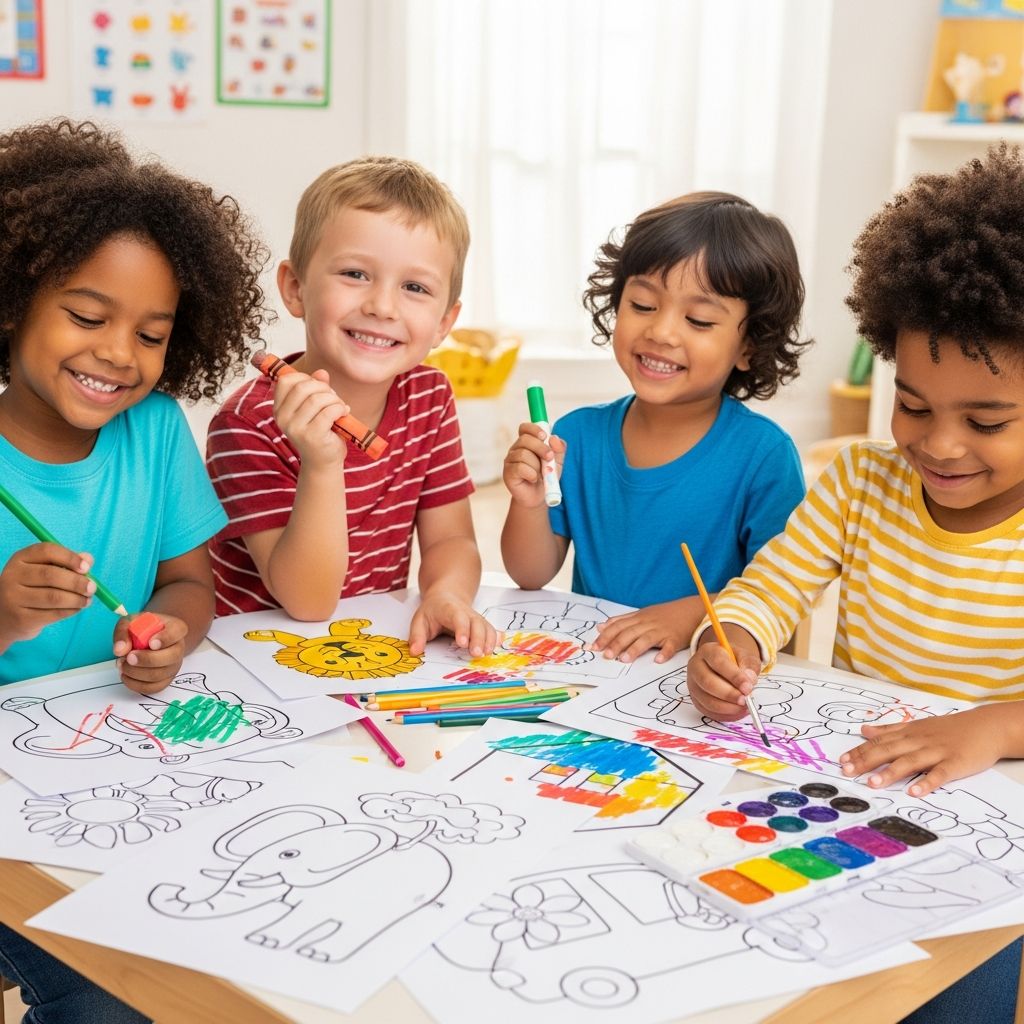
Coloring activities also nurture emotional intelligence and social skills. Children can use art to express feelings, and group coloring sessions promote teamwork and communication .
- Offers a calming activity that helps children manage stress and emotions
- Encourages sharing, cooperation, and conversation during group coloring
- Helps children articulate their thoughts and feelings through art
Integrating Learning Themes and Concepts
Coloring pages can be tailored to reinforce educational themes, such as numbers, letters, shapes, and real-world topics. This makes learning engaging and memorable .
- Introduces early math concepts like counting and pattern recognition
- Teaches color recognition and vocabulary
- Connects learning to children’s interests, such as animals, transportation, or seasons
Practical Tips for Parents and Educators
Maximize the benefits of coloring pages by integrating them into daily routines and learning activities. Here are some effective strategies:
- Choose age-appropriate pages that match children’s skill levels and interests
- Encourage storytelling by asking children to create stories around their colored images
- Use themed pages to reinforce classroom topics or home learning
- Allow freedom in color choices to foster creativity and decision-making
- Provide a variety of art supplies to explore different textures and techniques
Comparing Benefits of Coloring Activities
| Skill Developed | How Coloring Helps |
|---|---|
| Fine Motor Skills | Strengthens hand muscles and improves grip |
| Creativity | Encourages imaginative expression and decision-making |
| Emotional Regulation | Provides a calming outlet for stress and emotions |
| Social Skills | Promotes sharing, cooperation, and communication |
| Learning Concepts | Reinforces math, language, and thematic knowledge |
Frequently Asked Questions
How do coloring pages help preschoolers learn?
Coloring pages reinforce concepts like shapes, numbers, and letters, making learning fun and interactive. They also help children practice color recognition and develop early math skills .
Can coloring improve a child’s focus?
Yes, coloring encourages children to concentrate on one task for an extended period, which builds patience and attention span .
Are there social benefits to coloring?
Group coloring activities promote sharing, cooperation, and communication, helping children build social skills and emotional intelligence .
How can I make coloring more educational?
Choose themed pages that align with learning topics, encourage storytelling, and discuss the images and colors used to deepen understanding .
What supplies do I need for preschool coloring?
Basic supplies include crayons, colored pencils, markers, and age-appropriate coloring pages. Offering a variety of materials can enhance creativity and exploration .
Conclusion
Preschool coloring pages are a versatile and valuable resource for nurturing creativity, learning, and emotional growth in young children. By integrating these activities into daily routines, parents and educators can support holistic development and lay the groundwork for lifelong success .