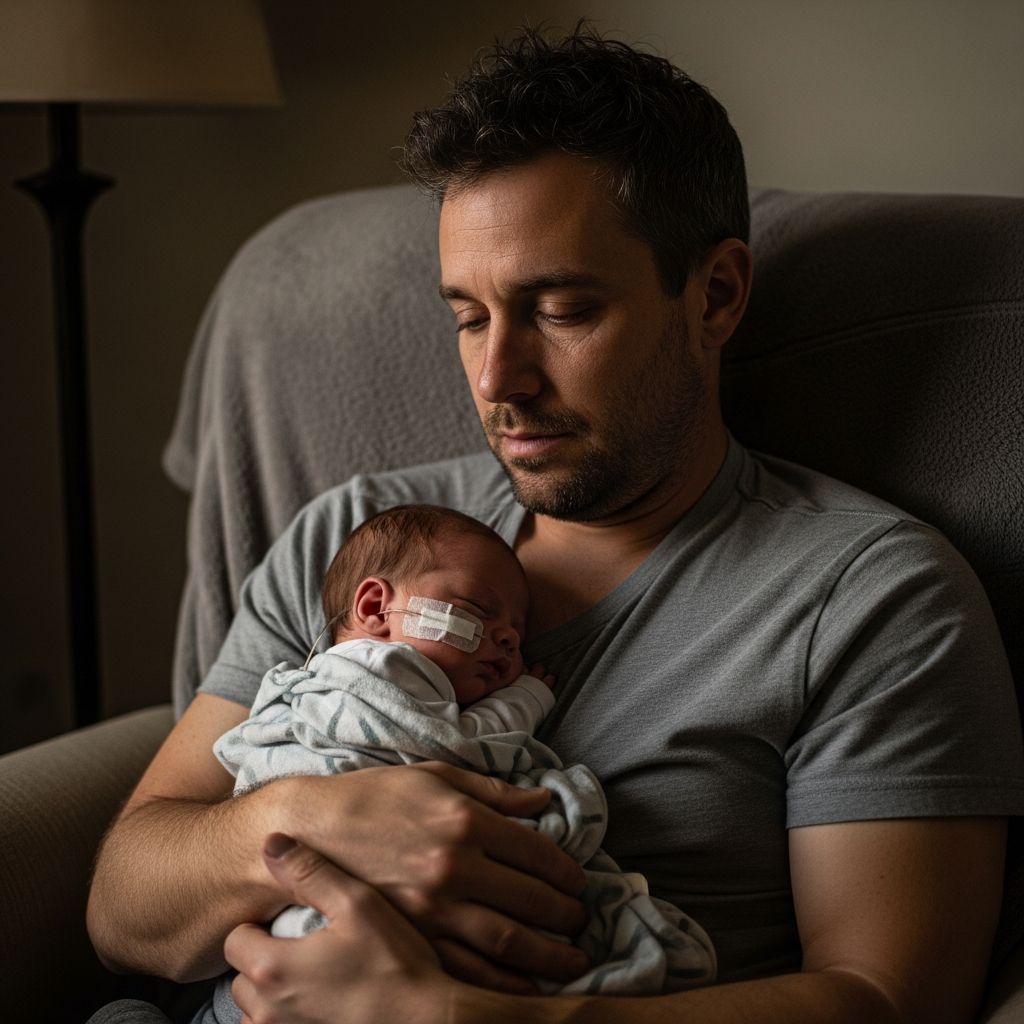
The journey of parenting a premature baby begins in the high-stakes environment of the Neonatal Intensive Care Unit (NICU), where medical teams monitor every breath and heartbeat. For fathers, this period is fraught with worry, but a surprising shift occurs once the infant is discharged home: their stress levels often rise sharply, surpassing those of mothers. This phenomenon, documented in rigorous studies, highlights a critical yet under-discussed aspect of preterm parenting.
Understanding the NICU-to-Home Transition
Bringing a preemie home marks a milestone of hope, yet it triggers unique pressures for fathers. In the NICU, structured care provides a safety net, but home demands immediate, round-the-clock responsibility without professional oversight. Research shows that fathers’ cortisol—a key stress hormone—climbs steadily over the first two weeks post-discharge, while mothers’ levels stabilize or decline.
This transition amplifies fathers’ multifaceted roles: caregiver, provider, and emotional anchor. Unlike mothers, who may have bonded through pregnancy and delivery, dads often step into primary hands-on duties amid work and household demands. A study tracking 86 parents via salivary cortisol tests and surveys confirmed this divergence, noting fathers’ biological stress markers outpaced their self-reported feelings, suggesting many underestimate their strain.
Scientific Evidence: Cortisol and Stress Trajectories
Northwestern Medicine researchers measured stress through saliva samples on discharge day, then at 1, 5, and 14 days home. Both parents started with elevated cortisol, but fathers’ rose progressively, indicating sustained activation of the body’s stress response. Mothers’ returned near baseline, possibly due to oxytocin-driven bonding or prior NICU adaptation.
| Time Point | Fathers’ Cortisol Trend | Mothers’ Cortisol Trend |
|---|---|---|
| Pre-Discharge | High | High |
| Day 1 Home | Increasing | Stabilizing |
| Day 5 Home | Further Rise | Stable |
| Day 14 Home | Peak Elevation | Baseline |
This table summarizes key findings from the study, underscoring the prolonged paternal stress curve. Prolonged elevation beyond two weeks raises concerns for health impacts like weakened immunity and impaired sleep.
Emotional and Psychological Burdens on Fathers
Beyond biology, fathers grapple with profound emotional shifts. Six months post-discharge, many recall discharge anxiety: fear of the unknown, inadequate preparation, and sudden responsibility. One qualitative study revealed fathers’ preoccupations with infant health, maternal recovery, and logistics persisted, crowding out personal needs.
- Fear of Failure: Doubts about managing feeds, medications, and emergencies without NICU nurses.
- Role Overload: Balancing work, home duties, and vigilance over a fragile newborn.
- Suppressed Emotions: Societal expectations to ‘stay strong’ mask anxiety, depression, and isolation.
Depression symptoms affect 17% of NICU fathers, persisting post-discharge unlike in mothers, per a large Pediatrics study. This gap demands targeted outreach, as untreated paternal distress harms family dynamics and child development.
Why Do Fathers Experience More Stress?
Several factors explain this disparity. Preterm birth disrupts expected fatherhood, with NICU separation hindering early bonding. Fathers often report heightened avoidance and hostility linked to hospitalization length, per psychological assessments.
Mothers may benefit from biological attunement and support networks focused on postpartum recovery. Fathers, conversely, juggle external pressures: returning to jobs amid sleep deprivation and financial strain. Cultural norms discourage vulnerability, leading to unacknowledged cortisol surges.
Even full-term parents face home stresses like sleep loss, but preemie dads’ baseline is amplified by medical fragility—frequent alarms, growth monitoring, and follow-up visits.
Long-Term Implications for Families
Unchecked stress cascades: impaired parenting, strained partnerships, and altered infant attachment. Babies sense parental tension, potentially affecting neurodevelopment. Fathers’ involvement in NICU, however, yields positives like faster infant weight gain and bonding opportunities.
Six months out, fathers value home-based care transitions, describing hospital relief but ongoing worries. Prioritizing paternal mental health fosters thriving families, as ‘babies thrive when parents thrive.’
Practical Strategies to Support Preemie Dads
Healthcare providers can intervene early. NICU protocols should include father-specific training: hands-on skills like kangaroo care and tube feeding to build confidence.
- Screen Universally: Routine depression and stress checks for both parents.
- Encourage Breaks: Partners urging gym time, friend meetups, or walks reduces cortisol.
- Post-Discharge Follow-Up: Home visits or virtual check-ins for first 30 days.
- Peer Networks: Dad groups sharing preemie stories normalize experiences.
Fathers: Delegate tasks, prioritize self-care, and voice concerns. Partners: Validate struggles, share load. Programs like those at Ann & Robert H. Lurie Children’s Hospital advocate proactive education.
Broader Mental Health Context in NICU Families
Preterm birth elevates risks: mothers show more anxiety/depression immediately post-birth, but trajectories diverge homeward. Fathers’ anger and avoidance correlate with NICU duration, signaling need for tailored interventions.
Holistic support—therapy, mindfulness, couple counseling—mitigates risks. Policymakers should fund paternal postpartum resources, mirroring maternal initiatives.
Frequently Asked Questions (FAQs)
How long does post-NICU stress last in fathers?
Stress markers like cortisol can elevate for at least 14 days, with emotional effects lingering months; early intervention helps.
Are fathers of preemies at higher depression risk?
Yes, 17% report symptoms persisting post-discharge, versus declining maternal rates.
What NICU activities build father confidence?
Kangaroo care, feeding, and diaper changes during stays foster bonding and readiness.
Can stress affect the preemie baby?
Yes, parental stress influences attachment and development; supportive parenting buffers this.
How can partners help reduce dad’s stress?
Encourage relaxation, share duties, and communicate openly about fears.
Conclusion: Empowering Fathers for Stronger Families
Recognizing fathers’ unique post-NICU stress empowers better outcomes. By validating their experiences and providing tools, we nurture resilient parents and healthy preemies. Shift focus from ‘strong silent dads’ to supported partners—families will flourish.
References
- Preemies’ Dads More Stressed Than Moms After NICU — Northwestern University Feinberg School of Medicine. 2017-12-06. https://news.feinberg.northwestern.edu/2017/12/06/preemies-dads-more-stressed-than-moms-after-nicu/
- Fathers’ Experiences Six Months After their Preterm Infant’s… — Taylor & Francis Online. 2024. https://www.tandfonline.com/doi/full/10.1080/24694193.2024.2406209
- Mothers and Fathers in NICU: The Impact of Preterm Birth on… — PMC (PubMed Central). 2016. https://pmc.ncbi.nlm.nih.gov/articles/PMC5114875/
- Depression in Dads of Preemies Deserves More Attention — Ann & Robert H. Lurie Children’s Hospital. N/A. https://www.luriechildrens.org/en/news-stories/depression-in-dads-of-preemies-deserves-more-attention/
- Study: Dads stress out when premature babies come home — UPI.com. 2017-12-08. https://www.upi.com/Health_News/2017/12/08/Study-Dads-stress-out-when-premature-babies-come-home/9991512766461/