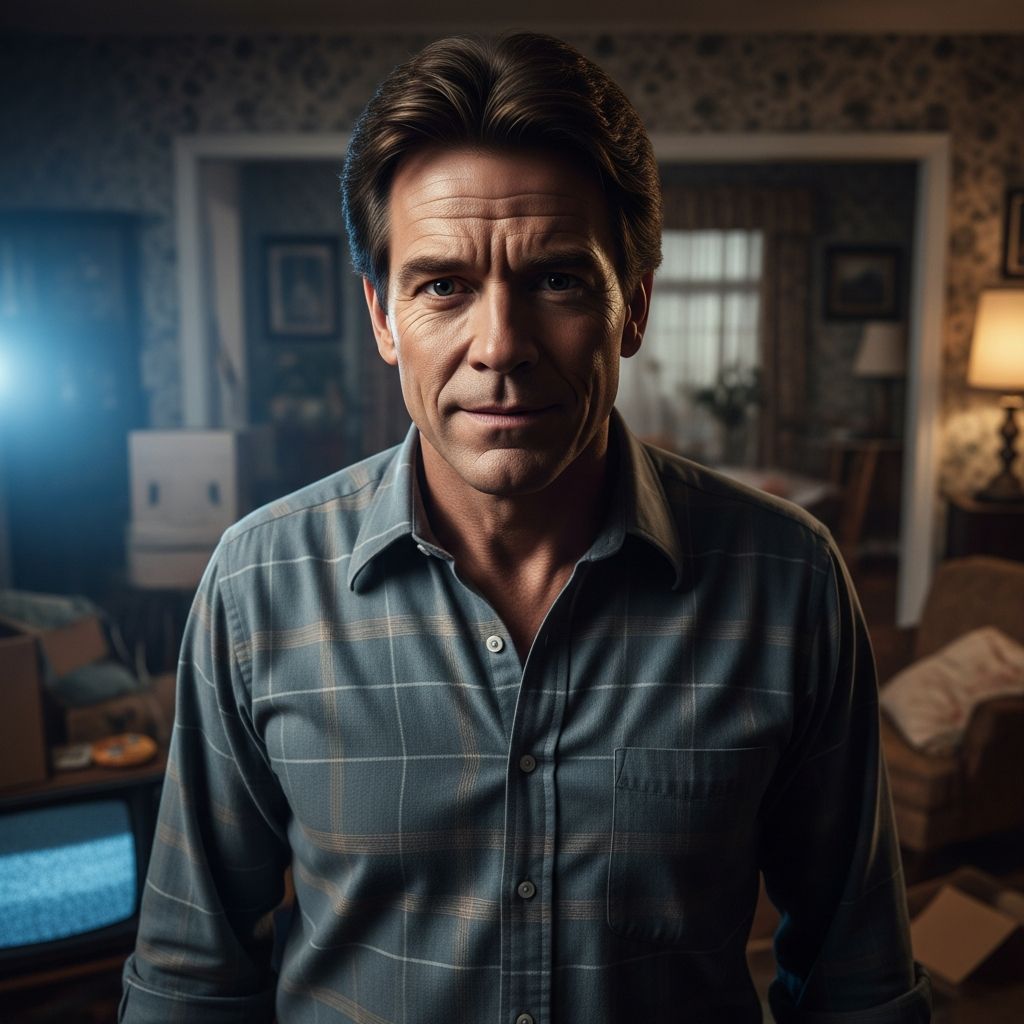
In the crowded history of horror cinema, fathers usually fall into two extremes: oblivious obstacles or outright threats. Craig T. Nelson’s Steve Freeling in Poltergeist quietly breaks that mold, offering a portrait of a flawed, funny, deeply engaged dad who becomes the emotional spine of a ghost story.
From Background Parent to Emotional Center
In many horror films, children and mothers absorb the screen time while fathers drift in and out as plot devices. Steve Freeling flips this pattern by staying emotionally present from the first sign that something is wrong in his home to the final moment when the family escapes its haunted nightmare.
His role is not about delivering bravado speeches or wielding weapons; instead, his value comes from showing up, listening, and insisting that the safety of his family outweighs his status, job, and ego. That shift—from distant provider to active emotional participant—helps explain why this character still resonates with parents decades later.
The Suburban Dream Under Siege
Steve is introduced as a classic early-1980s success story: a real-estate man selling neatly planned neighborhoods, a tidy house full of kids, and a sense that the future is mapped out in cul-de-sac comfort. The haunting in Poltergeist is terrifying not just because of the ghosts but because it invades this carefully constructed ideal of middle-class security.
As the family’s provider, Steve watches the very symbol of his achievement—the house—turn into a weapon aimed at his children. The film uses his unraveling confidence to explore a bigger anxiety simmering beneath the era’s optimism: what if the systems and institutions that promise safety are actually built on something rotten?
How His Job Sets Up the Horror
- He sells the very suburban development that hides the dark secret beneath the neighborhood.
- His career success depends on ignoring what was displaced or destroyed to make that dream community possible.
- When the truth surfaces, he must choose between corporate loyalty and moral responsibility to his family.
That choice—family over professional advancement—becomes one of the character’s most defining moments, marking him as a rare horror dad who actively rejects complicity.
Why This Dad Feels So Real
Steve Freeling stands out not because he is a flawless hero, but because he is recognizably human. His mistakes, jokes, flashes of irritation, and obvious exhaustion make him feel like someone viewers might actually know, rather than a simplified archetype.
Instead of a polished patriarch, the film gives us a man who is trying to keep up with changing expectations of fatherhood—more involvement, more emotional presence—while also feeling the pressure to provide. That tension adds depth to every scene where he falters and every scene where he steps up.
Everyday Dad Moments That Matter
- Goofy humor: He cracks corny jokes even in tense moments, revealing a coping style familiar to many parents.
- Late-night unwinding: The shared downtime with his wife shows a partnership based on friendship, not just obligation.
- Storm-night comfort: He uses simple tricks and imaginative reassurance to calm his frightened kids, making his tenderness as important as any overt act of protection.
A New Template for On-Screen Fatherhood
Before characters like Steve, horror often treated fathers as authority figures whose refusal to believe in danger made everything worse. In contrast, Steve’s arc is not about stubborn denial but about growing desperately willing to acknowledge that the impossible is happening in his living room.
This openness—combined with visible fear and genuine vulnerability—helped redefine how movie dads could look: not stoic pillars, but anxious participants who still act even when afraid. That shift paved the way for later portrayals of fathers who are allowed to panic, cry, and admit that they do not have all the answers.
| Aspect | Typical Horror Dad | Steve Freeling |
|---|---|---|
| Initial reaction to danger | Dismisses warnings, mocks superstition, delays action. | Shaken but attentive, quickly moves from skepticism to concern. |
| Relationship with kids | Distant, disciplinary, often off-screen. | Physically present, playful, and openly affectionate. |
| Approach to masculinity | Rigid toughness, emotional repression. | Allows fear, confusion, and humor to coexist. |
| Role in the plot | Barrier to solutions or active threat. | Key problem-solver, advocating for his family’s survival. |
| Connection to social systems | Aligned with authority without question. | Ultimately challenges his employer and the system that endangered his home. |
Marriage, Partnership, and Shared Fear
One of the subtle strengths of Poltergeist is the way it treats Steve and his wife as partners rather than caricatures. They bicker, laugh, and lean on each other, giving the story a believable emotional foundation even as the supernatural elements escalate.
Steve’s respect for his spouse is not expressed in grand speeches; it appears in small gestures—taking her fears seriously, sharing strategies, and acknowledging when she understands their children’s emotional needs better than he does. Instead of undermining her authority, he collaborates with it.
Signs of a Collaborative On-Screen Marriage
- They face doctors, investigators, and bosses together rather than as isolated individuals.
- Crucial decisions—like leaving the house—emerge from joint conversations, not paternal decrees.
- The film avoids the trope of the husband accusing his wife of hysteria, treating both parents’ terror as equally valid.
Flawed, Frustrated, and Still Trying
Steve’s imperfections are not a side note; they are central to why his character feels honest. As supernatural chaos mounts, he becomes more defensive and short-tempered, lashing out in ways that reveal how powerless he feels.
Yet the film consistently underlines that losing composure does not erase his love for his family. When it counts—whether confronting his employer about moral negligence or risking himself to support a rescue plan—he pushes through fear and confusion to protect the people closest to him.
Key Lessons from His Flaws
- Parents can break down under pressure and still be good parents.
- Admitting fear is not the opposite of bravery; it is often the precondition for it.
- Redemption in family stories usually comes through presence and effort, not perfection.
Why Modern Parents Still Relate
Even though Poltergeist is grounded in early-1980s suburbia, the pressures surrounding Steve will feel familiar to many modern viewers: economic uncertainty, work that conflicts with personal values, and a constant worry about whether the home is truly a safe space. His struggle to balance professional loyalty with moral clarity mirrors dilemmas that many parents still face in different forms.
Add to that the rising awareness of mental health, emotional literacy, and gentle parenting, and Steve Freeling’s blend of vulnerability, humor, and commitment begins to look surprisingly contemporary. He is an early cinematic example of the involved father who changes diapers, cracks jokes, and still finds himself terrified of failing the people who depend on him.
Takeaways for Today’s Dads
- Being present often matters more to kids than having the perfect solution.
- Listening to children’s fears—even when they seem irrational—builds trust that lasts longer than the crisis.
- Questioning unethical systems at work can be an act of protection for one’s family, not just a personal stance.
How the Character Redefined Horror’s Emotional Stakes
Steve’s involvement in the story raises the emotional stakes beyond simple survival. Because the film invests in his bond with his children and partner, every threat to their safety feels like a direct assault not only on their bodies but on the trust that holds the family unit together.
In this way, the horror is not just about spectral hands or crumbling architecture; it is about the possibility that a loving parent might be unable to protect what matters most. Watching Steve repeatedly choose his family over convenience or denial underscores that, even in a world of restless spirits, the most meaningful battles are often quiet, moral ones.
FAQs: Steve Freeling and the Legacy of the Horror Dad
Why is Steve Freeling considered an important horror dad?
Steve is important because he breaks away from the usual pattern of fathers who either refuse to believe the danger or become the danger themselves. Instead, he learns, adapts, and puts his family’s safety before his career and pride, making him a rare collaborative and emotionally present father in the genre.
Is he meant to be a heroic figure?
He is not heroic in a traditional action-movie sense; he does not defeat the supernatural threat single-handedly. His heroism is quieter, grounded in persistence, honesty about his fear, and an unwavering demand that his family’s well-being come first.
How does his job influence the themes of the movie?
As a real-estate professional who benefits from planned suburban development, his job links him directly to the forces that have literally disturbed the ground. When he learns the extent of that disturbance, he becomes a vehicle for the film’s critique of profit-driven decisions that ignore ethical and spiritual consequences.
What makes his marriage stand out in a horror context?
Many horror films use marital conflict as an additional source of chaos, but Steve’s marriage resists that easy drama. Instead of undermining each other, he and his wife present a united front, arguing at times but ultimately sharing information, fears, and responsibilities.
Can modern fathers still learn from this character?
Yes, because his defining traits—showing up even when afraid, listening seriously to his children, and challenging unethical authority—remain relevant. Steve Freeling models a version of fatherhood that embraces vulnerability as a strength, suggesting that the most enduring parental power lies in empathy and commitment, not in invincibility.