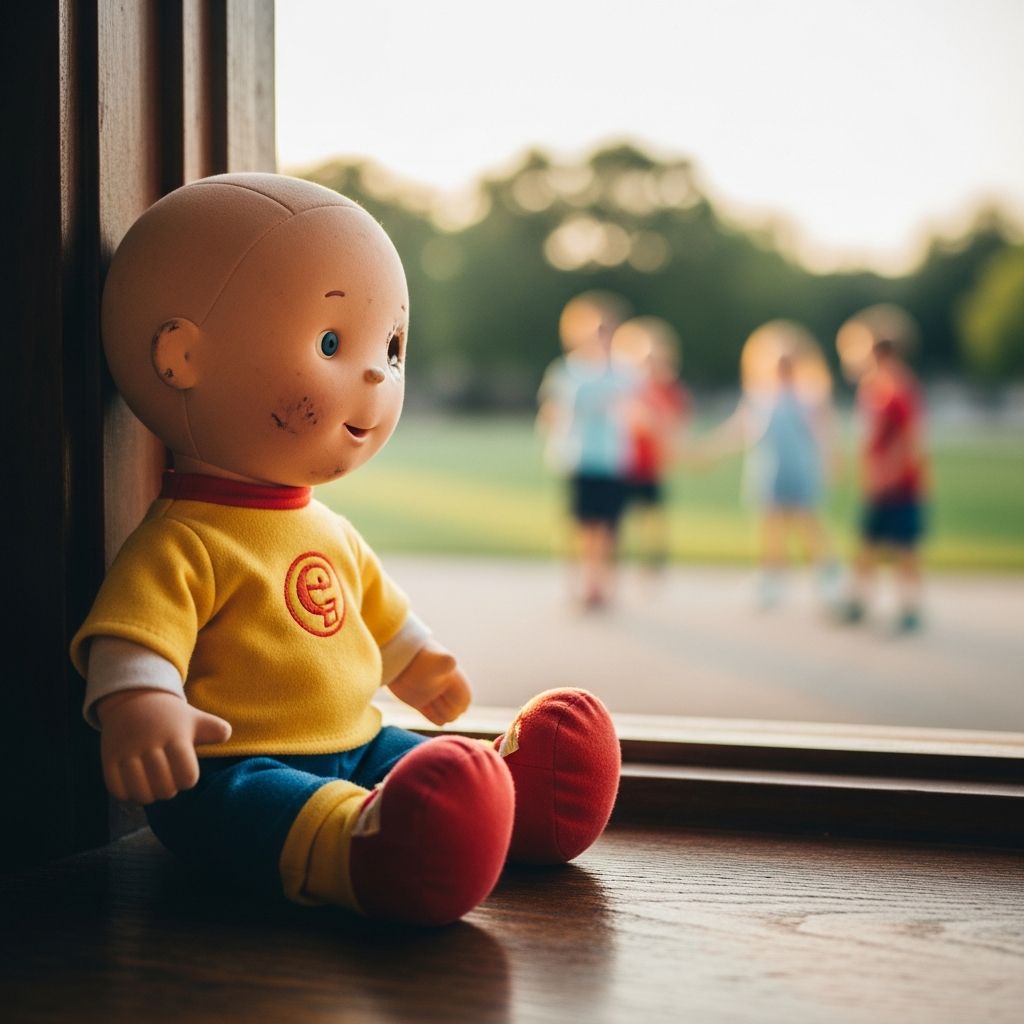
The animated series Caillou, a staple of PBS Kids for over two decades, has officially been retired from the network’s lineup. Premiering in 1997, the show followed the everyday adventures of a bald four-year-old boy, captivating young audiences while sparking intense debates among parents worldwide. This decision marks a significant shift in children’s educational television, reflecting evolving standards for content that balances child development with family viewing experiences.
Tracing the Origins and Longevity of Caillou
Caillou first appeared on screens in 1997, produced by Cookie Jar Entertainment (now part of DHX Media). The series spanned five seasons until 2010, after which reruns kept it in rotation on PBS Kids and various syndication channels. Over 20 years, it reached millions of preschoolers, emphasizing imagination, family dynamics, and simple life lessons through the lens of its titular character—a curious boy who turned mundane moments into fantastical play.
The show’s format was deliberately simple: short episodes depicted Caillou exploring his world with parents Boris and Rosie, sister Rosie, friends like Leo and Clementine, and grandparents. Everyday activities like park visits, birthday parties, or learning to share became portals to imaginative escapades, such as pretending to be a superhero or astronaut. This structure aimed to model positive behaviors for toddlers, aligning with PBS’s mission to deliver educational content.
- Debut year: 1997 on PBS Kids
- Total seasons: 5 (original run until 2010)
- Rerun duration: 2010–2021
- Core themes: Imagination, empathy, daily routines
Its persistence in reruns underscores its cultural footprint, but also highlights how children’s programming can endure even as tastes evolve. By 2021, PBS announced the farewell, stating it was part of refreshing their schedule to better suit modern kids’ needs.
Why Parents Loved to Hate Caillou: The Whining Phenomenon
No children’s show polarized audiences quite like Caillou. While kids adored his relatable tantrums and discoveries, parents developed a visceral aversion, often dubbing him the “most annoying kid on TV.” Social media exploded with memes, rants, and celebration posts when cancellation news broke, revealing a pent-up frustration built over years.
The primary grievance centered on Caillou’s behavior: frequent whining, selfishness, and meltdowns over trivial matters. Episodes often showed him throwing fits when denied a toy or facing minor changes, with parents depicted as endlessly patient enablers. Critics argued this modeled poor emotional regulation, potentially reinforcing bad habits in young viewers rather than teaching resolution.
| Common Complaints | Parental Perspective | Show’s Defense |
|---|---|---|
| Excessive whining | “It grates on my nerves during every viewing.” | Aimed to reflect real toddler emotions. |
| Self-centered plots | “Caillou never learns from mistakes.” | Promotes growth through trial and error. |
| Passive parenting | “Parents just cave in—no boundaries!” | Illustrates patience in child-rearing. |
| Bald adult-like child | “Uncanny design adds to irritation.” | Based on original book illustrations. |
Online forums and Twitter threads amplified these sentiments, with parents sharing stories of using Caillou as a “bad example” in discipline talks. One viral tweet from PBS Kids read: “We’re saying farewell to @cailloudhx, but remember, when we say goodbye to something…It just means we get to say hello to something new!” This optimistic note was met with cheers, signaling broad relief.
Educational Intent vs. Real-World Reception
Defenders of Caillou pointed to its roots in child psychology. Based on Canadian books by Christine L’Heureux and illustrated by Jacquelin Morin, the series was designed to help preschoolers process emotions. Experts in early childhood development praised its depiction of sibling rivalry, potty training, and social skills, arguing that showing flaws realistically aids empathy building.
PBS Kids, a pioneer in educational TV since Sesame Street, positions shows like Caillou within a framework balancing fun, learning, and tolerance. However, the formula proved challenging: what entertains a fidgety toddler can exhaust an adult. Studies on media effects suggest repetitive negative behaviors in shows may influence mimicry in young children, fueling the backlash—though no direct causation was proven for Caillou specifically.
Internationally, the show aired in over 100 countries, proving its universal appeal to kids despite adult disdain. This divide highlights a key tension in kids’ media: content must engage the child without alienating caregivers.
PBS Kids’ Strategic Refresh: What’s Next?
PBS’s decision wasn’t isolated; it coincided with broader changes, including the end of Adobe Flash support, which affected some interactive elements tied to older shows. A spokesperson emphasized ongoing efforts to update programming for today’s digital-native kids, introducing more diverse, interactive, and inclusive content.
Replacements include shows like Daniel Tiger’s Neighborhood, which builds on Mister Rogers with songs teaching emotional intelligence, and Alien TV, blending sci-fi adventure with science lessons. These emphasize proactive problem-solving and diverse representation, addressing some Caillou critiques.
- Daniel Tiger: Focuses on songs for feelings and routines.
- Wild Kratts: Adventure-driven wildlife education.
- Odd Squad: Math mysteries for logical thinking.
- Arthur: Long-running stories on friendship and growth.
This pivot reflects data-driven curation: PBS analyzes viewership metrics, parent feedback, and developmental research to prioritize high-impact shows.
Legacy of Caillou: Lessons for Children’s Media
Caillou’s exit prompts reflection on 20+ years of influence. It normalized discussions on toddler behavior, sparked parenting debates, and underscored the need for balanced portrayals. Positively, it encouraged imagination and family bonding themes that persist in modern shows.
Challenges ahead include navigating streaming competition from Netflix and YouTube, where bite-sized, ad-free content dominates. PBS’s ad-free, public-funded model remains a strength, ensuring quality over quantity.
Ultimately, Caillou’s story is one of evolution: what once filled airwaves now yields to fresher voices, reminding creators that children’s media must grow with its audience.
Frequently Asked Questions About Caillou’s Cancellation
Why did PBS Kids cancel Caillou after 20 years?
PBS retired Caillou to refresh its lineup for modern kids, amid technical shifts like Flash’s end and parent feedback on content.
Was Caillou ever an original new episode after 2010?
No, only reruns aired post-2010; the final new episodes were in 2010.
Do parents really hate Caillou that much?
Many did, citing whining and poor role-modeling, leading to widespread online celebrations upon cancellation.
What shows are replacing Caillou on PBS Kids?
Options like Daniel Tiger, Wild Kratts, and others offer updated educational adventures.
Can I still watch Caillou somewhere?
Reruns may appear on other networks or streaming, but it’s off PBS Kids broadcast.
Was Caillou educational?
Yes, it taught emotions and routines, though delivery drew criticism.
References
- PBS Kids cancels ‘Caillou’ after 20 years on air — New Rock 104.1. 2021-01-07. https://www.newrock1041.fm/2021/01/07/pbs-kids-cancels-caillou-after-20-years-on-air/
- Caillou CANCELLED After 20 Years on TV — Vailskibum94 (YouTube). 2021-01-06. https://www.youtube.com/watch?v=yL4gVrVC0Uk
- Why parents are celebrating the departure of PBS’ ‘Caillou’ — Current.org. 2021-01-01. https://current.org/2021/01/why-parents-are-celebrating-the-departure-of-pbs-caillou/
- Caillou canceled — FOX59 News (YouTube). 2021-01-08. https://www.youtube.com/watch?v=BydsikikoJQ
- The Reasons Why PBS Kids Said Goodbye To “Caillou” — PBS Kids Fandom Wiki. Accessed 2021. https://pbskids.fandom.com/wiki/The_Reasons_Why_PBS_Kids_Said_Goodbye_To_%22Caillou%22