Providing the right snacks for babies is essential for their growth, development, and introduction to diverse flavors. Between meals, well-chosen snacks can supply vital nutrients like iron, healthy fats, fiber, and vitamins while encouraging self-feeding skills. This guide draws from pediatric nutrition principles to offer practical, safe ideas categorized by age, food type, and preparation ease, ensuring parents can keep little ones satisfied and nourished.
Why Snacks Matter in a Baby’s Diet
Snacks bridge the gap between meals, preventing hunger that leads to fussiness and supporting steady energy levels. For infants starting solids around 6 months, snacks introduce textures and tastes, fostering healthy eating patterns. Toddlers, with smaller stomachs, benefit from 2-3 snacks daily alongside three meals to meet caloric needs—typically 1,000-1,400 calories for 12-24 months. Focus on variety: combine carbs, proteins, fats, and produce for balanced nutrition. Health authorities emphasize iron-rich and fat-inclusive options for brain development.
Key principles include offering two food groups per snack, starting small (1-2 tablespoons), and following the child’s lead to avoid overfeeding. Always supervise to prevent choking, cutting foods into graspable sizes.
Age-Appropriate Snack Strategies
Tailor snacks to developmental stages for safety and success.
6-9 Months: Purees and Soft Mashables
At this stage, babies explore with mouths and hands. Opt for smooth or slightly lumpy textures.
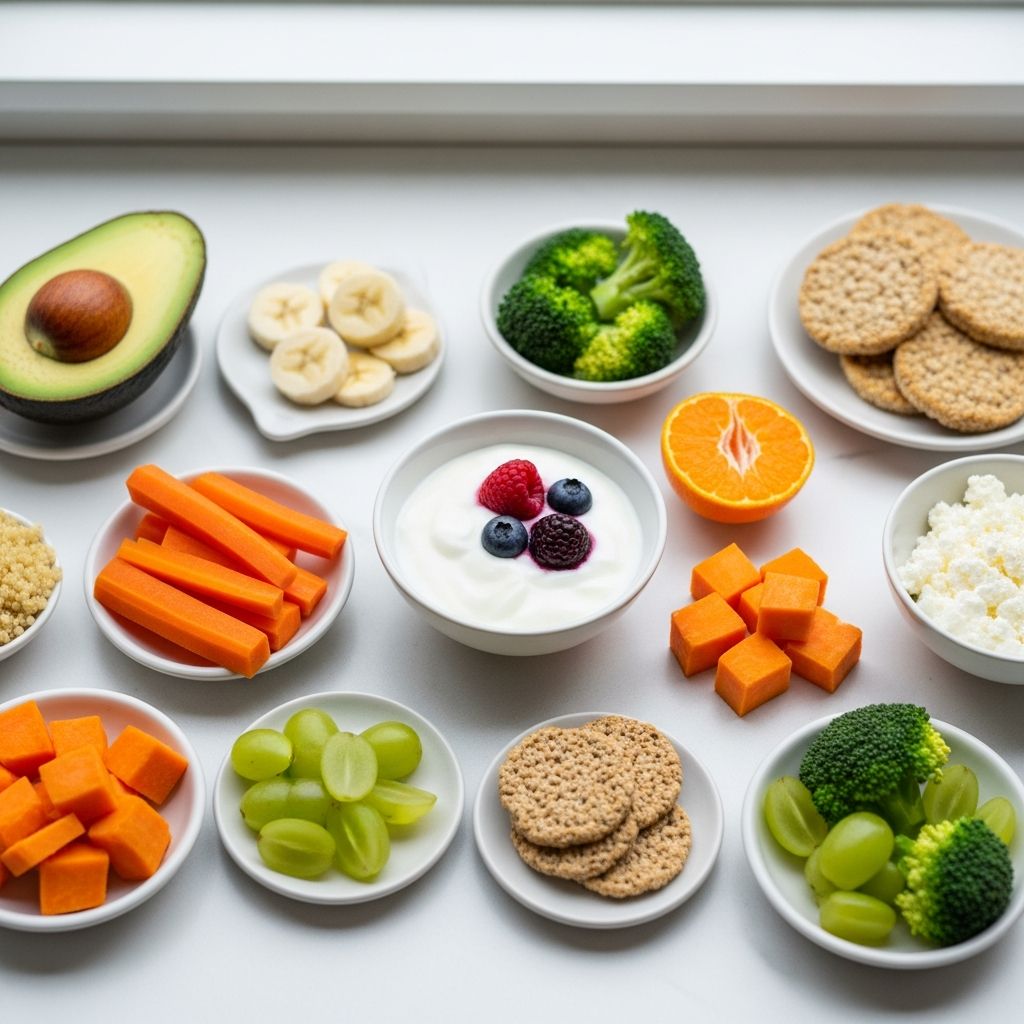
- Steamed apple or pear mash: Rich in vitamin C and fiber for digestion.
- Avocado puree: Loaded with healthy monounsaturated fats for brain health.
- Yogurt mixed with pureed fruits: Provides probiotics and calcium without added sugars.
- Soft-cooked carrot or sweet potato: Beta-carotene supports vision and immunity.
Portion: 1-2 tablespoons. Serve on a spoon or pre-load for self-attempts.
9-12 Months: Transition to Finger Foods
Babies refine pincer grasp, ready for soft, pick-uppable pieces.
- Diced soft banana or ripe peach: Natural sweetness with potassium.
- Shredded cheese or cottage cheese: Protein and calcium boost.
- Steamed broccoli florets: Vitamin K for bone health.
- Mashed beans: Plant-based iron source.
Introduce pouches like those with flax for omega-3s, but prioritize fresh foods.
12+ Months: Toddler Independence
Toddlers chew better and enjoy variety. Include crunchier textures.
- Cheerios softened in milk: Whole grains for sustained energy.
- Peanut butter on whole-grain toast strips: Healthy fats, no honey under 1 year.
- Cantaloupe chunks: Hydrating with vitamin A.
- Mini meatballs or egg muffins: Iron and protein from poultry or eggs.
USDA recommends fruit or veggie in at least one daily snack component.
Fruit-Powered Snack Ideas
Fruits deliver antioxidants, hydration, and natural sugars for quick energy. Always wash, peel if needed, and cut to prevent choking.
| Fruit | Prep Method | Age Suitability | Nutrient Highlight |
|---|---|---|---|
| Apple/Pear | Steamed, sliced thin | 6+ months | Fiber for regularity |
| Banana | Mashed or strips | 6+ months | Potassium for heart |
| Kiwi | Scooped or diced | 9+ months | Vitamin C immunity |
| Cantaloupe | Cubed small | 12+ months | Hydration, vitamin A |
Freeze-dried varieties offer portability without added sugars.
Veggie Delights for Tiny Tummies
Vegetables build habits early, despite picky phases. Steam or roast for softness.
- Bell pepper strips: Vitamin C powerhouse, colorful appeal.
- Carrot sticks, baked: Sweet, crunchy for older babies.
- Acorn squash, air-fried: Beta-carotene and fiber.
- Broccoli trees: Fun shapes with vitamin K.
- Seaweed sheets: Iodine for thyroid, low-calorie chew.
Dip in yogurt or hummus for protein pairing.
Protein and Dairy Boosters
Protein sustains fullness; aim for ½-1 oz per snack.
- Full-fat Greek yogurt: Mix with purees.
- Cheese cubes or strings: Calcium for bones.
- Scrambled egg strips: Complete protein.
- Canned salmon flakes: Omega-3s for cognition.
- Tofu cubes: Plant protein for variety.
Legumes like lightly mashed lentils add iron.
Grain-Based and Homemade Goodies
Whole grains provide B-vitamins and fiber.
- Oatmeal fingers: Baked with fruit.
- Mini muffins (banana, zucchini): Nutrient-dense treats.
- Peanut puffs: Allergy introduction post-6 months.
- Whole-grain crackers: With avocado spread.
Homemade options control sugars; recipes like sweet potato pancakes shine.
Quick On-the-Go Solutions
Busy days demand portable picks:
- Pouches (organic, no sugar).
- Yogurt melts.
- Stackable containers with cheese and fruit.
- Pre-cut veggie sticks in insulated bags.
HealthLink BC advises consistent timing for habits.
Safety First: Choking Prevention and Allergens
Cut firm foods small, avoid grapes whole, hot dogs, nuts until 4 years. Introduce allergens like peanuts early under guidance. Supervise always; learn infant CPR. Offer water in open cups.
Meal and Snack Routine Table
| Time | Example Snack | Nutrient Focus |
|---|---|---|
| 10 AM | Yogurt + berries | Protein + antioxidants |
| 3 PM | Cheese + crackers | Calcium + grains |
| Evening | Bean mash + pear | Iron + fiber |
Adjust for 3 meals + 2-3 snacks daily.
Frequently Asked Questions
What are the best first snacks for 6-month-olds?
Start with single-ingredient purees like avocado or banana for easy digestion and low allergy risk.
Can babies have yogurt before 12 months?
Yes, plain full-fat yogurt from 6 months; avoid those with added sugars.
How often should I snack my toddler?
2-3 times daily, spaced 2-3 hours from meals.
Are puffs healthy?
Choose whole-grain, low-sugar varieties sparingly as a transition food.
What if my baby refuses veggies?
Mix into favorites like muffins or smoothies; persistence pays off.
Building Lifelong Healthy Eaters
Expose to flavors early, model eating, and keep portions child-led. Snacks aren’t mini-meals—keep them light. Consult pediatricians for personalized advice, especially with allergies or delays. With these ideas, snacking becomes a joyful nutrient boost.
References
- What to Feed Toddlers 12-24 Months — Healthy Eating Research. 2021-08. https://healthyeatingresearch.org/wp-content/uploads/2021/08/What-to-feed-12-24-month-olds.pdf
- Ultimate List of Healthy Snacks for Babies (By Age and Stage) — Bucket List Tummy. 2024. https://www.bucketlisttummy.com/healthy-snacks-for-babies-ideas-for-all-ages/
- Meal and Snack Ideas for Your 1 to 3 Year Old Child — HealthLink BC. 2024. https://www.healthlinkbc.ca/healthlinkbc-files/meal-and-snack-ideas-your-1-3-year-old-child
- Healthy Snack Ideas — National CACFP Sponsors Association. 2024-06-11. https://www.cacfp.org/2024/06/11/healthy-snack-ideas/
- Snacks for Toddlers and Young Children — SR Nutrition. 2024-08. https://www.srnutrition.co.uk/2024/08/snacks-for-toddlers-and-young-children/