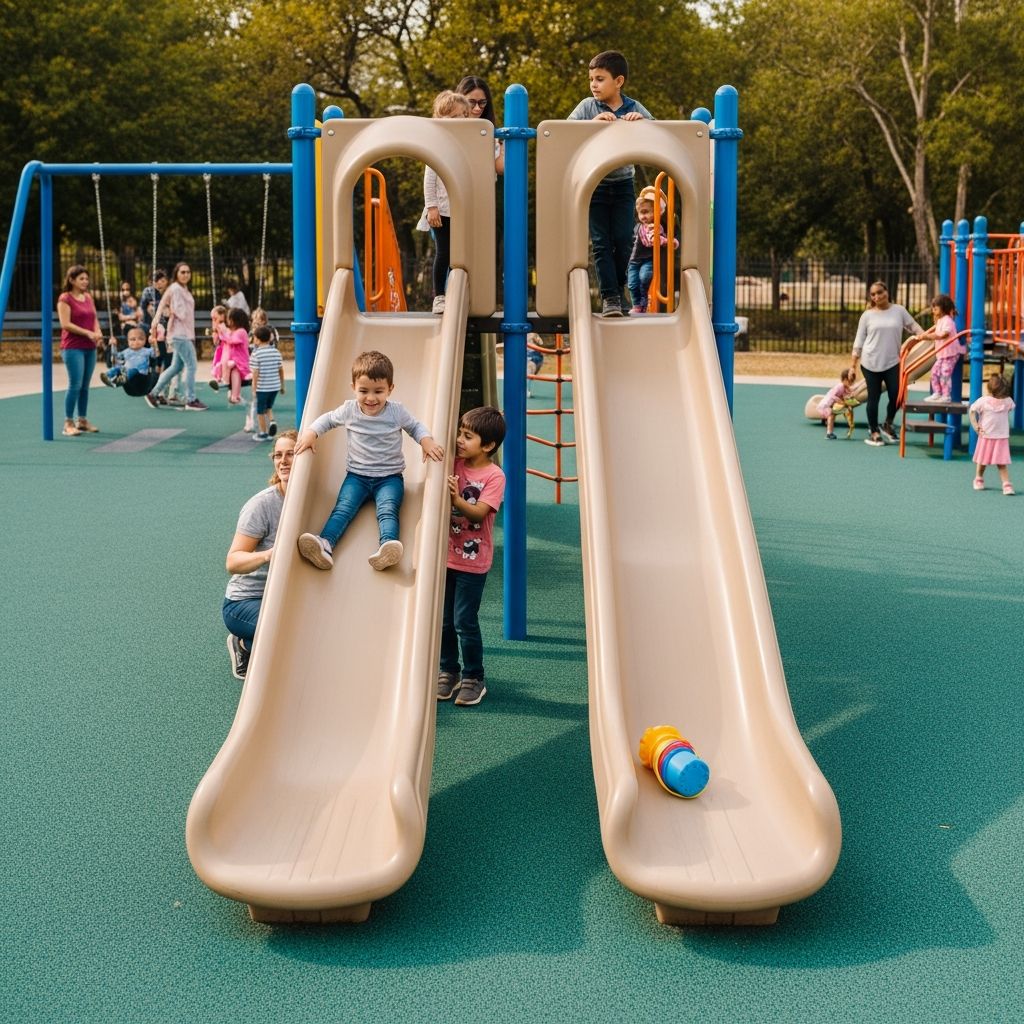
The Hidden Dangers of Shared Playground Sliding
Playgrounds serve as essential spaces for children to develop physical skills, build confidence, and engage in outdoor recreation. However, what many parents perceive as straightforward, enjoyable activities can present unexpected safety challenges. One commonly overlooked concern involves the practice of parents or caregivers accompanying young children down slides. While this might seem like a supportive gesture to encourage hesitant children, research and safety guidelines indicate that this practice introduces several unintended hazards that can increase rather than reduce injury risk.
Understanding these dangers requires examining the biomechanics of slides, the structural design of playground equipment, and how multiple bodies interacting on a single surface can create unstable conditions. When adults and children occupy the same slide descent simultaneously, the dynamics change significantly from what equipment manufacturers and safety engineers intended.
Understanding Playground Fall Statistics and Injury Patterns
Falls represent the leading cause of playground-related injuries, accounting for nearly 80% of all incidents. The specific mechanisms of these falls vary, but when they occur during shared sliding experiences, the consequences can be more severe due to the combined weight, unequal distribution of forces, and difficulty in maintaining control.
Children who fall from playground equipment face particular vulnerability because their bodies are still developing protective reflexes and bone density. Equipment designed for individual use creates specific impact zones and fall patterns that manufacturers calculate for single-user scenarios. Introducing an additional person fundamentally alters these calculations.
The typical height of residential playground slides ranges from 4 to 8 feet, depending on the equipment model. At these heights, falls can result in serious injuries including fractures, head trauma, and spinal injuries. When an adult and child descend together, the risk multiplies because of:
- Increased total weight creating greater momentum
- Reduced maneuverability and ability to adjust position mid-descent
- Potential for the adult to lose grip on the child during acceleration
- Compressed landing forces affecting both bodies simultaneously
Surface Impact and Cushioning Limitations
Modern playground safety standards mandate specific ground surfacing requirements designed to absorb impact energy and reduce injury severity. According to established guidelines, surfaces under and around playground equipment should consist of at least 12 inches of shock-absorbing materials such as engineered wood fiber, mulch, sand, pea gravel, or certified safety-tested rubber mats. Additionally, loose-fill materials require a minimum of 9 inches of depth initially, accounting for compression over time.
These surfacing materials have specific critical height ratings—the maximum height from which a fall would not typically result in life-threatening head injuries. These ratings are calculated based on standard weight distributions and impact patterns. When an adult and child land together on the same spot, they exceed the anticipated mass per unit area, potentially surpassing the surface’s impact attenuation capacity.
The design assumes impacts from individual children at various weights within age-appropriate ranges. A combined impact from an adult and child creates force concentrations that the surface engineering may not accommodate adequately, particularly in high-traffic areas where material compression has already diminished the protective layer.
Physical Control Challenges During Descent
Slides are designed with specific slope angles, typically ranging from 30 to 50 degrees, to provide controlled acceleration while allowing riders to maintain stability through friction. This angle works for bodies of specific weight ranges moving individually down the slide surface.
When two people occupy the slide simultaneously, several control problems emerge:
- Acceleration variations: The combined mass may accelerate faster than either person would individually, reducing reaction time
- Positioning conflicts: An adult attempting to hold or guide a child creates awkward body positioning that compromises both individuals’ stability
- Grip limitations: Adults may struggle to maintain secure contact with the child while also controlling their own descent, particularly if the child moves unexpectedly
- Exit challenges: The slide exit is designed for single-user egress; two bodies arriving simultaneously create congestion and potential tumbling
Children experiencing anxiety about slides may move unpredictably—hesitating, shifting weight suddenly, or attempting to slow themselves—behaviors that become dangerous when another person occupies the slide space. An adult descending with a nervous child may need to brake suddenly, creating whiplash forces or loss of grip.
Entrapment and Entanglement Hazards
Head entrapment represents a critical safety concern on playground equipment. Safety standards specify that openings in playground structures should measure either less than 3.5 inches or more than 9 inches to prevent a child’s head from becoming wedged. Openings between these measurements pose serious strangulation and entrapment risks.
When an adult descends with a child, clothing, long hair, or jewelry may become caught in equipment transitions, particularly at the slide’s sides or where it connects to climbing structures. Additionally, an adult’s arm or leg could inadvertently create a lever action that forces a child into an entrapment position. These scenarios rarely occur during individual sliding but increase substantially when two bodies navigate the confined space together.
Clothing and Personal Item Complications
Children’s playground attire and accessories present specific safety considerations. Loose clothing, drawstrings, hoods, and long hair can catch on slide surfaces or equipment edges. Safety organizations recommend removing bike helmets before playground use to prevent entanglement. When an adult and child share a slide, these risks compound because:
- Bulkier adult clothing occupies more space and may catch more easily
- Adult accessories like watches, rings, or zippers may snag child clothing
- Longer hair from either participant may become caught during close contact
- Buttons, snaps, or embellishments on adult garments may catch on the child’s skin or clothing
These seemingly minor complications can create sudden jerking movements that destabilize both riders and potentially cause falls or injuries.
Temperature and Friction Considerations
Slides generate friction differently depending on material composition, surface condition, and ambient temperature. Metal slides, particularly, can reach extremely high temperatures in direct sunlight, potentially causing burns. Plastic slides provide more consistent friction characteristics but still vary with temperature changes.
When an adult and child slide together, they change the friction dynamics. Increased weight pressing on the slide surface may generate more heat through friction, raising surface temperatures further. Additionally, the combined effect of two bodies can create unpredictable acceleration patterns, particularly if one person’s friction coefficient differs from the other’s due to different clothing materials or skin exposure.
Equipment Space and Clearance Standards
Playground equipment spacing follows specific safety guidelines. Structures should maintain a minimum of 6 feet clear space in all directions when adjacent play surfaces are less than 30 inches high, and 9 feet of separation when surfaces exceed 30 inches. These clearances accommodate falls from individual equipment users falling within normal parameters.
A shared descent can propel both riders farther from the intended landing zone, potentially causing them to land in adjacent equipment or hazardous areas outside the safety zone. The combined momentum and altered trajectory make falls less predictable than those from individual use.
Age-Appropriate Equipment Considerations
Playgrounds typically feature equipment designated for specific age ranges. Slides on preschool equipment (ages 2-5) differ significantly from those on school-age equipment (ages 5-12) in terms of height, angle, and expected user characteristics. When an adult accompanies a very young child, they may exceed the weight specifications that the preschool equipment was engineered to handle.
Manufacturers design slides with maximum weight limits and expected user profiles. Adult involvement changes these parameters dramatically. An adult descending a preschool slide creates forces far exceeding design specifications, potentially causing equipment failure, unexpected acceleration, or structural damage that compromises safety.
Supervision Best Practices Instead of Direct Participation
Effective playground supervision doesn’t require direct participation in activities. Safety experts recommend designing play areas so supervisors can easily observe all children and maintain visual contact continuously. This positioning provides better oversight than participating in activities while divided attention.
Effective supervisors should:
- Maintain unobstructed sightlines to all play areas
- Understand basic playground safety principles and equipment limitations
- Remain alert to hazardous conditions, overcrowding, or unsafe behaviors
- Be prepared to respond quickly to emergencies
- Avoid activities that divide their attention or compromise positioning
For children who feel anxious about slides, alternative encouragement strategies prove more effective. Standing at the bottom to celebrate their accomplishment, offering reassuring words from a safe viewing position, or gradually building confidence through repeated exposure to smaller slides creates positive associations without introducing physical risks.
Building Slide Confidence Without Risk
Parents naturally want to help their children overcome fears and build confidence. However, accompanying a child down a slide may inadvertently reinforce anxiety by suggesting the activity is genuinely dangerous. Several evidence-based approaches can help:
- Graduated exposure: Begin with shorter, less steep slides on equipment matched to the child’s age and size
- Positive reinforcement: Celebrate successes and acknowledge progress without pressure
- Peer modeling: Allow children to observe confident peers using slides successfully
- Practice and repetition: Frequent visits to playgrounds build familiarity and comfort
- Verbal preparation: Explaining what to expect and what the sensation will feel like reduces uncertainty
These approaches build genuine confidence based on the child’s own capabilities rather than dependency on adult assistance.
Equipment Maintenance and Regular Inspections
Safe slide use requires properly maintained equipment. Playgrounds should undergo thorough inspections before seasonal changes or after severe weather. Key maintenance considerations include:
- Ensuring all hardware remains tight and secure, with S-hooks and C-hooks closed completely
- Verifying that no sharp points, edges, or exposed bolt ends are present
- Checking for rust, cracks, rot, or splinters on metal and wooden components
- Confirming that guardrails protect all elevated surfaces above 18 inches
- Verifying secure anchoring to prevent equipment movement
Well-maintained equipment designed for individual use provides appropriate safety when supervision focuses on observation rather than participation.
Creating Comprehensive Playground Safety Strategies
Reducing playground injuries requires a multifaceted approach extending beyond individual equipment interaction. A comprehensive safety strategy includes proper surfacing, adequate spacing, age-appropriate equipment selection, regular maintenance, appropriate supervision, and visitor education. Each element contributes to creating environments where children can engage in physical activity with minimized risk.
Understanding the specific dangers associated with shared slide use represents one component of this larger safety framework. When parents recognize that supervised observation provides superior protection to direct participation, they can focus on creating the optimal conditions for safe, enjoyable play.
Frequently Asked Questions About Playground Slide Safety
Q: What should I do if my child is afraid of slides?
A: Build confidence gradually by starting with smaller slides, offering verbal encouragement from a safe viewing position, allowing time for repeated exposure, and celebrating small successes. Avoid reinforcing fear by accompanying them down the slide, which may suggest the activity is genuinely dangerous.
Q: How often should playgrounds be inspected for safety?
A: Inspections should occur before each use, with thorough examinations after seasonal changes or severe weather. Regular maintenance checks should address hardware tightness, surface integrity, and equipment stability.
Q: What ground surface materials are safest for playgrounds?
A: Engineered wood fiber, mulch, pea gravel, sand, and certified rubber mats all provide appropriate impact attenuation. Materials should be at least 12 inches deep initially and maintained to account for compression over time.
Q: How much clearance space should exist around playground equipment?
A: A minimum of 6 feet clear space is required in all directions when adjacent play surfaces are less than 30 inches high, and 9 feet of separation is needed for higher structures.
Q: Is there equipment I should avoid on playgrounds?
A: Yes, equipment not recommended for public playgrounds includes trampolines, swinging gates, heavy metal swings, free swinging ropes, and swinging exercise rings. Additionally, certain equipment is not appropriate for preschool-age children.
Q: What role should I play as a supervising adult?
A: Focus on maintaining visual contact, understanding playground safety principles, observing for hazardous conditions, and being positioned to respond quickly to emergencies. Avoid participating in activities that divide your attention or compromise your supervisory positioning.
References
- Playground Safety Guidelines — The Redwoods Group. Accessed January 17, 2026. https://redwoodsgroup.com/resources/playground-safety-guidelines/
- The Daily Dozen: A 12-Point Playground Safety Checklist — National Recreation and Park Association (NRPA). https://www.nrpa.org/siteassets/the-daily-dozen-12-point-playground-safety-checklist.pdf
- Playground Safety — National Safety Council (NSC). Accessed January 17, 2026. https://www.nsc.org/community-safety/safety-topics/child-safety/playground-safety
- Playground Design and Equipment — Whole Building Design Guide (WBDG). Accessed January 17, 2026. https://www.wbdg.org/resources/playground-design-and-equipment
- Public Playground Safety Handbook — U.S. Consumer Product Safety Commission (CPSC). https://www.cpsc.gov/s3fs-public/325.pdf