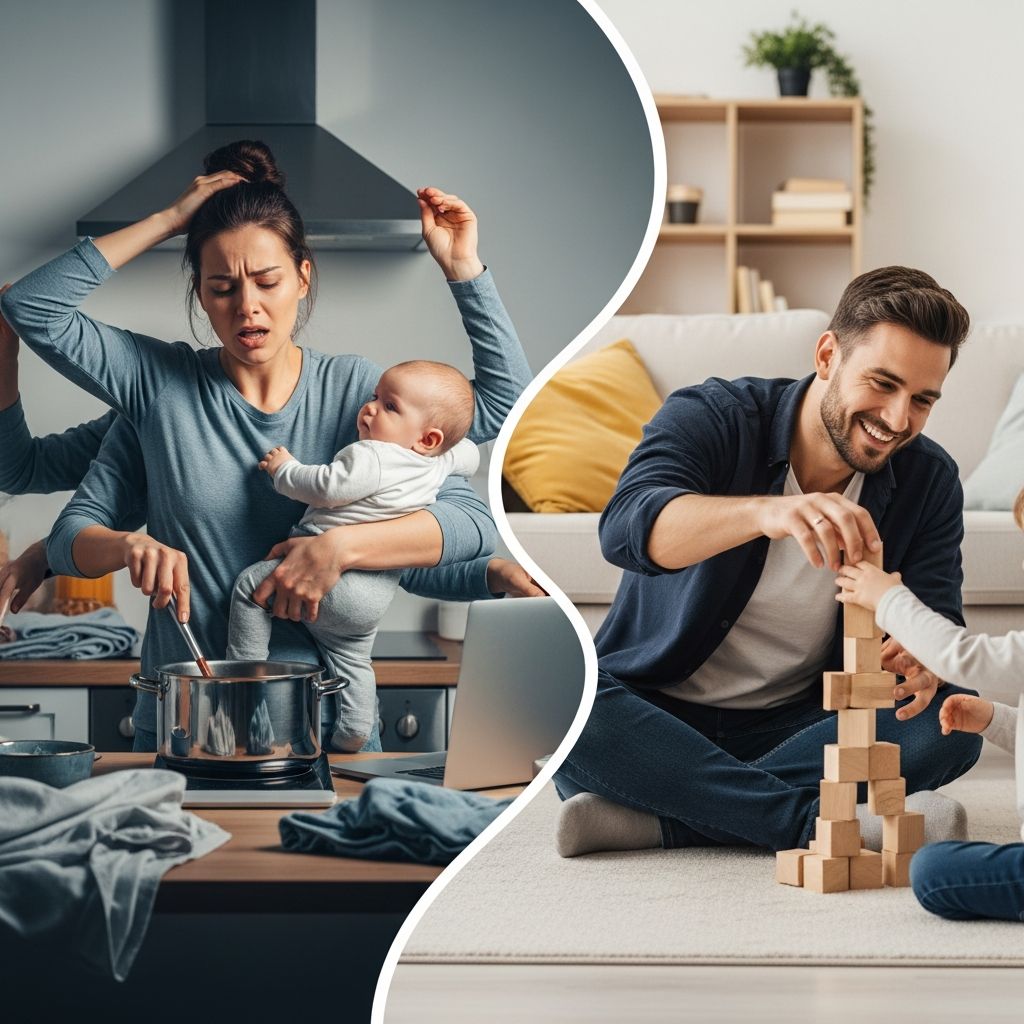
Modern parenting is fraught with invisible rules that treat mothers and fathers unequally. While fathers often receive praise for basic involvement, mothers face relentless scrutiny for the same or greater efforts. These disparities stem from deep-rooted gender norms, influencing everything from daily chores to long-term family dynamics.
Historical Roots of Gendered Parenting Norms
Gender double standards in parenting have persisted despite societal shifts toward equality. Research shows parents hold more permissive attitudes toward sons’ behaviors in courtship and family formation compared to daughters, with effect sizes ranging from 0.221 to 0.297 standard deviations for areas like premarital cohabitation and marriage timing. This parental bias extends beyond adolescence into everyday child-rearing, where mothers are expected to embody primary caregiving while fathers are seen as supportive figures.
Historically, these norms trace back to traditional divisions of labor, where women managed the home and children exclusively. Even as women entered the workforce, expectations lingered, creating a ‘second shift’ phenomenon where moms handle most unpaid labor. Fathers, conversely, benefit from lower benchmarks; a single evening of bedtime routines earns accolades, while similar maternal efforts are deemed routine.
Daily Life Disparities: Chores, Playtime, and Self-Care
In households worldwide, mundane tasks reveal stark contrasts. Consider these common scenarios:
- A father cooking dinner weekly is hailed as ‘super dad,’ yet a mother doing it daily faces criticism if the meal isn’t gourmet.
- Moms checking emails briefly at the playground draw judgments of neglect; dads get passes as ‘multitasking heroes.’
- Fathers solo-parenting for a weekend receive congratulations for survival; mothers managing the same for longer are just ‘doing their job.’
These patterns foster ‘mom guilt,’ where women internalize societal pressure, doubting their adequacy despite heavy loads. Dads, meanwhile, navigate low expectations that undermine their full potential as caregivers.
| Activity | Mom’s Perception | Dad’s Perception |
|---|---|---|
| Cleaning after meals (5x/week) | Slacking if not perfect | Heroic help if occasional |
| Diaper changes in public | Expected duty | Commendable involvement |
| Weekly kids’ bedtime | Minimal effort | Outstanding parenting |
| Full-time work + home | Not contributing enough | Family provider |
This table illustrates how identical contributions are valued differently based on gender, perpetuating imbalance.
Work-Life Balance: The Professional Parenting Divide
Balancing careers and family amplifies inequities. A work-from-home dad handling kids twice weekly while freelancing is celebrated for sacrifice. A mom in the same role faces accusations of prioritizing emails over playtime or neglecting housework. Full-time working moms are critiqued for childcare absence, while working dads are simply providers.
Studies confirm parents differentiate treatment by child gender, mirroring adult expectations. Mothers encounter higher bars for ‘independence’ or ‘contribution,’ trapped between stay-at-home stereotypes and career ambitions. This scrutiny erodes confidence and strains partnerships.
Emotional Labor and Mental Health Toll
Mothers disproportionately shoulder emotional labor—planning birthdays, tracking schedules, soothing worries. This invisible work garners no praise, unlike visible dad efforts. The result? Elevated maternal stress and burnout. Fathers report frustration from patronizing praise, limiting role expansion.
Societal comics and virals highlight these truths, sparking dialogues on low dad expectations hurting everyone. Dads crave genuine recognition for equal partnerships, not pity applause.
Impact on Children and Family Dynamics
Children absorb these biases, learning gendered roles early. Girls witness moms’ exhaustion, boys see dads’ leisure. Parental attitudes shape behaviors; stricter daughter oversight in family matters predicts divergent paths.
Unequal loads strain marriages, with resentment building over unrecognized maternal toil. Equitable division fosters healthier homes, modeling fairness for kids.
Challenging the Status Quo: Paths to Equity
Breaking cycles requires conscious effort. Partners must audit chores, aiming for 50/50 splits tailored to strengths. Communities play a role: praise balanced parenting, not gendered feats.
- Communicate openly: Discuss expectations weekly.
- Redefine success: Value consistency over spectacle.
- Seek support: Use apps for task-sharing.
- Educate circles: Share research on biases.
Couples thriving in equity report higher satisfaction, proving change is viable.
Voices from the Trenches: Real Parent Stories
Anonymous parents echo patterns: ‘My husband gets cheers for park trips; I’m nagged for phone glances.’ Another: ‘Solo weekends make me a hero; my wife does it seamlessly, unnoticed.’ These anecdotes underscore universality.
Progress shows in dual-income homes rejecting norms, but cultural inertia persists.
Frequently Asked Questions
What causes parenting double standards?
They arise from entrenched gender roles, where mothers are primary caregivers and fathers secondary, reinforced by media and tradition.
Do these standards affect dads negatively?
Yes, low expectations patronize fathers, hindering full involvement and equal partnerships.
How can couples achieve fairer divisions?
Track tasks, communicate needs, and celebrate mutual efforts without gender bias.
Are double standards fading?
Some progress exists, but research from the 1990s-2000s shows persistence, likely continuing today.
What role do children play in perpetuating this?
Kids internalize norms, replicating them unless parents model equality.
Building a Fairer Future for Families
Achieving parity demands rejecting outdated scripts. By elevating all parenting equally, families thrive. Research affirms attitudes drive behaviors; shifting parental views paves egalitarian paths.
Empowerment starts at home: audit, adjust, advocate. Society follows when individuals lead.
References
- Gender Double Standards in Parenting Attitudes — Killewald A, Gough M. 2011-02-24. https://pmc.ncbi.nlm.nih.gov/articles/PMC3035381/
- Double standards in parenting: moms versus dads — Joanna Anastasia. 2020 (approx., accessed 2026). https://joannaanastasia.com/double-standards-moms-versus-dads/
- Have You Seen This Viral Comic About Parenting Double Standards? — Cup of Jo. 2022-02-07. https://cupofjo.com/2022/02/07/have-you-seen-this-viral-comic-about-parenting-double-standards/