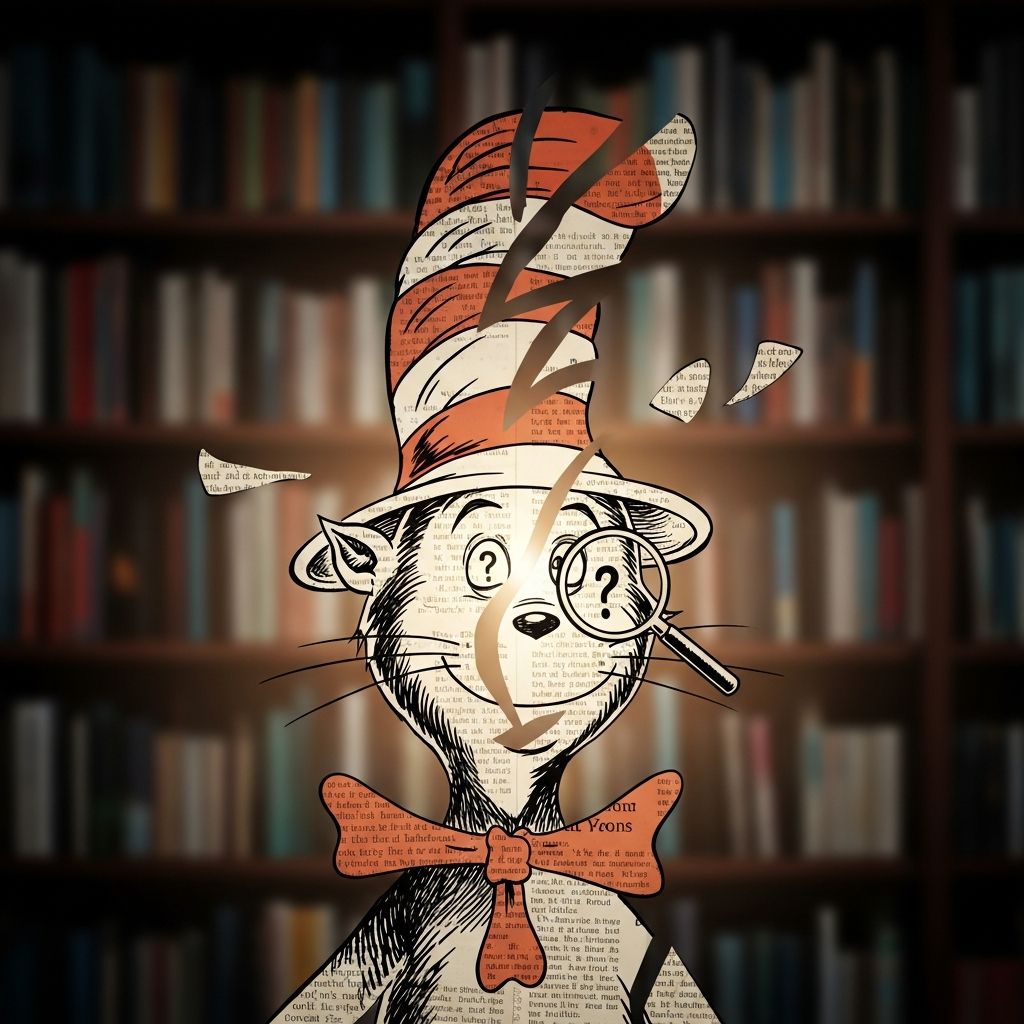
For generations of parents, the Cat in the Hat has been more than a story; it has been a shared ritual of rainy-day reading, silly rhymes, and breathless page turns.
Yet as conversations about race, representation, and power deepen, even this iconic troublemaker is being reconsidered, and many parents now find themselves wondering what exactly is hiding beneath the striped hat.
Why This Cat Still Matters
The Cat in the Hat is one of the most recognizable characters in children’s literature, with the original book selling millions of copies worldwide and becoming a foundational early reader text in schools and homes.
Parents and educators have long praised the book for its simple vocabulary and energetic storytelling, but recent cultural critiques have pushed many families to ask not only how the story works, but what values and images it quietly reinforces.
From Reading Primer to Cultural Symbol
When the Cat in the Hat appeared in the 1950s, it helped transform early reading from dry primers into lively, character-driven narratives filled with rhythm and mischief.
Over time, the Cat became a kind of shorthand for zany fun that pushes boundaries—a figure licensed into television, film, classroom decorations, and birthday parties, often detached from the specifics of the original story.
The Cat as More Than a Character
- A marketing icon that represents chaotic fun and creativity.
- A stand-in for the idea that learning to read can be exciting rather than tedious.
- A symbol of childhood rebellion that somehow resets everything by the end of the day.
This symbolic status is exactly why parents are taking a second look: when a character becomes omnipresent, the ideas attached to it quietly travel with it.
Mischief, Morality, and the Strange Safety of Chaos
At its core, the story drops an unsupervised brother and sister into a moral dilemma: do they follow house rules on a boring, rainy day, or embrace the Cat’s boundary-breaking games?
The talking fish protests constantly, functioning as a voice of order, while the children hesitate and observe; the Cat, meanwhile, gleefully escalates from balancing acts to kite-flying mayhem.
What Kids Actually See
- A grown-sized stranger entering the home uninvited and insisting that the absent mother “won’t mind.”
- Authority figures (symbolized by the mother and the fish) whose rules are easy to ignore until consequences loom.
- A magical reset at the end, when chaos gets erased almost instantly, without clear repercussions.
This combination—high-energy rule-breaking paired with a near-complete lack of real-world consequences—can make the book delightfully fun for kids but ethically knotty for adults who live in a world where boundaries exist for safety.
Psychology in a Striped Hat
Some educators interpret the book through a psychological lens, mapping the characters onto ideas of impulse, conscience, and compromise often associated with psychoanalytic theory.
In that view, the Cat embodies unchecked desire and spontaneity, the fish functions as a rigid moral guardian, and the children represent the conflicted middle ground trying to reconcile fun with responsibility.
| Story Element | Represents | Parenting Conversation Starter |
|---|---|---|
| The Cat | Impulses, curiosity, and risk-taking. | “When is it okay to try something wild, and when is it not?” |
| The Fish | Rules, safety, and anxiety about consequences. | “Why do some characters worry so much about rules?” |
| The Children | The tension between wanting fun and wanting approval. | “Have you ever wanted to do something fun but weren’t sure if it was okay?” |
| The Mother | Unseen power and adult authority that shapes behavior. | “How does the idea of a parent returning change what the kids do?” |
Using this kind of framework can help parents move the discussion away from “Is this book good or bad?” toward “What does this story reveal about how we handle temptations and limits?”
Unmasking the Visual Language
Beyond the plot, the visual design of the Cat—his white gloves, tall hat, and exaggerated gestures—has attracted attention from scholars who see echoes of historic performance traditions and caricatures.
These analyses argue that some of the imagery used in early 20th-century children’s books did not develop in a vacuum; it drew from entertainment forms that often relied on racial stereotypes, even when those stereotypes were later softened or abstracted.
Why Representation in Old Books Still Matters
- Children absorb cues about who looks playful, who looks scary, and who is framed as ridiculous or trustworthy long before they can explain why.
- Repeated patterns—such as certain facial features or styles being used only for comic figures—can quietly shape what feels “normal” or “other.”
- Parents often return to the stories they loved, which means older visual conventions can remain in circulation far longer than the attitudes that produced them.
Recognizing that the Cat’s design may sit at a crossroads of whimsy and uncomfortable history does not require parents to discard the book, but it does invite more active, intentional reading.
When a Beloved Author Becomes Complicated
In recent years, the legacy of Dr. Seuss has been widely debated, with particular attention to several works that include caricatured depictions of nonwhite people and stereotyped portrayals of cultures outside the United States.
Some of these titles have been voluntarily pulled from publication by the rights-holders, while others remain widely available, leaving parents and schools to make their own choices about which books fit their values and how to contextualize them.
Key Concerns Parents Are Raising
- Whether certain illustrations reinforce outdated or harmful stereotypes, even when children cannot yet articulate why they feel uncomfortable.
- How to balance nostalgia for beloved stories with a desire to offer more inclusive, affirming images and narratives.
- When to retire a book completely versus when to keep it in rotation as an opportunity for guided discussion.
These questions extend beyond one author; they sit at the heart of a broader shift in children’s publishing toward more diverse voices and more critical engagement with older classics.
Strategies for Reading Problematic Favorites
Parents do not need to choose between blind loyalty to childhood favorites and a strict ban on anything with rough edges. Many families adopt a middle path that keeps beloved stories in the mix but changes how they are read.
This approach treats the book as a tool rather than a script, and it gives children room to exercise their growing critical thinking skills.
Practical Ways to Engage More Deeply
- Ask open questions after reading. Instead of closing the book and moving on, invite kids to wonder: “Did anything in this story feel unfair or strange to you?”
- Talk about consent and boundaries. The Cat enters uninvited and insists adults will be fine with it; this is a natural opening to discuss why we do not let strangers in and why kids can say no when something feels wrong.
- Highlight who gets to be silly. Notice which characters look dignified, which look clownish, and whether those patterns repeat across multiple books in your home.
- Pair old books with new ones. Read a classic alongside a contemporary story that centers different kinds of families or heroes, then ask what feels different and why.
These practices help turn reading time into a space where children learn not only vocabulary but also empathy, perspective-taking, and the skill of gently questioning what they see.
Talking About Race and Caricature Without Overwhelming Kids
Young children do not need a history lecture to benefit from honest, age-appropriate conversations about unfairness and stereotypes in older media.
What they need most is a trusted adult who names problems clearly, answers questions simply, and models how to respond when something they like also contains something that hurts others.
Kid-Friendly Ways to Frame Hard Topics
- “Sometimes people used to draw whole groups of people in silly or hurtful ways, and that wasn’t kind.”
- “We can still enjoy fun parts of a story and also notice when something is not fair.”
- “If someone who looks like that drawing saw it, how do you think they might feel?”
By starting with feelings, fairness, and kindness, parents can build a foundation that will support more detailed conversations as children grow.
Reclaiming the Cat as a Teaching Tool
Ironically, the very things that make the Cat in the Hat controversial—the bending of rules, the exaggerated persona, the tension between fun and responsibility—also make the book a powerful conversation starter about values.
Instead of treating the story as a moral lesson neatly tied up by a clean house, parents can use it to surface questions about honesty, accountability, and what to do when a friend pushes boundaries too far.
Questions to Explore With Your Child
- “If you were in the house with the Cat, what would you do differently from the kids in the story?”
- “Do you think the Cat should have apologized? What would a good apology sound like?”
- “Who in the story is trying to keep everyone safe, and how do you feel about them?”
- “At the end, should the kids tell their mother the truth about what happened? Why or why not?”
None of these questions requires a single correct answer; what matters is giving children a chance to express their thinking and to hear that adults also wrestle with complicated feelings about stories they enjoy.
Building a Healthier Home Library
Rethinking the Cat in the Hat can be an invitation to scan your entire children’s bookshelf with fresh eyes, noticing what kinds of characters appear again and again and which perspectives are missing.
Many contemporary authors and illustrators are creating playful, smart, and inclusive stories that stand alongside older classics while widening the imaginative world available to kids.
Balancing Nostalgia and Inclusion
- Keep a handful of personally meaningful classics while being honest about their flaws when relevant.
- Intentionally add books where kids of different races, abilities, and family structures get to be both serious heroes and joyful goofballs.
- Rotate reading choices so that no single era, author, or aesthetic dominates your child’s sense of what stories can look like.
This kind of curation does not erase the past; it reframes it within a more generous and truthful landscape of voices.
Frequently Asked Questions
Is it wrong to keep reading the Cat in the Hat to my kids?
It is not inherently wrong to keep reading the book, especially if you pair it with open conversations and a diverse selection of other stories.
The key is to move from passive recitation to active engagement: notice what your child reacts to, invite questions, and be willing to name parts that feel unfair or outdated.
Should schools remove Dr. Seuss books altogether?
Different schools make different choices based on their communities, but many are choosing to de-emphasize certain titles while investing more heavily in books that better reflect the diversity of their students.
Parents can support this by advocating for robust, inclusive collections rather than framing the discussion only as a matter of removal or censorship.
How do I explain to my child that a favorite author did harmful things?
One approach is to say that talented people can still make harmful choices, and that learning more information sometimes changes how we feel about their work.
This helps children grasp that admiration does not require denial and that growth often involves rethinking what we once accepted without question.
What if my child is too young for conversations about race?
Very young children can still learn the basics of kindness, fairness, and noticing when someone is being treated as a joke instead of a full person.
Simple statements about respect, paired with stories that show a wide range of kids having adventures, lay the groundwork for more explicit discussions later on.
Are there alternatives if I decide to skip this book?
Families who feel uncomfortable with the Cat in the Hat can choose from many high-energy, imaginative picture books that emphasize creativity without relying on ambiguous intrusions or dated imagery.
Librarians, booksellers, and teachers are often eager to recommend titles that keep the sense of fun while better aligning with a family’s values around representation and consent.
Turning a Rainy-Day Read Into a Lifelong Skill
The Cat in the Hat is unlikely to disappear from children’s culture anytime soon, but the way families interact with it is already changing.
By treating the book not just as a nostalgic artifact but as a springboard for thoughtful conversation, parents can help kids learn to love stories deeply while also learning to see them clearly—and that might be the most valuable trick hidden under that striped hat.