Ernest Cline’s Ready Player One (and Steven Spielberg’s film adaptation) has been marketed and discussed as a kind of ultimate love letter to video games, 1980s pop culture, and nerd culture more broadly. Many parents who grew up in that era feel a strong pull to share it with their children, hoping to pass down the media that shaped their own imaginations. But the question is not simply, “Will my kid enjoy this?” A better question is, “Is this actually the story I want shaping how my kid thinks about games, relationships, and identity?”
This article takes a parent-first look at Ready Player One—both the book and the movie—drawing on critical commentary, research on media effects, and broader conversations about representation in geek culture. It is not about censorship; it is about giving adults enough context to make a thoughtful, informed choice.
What Ready Player One Promises — And What It Really Delivers
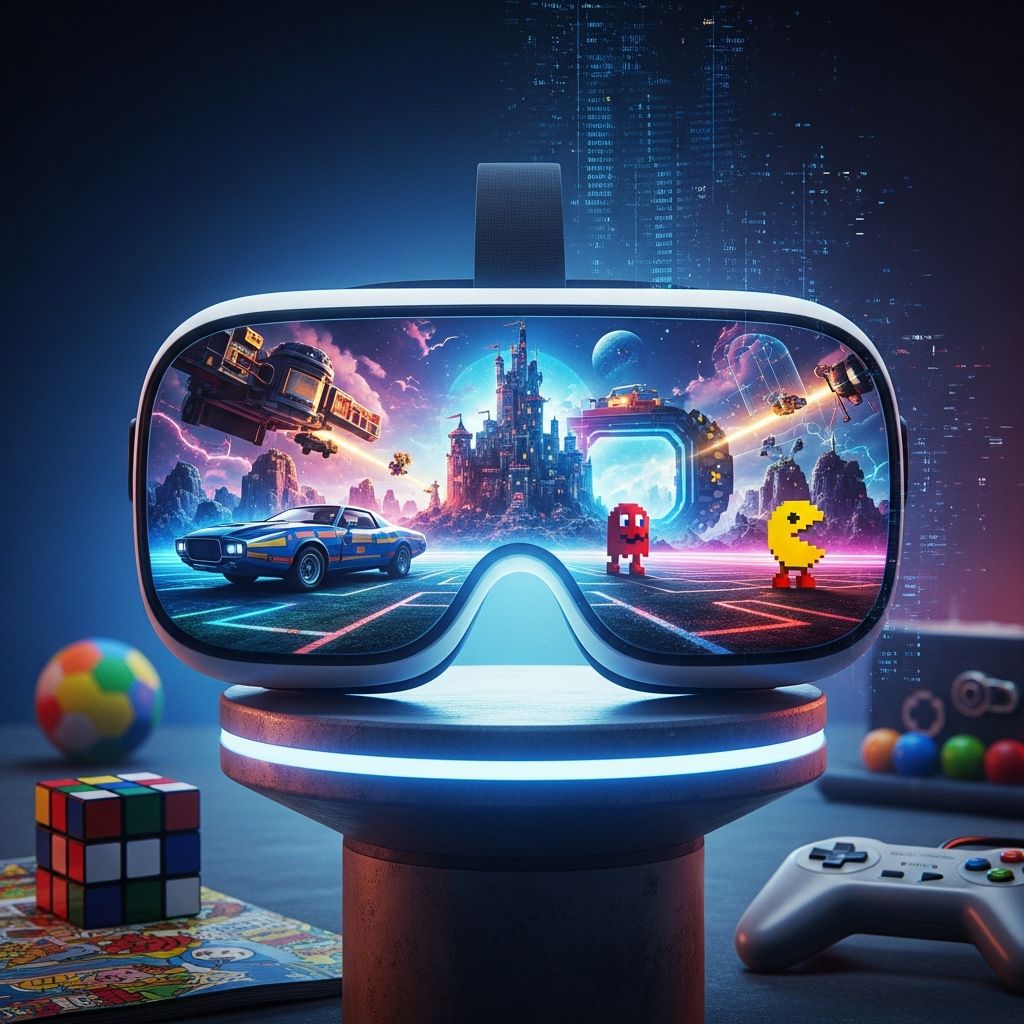
On the surface, Ready Player One looks ideal for teens who love gaming and sci-fi. It features:
- A virtual-reality universe (the OASIS) where players can be anything and go anywhere.
- A massive, puzzle-filled treasure hunt left behind by an eccentric game designer.
- Endless references to beloved movies, games, and music from the 1980s.
- A scrappy teen underdog hero with a chance to change the world.
The appeal is obvious, especially for adults who lived through the 80s or 90s and feel a jolt of recognition whenever a favorite movie, song, or game is mentioned. But beneath that premise are several elements that matter a lot more if you are a parent: thin characterization, shaky messages about relationships and online life, and limited representation.
Nostalgia as a Story Engine: Fun or Hollow?
A core selling point of Ready Player One is its dense web of nostalgic references. For some adult readers, this is the main attraction; for others, it becomes a slog. Critics have noted that long stretches of the novel read like a catalog of pop-culture trivia rather than a character-driven story.
Why This Matters for Younger Readers
- Most kids do not share this nostalgia. They may not recognize or care about 1980s sitcoms, arcade games, or obscure cult films. Without that emotional connection, pages of references can feel like homework.
- Heavy nostalgia can crowd out story and empathy. Research on media narratives suggests that character development and coherent plots are key for engagement and comprehension, especially in younger readers. When a book leans heavily on lists of references, it risks shortchanging those foundations.
- Nostalgia can send a subtle message. If the main emotional payoff comes from recognizing old media, kids may absorb the idea that the past is inherently richer or more authentic than their own cultural moment.
There is nothing wrong with letting kids discover older media. The question is whether a story that sometimes treats trivia recall as a kind of moral virtue is the best way to make that introduction.
Character Depth and Emotional Intelligence
Many critics point out that both the book and film versions of Ready Player One struggle with robust characterization. The protagonist, Wade Watts (avatar name Parzival), is a capable problem-solver and encyclopedic pop-culture expert, but beyond that he can feel emotionally shallow.
| Aspect | How It’s Handled in Ready Player One | Potential Impact on Young Readers |
|---|---|---|
| Empathy & relationships | Relationships often serve the plot or wish-fulfillment more than mutual growth. | May normalize one-sided, protagonist-centered relationships as “romance” or “friendship.” |
| Personal growth | Wade’s arc focuses on solving external puzzles; his internal changes are limited or inconsistent. | Reduces the sense that maturity involves self-reflection, accountability, or difficult emotional work. |
| Complex motives | Side characters are often defined by one trait or function. | Makes it harder for kids to see nuanced people with differing perspectives, identities, and values. |
Stories do not have to be moral lessons to be valuable, but when a book is positioned as a formative text for young geeks, it is fair to ask whether its emotional world is one parents are comfortable endorsing.
Gender, Diversity, and Representation
One of the most persistent critical themes around Ready Player One concerns representation. Reviewers have argued that the book leans hard on a narrow, heterosexual, male nerd fantasy and often fails to deeply engage with other experiences.
How Women Are Portrayed
- Romantic interest as reward. The central female character frequently functions as a kind of idealized geek dream girl rather than a fully realized person with her own independent arc.
- Limited backstory or agency. Critics note that she is often presented through the hero’s gaze and that her own motivations and history receive less attention.
Media researchers and pediatric organizations emphasize that repeated exposure to stereotyped gender roles can shape children’s views of what is “normal” or desirable in relationships, especially during adolescence. When girls are primarily framed as prizes to be won, boys and girls alike may internalize unhelpful beliefs about romance and self-worth.
Surface-Level Diversity
Ready Player One does include characters of different racial backgrounds and one queer character, but commentators have suggested that these characters can feel like symbolic gestures rather than deep explorations of diverse experiences.
- Some identities are revealed late in the story in ways that can feel like twists rather than grounded representation.
- Certain jokes and throwaway lines around gender identity and body size have been called insensitive or poorly handled by modern standards.
For families intentionally seeking inclusive stories, this may be a reason to pair Ready Player One with other works that center a broader range of voices.
Online Life, VR, and What the Story Leaves Out
Both the novel and the film are set in a future where people spend much of their lives inside a gigantic virtual reality platform. That premise could invite nuanced questions about digital life: community, harassment, empowerment, addiction, and the blending of offline and online identities. Reviewers note that the film, especially, mostly sidesteps these questions in favor of fast-paced action scenes.
Missed Opportunities About the Internet
- Little attention to online harassment or moderation. Real-world platforms grapple with bullying, hate speech, and targeted harassment, including in gaming environments. The OASIS rarely addresses these issues on-screen or on-page.
- Thin discussion of data, surveillance, or corporate power. While there is an evil corporation, the mechanics of data exploitation or algorithmic control remain largely unexplored.
- VR as fantasy playground, not social infrastructure. The story focuses on spectacular set pieces—races, battles—rather than the quiet, everyday ways online platforms shape work, schooling, and relationships.
Research from organizations such as Common Sense Media and academic institutions highlights both the risks and benefits of digital play: online spaces can support creativity and community, but they also bring exposure to misinformation, cyberbullying, and problematic content. When a blockbuster narrative treats the virtual world mainly as a fun escape with minimal downsides, it can downplay the complexity kids already face online.
Violence, Stakes, and Emotional Weight
Ready Player One features frequent in-game fights, large-scale battles, and high-intensity chases. In the film, this is stylized and spectacular, designed to thrill rather than traumatize. The book adds occasional real-world peril. For most teens accustomed to PG-13 blockbusters, this will not be unusually intense, but it is still worth unpacking how violence is framed.
- Consequences are often abstract. Avatars die and respawn; huge numbers of unnamed characters are wiped out with little emotional response.
- Conflict resolution leans heavily on combat. Alternative models of problem-solving—negotiation, collective organizing, restorative approaches—are largely absent.
- Violence is visually impressive, but ethically thin. Critics argue that the story rarely pauses to reflect on loss, collateral damage, or moral ambiguity.
Psychological research does not suggest that a single violent story will reshape a child’s personality, but repeated patterns of media where problems are solved only through force can influence attitudes toward aggression and empathy. Parents may want to frame Ready Player One as one story among many, not the template for heroism.
Is It Even Fun for Kids?
It is easy to assume that if adults found Ready Player One entertaining, their children will too. But reception among younger readers and viewers is mixed. Some teens and preteens love the set pieces and puzzle structure; others get bogged down by exposition and references they do not understand.
Attention and Pacing
- Heavy exposition in the book. The novel spends long sections explaining the OASIS, cataloging gear, or walking through every step of solving a puzzle.
- Relentless narration in the film’s opening. Reviewers have criticized the movie’s early voice-over for feeling like a dense info-dump rather than organic storytelling.
Some kids with strong interest in gaming systems and world-building may find this detail deeply satisfying. Others—especially reluctant readers—might be turned off by the slow build and dense jargon.
Questions for Parents to Consider
Instead of asking, “Is this good or bad?”, it can be more useful to ask targeted questions about fit. Below are prompts you can use to decide whether to offer Ready Player One now, later, or not at all.
- Age and maturity: Does your child have the emotional maturity to recognize wish-fulfillment fantasy versus realistic relationships and body image?
- Media literacy: Are they ready to discuss why nostalgic references might be fun for adults but less meaningful for them?
- Representation: Does your family prioritize stories that center diverse protagonists or challenge gender stereotypes?
- Online life: Is your child already grappling with social media, multiplayer games, or VR? Could this story be a springboard to talk about those experiences more critically?
- Reading goals: Are you trying to hook a reluctant reader, deepen empathy, or simply share something that you personally loved?
Your answers do not need to match anyone else’s. What matters is that you make the decision on purpose rather than out of nostalgia alone.
Alternatives and Complements to Ready Player One
If you decide to wait on Ready Player One or want to balance it with other stories, you might look for books and films that:
- Explore games and virtual worlds with more attention to community and collaboration.
- Center girls, queer kids, or kids of color as protagonists in speculative settings.
- Offer richer inner lives for characters, with clear emotional growth.
- Invite critical thinking about technology, corporations, and power.
Pairing Ready Player One with more nuanced titles can let kids enjoy the spectacle while still encountering more complex and inclusive visions of tech-shaped futures.
How to Talk About Ready Player One If You Share It
If you do decide to share the book or film with your child, you can turn it into a rich conversation rather than a passive viewing or reading experience. Media literacy experts often recommend asking open-ended questions and encouraging kids to analyze what they consume.
Conversation Starters
- On identity: “What do you think about the way people can look completely different in the OASIS? How might that be good or bad?”
- On relationships: “Do you think the characters really know each other, or mostly their avatars? What would you want to know before trusting someone you met in a game?”
- On nostalgia: “A lot of the story is about old movies and games. What media matters most to you, and why?”
- On power: “How does the company in the story try to control people? Do you see any similarities with real tech companies?”
- On balance: “The characters spend huge amounts of time in VR. How much screen time feels healthy to you in real life?”
These questions do not require lectures or firm answers. The goal is to help your child see that even fun, fast-paced stories carry assumptions and values worth examining.
Frequently Asked Questions (FAQs)
Q: What age is Ready Player One appropriate for?
Most rating and review services place the film in the PG-13 range and the book as suitable for older middle-schoolers to teens, mainly due to language, violence, and some suggestive content. Parents should consider their child’s sensitivity to intense action and their ability to contextualize stereotypes or shallow representation.
Q: Is the book or the movie better for kids?
The film streamlines some of the book’s dense exposition and trims certain problematic details, but it also emphasizes spectacle over nuance and leaves many deeper issues about online life unexplored. The book offers more world-building but also more pages of pop-culture listing and uneven character work. Your choice may hinge on whether your child is a strong, patient reader or more visually oriented.
Q: Does Ready Player One encourage unhealthy screen time?
The story depicts characters who essentially live inside VR, with limited critique of that dependence. While there is a surface-level message about valuing the real world, it can feel at odds with how glorified the OASIS is throughout the narrative. Using the book or film as a starting point to talk about balance can mitigate this issue.
Q: Is it a good gateway to get my kid into classic movies and games?
It can be, especially if you pause to show clips or talk about the references they do not recognize. But because many nods rush by or are presented as exclusive in-jokes, some kids may feel left out rather than invited in. Directly sharing a classic film or game you love—and discussing why it matters to you—might be a more effective introduction.
Q: Can I just let my kid read or watch it and handle the rest later?
You can, but research on children and media suggests that active mediation—talking with kids about what they see—helps them build critical thinking skills and reduces negative effects. Even a short conversation afterward can make a meaningful difference.
References
- Book Review: Ready Player One — Devon Trevarrow Flaherty. 2023-10-10. https://devontrevarrowflaherty.com/2023/10/10/book-review-ready-player-one/
- Ready Player One Review: Nothing More Than A Demo — Loud and Clear Reviews. 2020-03-29. https://loudandclearreviews.com/ready-player-one-review-2018-film-spielberg/
- Review: Ready Player One – An In-Depth Look at Ernest Cline’s Novel — The Narrative Craft. 2021-05-18. https://www.thenarrativecraft.com/post/review-ready-player-one-1
- A professorial review of Steven Spielberg’s Ready Player One — This Professor Plays, Indiana University of Pennsylvania. 2018-04-07. https://iblog.iup.edu/thisprofessorplays/2018/04/07/a-professorial-review-of-steven-spielbergs-ready-player-one/
- Ready Player One and The Problem with Geek Media — Maddie Gudenkauf. 2019-02-11. https://maddiegudenkauf.com/thoughts-of-maddness/ready-player-one-review
- Children, Teens, Media, and Body Image — Common Sense Media. 2015-01-01. https://www.commonsensemedia.org/research/children-teens-media-and-body-image