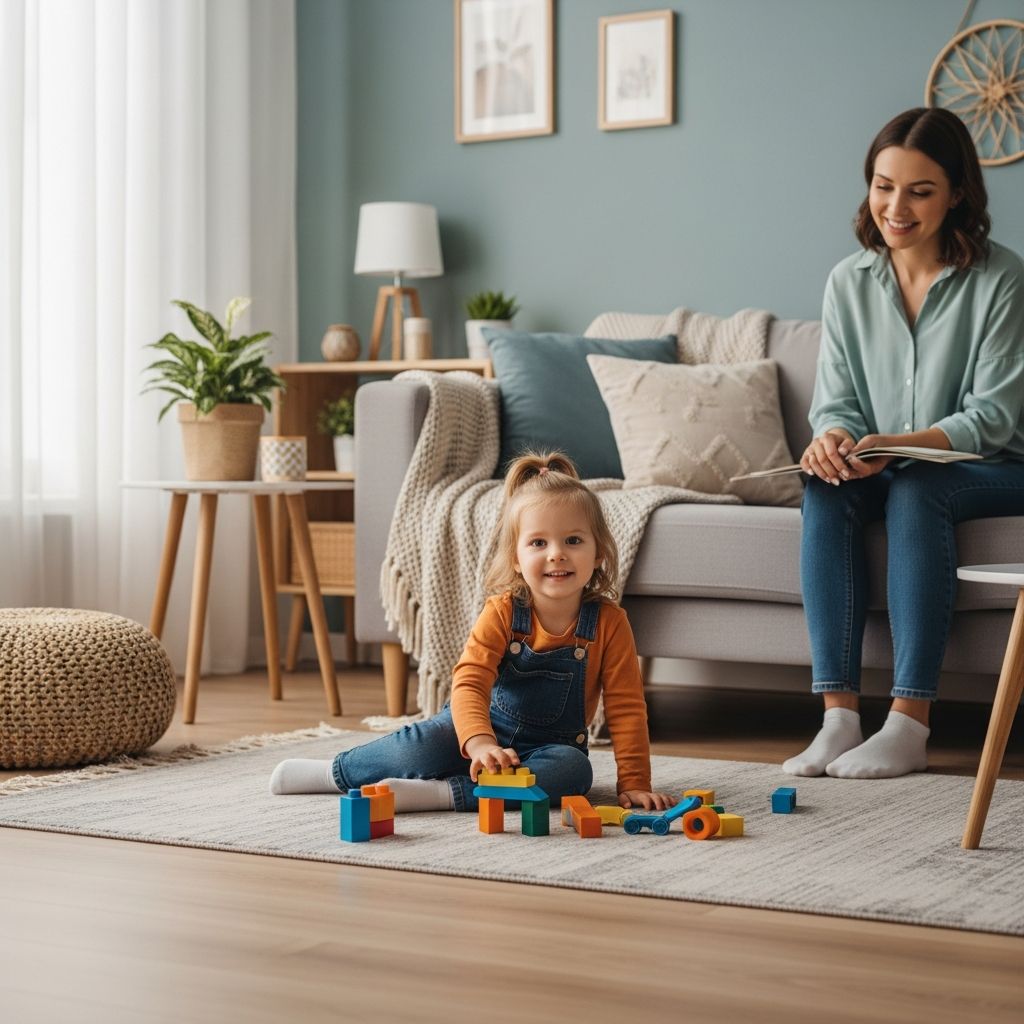
Understanding the Single-Child Family Phenomenon
The landscape of modern family structures is shifting in remarkable ways. What was once considered an unconventional choice—having just one child—has become increasingly common across North America and beyond. Single-child families now represent the most prevalent household type with children in Canada, accounting for 45 percent of families with kids, a substantial increase from previous decades. This transformation reflects broader changes in how people approach parenthood, career planning, and financial management. Rather than viewing a single child as a consolation prize or incomplete family, many modern parents are making deliberate, thoughtful decisions to have one child and stop there. Understanding this shift requires examining the multiple interconnected factors that have reshaped family planning in the twenty-first century.
The Statistical Rise of One-Child Households
Demographic data from across the globe reveals a consistent pattern: smaller families are becoming the norm. In the United States, the percentage of women who conclude their childbearing years with just one child has more than doubled over four decades, rising from 11 percent in 1976 to 22 percent in 2015. Canada’s trajectory mirrors this trend, with single-child families increasing from 38.9 percent in 1961 to 43.7 percent in 2016. Even more striking, projections suggest that one-child families in the United States are expected to double by 2050, making them not just a significant demographic category but potentially the dominant family structure.
This phenomenon extends far beyond North America. Europe, where family traditions have historically emphasized stability and multi-generational households, has witnessed an even more dramatic shift. Across the continent, approximately 47.5 percent of families have just one child, with some countries showing even higher percentages: Portugal leads at 57 percent, while Germany sits at 24 percent. In Asia, the story varies considerably by nation and urban versus rural contexts, but the overall trajectory points toward smaller families becoming increasingly standard globally.
The Economics of Modern Parenthood
Perhaps the most significant driver of the one-and-done trend is the extraordinary financial investment required to raise children in contemporary society. A comprehensive Canadian analysis calculated that the average cost of raising a single child through age 17 stands at approximately $350,000. This staggering figure encompasses housing expenses ($85,000), transportation costs ($59,000), and food ($48,000), among numerous other expenses. Critically, these figures are based on 2017 data and do not account for the 30 percent increase in the cost of living that has occurred since then.
The financial barriers extend beyond the immediate years of childhood. Parents now face the reality that adult children often remain dependent well into their twenties. This phenomenon reflects both economic necessity and cultural shifts in what parents feel obligated to provide. StatsCan’s expanded analysis included an addendum calculating the cost of supporting a child living at home until age 22, adding an additional $90,000 to the parenting expense equation. For many families, the prospect of duplicating these expenses for a second child becomes mathematically impossible rather than simply undesirable.
Delayed Motherhood and Career Trajectories
The age at which people become parents has shifted dramatically. In Canada, the average age of first-time mothers has increased from 22 in the 1960s to 29.4 today. This delay is not incidental but reflects deliberate choices, particularly among women navigating demanding professional environments. Many women prioritize establishing themselves in their careers, achieving financial stability, and paying down education debt before attempting to balance professional and parental responsibilities.
The contemporary labor market presents particular challenges for working women seeking to balance career advancement with family expansion. Those who successfully achieve what might be called the “trifecta” of professional success—combining adequate income, meaningful work, and employment stability—often feel unable to step away from their careers for extended parental leave or to manage the logistical complexity of multiple children. The intense demands of modern careers, combined with inadequate structural support for working parents, effectively push some women toward choosing a single child or no children at all.
This phenomenon has created a curious paradox: during a woman’s peak fertility years (ages 20 to 35), many are prioritizing education completion, professional advancement, and financial security. By the time they have achieved these goals and feel able to parent, their window for biological parenthood has narrowed significantly. While modern fertility treatments have extended this window, they add additional financial and emotional costs to family planning decisions.
Housing Affordability and Family Size
The affordability crisis in urban real estate markets directly constrains family size decisions. In major Canadian cities like Vancouver and Toronto, the shortage of rental units large enough for families with multiple children creates practical barriers to expansion. Young adults themselves face housing challenges that precede parenthood: approximately 70 percent of Canadians aged 20 to 24 still live with their parents, unable to afford independent housing.
Those who do manage to secure their own residences often find that their housing costs consume such a large portion of household income that adding a second child becomes financially untenable. The choice between adequate shelter and family expansion becomes a false binary, with housing winning out by economic necessity. Real estate markets in desirable urban areas with good job opportunities, schools, and amenities have priced out families with multiple children from these communities, concentrating single-child families in precisely the areas with the best economic opportunities.
Shifting Definitions of Intensive Parenting
Contemporary parenting culture has become increasingly intensive and demanding. Research by demographers studying fertility decline identifies intensive parenting ideology as a key factor driving decisions to limit family size. Modern parenting expectations now include not merely providing basic necessities but also ensuring children have access to enrichment activities, educational opportunities, and developmental experiences that previous generations considered luxuries.
Parents today feel pressure to invest substantially in each child’s human capital development, from music lessons and sports coaching to academic tutoring and strategic college preparation. What might be described as “helicopter parenting” or “concerted cultivation” requires significant parental time, emotional energy, and financial resources. Multiplying these demands across two or three children becomes overwhelming for many parents who are simultaneously managing their own careers and addressing other life responsibilities. The subjective costs of parenting—the emotional and psychological investment expected in contemporary culture—have escalated alongside objective financial costs, reinforcing the appeal of having just one child to whom these intensive resources can be devoted.
Broader Societal Implications and Policy Considerations
The aggregate effect of declining fertility rates and smaller family sizes carries significant implications for national economies and social policy. Canada’s fertility rate hit a historic low of 1.33 births per woman in 2022, placing it on the cusp of what demographers classify as “lowest low” countries, alongside Italy (1.3), Spain (1.3), Singapore (1.05), and Hong Kong (0.87).
One crucial consequence involves the ratio of working-age individuals to retirees. In 1966, Canada had 7.7 working-age persons for every senior citizen. Today that ratio has contracted to 3.4, and projections suggest it will reach 2:1 within the next decade. This demographic shift threatens the sustainability of public systems built on assumptions of larger working-age populations supporting smaller retired populations. Federal spending on elder care is projected to increase from 2.7 percent of GDP to 3.2 percent by 2031.
Policymakers face difficult choices about whether to maintain current universal benefits or shift toward means-tested approaches. The labor force participation rate, which peaked at 69.5 percent in 2007, is projected to fall below 60 percent by 2069 as the population ages. This contraction will reduce both productivity and tax revenue, forcing governments to make difficult decisions about funding priorities. Universities may lose resources to long-term care facilities, infrastructure maintenance may be deferred, and the comprehensive social safety net that citizens have come to expect may require significant restructuring.
The One-and-Done Community and Cultural Shifts
The normalization of single-child families has created visible cultural communities and support networks that reinforce these choices. Online platforms, from dedicated subreddits focused on “one and done” families to social media hashtags, have created spaces where parents can discuss their decisions, share experiences, and validate their choices against lingering cultural assumptions about incomplete families. This peer support helps insulate parents who choose single-child families from judgment or pressure to expand their families.
The emergence of these communities reflects a broader shift in how family size decisions are understood and discussed. Rather than treating the number of children as something that happens to families through circumstance, modern parents increasingly view it as an active choice reflecting their values, capacities, and life priorities. The language itself has shifted, with terms like “one and done” or “one and won” reframing single-child families as deliberate choices rather than unfortunate limitations.
Intersecting Factors Creating Perfect Conditions for Smaller Families
No single factor explains the rise of one-child families; rather, multiple reinforcing trends have converged to make this choice increasingly common and acceptable. The combination of delayed parenthood due to educational and career demands, extraordinary financial costs, inadequate policy supports for working parents, limited affordable housing in economically vibrant cities, and culturally intensified parenting expectations creates an environment where having one child becomes not merely acceptable but often optimal.
For many families, the decision to have one child reflects not a rejection of parenthood but rather a realistic assessment of what they can reasonably provide in terms of financial security, parental attention, and life stability. These parents often describe their choice as allowing them to be more present, intentional, and less stretched in their parenting, rather than managing multiple children while juggling other responsibilities.
Family Composition and Living Arrangements
As single-child families have become more common, household structures have begun adapting. Interestingly, while single-child families dominate among families with children, multigenerational household arrangements are simultaneously increasing, often driven by economic pressures that extend beyond active parenting years. In 2024, 20 percent of multigenerational home buyers reported that adult children or relatives had never left home, compared to just 7 percent in 2015. This suggests that while some families are choosing fewer children, they are simultaneously experiencing longer periods of economic interdependence across generations, blurring traditional boundaries of independent household formation.
| Region/Country | Key Statistic | Value or Change |
|---|---|---|
| United States | Growth projection by 2050 | One-child families expected to double |
| Canada | Proportion of single-child families (2016) | 43.7% of families with children |
| Canada | Fertility rate (2022) | 1.33 births per woman (historic low) |
| Canada | Average cost to raise one child (17 years) | $350,000 |
| Europe (average) | Families with single child | 47.5% |
| Portugal | Single-child families | 57% |
| Canada | Average age of first-time mothers | 29.4 years (up from 22 in 1960s) |
| Canada | Young adults (20-24) living with parents | 70% |
Common Questions About Single-Child Families
Q: Are only children disadvantaged in social development compared to children with siblings?
A: Research does not support the stereotype that only children are socially maladjusted. Modern single-child families often ensure their children have rich peer interactions through school, extracurricular activities, and planned social opportunities. Quality of parenting and access to social environments matter far more than the presence or absence of siblings.
Q: How do economic pressures specifically influence the decision to stop at one child?
A: With the average cost of raising a child reaching $350,000 over 17 years, combined with housing affordability crises and the extended financial dependence of adult children, many parents find that providing one child with opportunities, stability, and parental attention becomes financially and emotionally optimal compared to stretching resources across multiple children.
Q: What are the societal consequences of declining fertility rates?
A: Declining fertility creates demographic imbalances where fewer working-age individuals must support more retirees, threatening the sustainability of public pension and healthcare systems. This may necessitate policy changes including means-testing of benefits, increased immigration, or adjustments to retirement age and benefits structures.
Q: Is the one-and-done trend expected to continue?
A: Current projections indicate that single-child families will become even more common, particularly in North America and Europe. Unless significant policy interventions address affordability, parental support, and housing crises, the trend toward smaller families appears likely to continue or accelerate.
Q: How are communities supporting single-child families?
A: Online communities, support groups, and social media networks have emerged to normalize and validate the one-and-done choice. These communities help parents process their decisions and connect with others making similar choices, reducing isolation or judgment.
References
- Only Child Statistics: An In-Depth Analysis 2026 — AmyandRose. 2026. https://amyandrose.com/blogs/parenting/only-child-statistics/
- The Rise of the One-and-Done Family — Macleans.ca. 2024. https://macleans.ca/longforms/one-and-done-family/
- One Big Happy Household: How Families and the Data Are Shaping Multigenerational Living — National Association of Realtors. 2024. https://www.nar.realtor/blogs/economists-outlook/one-big-happy-household-how-families-and-the-data-are-shaping-multigenerational-living