The Hidden Challenge of Welcoming a Baby While Managing Pet Care
The arrival of a newborn fundamentally transforms household dynamics in ways that prospective parents rarely anticipate. While much of the prenatal focus centers on nursery preparation and infant care equipment, few conversations address the unexpected emotional turbulence that can emerge between new parents and their existing pets. This phenomenon—often unspoken due to feelings of shame or guilt—represents a genuine struggle affecting a significant portion of new parents navigating the intersection of infant caregiving and established pet relationships.
Unpacking the Emotional and Logistical Overwhelm
The transition into parenthood introduces simultaneous psychological and practical challenges that reshape a family’s entire operational structure. From an emotional perspective, new parents encounter an intensified spectrum of sensations ranging from profound protectiveness toward their infant to physical and mental exhaustion that permeates daily functioning. The cognitive landscape becomes dominated by concerns about the baby’s wellbeing, safety, and developmental milestones, consuming mental resources that previously extended to other family members.
On the logistical front, the household’s rhythm undergoes seismic shifts. Disrupted sleep patterns, frequent feeding schedules, management of infant-related equipment, and the constant need for environmental adaptation consume the temporal and energetic reserves that once supported pet care. What was previously a source of enjoyment—playing with a pet, taking walks, grooming—transforms into another task item competing for limited bandwidth. Parents find themselves questioning whether they can adequately address a pet’s needs when their capacity to function at baseline levels feels compromised.
The situation intensifies when pets exhibit behaviors that directly interfere with infant care. A barking dog during a baby’s sleep window, litter box accidents indoors, or a pet seeking attention during critical caregiving moments can trigger rapid escalation from mild frustration to significant resentment. Rather than viewing these behaviors as communication attempts from animals experiencing their own stress, exhausted parents may internalize them as deliberate interference with their already-challenging circumstances.
The Neurobiological Foundation of Emotional Reallocation
Research into the neurobiology of postpartum adjustment reveals fascinating insights into why emotional availability shifts so dramatically. Functional imaging studies demonstrate measurable changes in brain regions responsible for empathy processing, emotional regulation, and reward recognition during the postpartum period. These neurological adaptations serve an evolutionary purpose—they prioritize maternal attunement to the infant’s needs, amplifying responsiveness to baby-specific signals while potentially narrowing focus on other stimuli.
Understanding these changes as biologically adaptive rather than indicators of personal failure becomes crucial for parents wrestling with guilt. The brain isn’t malfunctioning or revealing a character flaw; it’s undergoing reorganization designed to enhance infant protection and caregiving. However, this reallocation of neurological resources comes with a trade-off: emotional bandwidth once distributed across multiple relationships becomes concentrated, leaving pets with significantly less access to the parent’s attention and emotional reserves.
Under conditions of elevated stress—which characterizes most early parenting phases—this attentional imbalance becomes even more pronounced. The brain’s finite resources prioritize immediate infant demands, further reducing emotional availability for peripheral relationships. This isn’t conscious rejection but rather an involuntary neurological prioritization that can produce profound guilt when parents recognize their changing feelings toward animals they previously cherished.
The Guilt and Resentment Spiral
A particularly challenging emotional pattern emerges when reduced affection toward pets collides with internalized expectations about what kind of parent or pet owner one should be. Many new parents arrive at parenthood with idealized visions of seamless integration—imagining their child growing up with a beloved animal companion while maintaining the exact same relationship quality with their pet as before. When reality inevitably deviates from this mental template, disappointment and disillusionment follow.
The emotional mathematics become complex: parents feel stressed when their pet requires attention they cannot provide, simultaneously experiencing guilt for even harboring negative feelings toward the animal. This internal conflict creates an exhausting emotional loop where resentment feeds guilt, which intensifies resentment, which deepens guilt further. The pet becomes unconsciously blamed for not fitting into the impossible role parents had constructed in their minds, rather than recognized as a living creature adjusting to profound household changes.
For parents managing postpartum mood complications, these emotional tangles become particularly pronounced. Postpartum anxiety and depression amplify irritability, reduce emotional resilience, and increase the likelihood that pet behaviors trigger disproportionate frustration responses. A parent might find themselves screaming at a dog over relatively minor infractions—not because the behavior is objectively severe, but because their emotional regulation capacity has been substantially compromised by underlying mood disturbance.
Understanding Your Pet’s Perspective During Transition
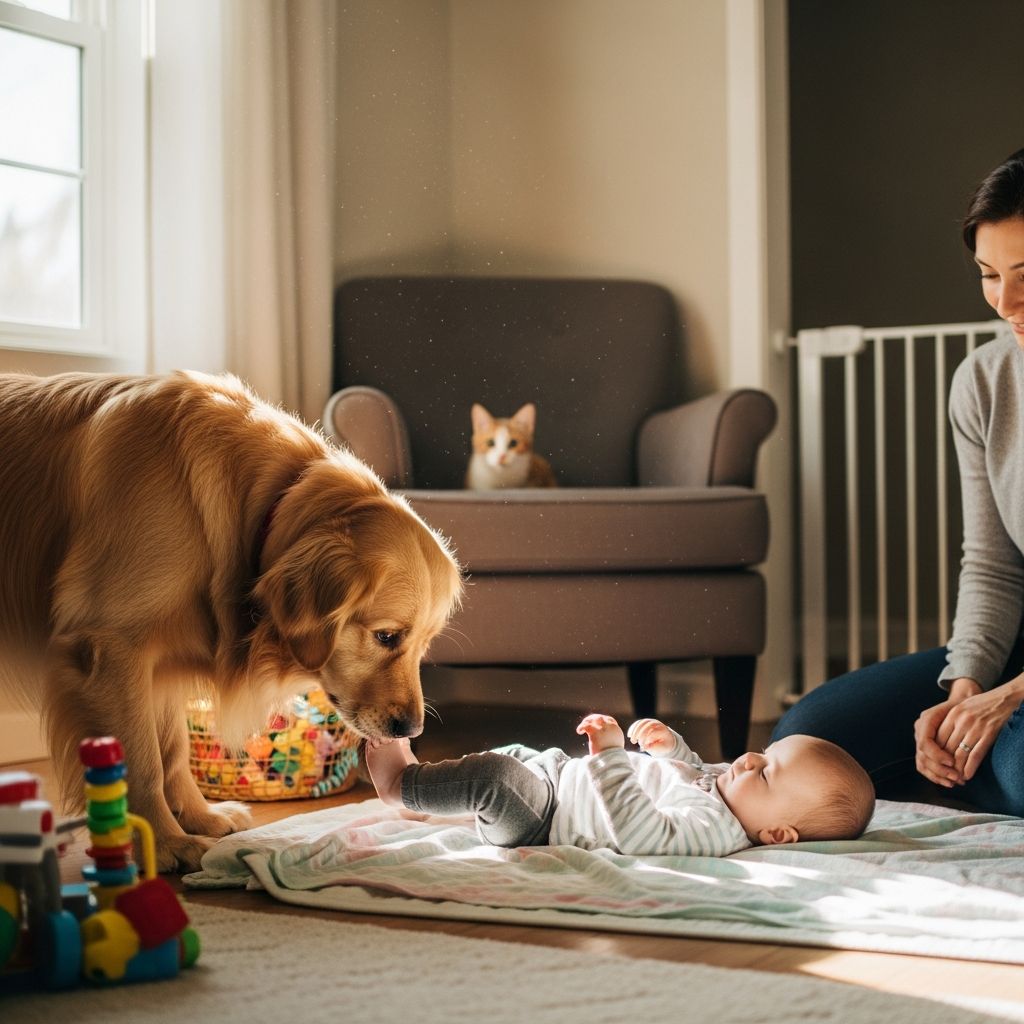
While new parents navigate their emotional turbulence, pets simultaneously experience their own adjustment crisis. The arrival of an infant introduces unprecedented changes to an animal’s familiar environment, routine, and access to their primary human attachments. Animals cannot comprehend that a baby’s needs take temporary priority; they only recognize that their world has fundamentally shifted without their consent or understanding.
Pet responses to this upheaval manifest across a spectrum. Some animals become noticeably clingy and needy, seeking increased reassurance and attention precisely when their human is least able to provide it. These pets are essentially requesting emotional scaffolding during their own period of destabilization, but to an already-depleted parent, this increased neediness feels like an additional burden rather than a cry for support. The timing creates a tragic misalignment—the pet needs more attention exactly when the parent has less to give.
Other animals respond by retreating and isolating themselves from household activity and unfamiliar stimulation. These pets may spend increased time in quiet spaces, avoiding the noise and commotion associated with a new infant. While this withdrawal might seem preferable to demanding behaviors, it can paradoxically increase parental guilt—parents notice their pet’s isolation and may feel responsible for the animal’s apparent unhappiness.
Behavioral complications can include resource guarding, jealousy-motivated actions, and protectiveness over the baby or the primary parent. These behaviors represent the pet’s attempt to reassert control and certainty in a destabilized situation. When a pet monopolizes toys, guards space, or shows protective behavior, it’s communicating anxiety about their position within the restructured family hierarchy, not demonstrating malice toward the baby.
Statistical Reality of Pet-Infant Adjustment Challenges
The prevalence of these struggles extends far beyond individual experience. A comprehensive survey of over 1,000 new parents with pets conducted in early 2024 revealed that 97% of respondents observed measurable behavioral changes in their dogs following the baby’s arrival. These changes predominantly included increased clinginess, heightened protectiveness, and amplified jealous behaviors—exactly the manifestations that create tension between pet and parent.
The survey data illustrates the severity of resulting concerns. Approximately 36% of respondents reported their dogs displaying noticeably increased jealousy toward the new infant. More troublingly, about 10% of respondents documented aggression-related behavior changes, with some parents admitting fear regarding their dog’s interactions with the baby. This escalation in concern—where nearly 80% of those noting safety concerns contemplated rehoming their pets—demonstrates how behavioral changes can accelerate from inconvenience to genuine crisis perception.
Practical Strategies for Restoring Pet-Parent Connection
Despite these significant challenges, pet behavior experts consistently emphasize that rehoming represents a last-resort option rather than an inevitable outcome. The majority of situations improve substantially with intentional intervention and adjusted expectations. Several evidence-based approaches can facilitate adjustment for both parents and pets.
Reestablish Predictable Routines: Animals thrive with consistency and predictability. Even amid the chaos of newborn care, prioritizing regular feeding schedules, consistent walking times, and stable interaction patterns helps reduce pet anxiety. If parental capacity genuinely prevents maintaining these routines independently, delegating to trusted community members—family members, friends, or professional pet care services—preserves structure for the animal while reducing parental burden.
Include Pets in Infant Care Moments: Rather than excluding animals from baby-related activities, strategically including pets (with appropriate supervision) during routine caregiving can reinforce their sense of belonging within the new family structure. A pet present during feeding or rocking time begins to associate the baby with positive experiences rather than viewing the infant as a rival for parental attention. This approach helps prevent the formation of negative associations between the baby’s presence and parental unavailability.
Establish Individual Connection Time: Scheduling dedicated periods—even brief ones—for solo activities with each pet helps maintain the pre-baby relationship foundation. A short walk with just the dog, uninterrupted cuddle time, or focused play sessions remind both parent and pet of their unique bond, counteracting the isolation that occurs when all parental time appears devoted to infant care.
Manage Expectations Realistically: Acknowledging that the pet relationship will look different during the early parenting years, without assigning moral judgment to that difference, provides substantial psychological relief. The goal isn’t recreating the pre-baby dynamic but rather finding a sustainable new equilibrium where the pet remains valued while infant care legitimately takes precedence.
Addressing Underlying Mental Health Complications
For parents experiencing postpartum anxiety, depression, or other mood disturbances, the additional layer of negative feelings toward pets can intensify overall psychological distress. If resentment toward pets accompanies other symptoms—persistent sadness, anxiety spirals, difficulty bonding with the baby, or intrusive negative thoughts—professional mental health support becomes essential. Treating the underlying condition frequently resolves the pet-related emotional turbulence as emotional regulation capacity improves.
Recognizing that reduced emotional capacity doesn’t reflect personal inadequacy helps parents extend self-compassion during this vulnerable phase. The guilt and overwhelm many parents experience are valid responses to genuinely challenging circumstances, not evidence of character deficiency or poor love for their pets.
The Path Forward: Integration Rather Than Elimination
The journey from initial resentment toward pets to restored positive relationships typically unfolds gradually rather than instantaneously. Many parents report that as infant care becomes less physically demanding, sleep patterns stabilize, and adjustment progresses, their emotional availability for pet relationships naturally expands. The animal that once seemed like an overwhelming burden reemergences as a source of companionship and joy.
This trajectory reminds us that postpartum pet resentment represents a temporary recalibration rather than a permanent relationship alteration. With intentional strategy, realistic expectations, and self-compassion, families can navigate this challenging transition period while preserving the meaningful bonds between pets and parents for the long term.
Frequently Asked Questions
Q: Is it normal to resent your pet after having a baby?
A: Yes, this experience is remarkably common and has biological, emotional, and logistical explanations. The majority of new parents experience some degree of shifted feelings toward their pets during early parenting phases, though the intensity varies considerably. Research shows these feelings typically improve as family adjustment progresses.
Q: Will I ever feel the same way about my pet as I did before having a baby?
A: Your relationship will likely transform rather than return to its previous state. Many parents develop a different but still meaningful connection with their pets, one that coexists alongside their parenting responsibilities. The quality of the relationship can recover substantially, though the relative priority allocation may remain shifted.
Q: What should I do if my pet’s behavior is genuinely unsafe around my baby?
A: Aggression, unpredictable behavior, or genuine safety concerns warrant professional assessment. A certified animal behavior specialist can evaluate your pet’s temperament, identify whether the behavior stems from anxiety or other causes, and recommend specific training protocols, management strategies, or in serious cases, rehoming options.
Q: Can my postpartum mental health struggles affect how I feel toward my pet?
A: Absolutely. Postpartum depression and anxiety can amplify irritability, reduce emotional resilience, and intensify negative feelings toward pets. If you’re experiencing persistent mood changes alongside pet resentment, consulting with a mental health professional can help address the underlying condition, often improving your pet relationship as a secondary benefit.
Q: Is rehoming my pet the best solution if things aren’t improving?
A: Rehoming should be considered a last resort after exploring other interventions. Many situations improve substantially with routine adjustments, professional pet behavior support, and mental health treatment for parents. Most pet experts recommend exhausting these options before making permanent placement decisions.
References
- Why New Parents Sometimes Resent Their Pets—And What to Do About It — Prairie Care. January 2024. https://prairie-care.com/press-pet-resentment/
- Women Who Can’t Stand Their Pets After Having Children Usually Have These Reasons — YourTango. https://www.yourtango.com/family/women-who-cant-stand-their-pets-after-having-children-usually-have-these-reasons
- Help! I Resent My Dog — Dog Meets Baby Expert. https://www.dogmeetsbaby.expert/post/help-i-resent-my-dog
- Can’t Stand Your Dog After Having a Baby? You’re Not Alone — ManyPets Survey. February 2024. https://manypets.com/us/blog/dogs-and-babies/
- Dogs and Babies: Behavioral Changes and Family Integration Survey — ManyPets. 2024. https://manypets.com/us/blog/dogs-and-babies/