Every once in a while, a short video of a baby and a song can say more about love, development, and nostalgia than a stack of parenting books. A widely shared clip of a baby utterly transfixed while watching Stevie Nicks sing is one of those moments: simple, sweet, and unexpectedly profound.
The Viral Moment: A Baby and Stevie Nicks
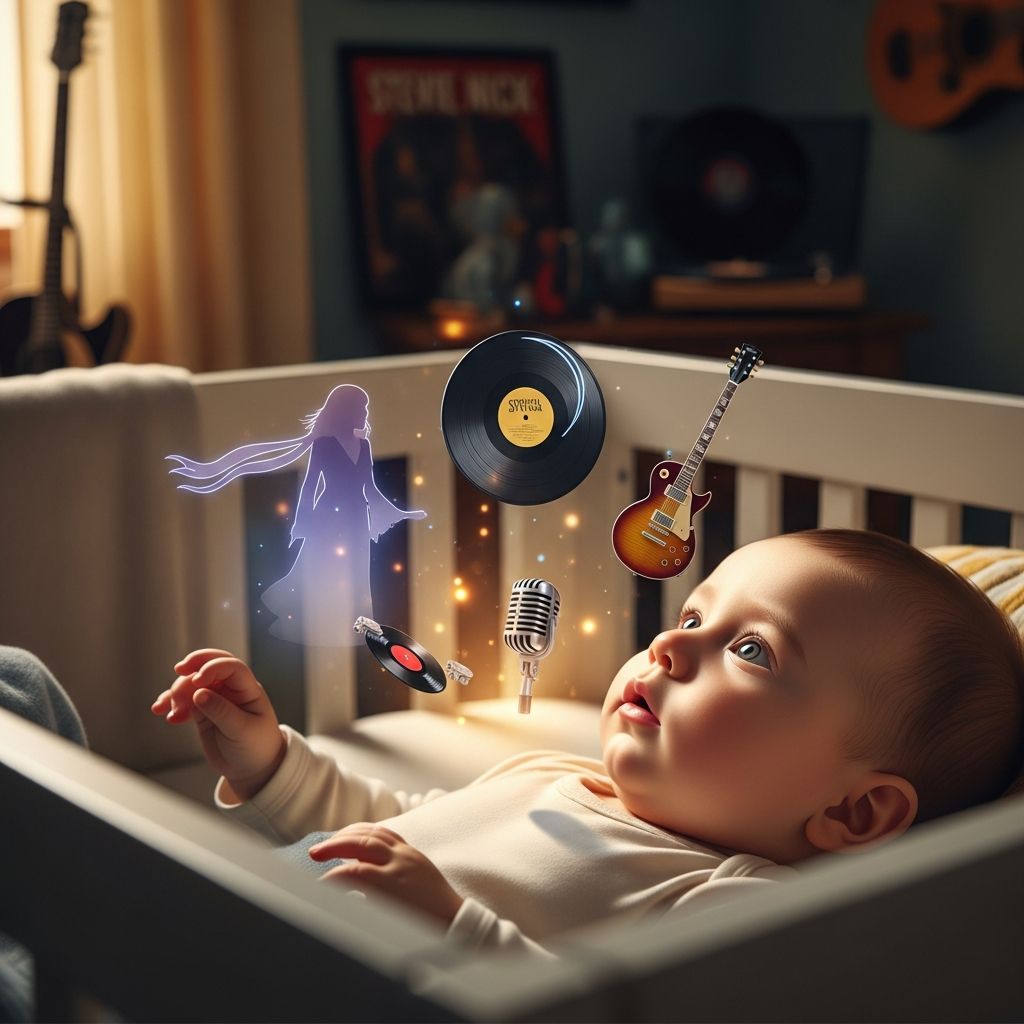
In the clip that has been circulating on social platforms, a very young baby sits or reclines comfortably while a video of Stevie Nicks performing plays nearby. The baby’s eyes are locked on the screen, face completely still, mouth slightly open, as if nothing else in the world exists except that song and that voice. Even when there are other sounds or movement in the background, the baby’s attention hardly wavers.
For many viewers, the magic is in the contrast: an icon of classic rock and a tiny, brand-new human sharing a moment that looks like pure, wordless understanding. The baby is not clapping, dancing, or singing along, but the stillness suggests deep focus and absorption, almost like the baby is listening with their entire body.
Why This Clip Resonates With Parents
Parents and grandparents react strongly to this kind of video because it touches several emotional chords at once. There is the charm of an expressive baby face, the nostalgia of a beloved Stevie Nicks performance, and the heart-tug of seeing a new generation encounter the music that shaped their caregivers’ youth. The baby seems to be receiving an invisible inheritance, not of money or objects, but of taste, culture, and emotional memory.
There is also a quiet reassurance built into the clip: that even in a frantic, highly digital world, simple things still hold power. A voice, a melody, and a small child’s attention are enough to stop adults in their tracks. For caregivers exhausted by routines and worries, seeing a baby spellbound by music can feel like a reminder that connection does not need to be complicated.
What Babies Actually Perceive in Music
Although infants obviously do not understand lyrics or biographies of rock legends, they are surprisingly sensitive to the raw ingredients of music. By just a few months of age, babies can distinguish between different pitches, rhythms, and tempos. Strong, steady beats and clear melodic patterns are especially easy for them to follow, which is one reason lullabies and simple songs feel so natural during bedtime routines.
In the case of Stevie Nicks, the baby is likely picking up on several elements at once: the grain of her voice, the rise and fall of the melody, the rhythm section underneath, and the emotional intensity that adults sense as passion or longing. Even without words, the sound carries an emotional contour, and babies are wired to pay attention to changes in tone and energy.
Why This Baby Looks So Completely Transfixed
The stillness many viewers notice in the video is actually a strong sign of concentration. When babies are deeply engaged, they often stop flailing or looking around and instead fix their gaze steadily on whatever has caught their interest. The baby in the clip appears to be in that concentrated state, where energy is directed inward rather than outward.
The combination of moving images, a human face on the screen, and rich, expressive singing gives the baby multiple channels of information to process. A baby does not need to know that Stevie Nicks is a famous musician to experience her presence as intense and compelling. The brain is busy mapping patterns and making predictions about what will come next in the song.
Classic Rock, Stevie Nicks, and Parental Nostalgia
Stevie Nicks has a particular place in popular culture as both a rock star and a symbol of a certain era’s emotion and style. Many current parents grew up with her music playing at home, in cars, or in older siblings’ bedrooms. When they play those songs around their own babies, they are not only sharing audio; they are sharing pieces of their younger selves.
That emotional layering deepens the impact of the video. Watching a baby look up at Stevie Nicks is also, in a way, watching that baby look up into the past life of the parent or grandparent who pressed play. The music becomes a bridge between generations, giving adults a way to pass on personal history without a single lecture or explanation.
How Music Shapes Early Emotional Development
Music is one of the earliest tools caregivers use to regulate babies’ emotions. Lullabies calm, bouncy songs energize, and soft humming soothes. Over time, babies start to associate particular melodies or tones with safety and comfort. When a familiar song begins, some babies visibly relax because their bodies predict that calm and closeness are coming next.
In the viral clip, the baby’s fixed attention may reflect an early form of this emotional mapping. Even if the child has heard the song only a few times, the recurring sound world of Stevie Nicks’ voice and the song’s structure may already feel familiar. That familiarity can create a pocket of security, where focusing on the performance feels good and safe.
Auditory Attention: Why Voices Matter So Much
Babies are naturally tuned to voices, especially human voices with expressive intonation. Long before they understand words, they react to rises and falls in pitch, breathy or raspy textures, and contrasts between loud and soft. A distinctive singer like Stevie Nicks provides a highly textured sound that fascinates the developing auditory system.
From a developmental point of view, listening to rich, varied vocal performances can support the pathways that will later handle language. While a rock song is not a language lesson in any formal sense, it exercises similar circuits: parsing rhythm, tracking syllable-like units, and noticing emotional color in sound. The baby’s transfixed state is a visible sign of that workout.
Visuals, Faces, and the Screen Factor
The clip does not only involve sound; there is also a video of Stevie Nicks singing. Babies love faces, and they especially love watching mouths move as people talk or sing. A close-up of a singer delivers exactly that kind of visual: eyes, mouth, and expressive gestures that change in sync with the sound.
However, it is important to separate the magic of music and facial expression from the more general issue of screen time. Short, supervised moments of watching a performance together can be meaningful, especially if the parent is also present, singing along or talking to the baby. The key is that the video becomes a shared experience, not a passive background babysitter.
Screen Time Considerations for Babies
Health organizations typically advise very limited or no solo screen time for babies under 18 to 24 months, emphasizing direct interaction instead. The concern is not that a brief music clip is harmful, but that frequent or unsupervised use could displace talk, touch, and play, which are essential for healthy development. With that in mind, videos like the Stevie Nicks clip can be enjoyed as occasional treats rather than daily habits.
Caregivers who want to share performances with their infants can keep a few principles in mind: keep sessions short, watch together, comment out loud on what is happening, and balance digital music time with plenty of real-world singing and instrument play. In this way, screens support connection rather than replace it.