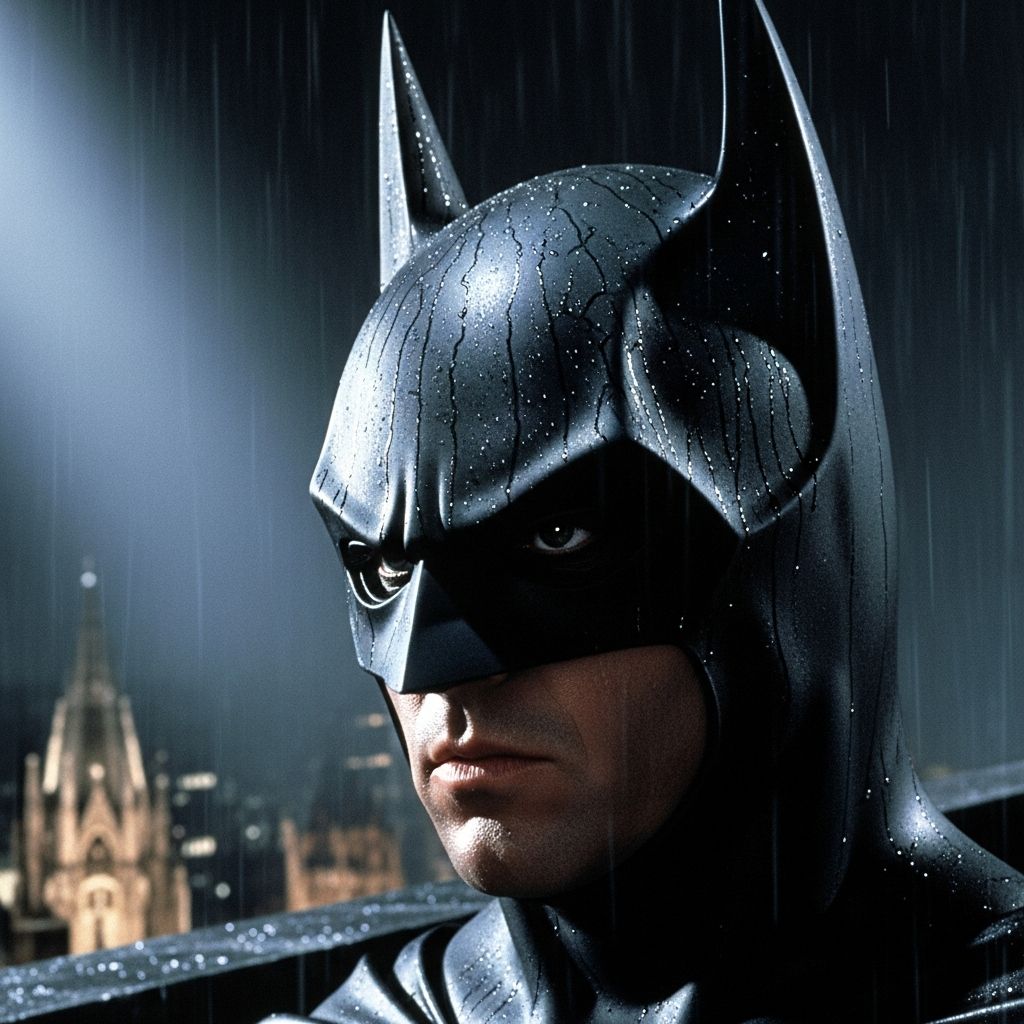
When audiences first heard that a comedic actor best known for offbeat roles was cast as Batman, skepticism was intense. Yet Michael Keaton’s 1989 performance, guided by Tim Burton’s eerie, operatic vision of Gotham, became a turning point not only for the character, but for superhero cinema as a whole. More than three decades later, many fans and critics still argue that Keaton’s Dark Knight remains the most influential live-action Batman.
The Cultural Earthquake of Batman (1989)
In the late 1980s, superhero movies were in a slump. The Superman franchise had fizzled, and costumed heroes were largely seen as campy or childish on screen. Burton’s Batman (1989) changed that perception almost overnight.
- Box office dominance: The film was the biggest hit of 1989 and became a pop-culture phenomenon, from merchandise to media coverage.
- Genre revival: Its success helped revive the comic-book movie as a serious Hollywood investment, paving the way for the modern superhero blockbuster era.
- Shift in tone: Audiences saw that superhero stories could be brooding, gothic, and psychologically layered rather than strictly camp.
Keaton was at the center of this shift. His performance proved that Batman could be more than a colorful do-gooder—he could be damaged, unsettling, and strangely vulnerable.
Reimagining Batman: From Camp Crusader to Gothic Antihero
For many viewers, the most familiar Batman before 1989 was Adam West’s bright, tongue-in-cheek TV incarnation. Burton and Keaton moved decisively in the opposite direction.
- Visual darkness: Gotham City became a nightmarish industrial maze, drenched in shadows and smoke, designed by production designer Anton Furst.
- Moral ambiguity: Keaton’s Batman does not feel like a conventional, reassuring hero; he operates from trauma and obsession rather than pure altruism.
- Psychological focus: Instead of treating Bruce Wayne as a generic billionaire playboy, the film foregrounds his psychological scars and social awkwardness.
This darker approach influenced later portrayals, including Christopher Nolan’s trilogy, which explored Batman as a symbol born from pain and fear.
Inside Michael Keaton’s Bruce Wayne: A Man Barely Holding It Together
What makes Keaton’s work so distinctive is not just his time in the batsuit, but the way he plays Bruce Wayne as a man quietly coming apart.
Socially awkward, not suave
Instead of a charming, effortlessly confident socialite, Keaton’s Bruce is shy, introverted, and often uncomfortable in his own home.
- He fumbles through small talk, appearing distracted and distant around guests.
- There is a sense that he doesn’t quite know how to be “Bruce Wayne,” as if the billionaire persona is an ill-fitting costume.
- His wealth embarrasses him rather than empowering him, undercutting the traditional fantasy of a glamorous playboy.
This approach subtly reverses the classic assumption that Bruce is the mask and Batman the truth; here, both identities feel incomplete, exposing a man with no stable self to fall back on.
Haunted more than heroic
Keaton plays Bruce as perpetually haunted—his eyes often distant, his body language closed off. This fits a reading of the character in which the trauma of his parents’ murder never truly heals, but instead becomes the engine driving every decision he makes.
Rather than emphasizing nobility, Keaton leans into discomfort. Bruce has money, power, and a secret lair, but he appears emptier, not happier, for it. That bleakness remains one of the performance’s most striking qualities.
The Batman Persona: A Creature of Fear, Not Just a Costume
Keaton’s Batman is less a superhero in spandex and more a predatory figure sculpted from shadow. Several elements contribute to this impression.
The all-black suit and silhouette
Though comic-book Batman at the time was still often depicted with blue and gray tones, the film embraces an all-black suit, emphasizing Batman as a looming shape in the darkness.
- Armored look: The rigid, sculpted armor departs from spandex, implying vulnerability to gunfire and the need for protection.
- Distinct silhouette: The angular cowl and massive cape turn Batman into a living icon—recognizable even in brief glimpses.
- Movement limitations: Keaton couldn’t easily turn his head in the suit, so he adopted a deliberate, almost inhuman way of moving that made Batman seem statuesque and eerie.
A voice that whispers instead of growls
Later Batmen would rely on heavily distorted growls, but Keaton’s vocal change is more restrained. He makes Batman’s voice:
- Quiet but firm: He speaks minimally and with a low, controlled tone.
- Subtly distinct from Bruce: The shift is noticeable without becoming theatrical, emphasizing secrecy without parody.
This understated approach supports a version of Batman who is frightening because he reveals so little of himself, not because he shouts his menace.
Gotham as a Character: Tim Burton’s Operatic City of Shadows
Keaton’s performance would not resonate as strongly without the environment Burton builds around him. Gotham City in 1989 feels like a space where Batman has to exist because everything is decaying, corrupt, and grotesque.
- Expressionist architecture: Skewed angles, towering statues, and cramped streets evoke German Expressionist cinema, turning the city into a physical representation of moral distortion.
- Industrial grime: Smoke stacks, chemical plants, and neon-lit alleys make Gotham look poisoned by its own progress.
- Permanent night: Much of the film unfolds after dark, emphasizing that Batman’s world is one of perpetual twilight rather than sunshine.
Keaton’s Batman blends into this environment. He doesn’t feel like a bright symbol imposed on a city; he feels like Gotham’s inevitable offspring—a natural extension of its anxiety and decay.
Batman and Joker: Two Sides of a Broken City
The power of Keaton’s Batman is amplified by his foil: Jack Nicholson’s Joker. Their dynamic illustrates two competing responses to a deformed world.
| Aspect | Michael Keaton’s Batman | Jack Nicholson’s Joker |
|---|---|---|
| Core emotion | Repressed grief and rage | Exaggerated joy and cruelty |
| Public persona | Withdrawn, awkward billionaire | Showman gangster turned media spectacle |
| Use of fear | Weaponizes fear to control crime | Spreads chaos by mocking fear itself |
| Relationship to Gotham | Reluctant guardian born from trauma | Agent of corruption reveling in decay |
Because Keaton underplays so much, Nicholson’s theatricality pops even more. Their clash balances interiorized anguish with extroverted madness, a contrast that many later Batman films would emulate.
How 1989’s Batman Shaped Future Dark Knights
Modern iterations of Batman often appear very different on the surface, but many of their core elements can be traced back to the Burton–Keaton template.
- The tormented billionaire: Nolan’s trilogy and later films continue the idea that Bruce Wayne is maladjusted, haunted, and socially off-balance rather than a simple playboy.
- The city as mirror: Gotham as a corrupt, almost mythic metropolis becomes a staple in live-action and animated portrayals.
- The grounded costume: Armored, tactical suits—with capes and cowls adapted to cinematic realism—owe a stylistic debt to the 1989 design.
- Serious superhero tone: The idea that comic-book films can be dark character studies as well as spectacles gained traction in part because Batman ’89 succeeded critically and commercially.
When Keaton returned to the role in later projects, it underlined just how iconic his interpretation had become: he was not merely one Batman among many, but a reference point for what Batman on film could be.
Is Michael Keaton the “Best” Batman?
Calling any actor the “best” Batman is ultimately subjective, but there are clear reasons Keaton lands at or near the top of many lists.
What sets Keaton apart
- Unexpected casting: Coming from comedy, he subverted expectations and proved that unconventional choices can yield rich, layered performances.
- Economy of emotion: He uses small gestures and minimal dialogue to convey deep trauma, making the character quietly compelling rather than loudly heroic.
- Integration with tone: His acting style perfectly matches Burton’s gothic, eccentric vision, creating a coherent world rather than a clash between script, performance, and visuals.
- Enduring influence: Subsequent film-makers and actors borrowed from this blend of brooding seriousness, stylized visuals, and psychological depth.
Other actors have brought different strengths—physicality, detective skills, or grounded realism—but Keaton’s version is arguably the one that first convinced mainstream audiences that Batman could be more than a nostalgic TV relic. He proved Batman could be cinematic myth.
FAQs About Michael Keaton’s 1989 Batman
Why was Michael Keaton’s casting as Batman controversial?
Keaton was primarily known for comedic and quirky roles, so many fans doubted he could portray a dark, intimidating superhero. The 1989 film’s success and his acclaimed performance helped overturn those doubts.
How did Tim Burton’s Batman change superhero movies?
It demonstrated that comic-book adaptations could combine serious tone, visual artistry, and psychological depth while still achieving major box-office success, encouraging studios to invest in darker, more ambitious superhero projects.
Was the black Batsuit new to the character?
In the comics, Batman was typically depicted in gray and blue, but the film popularized an all-black armored look that influenced many later live-action and animated versions of the costume.
How is Keaton’s Bruce Wayne different from other versions?
Instead of a confident playboy façade, Keaton plays Bruce as introverted, socially uneasy, and visibly burdened by trauma, which gives the character a more unsettling and vulnerable edge.
Is Michael Keaton widely regarded as the best Batman?
Opinions vary, but many critics and long-time fans rank him among the top portrayals because of his unique mix of psychological nuance, subdued intensity, and lasting influence on how Batman is depicted in film.
References
- How Tim Burton’s Batman 1989 Changed the Dark Knight Forever — Fandom. 2023-06-15. https://www.fandom.com/articles/batman-1989-tim-burton-michael-keaton-impact
- Batman (1989) Review — Father Son Holy Gore. 2015-09-27. https://fathersonholygore.com/2015/09/27/batman-1989-review/
- ‘Batman’ at 35: Bleak, Brooding and Worth the ’80s Hype — Hollywood in Toto. 2024-06-21. https://www.hollywoodintoto.com/batman-1989-michael-keaton-review/
- Batman (1989) Review — KG’s Movie Rants. 2022-03-03. https://kgsmovierants.com/2022/03/03/batman-1989-review/
- Batman (1989) Retrospective — Robert Fantozzi. 2019-08-04. https://www.robertfantozzi.com/retrospective-part-1-of-8-batman-1989/