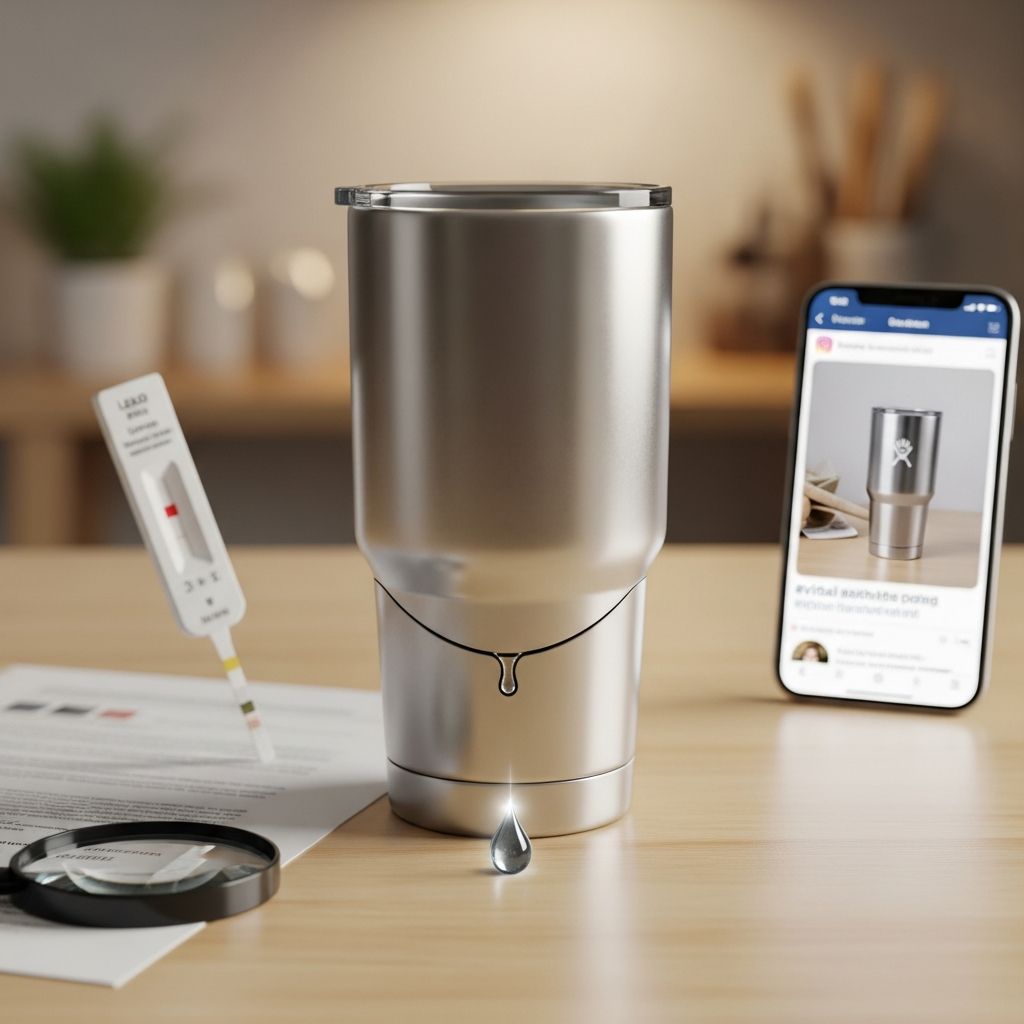
Popular insulated tumblers, such as those from Stanley, have sparked widespread debate after social media videos highlighted lead detection in their bases. While these products keep drinks cold or hot for hours, questions about a hidden lead pellet have parents and consumers questioning their safety. This article dives deep into the manufacturing details, health implications, regulatory standards, and practical steps to protect your family from lead exposure.
Understanding the Construction of Modern Tumblers
Insulated tumblers rely on a double-wall vacuum-sealed design to maintain beverage temperatures. At the base, a small pellet seals this vacuum, often containing lead as part of an industry-standard soldering process. This pellet remains fully encased under a durable stainless steel cover, preventing direct contact with users or contents under normal conditions.
Manufacturers like Stanley emphasize that no lead touches the interior surfaces or drink areas. The steel barrier ensures the seal stays inaccessible during everyday use, from commuting to workouts. However, viral tests using home kits have lit up positive on the exterior base, fueling panic despite the encapsulation.
The Science Behind Lead in Sealing Technology
Lead solder provides a reliable, airtight seal in vacuum insulation, a practice common across brands for decades. Experts note this method withstands daily wear without leaching unless compromised. Environmental toxicologists confirm that intact products pose negligible risk, as the lead cannot migrate to liquids or skin.
That said, durability matters. Reports of bases detaching—though rare—expose the pellet, potentially allowing contact. In such cases, replacement under warranty is standard, but experts urge caution: any product relying on perfect integrity shifts safety responsibility to users.
Health Impacts of Lead Exposure: What Families Need to Know
Lead is a potent neurotoxin with no safe exposure threshold, especially for children and pregnant individuals. Even trace amounts can impair brain development, lower IQ, cause attention deficits, and trigger anemia or kidney issues. Adults face reproductive and cardiovascular risks from chronic buildup, as lead bioaccumulates in bones and tissues.
| Group | Key Vulnerabilities | Symptoms of Exposure |
|---|---|---|
| Children & Fetuses | Developing brains, higher absorption rates | Learning delays, behavioral issues, growth stunting |
| Adults | Long-term accumulation | Hypertension, kidney damage, fertility problems |
| Pregnant Women | Fetal transfer via placenta | Preterm birth, low birth weight |
Unlike acute poisoning from paint chips, tumbler-related risks are hypothetical and minimal if undamaged. Far greater threats lurk elsewhere.
Beyond Tumblers: Common Household Lead Sources
Social media fixates on tumblers, but public health experts prioritize bigger culprits. Aging home paint (pre-1978) generates toxic dust; lead pipes contaminate 10-20% of U.S. tap water, rising to 40-60% for infant formula. Cosmetics, imported toys, and dishware also contribute.
- Water Systems: Lead service lines leach into taps; flush lines before use and test annually.
- Legacy Paint: Dust from renovations poses inhalation risks; wet-wipe and HEPA-vacuum.
- Imported Goods: Jewelry, spices, and candies often test high; check CPSC recalls.
- Soil & Air: Historical pollution lingers; garden safely and avoid root veggies in urban areas.
Addressing these systemic issues—via pipe replacements and filtration—yields greater health gains than ditching a tumbler.
Regulatory Landscape and Recall History
The U.S. Consumer Product Safety Commission (CPSC) enforces a 100 ppm lead limit in children’s products, with zero tolerance for accessible hazards. Adult tumblers like Stanley fall outside children’s rules but must avoid “unreasonable risk.” Recent recalls targeted kid cups from Tiblue, Klickpick, PandaEar, and Cupkin exceeding limits due to exposed beads.
Stanley has faced no recalls for this issue, attributing it to robust design. The EPA sets drinking water action at 15 ppb, underscoring stricter liquid standards. Internationally, EU REACH bans lead in many consumer goods, pushing solder alternatives.
Testing Your Tumbler: DIY Kits vs. Lab Accuracy
Home swab tests react to the steel base’s exterior, often false-positive for users since lead stays sealed inside. For precision, send damaged bases to certified labs like those accredited by the EPA. Visual checks suffice for most: intact steel disk means low worry.
If concerned:
- Inspect base for dents, cracks, or looseness.
- Avoid dishwashers if warranty specifies hand-wash.
- Contact manufacturer for free replacement on defects.
- Report issues to CPSC at saferproducts.gov.
Alternatives: Lead-Free Hydration Options
Seek tumblers using induction sealing or copper solder, avoiding lead pellets. Brands like Hydro Flask and Yeti claim lead-free processes, though verification varies. Single-wall bottles or glass skip vacuum seals entirely.
| Brand/Type | Lead Status | Key Features | Best For |
|---|---|---|---|
| Stanley Quencher | Encased lead pellet | 40oz, 2-day ice | Daily commuters |
| Hydro Flask | Lead-free claim | Temp-retention, durable | Outdoor enthusiasts |
| Glass Bottles | No insulation needed | Non-toxic, recyclable | Home/office use |
| Simple Modern | Affordable, customizable | Budget buyers |
Prioritize BPA-free plastics and third-party certifications like NSF/ANSI 61 for drinkware safety.
Expert Guidance on Daily Precautions
Toxicologists advise treating tumblers as safe absent damage. Prioritize water testing (kits from EPA-approved labs) and certified filters like reverse osmosis for tap water. For kids, use lead-free sippy cups and monitor play areas.
“If the structural integrity holds, routine use presents no exposure pathway.” — Environmental toxicologist.
Public health professors rank tumblers low on worry lists compared to housing stock. Focus advocacy on infrastructure fixes for lasting impact.
Frequently Asked Questions About Tumbler Safety
Do Stanley cups leach lead into drinks?
No, when intact. The pellet is isolated by steel; tests show no interior contamination.
Is the lead pellet safe for children?
Yes for adult products if undamaged. Avoid kids’ tumblers with recalls; opt for certified child-safe options.
What if my tumbler base pops off?
Stop using it, wipe away residue, and request warranty replacement. Test via lab if concerned.
Are other brands safer?
Many use similar tech; check manufacturer disclosures. Lead-free alternatives exist but verify claims.
How can I reduce overall lead exposure?
Test home water/paint, use filters, avoid imported risks, and support lead pipe bans.
Empowering Choices for Healthier Hydration
The tumbler trend highlights consumer power: viral scrutiny drives transparency. While Stanley cups remain safe for most, awareness amplifies calls for lead-free innovation. By understanding risks and prioritizing proven threats, families hydrate confidently amid hype.
References
- How worried should you be about lead in your Stanley cup? — Northeastern University Bouvé College of Health Sciences. 2024-02-00. https://bouve.northeastern.edu/news/how-worried-should-you-be-about-lead-in-your-stanley-cup/
- Stanley and other drink cups contain lead. Should you be worried? — 6ABC Philadelphia (WPVI). 2024-02-00. https://6abc.com/post/stanley-cups-lead-oversize-tumblers-tiktok/14378499/
- Do Stanley tumblers contain lead, and should you be concerned? — NBC Chicago (YouTube). 2024-02-16. https://www.youtube.com/watch?v=58HKxrF4Ei8
- Assessing risk of lead exposure from insulated beverage containers — Harvard T.H. Chan School of Public Health. 2024-01-29. https://hsph.harvard.edu/news/assessing-risk-of-lead-exposure-from-insulated-beverage-containers/
- Concerned about lead in your Stanley Quencher? Here’s what to know — KSAT 12 (Hearst). 2024-02-06. https://www.ksat.com/news/local/2024/02/06/concerned-about-lead-in-your-stanley-quencher-heres-what-to-know/
- Worry About Lead in Your Drinking Water, But Not From Stanley Cups — Earthjustice. 2024-00-00. https://earthjustice.org/article/worried-about-lead-in-your-drinking-water-stanley-cups-are-a-small-part-of-a-much-bigger-problem
- Lead poisoning – Symptoms & causes — Mayo Clinic. 2024-00-00 (Last updated). https://www.mayoclinic.org/diseases-conditions/lead-poisoning/symptoms-causes/syc-20354717