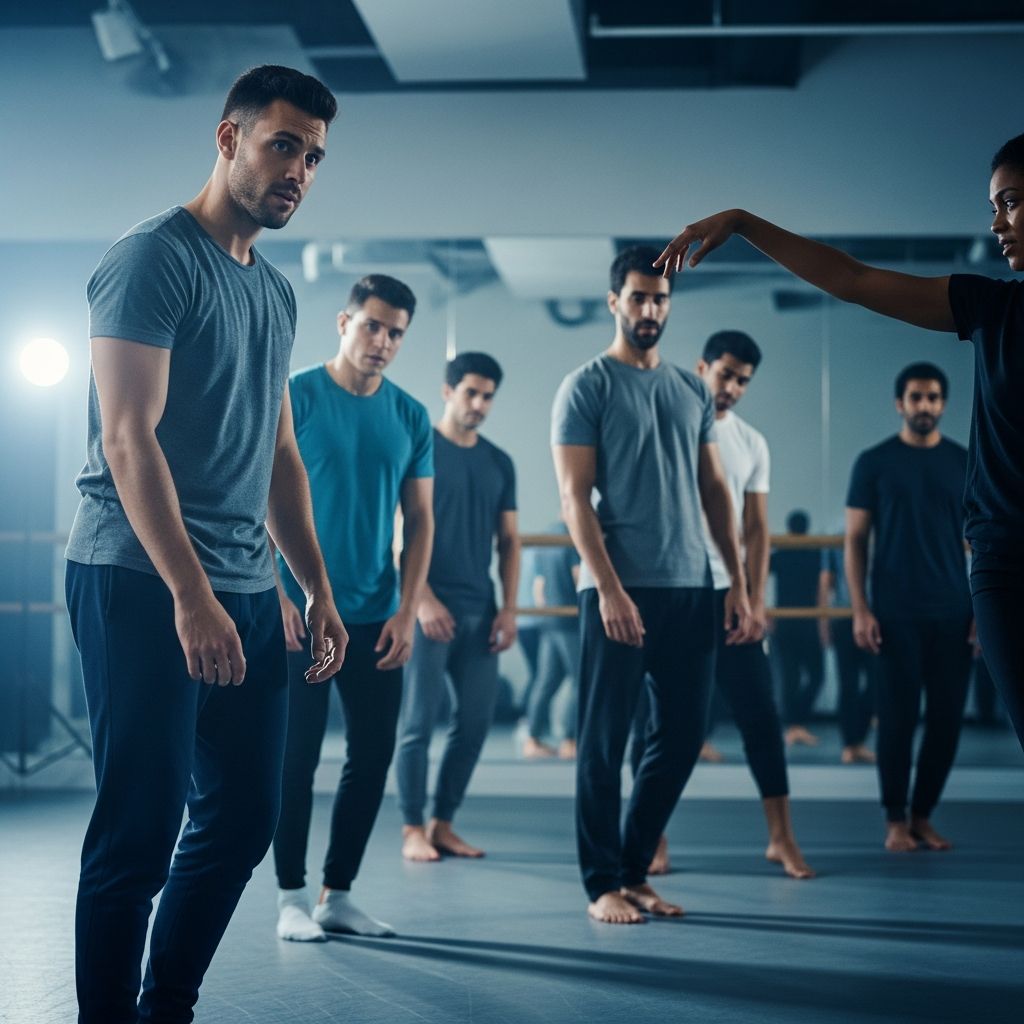
Plenty of men joke that they have “two left feet,” but research suggests that what happens on the dance floor is about far more than rhythm or confidence. Behind every stiff shuffle and every unexpectedly smooth move lies a mix of biology, brain wiring, personality, and cultural pressure. Modern motion-capture studies and psychology experiments have begun to unpack what people see when a man starts to dance – and why some moves are judged as more attractive than others.
How Science Studies Male Dancing
To move beyond personal opinions and cultural stereotypes, scientists have turned to technology and controlled experiments to analyze dance.
- Motion-capture systems record precise body movements using sensors or markers placed on key joints and limbs, allowing researchers to replay dances as simplified 3D avatars.
- Standardized music (often a basic drumbeat or the same song for everyone) ensures that the rhythm is constant, so differences in movement can be measured objectively.
- Neutral avatars remove distractions like face, clothing, and physical appearance, so observers rate only movement quality.
- Ratings by peers (often women judging male dancers) provide data on perceived attractiveness, skill, and confidence.
This approach has allowed researchers to link specific movement patterns to how attractive, strong, or appealing a male dancer appears.
What Women Notice in Men’s Dance Moves
Studies consistently show that women use male dancing as a cue to underlying qualities like strength, health, coordination, and even personality.
Key movement qualities of “good” male dancers
- Big but controlled upper-body movements: Larger and more varied movements in the neck, head, and torso are associated with higher dance ratings.
- Vigorous arm use: Strong, purposeful arm motions (rather than limp or stiff arms) tend to signal physical strength.
- Quick, precise leg actions: In one study, speed of the right knee’s bending and twisting was a strong predictor of dance quality ratings.
- Rhythmic variation: Subtle changes in speed, direction, and amplitude make the dance look dynamic rather than robotic.
| Movement Feature | How It Tends to Be Perceived |
|---|---|
| Large torso and neck movements | Confidence, expressiveness, physical vigor |
| Vigorous arm swings | Upper-body strength, assertiveness |
| Fast right-knee movements | Agility, coordination, athletic ability |
| Minimal upper-body motion | Stiffness, low energy, social discomfort |
Strength, Symmetry, and “Genetic Quality” on the Dance Floor
Dance is not just about entertainment; in evolutionary terms, movement can operate as a kind of courtship display. Several research lines connect male dance ability to physical and genetic markers.
Physical strength signals
- One study found that men with higher handgrip strength – often used as a proxy for overall upper-body strength – were rated as better dancers by both men and women.
- Observers picked up strength cues mostly through the size and vigor of arm and upper-body movements.
- Male observers were especially accurate at detecting another man’s upper-body strength from his dance, likely because of intrasexual competition (assessing potential rivals).
Body symmetry and attractiveness
- Research using motion-capture and faceless avatars found that dancers with more symmetrical bodies – a marker often linked to developmental stability and good genes – were rated as better dancers and more desirable overall.
- Symmetrical men, in particular, received higher ratings from female observers than symmetrical women did from male observers, aligning with the idea that male courtship displays are strongly scrutinized.
These findings support the theory that competent male dancing may be an honest signal of health, coordination, and general physical quality rather than just a learned social skill.
Personality Traits That Show Up in Male Dancing
Dancing does not only reveal strength or symmetry. It can also hint at a man’s personality. In one study, women rated the dance quality of men whose personality traits were also measured.
- Conscientiousness (being organized, reliable, self-disciplined) was positively associated with better dance ratings.
- Agreeableness (being cooperative, considerate, kind) was also linked to more appealing dance movements.
- Previous work by the same research team suggested that risk-taking and sensation-seeking were connected to more impressive, bold dance styles, which might signal short-term genetic benefits but not necessarily long-term reliability.
This suggests that when women watch men dancing, they may be subconsciously forming impressions about both short-term traits (like energy and boldness) and long-term traits (like dependability and social warmth).
Why So Many Men Feel Awkward: Brain and Culture Together
If strong, expressive movement and rhythm tend to look good, why do so many men say they can’t dance? The answer likely lies in the intersection of brain function, early learning, and social pressure.
Movement, timing, and the brain
Dancing requires the brain to synchronize multiple systems:
- Auditory processing to detect the beat and rhythmic structure of the music.
- Motor planning in areas like the premotor cortex and supplementary motor area to sequence steps and gestures.
- Balance and coordination, heavily supported by the cerebellum, to keep the body stable while moving in complex ways.
Neuroscience work on dance and music shows that training can reshape these circuits; people who practice moving to rhythm show stronger coupling between auditory and motor brain regions. Many boys, however, receive less formal dance instruction than girls, which may reduce early opportunities to refine these systems through practice.
Gender norms and early experience
Cultural expectations matter as much as biology:
- In many cultures, girls are encouraged to dance from a young age, while boys are funneled toward sports or activities that emphasize strength but not expressive movement.
- Boys who enjoy dance may face social stigma, which can discourage practice and lead to less comfort on the dance floor as adults.
- Because dance is often tied to public performance and social judgment, men who feel scrutinized may default to minimal, “safe” movements, which ironically are rated as less attractive.
Over time, this combination of limited practice and strong social evaluation helps create the belief that many men are simply “not dancers,” even though underlying motor skills could be improved with experience.
The Social Dynamics: Men Judging Men, Women Judging Men
Interestingly, it is not only women who read signals from male dancing. Other men are also paying attention.
Male observers and competition
- Research on dance and strength found that male observers were even better than female observers at detecting upper-body strength cues in other men’s dancing, likely because of intrasexual rivalry.
- This means that when a man dances, he is not just performing for potential partners; he is also signaling something about his physical formidability to other males.
Female observers and mate value
- Women’s ratings of dance quality often match measures of physical condition and developmental stability like symmetry and strength.
- Descriptions of someone as a “good dancer” can increase their perceived mate value in experimental settings, even without seeing them move.
The dance floor becomes a compressed social information space where people quickly evaluate each other’s bodies, personalities, and potential as partners.
Why Calling Men “Bad Dancers” Misses the Point
The stereotype that men are inherently bad at dancing oversimplifies what is really a multidimensional skill. Science suggests several key points:
- No fixed “dance gene”: While physical traits like symmetry and coordination influence how dancing looks, there is no single factor that determines ability.
- Practice and feedback matter: Motor skills and rhythm processing improve with training, just as they do in sports or musical performance.
- Culture shapes comfort: Social messages about masculinity, public performance, and fear of embarrassment can strongly inhibit how freely men move, regardless of their potential.
Instead of asking why men are universally “bad,” it is more accurate to ask why many men receive fewer opportunities, less encouragement, and more social risk when they dance.
Practical Takeaways for Men Who Want to Dance Better
Although the research mainly explains how observers react, it also offers clues about how men can feel and look more comfortable dancing.
- Engage the upper body: Avoid locking the torso. Gentle twists, shoulder rolls, and head movements can make your dancing look more dynamic.
- Use your arms with purpose: Let your arms move naturally with the beat instead of clinging to your sides; controlled, confident arm swings are read as more attractive.
- Add small variations: Change direction, level, or speed slightly every few beats rather than repeating the same tiny step.
- Build rhythm sense: Simple exercises like clapping or stepping to different tempos improve auditory–motor timing.
- Reduce self-monitoring: Focusing less on how you look and more on enjoying the music can reduce stiffness caused by anxiety.
From a scientific perspective, dancing well is not about copying complex choreography but about expressing energy and control in ways that signal coordination, strength, and openness.
Frequently Asked Questions About Men and Dancing
Are men biologically worse at dancing than women?
Current research does not show that men are biologically destined to be worse dancers. Differences are more strongly tied to practice, cultural expectations, and how comfortable individuals feel expressing themselves through movement.
Why do women seem to care more about how men dance than the other way around?
Evolutionary theories suggest that in species where males compete for mates and females are more selective, male displays (including dance) are scrutinized more closely. Human studies show that women’s ratings of male dance quality track with indicators of physical and genetic quality.
Does being a good dancer really make someone more attractive overall?
Experiments indicate that people described as good dancers are rated as having higher mate value than those described as non-dancers, even without seeing them move. Motion-capture studies further link higher-rated dance to traits like symmetry and strength, which are commonly associated with attractiveness.
What specific moves should men avoid if they don’t want to look awkward?
Research focuses more on what helps than on “bad moves,” but consistently minimal upper-body involvement, extremely rigid posture, and tiny, repetitive steps tend to be judged poorly. Overly exaggerated or aggressive moves can also backfire if they look uncontrolled rather than confident.
Can dance practice improve brain health as well as social confidence?
Yes. Work in neurology and aging shows that frequent social dancing is associated with better cognitive resilience and may reduce dementia risk, likely because it combines physical activity, coordination, memory, and social engagement.
References
- Male dancers signal their strength to men and women — Northumbria University Newsroom. 2010-11-24. https://newsroom.northumbria.ac.uk/pressreleases/male-dancers-signal-their-strength-to-men-and-women-1195733
- Male dance moves that catch a woman’s eye — Hugill N, Fink B, Neave N, Seydel H,: Biology Letters (Royal Society). 2011-02-23. https://www.ncbi.nlm.nih.gov/pmc/articles/PMC3061152/
- New study scientifically links dancing to attraction, genetic advantage — University of Washington News. 2005-12-21. https://www.washington.edu/news/2005/12/21/new-study-scientifically-links-dancing-to-attraction-genetic-advantage/
- Conscientious Guys Wow Women on the Dance Floor — LiveScience (Fischer M). 2011-06-03. https://www.livescience.com/17003-conscientious-men-dancers.html
- Dancing and the Brain — Harvard Medical School. 2007-08-01. https://hms.harvard.edu/news-events/publications-archive/brain/dancing-brain
- Further Investigations of the Effect of Dancing Ability on Mate Value — Hughett P et al., Bucknell University Institutional Repository (journal article record). 2010. https://digitalcommons.bucknell.edu/fac_journ/1301/