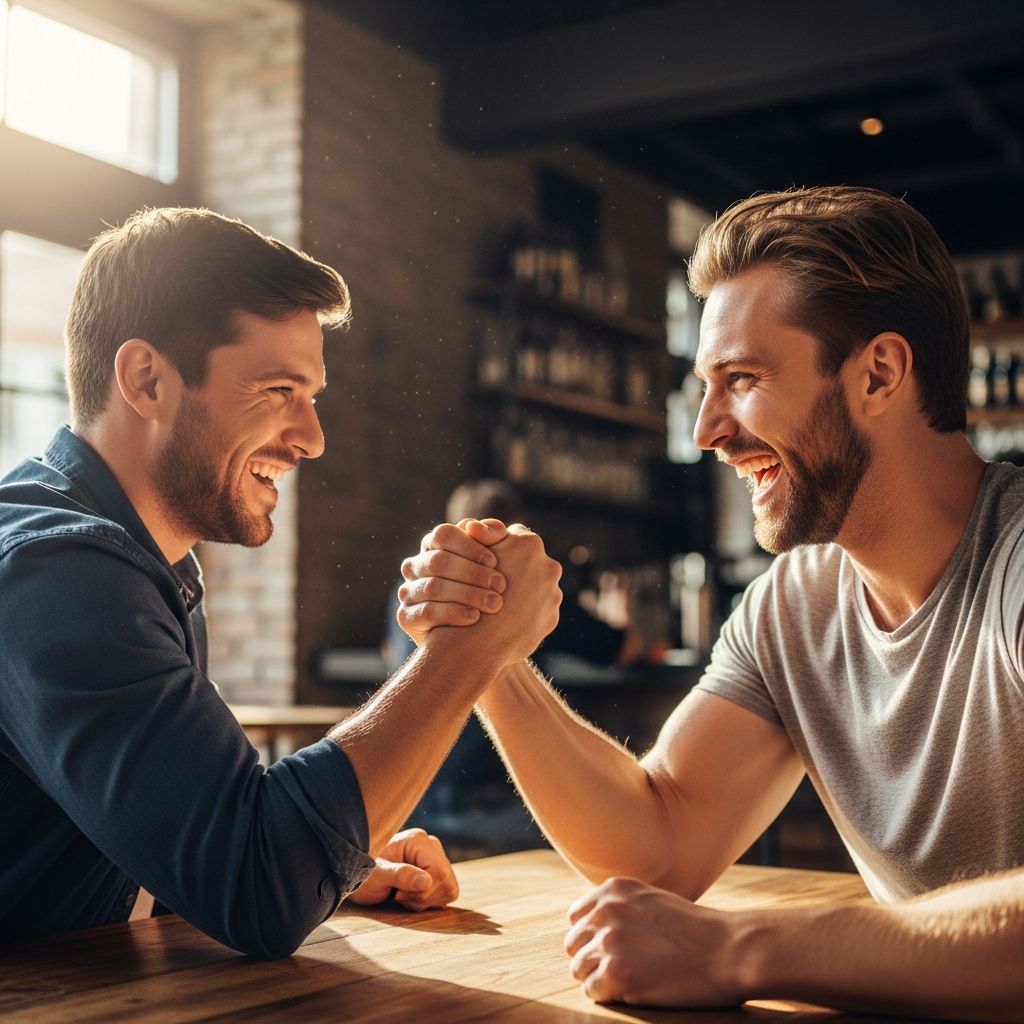
Men’s tendency to engage in rough play and verbal sparring serves as a vital mechanism for building lasting friendships and emotional resilience. This form of interaction, rooted in biology and shaped by culture, helps men navigate stress and loneliness more effectively.
The Biological Roots of Brotherly Banter
From an evolutionary standpoint, male alliances formed through competitive yet cooperative behaviors increased survival odds in ancestral groups. Prehistoric men who formed tight-knit bonds with peers were better equipped to hunt, defend territory, and protect kin, passing on genes that favored such social wiring. Modern neuroscience echoes this: during stress, male brains release hormones like oxytocin that promote huddling and affiliation, turning tension into teamwork.
In rodent studies, mild stressors prompted males to cluster together, elevating oxytocin levels linked to trust and empathy. This mirrors human dynamics where shared challenges—be it a tough workday or a sports loss—draw men closer through jokes and jostles rather than overt affection. Such bonding isn’t mere fun; it recalibrates the stress response, making individuals more adaptable.
How Playful Conflict Builds Emotional Strength
Roughhousing and teasing act as low-stakes arenas for practicing vulnerability and trust. A shoulder punch or sarcastic jab tests boundaries safely, signaling ‘I see your flaws, but you’re still in my circle.’ This side-by-side engagement sidesteps direct emotional talks, which many men find awkward due to socialization.
- Stress Buffering: Group affiliation post-stress lowers cortisol, enhancing recovery.
- Emotional Regulation: Banter hones communication skills without judgment.
- Resilience Training: Playful rivalry simulates real conflicts, building coping mechanisms.
Psychologists note that men often prefer ‘shoulder-to-shoulder’ activities—like gaming or grilling—over face-to-face confessions. Over time, these shared moments open doors to deeper disclosures.
Cultural Barriers to Authentic Male Connections
Society often drills into boys that vulnerability equates to weakness, peaking in adolescence when peers mock emotional openness as ‘unmanly.’ Developmental research by Niobe Way reveals young boys crave intimacy akin to girls, but by mid-teens, they suppress it to conform, leading to friendless adulthoods.
This shift hollows emotional capacity: men report fewer confidants, relying overburdened on romantic partners for support. The stereotype of the stoic loner glorifies isolation, ignoring how it fuels depression and health risks.
| Developmental Stage | Typical Male Friendship Pattern | Long-Term Impact |
|---|---|---|
| Childhood (Pre-Teen) | Open affection, close confidences | Strong emotional foundation |
| Early Adolescence (14-15) | Decline in intimacy due to peer pressure | Emerging isolation |
| Adulthood (20s+) | Superficial ties, activity-based hangs | Loneliness epidemic, strained relationships |
This table illustrates the trajectory, drawn from longitudinal studies on male socialization.
Neuroscience: Hormones Fueling the Bromance
Oxytocin, dubbed the ‘bonding hormone,’ surges in pair-bonded males to reinforce loyalty and deter rivals. In friendships, it similarly amplifies rewarding interactions, making post-game beers or gym sessions feel euphoric. Paired with dopamine from victory or shared laughs, these chemicals cement alliances.
Long-term bonds demand maintenance: selective aggression toward outsiders protects the group, while internal play keeps dynamics lively. For humans, this translates to teasing that reinforces hierarchy without true harm, preserving unity.
Health Wins from Rough-and-Tumble Ties
Strong male networks correlate with lower stress, better mental health, and even physical longevity. Men with solid bro-mances adapt faster to crises, reporting higher life satisfaction.
- Mental Health Shield: Friendships combat isolation, a top suicide risk factor for men.
- Physical Perks: Joint activities promote exercise, reducing chronic disease odds.
- Purpose Boost: Belonging fosters meaning, curbing aimlessness.
Therapists observe men in groups shed shame, embracing tenderness playfully—a tender heart under brass balls.
Practical Ways to Forge Deeper Dude Bonds
Reclaim brotherhood through intentional play. Start small: invite a buddy for pickup basketball, where trash talk flows naturally into real talk.
- Pick Shared Adventures: Hiking, gaming, or fixing cars—activity first, chat second.
- Embrace the Ribbing: Tease lightly to signal safety; it disarms defenses.
- Join Groups: Men’s circles or sports leagues normalize vulnerability.
- Schedule Regularly: Consistency turns acquaintances into allies.
- Lead by Example: Share a minor struggle; reciprocity follows.
Experts like Fred Rabinowitz advocate these steps, proven in therapy to spark intimacy.
Frequently Asked Questions
Why do men bond through fighting or teasing instead of talking?
Male brains favor action-oriented affiliation, evolved for group survival. Teasing tests trust safely, bypassing cultural taboos on direct emotion.
Does rough play really reduce stress?
Yes—studies show stress boosts social hormones like oxytocin, aiding recovery via bonding.
Can adult men rebuild lost friendships?
Absolutely. Shared activities rebuild intimacy gradually, countering adolescent suppression.
Is male bonding linked to better health?
Strong ties buffer stress, improve emotional skills, and enhance purpose, lowering health risks.
How does culture hinder male closeness?
Norms label vulnerability ‘feminine,’ causing boys to distance emotionally by teens.
Real-Life Stories of Brotherhood in Action
Consider veterans’ groups: ex-soldiers roughhouse and roast, processing trauma through trusted banter. Or weekend warriors on the golf course, where a missed putt sparks jabs that evolve into life advice. These vignettes prove play’s power.
In therapy, men recount playground lessons—like a 7-year-old retracting a hug after gay-panic taunts—fueling lifelong wariness. Yet, reclaiming play heals: one client joined a boxing gym, finding brothers who punch and then embrace.
The Future of Male Friendships
As loneliness surges, initiatives like men’s sheds and bro-podcasts challenge norms. Embracing rivalry’s tender underbelly could redefine masculinity, prioritizing health over heroics.
Ultimately, men’s playful conflicts aren’t relics; they’re rocket fuel for resilient lives. Lean in, jab back, bond deep.
References
- Male Bonding Is Good for Your Health — Vanderbilt Health. 2023. https://my.vanderbilthealth.com/embrace-the-bromance-male-bonding-is-good-for-your-health/
- The Importance of Male Friendships — We Are Brothers. 2023. https://www.wearebrothers.org/the-importance-of-male-bonding/
- The Neurobiology of Love and Pair Bonding — PMC (NIH). 2023-06-12. https://pmc.ncbi.nlm.nih.gov/articles/PMC10295201/
- Why Friendships Among Men Are So Important — Greater Good Science Center (UC Berkeley). 2017-04-11. https://greatergood.berkeley.edu/article/item/why_friendships_among_men_are_so_important
- The Importance Of Male Friendships — Brass Balls Tender Heart. 2023. https://brassballstenderheart.com/the-importance-of-male-friendships/