Understanding the Science Behind Physical Attraction to Bigger Builds
Physical attraction remains one of the most complex aspects of human relationships, influenced by cultural conditioning, evolutionary biology, and individual preference. Contemporary research reveals a noteworthy shift in how many women evaluate potential romantic partners, particularly regarding body size. Rather than conforming to narrow aesthetic ideals perpetuated by mainstream media, emerging scientific evidence demonstrates that many women find larger physiques genuinely appealing. This shift represents an important cultural moment where diverse body types are gaining recognition as desirable and attractive. The reasons underlying this attraction extend far beyond superficial preference, rooted instead in psychological perception, evolutionary psychology, and practical relationship benefits.
The Humor Factor and Personality Perception
One of the most consistently documented advantages larger men experience in romantic contexts involves their perceived sense of humor. Substantial psychological research confirms that women prioritize the ability to make them laugh when evaluating romantic prospects. However, this preference doesn’t automatically translate to all bigger men being inherently funnier. Rather, cultural conditioning and media representation have created a persistent association between larger body types and comedic talent. Popular entertainment has reinforced this stereotype across decades, leading many individuals to enter interactions with larger men expecting a certain level of wit and charm. This preconceived notion can actually work to the advantage of bigger men, as women may approach them with positive expectations regarding humor and personality compatibility. The halo effect—whereby one positive characteristic influences overall perception—means that the anticipated humor of a larger partner can enhance perceptions of other qualities, making them appear more charismatic and socially confident than equally humorous slimmer counterparts.
Trustworthiness and Social Perception
Research from academic institutions examining political perceptions and social trust has uncovered an intriguing phenomenon: individuals with fuller figures are frequently perceived as more trustworthy and reliable than their leaner counterparts. This perception may stem from deeply ingrained evolutionary psychology, where historical associations between body size and resource accumulation created mental links between larger physiques and financial security. In ancestral environments, the ability to maintain a larger body often signaled access to abundant food supplies and therefore higher social status. Although modern economic systems operate entirely differently, these primal associations remain embedded in human psychology. Additionally, larger individuals may be perceived as less threatening in certain contexts, or their physical presence might evoke feelings of safety and stability. These unconscious associations translate into romantic contexts, where a partner perceived as trustworthy and reliable becomes inherently more attractive. The psychological foundation of romantic relationships relies heavily on trust and security, making this perception advantageous beyond mere physical attraction.
Enhanced Sexual Stamina and Physical Performance
Among the most surprising research findings regarding romantic compatibility involves sexual endurance. A comprehensive 2010 study published in medical research literature examined sexual performance across different body types, documenting notable differences in duration and consistency. Men with elevated BMI measurements and more substantial belly mass demonstrated significantly longer periods of intimate engagement compared to leaner counterparts, with research indicating differences of several minutes. The physiological reasons behind this phenomenon remain subjects of ongoing investigation, but researchers propose several mechanisms. Greater muscle mass may provide increased physical support and endurance during extended physical activity. Additionally, metabolic differences and cardiovascular variations between body types could contribute to performance differentials. Furthermore, men with larger physiques may experience psychological benefits from increased confidence, potentially reducing anxiety-related performance issues that sometimes affect sexual function. Survey data collected from large female populations revealed that approximately 38 percent rated overweight and plus-size men as superior lovers, with many attributing this advantage to their apparent eagerness to prioritize partner satisfaction and their demonstrated gentleness and attentiveness during intimate encounters.
Body Image Security and Relationship Dynamics
Modern society places intense pressure on women regarding physical appearance, with unrealistic standards permeating virtually every media format and social context. This constant scrutiny creates widespread body image insecurity among female populations across all age groups. An interesting relational dynamic emerges when women partner with men who maintain a more relaxed attitude toward their own bodies. A larger partner who demonstrates self-acceptance and comfort in his own skin can create psychological safety that extends to his partner. When a man shows no obsession with his own physical imperfections or dietary restrictions, his female partner may feel liberated from similar concerns and pressures. Additionally, relative body comparisons can psychologically influence self-perception. When a woman partners with someone whose body size differs significantly from her own, she may experience reduced social judgment or comparison, as the contrast between partners becomes visually apparent. The comparative advantage of appearing slimmer beside a larger partner, while perhaps not consciously acknowledged, can contribute to enhanced confidence and reduced self-consciousness during intimate moments and social situations.
Physical Comfort and Affectionate Connection
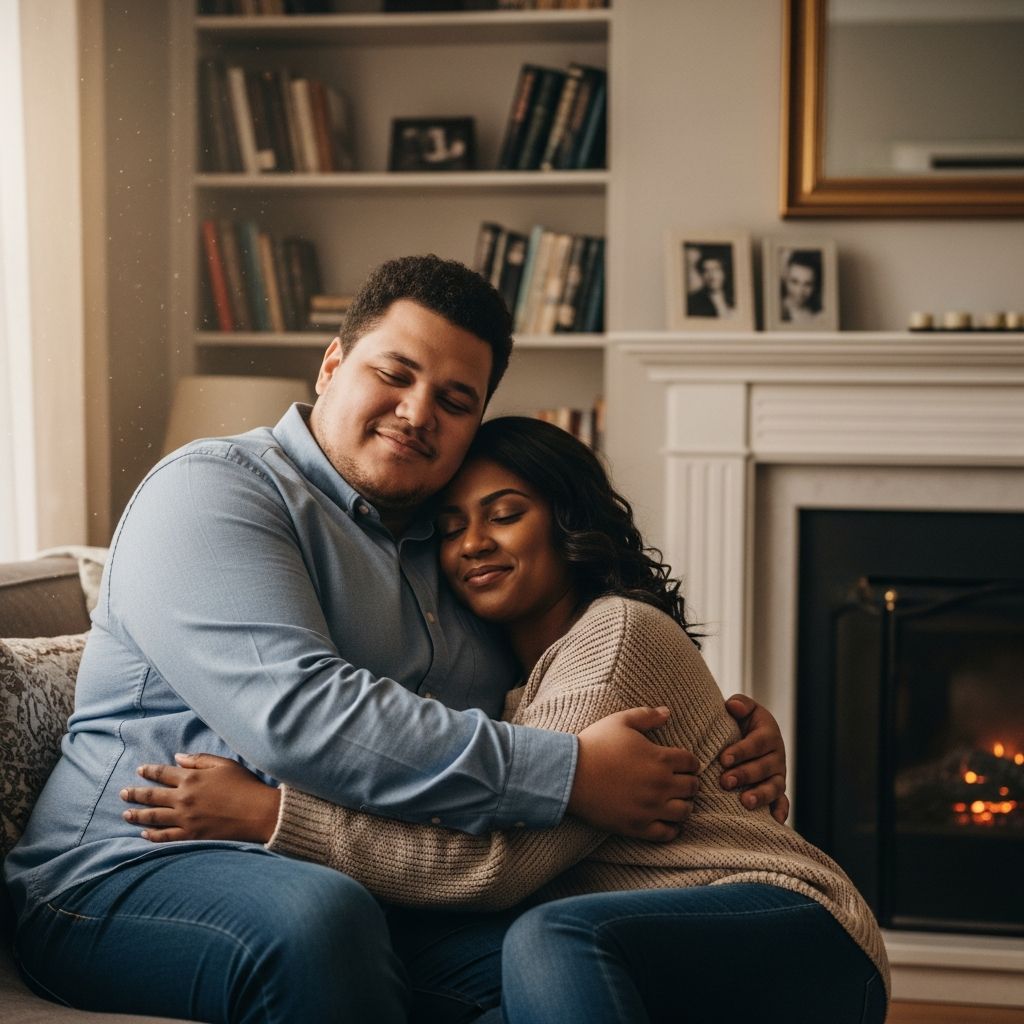
Beyond psychological and performance considerations, the physical characteristics of larger bodies offer distinct practical advantages in intimate relationships. Increased body mass and size provide expanded surface area for physical contact, touch, and affectionate expression. Cuddling with a partner possessing a larger frame can feel cozier and more enveloping, creating sensations of comfort and security. The tactile experience of intimate contact becomes enhanced through additional soft tissue and warmth. During cooler weather, a larger partner’s body naturally radiates and retains heat more effectively, creating an inherently warmer physical presence. Men with broader shoulders and more substantial frames can create physical sensations of protection and envelopment that resonate with deeply seated psychological needs for safety and comfort. Additionally, the literal comfort of resting against a larger partner during extended periods of closeness offers practical advantages. These physical benefits contribute to overall relationship satisfaction and emotional bonding, as physical comfort and affectionate contact remain crucial components of healthy intimate relationships.
Historical Perspectives on Body Size and Desirability
Historical analysis reveals that contemporary aesthetic preferences are relatively recent developments. Across much of human history and across diverse cultures, larger bodies represented wealth, power, and desirability. In pre-modern societies where food scarcity posed constant threats, visible body mass demonstrated access to abundant resources and high social standing. Consequently, larger individuals occupied elevated social positions and experienced greater romantic prospects. A man with a substantial physique communicated to potential partners that he could provide security, abundance, and protection. Though modern economic systems have fundamentally changed material scarcity dynamics, evolutionary psychology suggests that deep preferences persist. Remnants of historical attraction patterns may continue influencing contemporary preferences at subconscious levels, even when rational awareness recognizes that body size no longer correlates with resource access. These lingering evolutionary preferences explain why some women continue experiencing genuine physical attraction to larger builds despite cultural messages promoting extreme thinness as the ideal aesthetic standard.
Emotional Availability and Caring Characteristics
Survey research examining female preferences in intimate relationships revealed consistent themes regarding emotional qualities associated with larger partners. Women frequently reported that bigger men demonstrated greater eagerness to prioritize their partner’s pleasure and satisfaction during intimate interactions. Additionally, tenderness and gentleness emerged as commonly cited positive characteristics, with many women describing larger partners as more emotionally attuned and responsive to their needs. These behavioral patterns might relate to socialization factors and different relationship approaches. Men who occupy non-dominant positions in terms of conventional masculine ideals may develop enhanced empathetic capacities and attentiveness to partners’ emotional needs. Alternatively, confidence derived from romantic success despite not conforming to mainstream physical ideals might enable larger men to approach relationships with secure confidence rather than defensive posturing. Whatever the underlying mechanisms, the consistent association between larger body types and emotional caregiving represents a significant advantage in romantic contexts, where emotional connection and partner consideration substantially influence relationship satisfaction and longevity.
Comparison of Body Type Preferences in Intimate Contexts
Research surveys examining female preferences regarding male body types reveal informative patterns about contemporary attraction standards:
| Body Type Category | Preference Percentage |
|---|---|
| Overweight/Plus-Size Men | 38% |
| Athletic/Muscular Men | 21% |
| Tall Men (Over 6 feet) | 13% |
| Short Men (Under 5’8\”) | 10% |
| Slim/Petite Men | 9% |
This data demonstrates that larger male physiques represent the most commonly preferred category in intimate relationship contexts, significantly surpassing other body type preferences. The substantial gap between larger men and other categories suggests this represents not merely a minority preference but rather a substantial majority perspective.
Top Reasons Women Report Greater Satisfaction With Larger Partners
When surveyed about specific advantages and positive experiences with larger partners in intimate contexts, women identified several consistently mentioned factors:
- Partner-Focused Attention (42%): Women frequently reported that larger partners demonstrated strong motivation to prioritize their satisfaction and pleasure, approaching intimate interactions with genuine enthusiasm for their partner’s enjoyment rather than self-centered focus.
- Emotional Warmth and Gentleness (42%): A substantial portion of respondents emphasized the caring and tender nature of their larger partners, describing interactions characterized by consideration and emotional sensitivity.
- Reduced Body Image Anxiety (27%): Approximately one-quarter of women specifically mentioned that intimate experiences with larger partners felt less judgmental, allowing them to relax and feel less self-conscious about their own physical appearance.
- Enhanced Physical Satisfaction (19%): Some women reported experiencing intensified orgasmic responses, potentially attributable to the combination of stamina benefits and emotional comfort provided by larger partners.
- Adventurous Approach to Intimacy (14%): A notable minority indicated that their larger partners demonstrated willingness to explore varied intimate experiences and novel approaches, creating relationship excitement and novelty.
Health Considerations and Relationship Realities
While substantial advantages characterize relationships with larger men, candid acknowledgment of health implications remains important. Higher body mass correlates with elevated risks for various chronic conditions, including cardiovascular disease and metabolic disorders. Additionally, some evidence suggests potential connections between obesity and certain sexual function challenges, though these represent relative risks rather than absolute certainties. Importantly, the existence of romantic and relational advantages for larger men does not negate legitimate health considerations or negate the value of overall wellness. Individuals seeking to optimize both romantic success and long-term health might pursue balanced approaches that accept their natural body type while maintaining sufficient physical activity and nutritional awareness. The central insight from contemporary research involves recognizing that romantic success and relationship satisfaction do not require conformity to narrow aesthetic ideals or pursuit of specific body types that may feel unnatural or unsustainable.
Frequently Asked Questions
Are larger men genuinely more attractive to women, or does this represent a minority preference?
Research data demonstrates that approximately 38 percent of women rate larger men as most attractive in intimate contexts—substantially more than any other body type category. This represents the largest single preference group, indicating this attraction extends well beyond minority opinion.
Does the research about sexual stamina apply to all larger men?
While statistical averages show larger men demonstrate longer average intimate duration, individual variation remains substantial. The research identifies general patterns rather than absolute rules applicable to every individual.
Can a larger man improve his romantic prospects without losing weight?
Yes, according to the research. The data suggests that romantic success depends more on emotional qualities, humor, trustworthiness, and confidence than on meeting specific weight standards. Many women actively prefer larger partners.
How much of the attraction to larger men involves cultural conditioning versus genuine biological preference?
This remains complex, as both factors likely contribute. Evolutionary psychology suggests some preferences stem from historical patterns, while modern preferences are shaped by media representation and cultural messaging. Likely both factors interact to create contemporary attraction patterns.
Q: Does being larger affect a man’s chances of finding a romantic partner?
A: The research suggests larger men need not worry disproportionately about romantic prospects compared to other body types. In fact, data indicates they may enjoy certain relational advantages regarding attraction and partner satisfaction compared to some other male body types.
References
- International Journal of Impotence Research — Nature Publishing Group. 2010. Study on sexual performance duration across body mass index categories. https://www.nature.com/journals/ijir
- Weight and Your Love Life — Psychology Today. 2020-01-15. Examination of body weight effects on romantic attraction and relationship dynamics. https://www.psychologytoday.com/us/blog/between-the-sheets
- University of Missouri Research on Political Perception and Trustworthiness — University of Missouri. Evidence regarding perception of trustworthiness correlating with body composition. https://www.umsystem.edu
- Survey of British Women on Intimate Preferences — Independent research survey data. Data from 2,544 respondents regarding body type preferences in intimate relationships. Published research synthesis.
- Evolutionary Psychology and Historical Body Type Preferences — Research examining cultural and biological factors influencing aesthetic preferences across historical periods and societies.