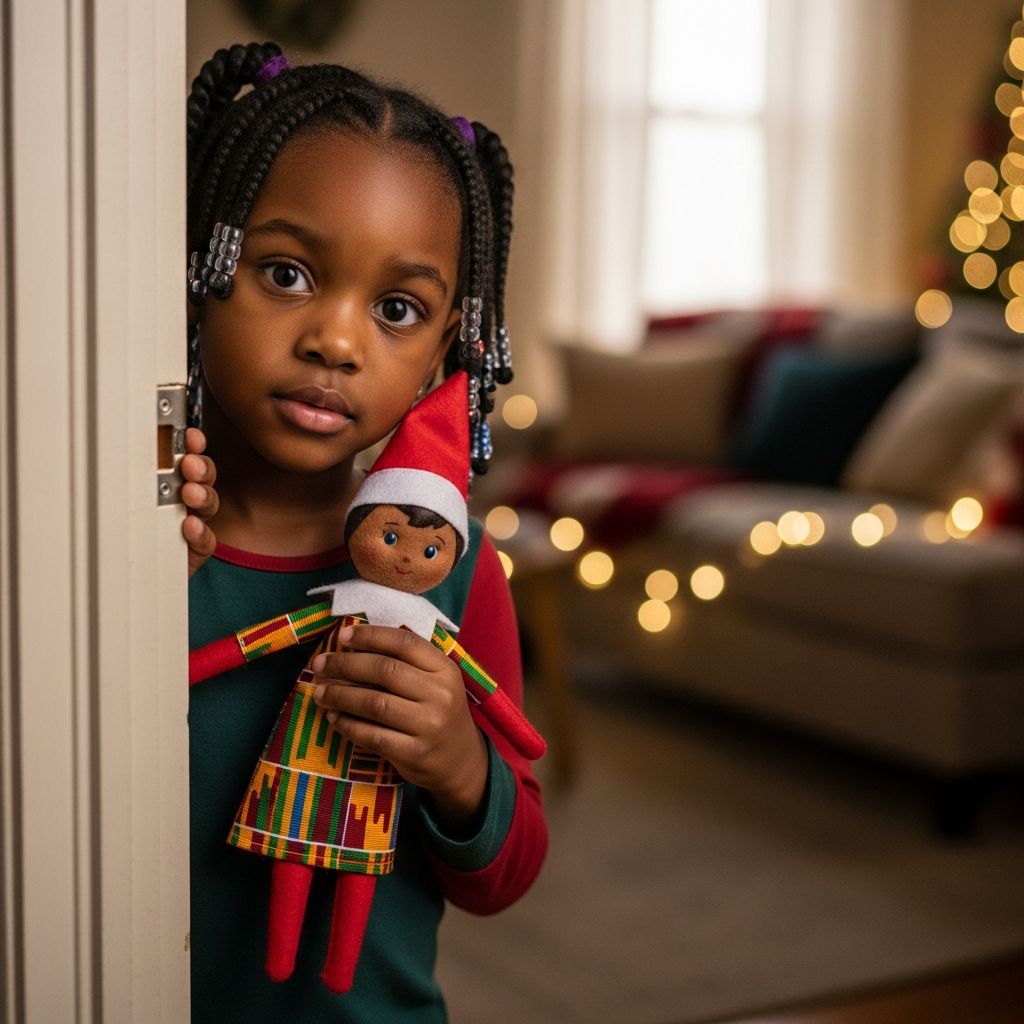
The Elf on the Shelf has become a staple in countless households during the holiday season, with over 17.5 million elves adopted worldwide since its debut in 2005. This whimsical scout from Santa’s workshop moves nightly to monitor children’s behavior, reporting back to the North Pole on who’s been naughty or nice. Yet, for many Black families, this tradition feels less like festive fun and more like an unwelcome intruder. Parents in these communities frequently cite deep-seated concerns rooted in history, psychology, and cultural values that make the elf incompatible with their parenting philosophies.
The Surveillance Shadow: Echoes of Historical Trauma
At the heart of the resistance lies a profound discomfort with constant watching. The elf’s role as an omnipresent observer evokes painful memories of systemic surveillance that Black Americans have endured for generations. From slave patrols in the antebellum South to modern-day policing disparities documented in reports by the U.S. Department of Justice, the notion of being perpetually monitored carries heavy emotional weight.
Psychologists note that toys promoting external oversight can exacerbate these sensitivities. A 2023 analysis by child development experts highlights how such playthings may inadvertently reinforce a culture of suspicion rather than trust. For Black parents, introducing a doll that ‘spies’ on children feels like normalizing an oppressive dynamic rather than fostering security.
- Historical Context: Enslaved people were constantly policed, with overseers tracking every move to enforce compliance.
- Modern Parallels: Studies from the Pew Research Center show Black families disproportionately experience police interactions, amplifying privacy fears.
- Psychological Impact: Constant monitoring can hinder children’s development of self-regulation, per American Psychological Association guidelines.
This unease is not abstract; it’s personal. Parents recount stories of relatives who lived under Jim Crow laws, where neighbors were incentivized to report on one another, mirroring the elf’s tattletale function.
Discipline Dilemmas: Undermining Family Authority
Black parenting traditions often emphasize communal guidance and intrinsic moral development over external rewards or punishments. The elf disrupts this by positioning itself as Santa’s delegate, potentially eroding parental authority. Counselors like those interviewed in educational journals argue that children learn best from consistent family-led discipline, not novelty toys that shift blame to a magical figure.
Consider the daily ritual: parents must relocate the elf before dawn, creating elaborate scenes to maintain the illusion. If forgotten, children may meltdown, accusing siblings of ‘killing the elf’s magic’—a scenario a Georgia judge humorously cited in a mock ban, noting the emotional distress it causes. For busy Black families navigating work, school, and community obligations, this added labor feels burdensome and counterproductive.
| Traditional Black Discipline Approach | Elf on the Shelf Influence |
|---|---|
| Focus on internal values like respect and resilience | External judgment based on ‘nice’ or ‘naughty’ lists |
| Parental consistency builds trust | Elf as competing authority figure |
| Long-term character growth | Short-term compliance for gifts |
Experts from the National Association for the Education of Young Children warn that reward-driven behavior fosters materialism over genuine kindness, clashing with values passed down through generations in Black households.
Cultural Mismatch in Holiday Celebrations
Holiday traditions in Black families often center Kwanzaa, church pageants, or soul food feasts that prioritize family bonding, storytelling, and spiritual reflection. The Elf on the Shelf, a commercial product from a predominantly white cultural lens, doesn’t align seamlessly. Marketing data reveals its popularity spikes in suburban, middle-class demographics, underscoring its limited penetration in diverse communities.
Kwanzaa, observed from December 26 to January 1, embodies seven principles (Nguzo Saba) like unity and creativity, taught through kinara candle-lighting and communal discussions—no scouts required. Similarly, many families draw from African diaspora customs, incorporating drumming circles or gospel sing-alongs that build joy without judgment.
- Kwanzaa Rituals: Daily focus on principles like imani (faith) encourages self-reflection.
- Church Traditions: Nativity plays emphasize Jesus’ birth over Santa’s list-making.
- Home Innovations: Custom ‘joy jars’ where kids note good deeds for family review.
These alternatives promote collective pride, contrasting the elf’s individualistic surveillance.
Psychological Concerns: Fostering Fear Over Fun
Child psychologists raise alarms about the elf’s creepy aesthetic and psychological toll. Privacy advocates, including those from the ACLU’s Speech, Privacy, and Technology Project, decry it as an early lesson in eroded consent. Jay Stanley, a senior policy analyst, advocates teaching kids to ‘do the right thing even when nobody’s watching,’ a mantra resonating deeply in communities valuing authenticity.
Reports of children fearing the elf—hiding from its gaze or mimicking its ‘mischief’ in messy setups—underscore risks. A school counselor noted elves modeling poor behavior, like raiding cookie jars, which confuses rule-following. For Black children already navigating racial biases, adding a judgmental toy compounds stress.
Positive adaptations exist, such as ‘kindness elves’ reporting only good acts, but many parents prefer skipping altogether to avoid mixed messages.
Practical Burdens for Overextended Parents
Beyond ideology, logistics deter participation. With 14.5 million elves in homes by 2021, the nightly chore competes with holiday prep like baking pecan pies or attending choir rehearsals. A Cobb County judge’s satirical ‘ban’ captured this exhaustion, calling it ‘tyranny’ amid COVID strains—sentiments echoed by Black parents juggling multiple jobs.
Social media amplifies pressure with viral stunts (elves zip-lining or baking), turning fun into competition. Families opt for low-effort joys: reading The Night Before Christmas with a twist or crafting ornaments symbolizing heritage.
Community Voices: Real Stories from Black Parents
Interviews reveal nuanced views. One mother shared, ‘My ancestors watched overseers; I won’t have a doll watching my babies.’ Another appreciated the elf’s intent but chose ‘faith trackers’ logging prayers answered. These testimonials highlight agency in curating traditions.
“We teach goodness from the heart, not for a list.” – Anonymous Atlanta parent
Alternatives to Keep the Holiday Magic Alive
Ditching the elf opens doors to enriching options:
- Gratitude Chains: Link paper strips noting daily thanks, reviewed New Year’s Eve.
- Helper Gnomes: Neutral figures assisting with chores, emphasizing teamwork.
- Storytime Scouts: Elves that ‘deliver’ books nightly, sparking imagination without spying.
- Cultural Story Circles: Sharing folktales of Anansi the Spider for moral lessons.
These foster creativity and connection, aligning with evidence-based play from the CDC’s child development resources.
Frequently Asked Questions (FAQs)
What is Elf on the Shelf, and why is it popular?
A stuffed elf doll that ‘watches’ kids and reports to Santa, adopted by over 17.5 million families for its fun hide-and-seek element.
Do all Black families avoid the elf?
No, some adapt it positively, but many opt out due to cultural and historical reasons outlined above.
Are there studies on the elf’s psychological effects?
While not peer-reviewed extensively, experts from privacy groups and counselors note risks to autonomy and privacy.
What holiday alternatives promote good behavior?
Kwanzaa principles, joy jars, and family-led kindness challenges effectively build intrinsic motivation.
Is the elf harmful to all kids?
Not inherently, but for families with surveillance trauma, it can evoke discomfort; judge fit to your values.
Embracing Authentic Holiday Joy
Rejecting the Elf on the Shelf empowers Black families to reclaim holidays on their terms—rooted in love, legacy, and liberation. By choosing traditions that uplift without oversight, parents nurture resilient, empathetic children ready to shine beyond any list. This intentionality transforms December into a tapestry of meaningful memories, proving magic thrives in authenticity.
References
- County Judge Bans Elf on the Shelf ‘Tyranny’ as ‘Gift To Tired Parents’ — Route Fifty / Kate Elizabeth Queram. 2021-11-01. https://www.route-fifty.com/management/2021/11/county-judge-bans-elf-shelf-tyranny-gift-tired-parents/186734/
- Why is “The Elf on the Self” a controversial toy? — The Spellbinder / Citlali Zavala. 2023-12-01. https://thespellbinder.net/9267/features/why-is-the-elf-on-the-self-a-controversial-toy/
- Cobb County judge bans Elf on the Shelf — YouTube. N/A. https://www.youtube.com/watch?v=LcDI71kDi38