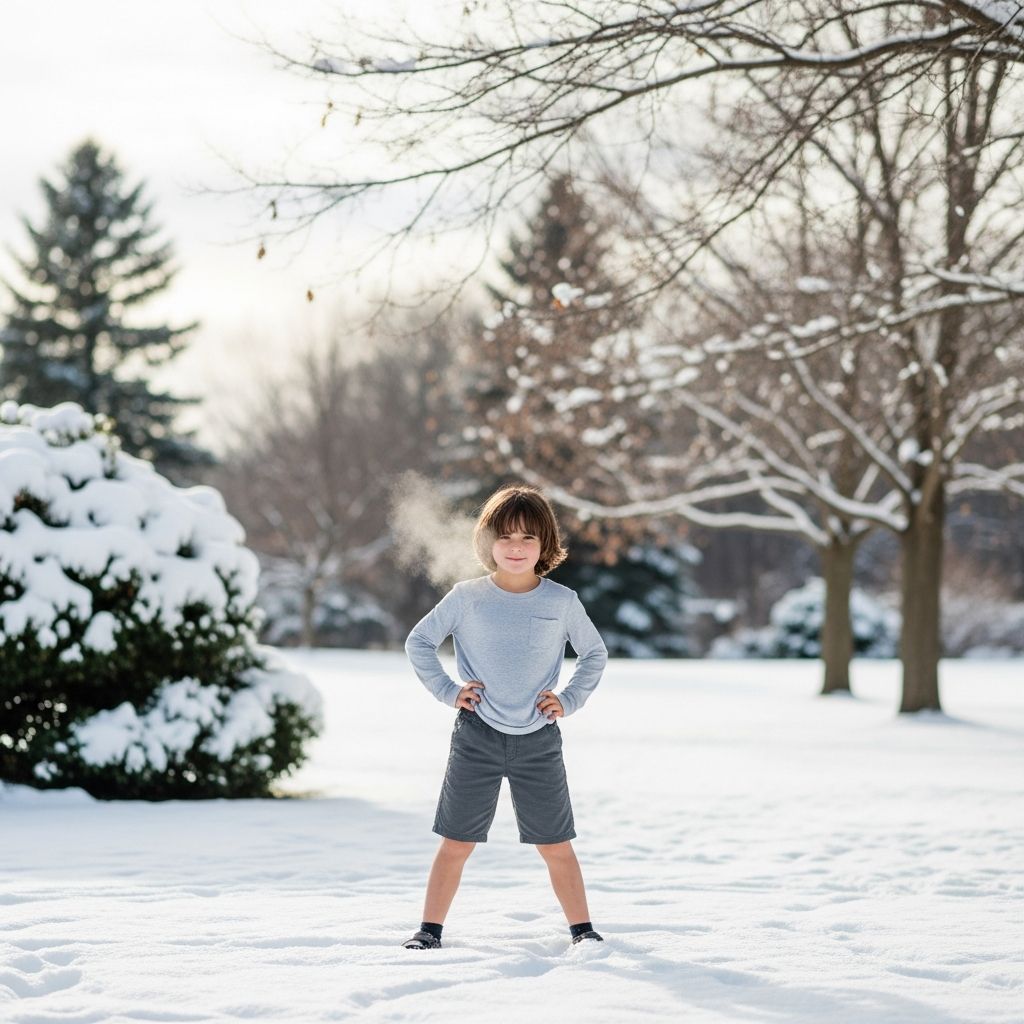
Every winter, parents everywhere find themselves asking the same question: “Why is my child wearing shorts when it’s freezing outside?” What looks like a simple clothing choice is often a mix of comfort preferences, growing independence, peer culture, and a bit of everyday drama. Instead of turning it into a daily shouting match, parents can approach this phase with science, structure, and a sense of humor.
Understanding the “Shorts in Winter” Phase
Before reacting, it helps to understand why so many kids and teens gravitate toward shorts even in cold weather. Their logic may be different from an adult’s, but it usually isn’t random or reckless from their point of view.
- Many children are less sensitive to cold in their legs than adults and genuinely do not feel as uncomfortable as parents expect.
- Adolescents often see clothing as part of their identity, and shorts can signal toughness, nonchalance, or belonging to a particular peer group.
- Daily outfit routines can become habits: once a child is used to grabbing shorts and a hoodie, change feels annoying or unnecessary.
What feels like defiance to a parent may feel like consistency, self-expression, or normal comfort to a child. Recognizing this difference in perspective is the first step toward calmer conversations.
Psychology Behind Weather-Defying Wardrobes
Clothing is one of the simplest ways for children and teens to experiment with who they are. Winter shorts can be less about temperature and more about autonomy, curiosity, and social dynamics.
- Autonomy and control: Kids have little power over school schedules, homework, and rules. Clothing is one area where they can make firm decisions.
- Peer influence: If classmates, teammates, or older kids wear shorts in cold weather, your child may copy them to fit in or appear brave.
- Boundary testing: Pushing limits is a normal part of development. Refusing to wear pants may be a low-risk way to see how far they can go.
Understanding these motives does not mean giving in to every demand. It simply allows parents to respond in ways that teach skills instead of escalating power struggles.
Health and Safety: What Really Matters
Parents often picture dramatic outcomes from bare legs in cold air, but the true risks depend on how cold it is, how long the child is outside, and how much of the body is covered. The goal is to distinguish between genuine danger and mild discomfort.
Shorts in cool but not frigid temperatures usually lead to nothing more than being cold and uncomfortable. However, very low temperatures, strong wind, and long outdoor exposure can raise concerns such as:
- Skin damage from freezing temperatures: Very cold air and wind can damage exposed skin, especially on extremities like fingers, toes, ears, and nose.
- Lowered body temperature: Prolonged exposure to cold can cause the body to lose heat faster than it can produce it, which can slowly affect energy, coordination, and thinking.
These situations are more likely outdoors for extended periods—think waiting for a long bus ride with no shelter or playing outside for an hour—than for a brief walk from house to car. The key is to match clothing expectations to both the temperature and the duration of exposure.
Temperature-Based Clothing Suggestions
Every family’s tolerance for cold is different, but it helps to set general temperature guidelines. These are not medical rules, but simple reference points many parents find practical when creating household clothing policies.
| Temperature / Conditions | Reasonable Legwear | Other Recommended Clothing |
|---|---|---|
| Above 50°F (10°C) | Shorts or pants are usually fine. | Light jacket or sweatshirt as needed; regular socks and shoes. |
| 40–50°F (4–10°C) | Pants or thick leggings are preferred; shorts only for quick trips. | Coat or warm hoodie; closed shoes; hat for windier days. |
| 32–40°F (0–4°C) | Pants strongly recommended; shorts typically not appropriate. | Winter coat, warm socks, closed shoes or boots; hat and gloves for longer outdoor time. |
| Below 32°F (0°C) | Insulated pants or at least long pants; no shorts. | Winter coat, hat, gloves, scarf, and warm socks; extra layers for long outdoor activities. |
| Wet, windy, or snowy conditions | Water-resistant pants or snow pants for play; long pants for any outdoor time. | Waterproof outer layer, insulated boots, hat covering ears, gloves or mittens. |
Instead of arguing about feelings—“But I’m not cold!”—parents can refer to predictable rules such as, “Under 40 degrees means long pants for school,” which eventually become routine.
Turning Conflict Into Collaboration
Clothing fights are draining for everyone. Reframing the conversation from “You must obey” to “We are solving a problem together” can lower defensiveness and encourage cooperation.
- State the shared goal: “I want you to be safe and able to focus at school, not shivering all day.”
- Ask for input: “Given how cold it is, what do you think would be a reasonable outfit that still feels comfortable for you?”
- Offer choices within limits: “For recess, the rule is pants. You can pick joggers, lined pants, or thermal leggings under your sports shorts.”
When children feel heard, they are more likely to compromise instead of digging in. Negotiation with clear boundaries also models healthy decision-making skills they will use in many other areas of life.
Practical Strategies for Everyday Mornings
Morning rush plus clothing disagreements is a stressful combination. Planning ahead and building predictable systems can reduce both arguing and last-minute scrambling.
Prepare the Night Before
Even a few minutes of planning can save a lot of conflict during breakfast. Inviting kids into the process gives them a sense of control while still allowing parents to guide choices.
- Check the forecast together and read the expected temperature and conditions out loud.
- Agree on a complete outfit in advance—top, bottom, outerwear, socks, shoes—and place it in a designated spot.
- If your child insists on shorts, pair them with warm layers such as thermal leggings, tall socks, or lined tights.
Use Clear, Consistent Rules
Many conflicts come from unpredictable enforcement. When guidelines are repeated and applied consistently, kids eventually stop testing them as often.
- Establish weather-based rules, such as: “School days under 45°F mean pants; weekends can be more flexible if we are mostly indoors.”
- Apply the same rule for all children in the household to avoid arguments about fairness.
- Share the rules with all caregivers—co-parents, grandparents, sitters—so your child receives the same message.
Balancing Comfort, Sensory Needs, and Safety
Some children are not just stubborn about clothing—they are genuinely uncomfortable in certain fabrics, seams, waistbands, or layers. For these kids, shorts might feel far more tolerable than jeans or thick pants.
- Soft athletic pants, joggers, or leggings can offer the loose or stretchy feel of shorts while still providing warmth.
- Look for tagless, smooth-seam, or sensory-friendly clothing lines if your child complains of “itchy” or “scratchy” fabrics.
- Allow gradual changes: for example, adding knee-high socks to shorts, then moving to thin leggings, then to thicker pants as your child adjusts.
When a child’s resistance is rooted in genuine discomfort, solving the sensory problem usually leads to much less conflict than simply demanding obedience.
When to Stand Firm and When to Let It Go
Not every hill is worth dying on, but some are non-negotiable. The art of parenting is knowing which is which. Clothing is an area where parents can selectively choose their battles, guided by safety, duration of exposure, and context.
- Be firm when: Temperatures are very low, exposure will be prolonged, or activities involve snow, ice, or strong wind.
- Be flexible when: A child will only be outside briefly, you can easily bring backup layers, and conditions are cool but not extreme.
- Use natural consequences when safe: Allow a child to experience being chilly on a short walk while keeping extra layers on hand if discomfort becomes significant.
Letting kids sometimes feel the real-world results of their choices—within safe limits—can reduce future arguments more effectively than repeated lectures.
Sample Household Clothing Policy
Every family can design a simple winter clothing policy that matches their climate, values, and routines. Below is an example you can adjust rather than adopt word-for-word.
- On school days, if the morning temperature is under 45°F (7°C), long pants are required.
- On weekends, shorts are allowed above 40°F (4°C) for quick errands; pants are required for outdoor play lasting more than 20 minutes.
- For snow, ice, or heavy wind, kids must wear pants, a warm coat, closed shoes or boots, and something covering their ears and hands.
- If a child insists on shorts on a marginally cold day, they must add long socks and bring pants in their backpack as a backup.
- Parents agree to avoid arguing in the morning; if there is disagreement, the family will revisit the policy together later that day.
Written rules help move debates out of the emotional moment and into calmer family discussions where everyone can propose changes and compromises.
Managing Judgment, Criticism, and Social Pressure
Parents often worry not just about the weather, but about how others might judge their child’s clothing. Seeing a kid step off the school bus in shorts on a frosty morning can trigger anxiety about being viewed as careless or inattentive.
- Remember that a single snapshot of a child’s outfit does not reveal the full context of your family’s rules and decisions.
- If teachers or other adults comment, respond briefly and calmly: “We have clear clothing rules at home and are working with our child on independence within safe limits.”
- Avoid shaming your child in public; discuss wardrobe expectations privately, away from an audience.
Staying grounded in your own values and knowledge of your child will help you handle other people’s reactions with more confidence.
Frequently Asked Questions
Is wearing shorts in winter dangerous for every child?
Not automatically. If temperatures are cool but not extremely low, and outdoor time is brief, the main outcome is usually discomfort rather than serious harm. Problems are more likely with very cold temperatures, long outdoor exposure, or poor coverage of other body parts such as hands, feet, and head.
Can my child get sick from having bare legs in the cold?
Illnesses such as colds and flu are caused by viruses, not by exposed skin alone. However, being very chilled over time can make the body work harder to stay warm, which may leave a child more tired and less resilient. Dressing sensibly for the weather is one part of supporting overall health.
What if my child insists they are not cold?
Some kids do feel less bothered by cold, but safety does not always match short-term comfort. You can validate their feelings while still holding limits: “I hear that you feel fine, but our rule is pants when it’s below this temperature.” Over time, natural experiences of being chilly and seeing others dressed warmly may help them accept the guideline.
How do I avoid a power struggle every morning?
Prepare outfits the night before, use consistent temperature-based rules, and offer limited choices instead of open-ended ones. For example: “Today is a pants day. Do you want the black joggers or the gray ones?” Reducing surprise and giving some control within boundaries can greatly cut down on arguments.
What if my child has sensory issues with certain clothing?
In that case, focus first on comfort and texture. Look for soft, stretchy, or tagless options and experiment with athletic pants, leggings, or lined styles that feel more like shorts. When sensory needs are respected, children are usually far more willing to cooperate with weather-appropriate clothing rules.
Supporting Independence While Staying Warm
Letting kids have opinions about their outfits is part of helping them grow into capable, confident adults. Winter shorts battles are rarely about defiance alone; they are about identity, comfort, and the push-and-pull of independence. With clear limits, thoughtful choices, and a willingness to step back when the stakes are low, families can get through this phase with fewer tears—and warmer legs.