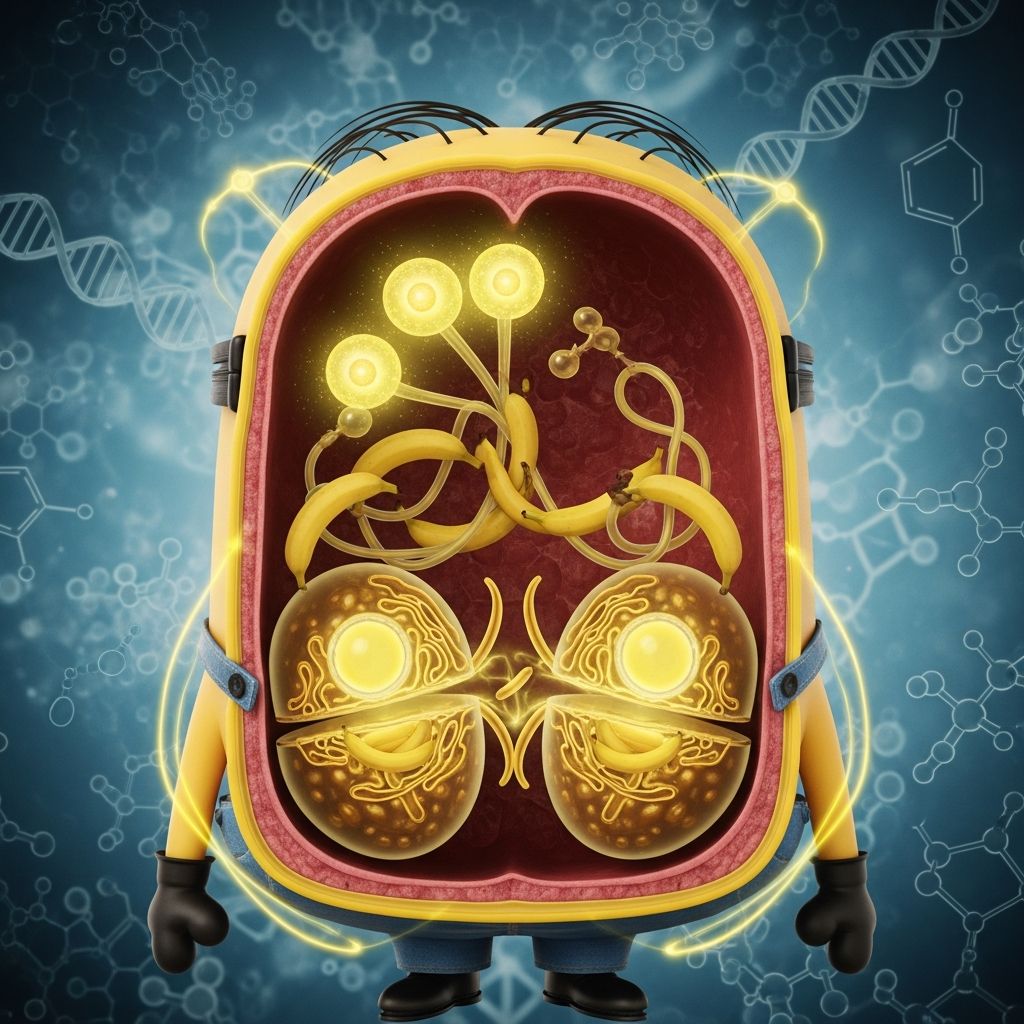
Minions have been blown up, frozen, shrunk, fired into space, and flattened by rockets, yet they keep bouncing back with the same chaotic energy and slapstick resilience. Fans who notice how long they have apparently existed and how many of them crowd Gru’s laboratory inevitably end up asking a deeply unsettling question: if they do not age or die in any normal way, how on earth do Minions reproduce, or do they reproduce at all?
Why Minion Reproduction Is a Mystery
Across the Despicable Me and Minions movies, audiences see vast armies of nearly identical yellow hench-creatures, but there is never a clear moment where a baby Minion is born, hatched, or built. Official commentary from the creative team has even claimed that Minions cannot reproduce in any way, which only deepens the puzzle of why there are so many and why they have apparently existed for ages.
This strange combination of huge population, cartoon-level indestructibility, and absence of offspring has encouraged writers, fans, and even a few scientists to build elaborate mock-biological models to explain how a species like this could exist. The result is a pile of theories that range from tongue-in-cheek plausible to proudly ridiculous.
What Makes a Minion a Minion?
Before trying to explain how Minions might reproduce, it helps to list the traits that any theory has to account for: their pill-shaped bodies, their limited set of physical variations, and their seemingly endless lifespan. Across the films, Minions differ mainly in three visible ways: height, number of eyes, and hair style, while staying almost identical in skin color, body shape, and general behavior.
They also appear throughout human history serving one villain after another, from prehistoric creatures to modern super-villains, which implies that either they have extremely slow aging or they are effectively immortal. Any theory of reproduction that treats them like a biological species has to explain how they avoid accumulating lethal genetic damage over such long periods of time without obvious generational turnover.
Fan Theory 1: Asexual Copy-Paste Minions
One of the most intuitive fan ideas is that Minions simply reproduce asexually, like certain microbes or simple animals that split in two or bud off clones. In this scenario, a Minion occasionally produces a copy of itself, perhaps by mitosis-like division or by budding a smaller, fully formed Minion that quickly grows to full size.
Supporters of this view point to the large, relatively uniform population and the lack of any obvious pairs or family structures that would suggest conventional mating. If Minions copied themselves with only occasional random mutations, that would align with their limited variations in features like hair or eye number while still allowing for subtle diversity over billions of years.
How Asexual Minions Would Work
- Each Minion could contain all the genetic information needed to produce a complete new Minion without a partner.
- Division might be triggered by environmental conditions, such as a surplus of food, or by the arrival of a new villain needing more henchmen.
- Mutations during copying could explain rare oddballs, like unusual hair, height, or other quirks, without the full range of traits expected from complex sexual recombination.
However, if Minions only reproduced asexually, evolutionary biologists note that the population would face issues with long-term genetic health, because harmful changes would accumulate without being shuffled out by sexual mixing. That has led other theorists to argue that some kind of sex must be hiding under those overalls, even if the movies never show it.
Fan Theory 2: Strange but Sexual Minions
Another widely discussed theory starts from the idea that the diversity in Minions’ hair, height, and eyes hints at genetic recombination, which would naturally result from sexual reproduction. Under this model, Minions do have sexes or compatible mating types, even if they all present with similar voices and are usually treated as male in the broader franchise.
Some writers have even tried mapping Minion traits to possible sexes, arguing that different eye counts could represent different gamete-producing types in a fictional biology system. Others propose that Minions are hermaphroditic, carrying both male and female reproductive organs like certain plants or snails, allowing any two Minions to exchange genetic material while still looking near-identical from the outside.
Possible Sexual Models
- Classic male–female system: A minority of Minions could function as egg carriers and the rest as sperm producers, with external differences so subtle that fans would not easily spot them on screen.
- Hermaphroditic system: All Minions could be capable of producing and receiving gametes, making every Minion a potential partner for every other.
- Life-stage switching: Some theorists suggest they might switch reproductive roles over long lifespans, taking inspiration from species that change sex during their life cycle.
Because Minions never appear pregnant, raising infants, or even truly romantic, sexual models usually assume that any reproductive behavior happens entirely offscreen or at extremely rare intervals to keep the population stable across ages. These explanations lean heavily on stylized cartoon storytelling, where complex biological events can simply be left out without breaking the visual logic of the world.
Fan Theory 3: Walking Potato Plants
One of the more imaginative and popular notions online reclassifies Minions not as animals but as plant-like organisms, sometimes jokingly described as sentient potatoes with goggles. In this framework, Minions might reproduce the way tuber-forming plants do, combining both sexual and asexual strategies to maintain a genetically flexible but visually uniform crop of little yellow helpers.
Some fan explanations imagine that Minions have hidden root-like structures under their clothing that can produce new Minion buds underground, much as potatoes generate new tubers from buried stems. Above ground, Minions might form flower-like structures capable of mixing genetic material via pollen-like particles, while below ground asexual tuber clones maintain the core population.
Why the Potato Model Appeals
- It neatly explains why Minions can be chopped, flattened, or stressed without obvious long-term damage, as tubers can often regrow from small surviving portions.
- It gives a plausible dual system where sexual reproduction maintains genetic variability and asexual tuber production keeps the army of Minions numerically stable.
- It fits with their simple, cylindrical shape and the running joke that they can be treated like food in some visual gags.
Of course, nothing in the official films actually shows Minions sprouting leaves or burying roots, so this model stays firmly in playful headcanon territory. Still, it demonstrates how far fans are willing to stretch real biology to build a fully fleshed-out life cycle for characters who, on screen, exist mostly to slip on banana peels.
Fan Theory 4: No Reproduction, Just Eternal Minions
In contrast to theories that assume some form of breeding, another camp takes the official word at face value and argues that Minions simply never reproduce at all. Under this interpretation, the number of Minions was fixed at their creation, and their apparent indestructibility and agelessness allow that original cohort to persist across history without ever needing offspring.
This view is strengthened by statements from people connected to the franchise who have described Minions as all male, unable to divide, and effectively invulnerable. If that is taken as an in-universe fact rather than a joke, then theories about eggs, seeds, or romantic pairings become unnecessary, and the real puzzle shifts to how any biological system could sustain itself forever without repair through reproduction.
Biological Problems with Eternal Beings
- Any DNA-based organism would accumulate errors over time from radiation and replication mistakes, which reproduction usually helps reshuffle or purge.
- If Minions never replace themselves, they would need almost perfect molecular repair systems to avoid catastrophic genetic damage over billions of years.
- Indestructible individuals defy most ecological models, since natural populations usually rely on birth and death to respond to environmental change.
To resolve these issues, some fan essays introduce speculative mechanisms like hyper-efficient DNA repair enzymes that constantly fix Minion genomes, which would account for their longevity without visible reproduction. Others treat Minions more like living robots or engineered constructs that are maintained rather than naturally evolved, sidestepping standard evolutionary constraints altogether.
Comparing the Major Minion Theories
Because none of the theories can be verified inside the fictional universe, they are best treated as playful thought experiments that test how far biological principles can be stretched while still making some internal sense. Some prioritize consistency with on-screen visuals, while others foreground scientific plausibility or creator comments, leading to different conclusions about what Minions really are.
The table below summarizes the main speculative models and how each one attempts to solve the core puzzle of Minion population and longevity.
| Theory | Core Idea | Strengths | Weaknesses |
|---|---|---|---|
| Asexual clones | Each Minion self-copies like a microbe or simple animal. | Explains large, uniform population with rare variations. | Struggles with long-term genetic health and lack of shown division scenes. |
| Sexual Minions | Minions reproduce via gametes, possibly with hidden sexes or hermaphroditism. | Matches observed diversity and evolutionary principles. | No visible romance, pregnancy, or offspring; official comments say no reproduction. |
| Potato-plant model | Minions function like tuber plants with both sexual seeds and asexual roots. | Combines diversity with numerical stability; fits joking “living potato” comparisons. | Not supported by on-screen anatomy; highly speculative. |
| Eternal originals | A fixed number of Minions was created once and never reproduces. | Aligns with creator statements and lack of reproduction scenes. | Demands near-perfect DNA repair and breaks standard ecological models. |
How Serious Is Any of This?
Although some articles and videos bring in real scientists to comment on Minion biology, the conversation is intentionally tongue-in-cheek, using these characters as an excuse to explain genuine concepts like asexual reproduction, hermaphroditism, and genetic repair. The franchise itself never attempts to take a firm stance beyond the broad statement that Minions are male-presenting, ageless, and not meant to be taken as realistic organisms.
In that sense, Minion reproduction theories function more like collaborative fan storytelling than canonical world-building, inviting audiences to blend science class vocabulary with cartoon logic. The result is a kind of playful pseudo-science that treats each new detail or creator quote as data to feed into an ever-evolving headcanon.
Frequently Asked Questions About Minion Reproduction
Are Minions officially confirmed to reproduce?
Public comments tied to the franchise have stated that Minions do not reproduce or divide in any way, and that the existing crowd represents a fixed group rather than a breeding population. This has encouraged many fan theories to view them as effectively immortal or artificially created beings instead of a normal species.
If they do not reproduce, why are there so many Minions?
One explanation is that the original number was simply very large, giving villains an instant army that persists unchanged across eras. Fans who resist that idea often fall back on speculative reproduction mechanisms—such as cloning, plant-like tubers, or hidden sexual cycles—to reconcile the huge visible population with basic biological expectations.
Is there any canon explanation in the movies?
The films show Minions appearing throughout history but never directly depict their origin or life cycle beyond comedic flashbacks and montages. Because of this, viewers looking for a definitive canon answer will not find one on screen and must rely instead on out-of-universe commentary and playful speculation.
Do scientific discussions about Minions use real biology?
Yes, many tongue-in-cheek analyses borrow genuine concepts from evolution, genetics, and reproductive biology, using Minions as a lighthearted teaching tool. These discussions point out how features like long lifespans, minimal diversity, and apparent invulnerability would challenge standard biological models in a real-world context.
Will the franchise ever answer the question directly?
Given the chaotic, family-friendly tone of the series, it is unlikely that any future film will dwell in detail on how Minions might reproduce. Leaving the question open sustains fan interest, preserves the characters’ surreal mystery, and keeps the focus on slapstick humor rather than imaginary reproductive anatomy.
Minions as a Playground for Pseudo-Science
Ultimately, the enduring fascination with Minion reproduction says more about audience curiosity than it does about any official lore. When a fictional world leaves a glaring gap—how a species persists across eons without visible birth or death—fans naturally fill it with theories, jokes, and speculative models drawn from whatever bits of science and pop culture they find most entertaining.
Whether imagined as cloning microbes, mischievous hermaphrodites, ambulatory potatoes, or immortal constructs, Minions provide a safe, silly canvas for thinking about evolution, reproduction, and what it even means to be a species. The real answer may stay forever offscreen, but the weird science invented along the way has already become part of their cultural footprint.