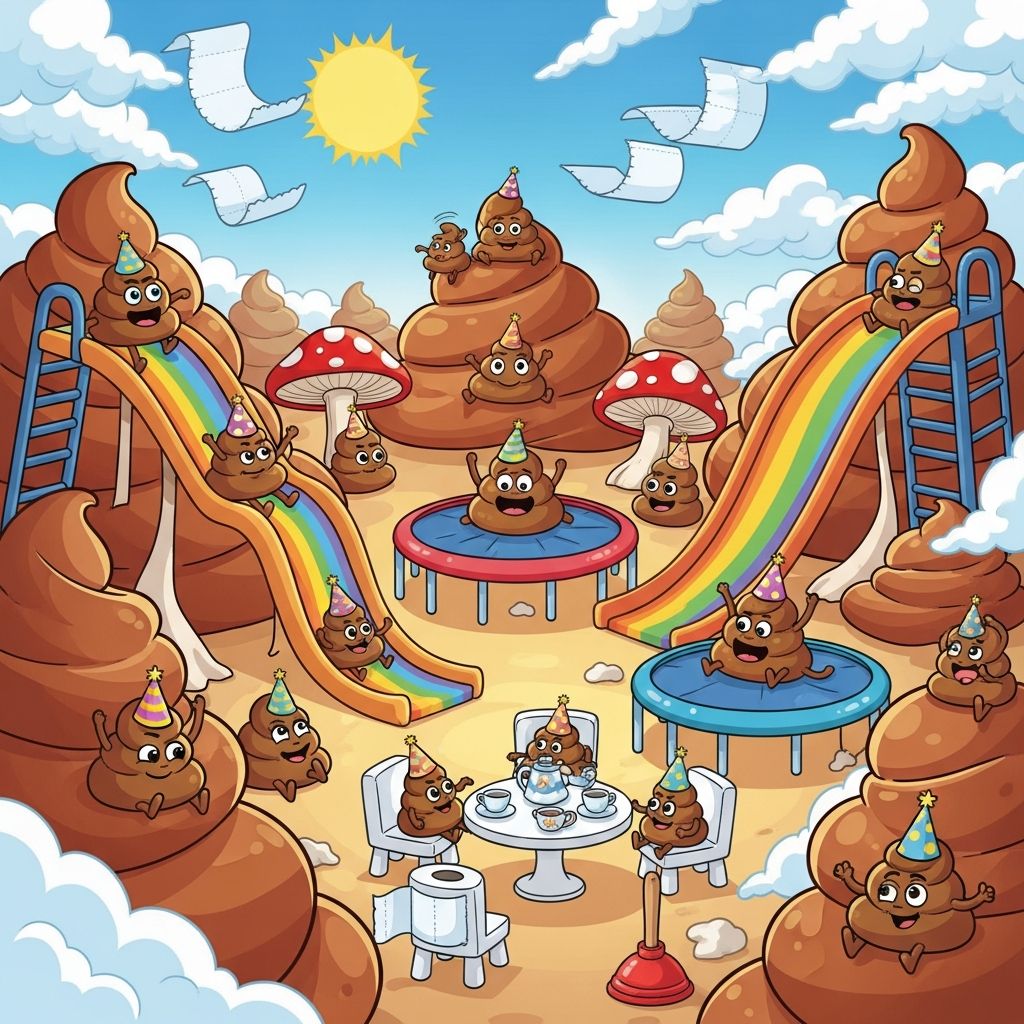
Poop jokes are the comedy playground kids never seem to outgrow. While grown-ups may roll their eyes, children crack up at every mention of toilets, farts, and stinky situations. This guide helps you understand why kids love poop jokes, how to keep the humor age-appropriate, and ways to turn bathroom giggles into fun moments of connection at home or on the go.
Why Kids Find Poop Jokes So Funny
Children are endlessly fascinated by anything their bodies do, especially things adults usually whisper about. Poop jokes sit at the perfect intersection of forbidden, gross, and safe, which is comedy gold for young minds.
- Taboo = exciting: Talking about bodily functions feels like breaking a tiny rule, which makes it extra funny for kids.
- They’re learning about bodies: Between potty training and health lessons, poop is a real topic in their lives, just with added giggles.
- Simple wordplay: Puns on words like “duty/doody” or “turd/third” are easy for kids to understand and repeat.
- Shared laughter: Kids love jokes they can tell their friends or siblings without needing a long setup or explanation.
Psychologists note that humor about bodily functions can help kids navigate embarrassment and anxiety about growing up and using the toilet in social settings, like school or daycare. Laughter turns something potentially awkward into something light and manageable.
Setting Ground Rules for Potty Humor
Poop jokes can be hilarious and respectful at the same time when families set a few clear boundaries. Simple rules help children understand when bathroom humor is okay and when it’s not.
- Choose the right place: Make it clear that silly poop jokes are fine at home, in the car, or at playtime, but not during class, religious services, or fancy events.
- Use kind language: Bathroom jokes should never target someone’s body, disability, or appearance.
- No jokes during meals: Many families find it easiest to say that poop talk hits pause when food is on the table.
- Stop when someone says “no”: Teaching kids to respect others’ boundaries (even about jokes) is an important social skill.
Basic etiquette around toilets and handwashing can go hand-in-hand with these rules, reinforcing respectful talk and clean habits.
Age-Appropriate Bathroom Humor
As children grow, their understanding of humor changes. You can keep things fun by matching jokes to their age and maturity.
| Age Range | What Works Best | Keep in Mind |
|---|---|---|
| 3–5 years | Very simple “poop” mentions, silly sound effects, cartoonish toilet jokes. | They often repeat one word (“poop!”) and laugh—keep it gentle and brief. |
| 6–8 years | Short puns, knock-knock jokes, jokes about animals and toilets. | They can remember quick punchlines and share them with friends. |
| 9–12 years | Longer setups, wordplay, “fake serious” explanations about silly topics. | They may try writing their own jokes or comedy routines. |
Simple Structures Kids Can Use to Invent Poop Jokes
Rather than just giving kids a list to memorize, you can help them create their own poop jokes using easy patterns. This builds language skills and creativity while still being delightfully gross.
1. The Classic “Why Did…?” Joke
These are easy to customize and encourage kids to think about cause and effect in silly ways.
- Pattern: Why did the <funny thing> <do something>? Because <silly reason>.
- Example idea: Why did the toilet paper run away? Because it heard a big job coming.
2. “What Do You Call…?” Jokes
These are great for introducing puns and playful vocabulary.
- Pattern: What do you call <object or person> that <funny action>? A <punny answer>.
- Example idea: What do you call a superhero toilet? The Flush Avenger.
3. Knock-Knock Bathroom Riddles
Knock-knock jokes are a staple for early elementary kids because they follow a predictable rhythm.
- Pattern: Knock, knock. Who’s there? <Word or name>. <Word or name> who? <Poop-themed punchline>.
- Example idea: Knock, knock. Who’s there? Flush. Flush who? Flush the toilet, it’s getting stinky!
Safe Bathroom Humor for Different Situations
Poop jokes don’t all have to be the same. You can tailor them to where you are and what your kids need in the moment.
For Long Car Rides
Turn endless miles into silly smile sessions.
- Take turns telling made-up poop puns about things you see out the window (rest stop, gas station, mountain, and more).
- Try a “joke relay”: one person starts a joke, the next person has to finish it with a bathroom-themed punchline.
For Potty Training Toddlers
Lighthearted jokes can reduce tension and make the bathroom a friendlier place.
- Use silly sound effects and playful phrases when they successfully use the toilet.
- Let a favorite stuffed animal “tell” a short, goofy poop joke after each successful trip.
Health organizations and pediatric experts recognize that keeping potty training positive and low-stress helps kids succeed and avoid anxiety or constipation linked to fear or pressure.
For Older Kids Feeling Embarrassed
As children get older, some feel shy about using public restrooms or talking about bathroom needs.
- Use clever, low-key jokes to show that everyone deals with poop and it’s nothing to be ashamed of.
- Share a silly story about an awkward bathroom moment from your own childhood to normalize it.
Talking openly and calmly about digestion and toilet use can help children manage embarrassment and feel more comfortable asking for bathroom breaks at school.
Fun Ways to Turn Poop Jokes Into Learning Moments
Believe it or not, bathroom humor can open the door to talking about science, health, and emotions in kid-friendly ways.
Talking About Digestion
After a poop joke gets everyone laughing, you can slip in a quick, factual note about how the body works.
- Explain that poop is what is left after the body takes the nutrients and water it needs from food.
- Mention that drinking water and eating fiber (like fruits, vegetables, and whole grains) helps everything move smoothly.
Healthy Bathroom Habits
Use jokes as a reminder to practice good hygiene.
- Pair silly rhymes with handwashing to help kids remember to use soap and scrub for enough time.
- Create a funny “toilet checklist” song: wipe, flush, wash, dry, and turn off the light.
Emotional Check-Ins
Kids sometimes use humor to hide worries. After the laughter fades, you can gently ask:
- “Does anything about using the bathroom at school feel scary or weird?”
- “Do you ever feel rushed or afraid to ask the teacher to go?”
These small questions can reveal stress about school bathrooms, teasing, or accidents, giving you a chance to support your child.
Keeping Poop Jokes Kind, Not Cruel
Not all bathroom humor is harmless. Some jokes can slip into bullying or shaming if kids aim them at others. You can keep things kind by teaching clear guidelines.
- No jokes about accidents: If someone has a bathroom accident, that’s a time for help and comfort—not jokes.
- No targeting specific people: Jokes should be about imaginary characters, animals, or objects, not classmates or family members.
- Respect privacy: Emphasize that what happens inside a bathroom stall is private, no peeking or teasing.
- Use humor to include, not exclude: Encourage kids to tell jokes everyone can laugh at together.
Teaching empathy alongside humor helps children understand that jokes are meant to make people feel good, not small.
Sample Themes for Kid-Made Poop Jokes
Instead of listing specific jokes, here are themes and prompts you can give kids so they invent their own punchlines.
- Animal bathrooms: “Imagine where a dinosaur, unicorn, or space alien would go poop. What would that look like?”
- Toilets with jobs: “What would a superhero toilet’s catchphrase be?”
- Space and science: “What happens when an astronaut really needs to go in zero gravity?”
- Royal restrooms: “How fancy would a king or queen’s toilet be? What would their royal plumber be called?”
- Poop on vacation: “If poop went on holiday, where would it stay and what would it do for fun?”
Encouraging kids to fill in the jokes themselves keeps the humor fresh and gives them a sense of ownership over the silliness.
Frequently Asked Questions (FAQs)
Q: Is it normal for kids to be obsessed with poop jokes?
Yes. Many children go through a stage where potty humor is especially funny. It usually peaks in the early elementary years and then fades as they mature, especially if adults respond with calm limits instead of harsh reactions.
Q: How do I stop poop jokes from getting out of control?
Set simple rules: where they are allowed (home, car), where they are not (school, dinner), and how to stop when someone says they have had enough. Be consistent and calm, and model the language you want your child to use.
Q: Are poop jokes bad for my child’s manners?
On their own, no. Occasional silly bathroom jokes are normal. What matters is teaching kids context: when to use them, when to switch to more polite conversation, and how to respect other people’s comfort levels.
Q: Can bathroom humor help with potty training?
Playful language, songs, and lighthearted jokes can make the bathroom feel less intimidating, especially for toddlers who are anxious about using the toilet. Just keep the tone positive and avoid shaming or threats.
Q: When should I worry about my child’s poop talk?
If bathroom talk is constant, used to bully others, or paired with stool withholding, chronic constipation, pain, or toilet refusal, talk with a pediatrician or child health professional. They can help rule out medical issues and offer support strategies.
References
- Humor development in children — American Psychological Association. 2019-06-01. https://www.apa.org/monitor/2019/06/humor-children
- Digestive system — National Library of Medicine, MedlinePlus. 2023-03-15. https://medlineplus.gov/digestivesystem.html
- Toilet training: Common questions and answers — American Academy of Pediatrics. 2022-04-01. https://www.healthychildren.org/English/ages-stages/toddler/toilet-training/Pages/toilet-training-common-questions-and-answers.aspx
- Constipation in children — Mayo Clinic. 2024-02-20. https://www.mayoclinic.org/diseases-conditions/constipation-in-children/symptoms-causes/syc-20354242
- Helping children with toileting difficulties — Royal Children’s Hospital Melbourne. 2021-10-01. https://www.rch.org.au/kidsinfo/fact_sheets/Toilet_tips/
- Handwashing: Clean hands save lives — Centers for Disease Control and Prevention. 2023-10-16. https://www.cdc.gov/handwashing/index.html