The Timeless Appeal of Bodily Function Comedy
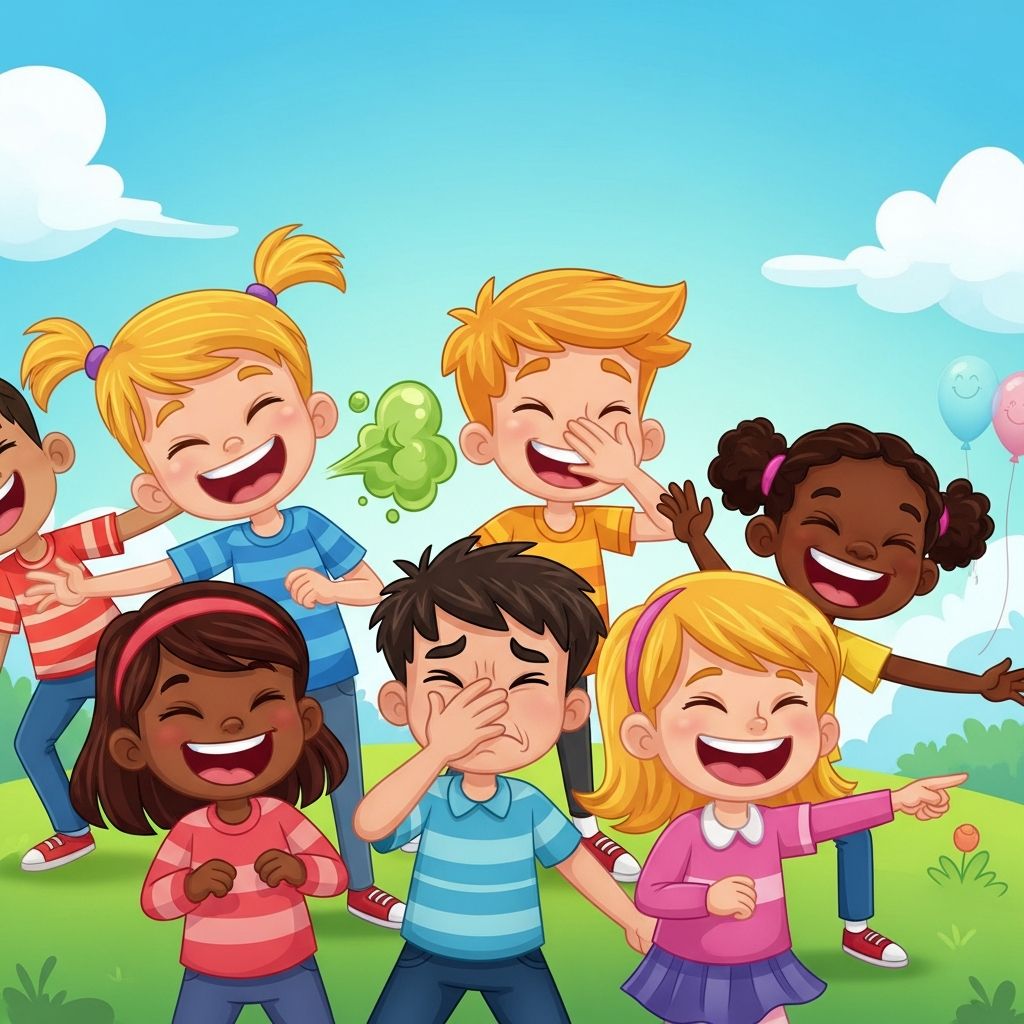
Humor centered on natural bodily functions has captivated audiences across generations, and children are particularly drawn to this style of comedy. The simplicity and directness of these jokes, combined with their inherent absurdity, creates the perfect formula for eliciting genuine laughter from young audiences. Unlike complex wordplay that requires sophisticated understanding, these jokes tap into something universally relatable—something that happens to everyone regardless of age or background.
The appeal extends beyond mere silliness. Children often find empowerment in humor that addresses bodily functions that are typically considered improper or taboo in polite company. By laughing at these jokes, young people engage in a form of social bonding and mild rebellion against adult conventions, which naturally increases their entertainment value.
Pun-Based Humor and Clever Wordplay
Many of the most effective jokes in this genre rely on creative wordplay and unexpected linguistic twists. These jokes work by setting up expectations and then subverting them with clever punchlines that demonstrate linguistic creativity.
Consider the structure where a joke asks what something is called, and the answer involves a homophone or double meaning. For example, asking what happens when you experience flatulence in a confined space leads to answers that play on the dual meanings of words related to pressure, atmosphere, or confined spaces. These puns require just enough cognitive processing to feel satisfying while remaining accessible to children.
The charm of these jokes lies in their simplicity combined with unexpected connections. A joke might link an everyday object or situation with the subject matter, creating an amusing juxtaposition that catches the listener off guard.
Absurdist Scenarios and Impossible Situations
Another category of jokes in this genre involves completely absurd scenarios that blend reality with impossibility. These jokes often feature animals, fictional characters, or unusual circumstances that wouldn’t occur in real life.
The humor derives from the mental image created by these scenarios. When a joke describes something that could never actually happen—like a specific animal species engaging in this behavior—the absurdity itself becomes the source of entertainment. Children appreciate the permission these jokes give them to imagine ridiculous situations without logical constraints.
These scenarios often involve recognizable characters from popular culture or archetypal figures, which adds another layer of humor. The incongruity between the character’s normal persona and their involvement in these jokes creates additional amusement.
Physical Comedy and Sensory Humor
Many jokes in this category employ sensory descriptions that create vivid mental images. References to smells, sounds, and physical sensations make these jokes more engaging and memorable for young audiences.
The sensory element transforms abstract concepts into concrete experiences that children can easily visualize and find hilarious. By describing what something might smell like or how it might sound, these jokes bypass intellectual processing and appeal directly to children’s imagination and physical awareness.
Sound-based wordplay is particularly effective, as the acoustic dimension adds another layer to the humor. Jokes that involve onomatopoeia or sound-related puns create a more immersive comedic experience than purely visual or conceptual humor.
Character-Based Comedy and Celebrity References
Jokes that reference famous figures, whether real or fictional, add an extra dimension of humor through recognition and contrast. When a well-known character or personality is placed in an embarrassing or ridiculous situation, the incongruity generates laughter.
These jokes work particularly well because children may recognize certain references, making them feel included in a more sophisticated form of humor. The juxtaposition of a serious or dignified figure with crude subject matter creates the comedic tension that makes the punchline satisfying.
Pop culture references also date jokes to specific eras, turning them into cultural artifacts that reflect what was popular when they were created. This adds nostalgic value for older individuals who enjoy sharing these jokes with younger generations.
Mathematical and Scientific Humor
A clever subcategory of these jokes incorporates elements of mathematics, physics, or science, creating humor that appeals to analytically-minded children and demonstrates that comedy can involve intellectual concepts.
These jokes might frame the subject matter within scientific terminology, ask impossible mathematical questions, or reference physics concepts in ridiculous contexts. The humor arises from the collision between serious academic frameworks and the inherently silly subject matter.
By incorporating educational elements into entertainment, these jokes make learning feel fun and accessible. Children who enjoy science may find particular amusement in jokes that cleverly manipulate scientific concepts for comedic effect.
Observational Humor and Social Commentary
Another effective approach involves making observations about everyday situations, social dynamics, or human nature through the lens of bathroom humor. These jokes comment on relatable experiences or universal truths in amusing ways.
Observational humor works because children recognize the situations being described and appreciate the clever way the joke frames these experiences. The humor emerges from the accurate observation combined with the unexpected direction the joke takes.
These jokes often reveal surprising insights about social conventions and human behavior, providing subtle commentary on why certain things are considered inappropriate or embarrassing.
Comparative Humor and Analogies
Jokes that draw comparisons between this bodily function and other concepts create humor through unexpected similarity and forced analogies. These jokes ask listeners to accept unusual premises and follow the logical conclusion.
By comparing something crude or undignified to something noble, sophisticated, or completely unrelated, these jokes create cognitive dissonance that resolves into laughter. The greater the distance between the two things being compared, the more surprising and memorable the joke becomes.
This type of humor develops critical thinking skills, as children must understand both concepts being compared to fully appreciate the joke’s structure.
Situation-Based Humor and Environmental Context
Many jokes derive humor from specific contexts or environments where this bodily function would be particularly inappropriate or create unfortunate circumstances. The humor emerges from the mental image of the situation.
These jokes often involve enclosed spaces, formal occasions, or situations where making noise would be problematic. The incongruity between the formal or serious nature of the situation and the occurrence in question generates amusement.
Environmental context jokes frequently reference locations or situations that children can visualize clearly, making the jokes more impactful and memorable. The specificity of the setting enhances the humor’s effectiveness.
Wordplay Involving Names and Terminology
A particularly effective category involves jokes where the punchline uses alternative terminology, slang, or creative neologisms for the subject matter. These jokes celebrate linguistic creativity and the numerous ways to reference the same concept.
The humor works partly because of the cleverness of the alternative terminology and partly because of the surprise when the expected term is replaced with something unexpected. Children enjoy learning new words and phrases, even if they’re silly variations on existing vocabulary.
These jokes demonstrate that language is flexible and can be manipulated for comedic effect, subtly encouraging linguistic experimentation and playfulness.
Frequently Asked Questions
Why do children find bathroom humor so entertaining?
Children are naturally drawn to taboo subjects and humor that adults consider inappropriate, making bodily function jokes appealing because they involve subject matter typically not discussed in polite company. Additionally, the simplicity and relatability of these jokes make them accessible and memorable.
At what age do children typically start enjoying these jokes?
Most children begin appreciating these jokes around ages five to seven, when they develop sufficient language comprehension to understand wordplay and appreciate the humor’s audacious nature. The appeal typically peaks during elementary school years.
Are these jokes appropriate for all settings?
While these jokes are generally considered harmless fun, context matters. They work well during casual gatherings, family time, or peer interactions but may be inappropriate in formal educational settings or professional environments.
How can parents use these jokes effectively?
Parents can use these jokes as tools for bonding with children, creating moments of shared laughter, and making their children feel understood. Knowing and sharing age-appropriate humor demonstrates that adults recognize and accept children’s natural interests.
Do these jokes have educational value beyond entertainment?
Yes, many of these jokes incorporate wordplay, scientific concepts, or social observations that encourage linguistic development, critical thinking, and understanding of social dynamics, making them valuable for cognitive development.
Why is this type of humor universal across cultures?
Bodily functions are universal human experiences that transcend cultural boundaries. The taboo nature of discussing these subjects in polite society is nearly universal, making jokes about them appealing across different cultures and languages.
References
- Fatherly: 55 Funny Fart Jokes for Kids — Fatherly. Retrieved February 2, 2026. https://www.fatherly.com/entertainment/50-best-funniest-fart-jokes-kids
- Beano: Fart Jokes | Kids Zone — Beano.com. Retrieved February 2, 2026. https://www.beano.com/kids-zone/jokes/fart-jokes
- DaddiLife: 70 Poop Jokes That Even Parents Will Find Hilarious — DaddiLife. Retrieved February 2, 2026. https://www.daddilife.com/health/dad-jokes/poop-jokes/
- Puns Nest: 218+ Fart Jokes Funny Gas Gags for All Ages — Puns Nest. Retrieved February 2, 2026. https://punsnest.com/fart-jokes/
- Upparent: 167+ Funny Jokes for Kids — Upparent. Retrieved February 2, 2026. https://www.upparent.com/questions/funny-jokes-for-kids