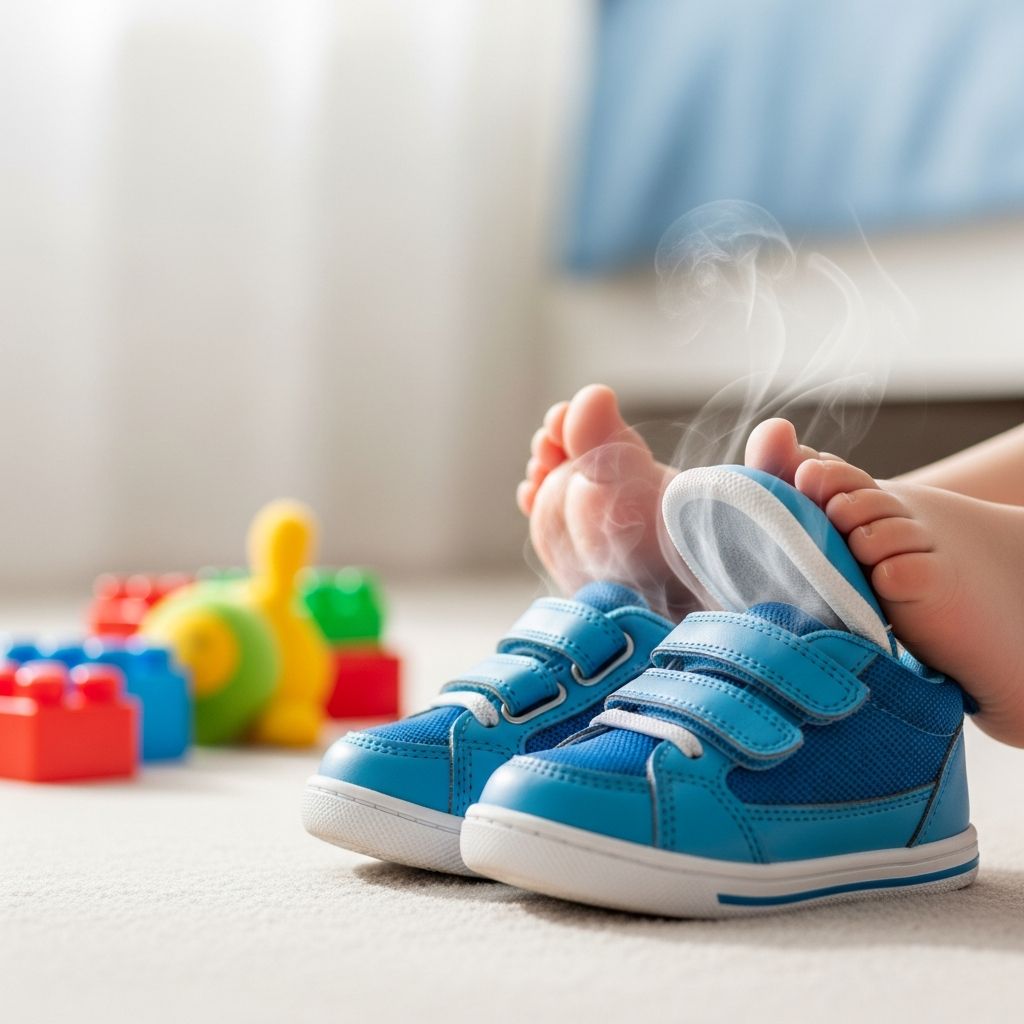
Many kids are active, sweaty, and full of energy – which is great for growing bodies but not always great for the way their shoes smell. Smelly feet are extremely common in children and usually not a sign of anything serious, but they can be embarrassing and uncomfortable if nothing is done about them.
This guide explains, in simple language, why feet smell, what is going on inside shoes and socks, and how families can build easy habits that make feet fresher and healthier.
What Is Foot Odor, Exactly?
Foot odor is the noticeable smell that comes from feet, socks, or shoes after they have been trapped in a warm, damp space for a while. The medical name people sometimes use is bromodosis, but for kids and parents it is usually just called “stinky feet.”
The smell can range from slightly sour to very strong and can stick to shoes, sports gear, and even carpets when kids walk around barefoot after taking shoes off.
Why Kids’ Feet Tend to Smell More
Children’s feet are busy all day: running at recess, sitting in class, going to sports practice, and playing at home. All this activity means their feet sweat a lot, especially when locked inside shoes and socks for many hours.
During growth spurts and the early teen years, sweat glands become more active, so the same shoes that were fine a year ago now smell stronger after a day of school or practice.
The Three-Part Smell Recipe
Foot odor usually needs three things to appear regularly: moisture, warmth, and time. Once these are present, smell-producing germs can thrive and start making the odors everyone notices.
- Moisture: Sweat from the skin and sometimes damp socks or shoes after rain or sports.
- Warmth: Closed shoes trap heat, especially during long school days or athletic activities.
- Time: Hours of wearing the same shoes allows germs to multiply and create odor-causing substances.
What’s Living in Shoes and Socks?
The skin on the feet naturally has bacteria on it. These tiny organisms are part of the body’s normal environment, but they love dark, damp spaces like the inside of shoes. When sweat soaks into the lining of shoes and socks, bacteria use the sweat, oils, and dead skin cells as food.
While these bacteria are eating and growing, they release waste substances that have strong, unpleasant smells. Some people also have certain types of bacteria that produce especially powerful odors, so their feet smell more noticeable even if they are not sweating much more than other children.
Why Some Kids Smell More Than Others
Not every child’s feet smell the same, even if they wear similar shoes and play the same sports. A few natural differences make some kids more likely to have strong foot odor.
- Extra-active sweat glands: Some children simply sweat more on their feet than others.
- Skin chemistry: Natural skin oils and types of bacteria differ from person to person, changing how intense the smell becomes.
- Habits and routines: Skipping foot washing, reusing socks, or wearing the same shoes every day all increase odor.
Common Everyday Triggers of Smelly Feet
Many everyday choices make it easier for foot odor to build up. The good news is that most of them can be changed with simple new habits at home and school.
- Wearing one pair of shoes all day, every day, without time to dry out.
- Keeping socks on after school instead of changing into a dry pair.
- Choosing socks made from materials that trap sweat rather than letting it evaporate.
- Skipping soap when washing feet in the shower or forgetting to wash feet at all.
- Leaving damp shoes in closed spaces like lockers or backpacks.
Is Foot Odor a Health Problem?
On its own, foot odor is usually more of a comfort and confidence issue than a dangerous medical problem. However, constantly damp, sweaty feet can irritate the skin and may allow certain infections to appear more easily.
When odor is severe, does not improve with better hygiene, or is accompanied by pain, itching, or skin changes, it may be time to talk with a healthcare professional for a closer look.
Warning Signs That Need Attention
Parents and kids should watch for signs that smelly feet might be linked to something more than normal sweat and bacteria. Getting help early usually makes treatment much easier.
- Red, scaly, or cracked skin between the toes or on the bottom of the foot.
- Blisters, open sores, or areas that hurt to touch or walk on.
- Intense itching or burning sensations on the feet.
- Odor that stays strong even after washing and changing socks regularly.
Simple Daily Habits for Fresher Feet
The best way to handle foot odor in children is to create a set of small, repeatable habits. None of these steps are complicated, but doing them every day makes a big difference over time.
- Wash feet every day: Use warm water, mild soap, and a gentle scrub between toes.
- Dry carefully: Pat feet dry, especially between toes, before putting on socks.
- Fresh socks daily: Start each day with clean, dry socks and change them if they become sweaty.
- Shoe “rest days”: Rotate shoes so each pair can dry out completely between wears.
- Short barefoot breaks: When safe at home, let feet breathe without shoes or socks.
Choosing the Right Socks and Shoes
Not all socks and shoes are equal when it comes to preventing odor. Some materials hold on to sweat and smell, while others let moisture escape and keep feet drier.
Teaching kids how to choose comfortable, breathable footwear gives them more control over how their feet feel and smell throughout the day.
Helpful Sock Features
Good socks pull moisture away from the skin and allow air to circulate. When shopping, focus more on what the socks are made of than on the color or design.
- Look for cotton or special moisture-wicking blends that feel soft and breathable.
- Avoid very thin, plastic-feeling fabrics that get soggy and stay damp.
- Choose socks that fit well but are not too tight, so air can still move around the foot.
Helpful Shoe Features
Shoes that trap heat and moisture quickly become a favorite home for odor-producing bacteria. A few simple choices can make a major difference in how shoes smell by the end of the week.
- Pick shoes with breathable materials like mesh panels or natural leather.
- Avoid completely closed plastic shoes that feel hot and sticky after a short time.
- Check that shoes fit properly; tight shoes increase friction and sweating.
- Use removable insoles if possible, so they can be washed or replaced when smelly.
Home Care Ideas to Reduce Odor
If a child already has smelly feet, several gentle home strategies can help. These methods aim to keep feet drier, limit bacteria, and freshen shoes so odors do not build up as quickly.
Easy Foot Care Steps
- Soak feet in warm water with a small amount of gentle cleanser for 10–15 minutes, then dry well.
- Use a soft washcloth or brush to remove dead skin, especially on the heel and ball of the foot.
- Apply a light, non-greasy moisturizer to keep skin from cracking, avoiding the spaces between toes.
- If advised by a healthcare professional, use a child-safe foot powder or spray to keep feet drier.
Shoe and Sock Care Tips
Shoes and socks absorb a lot of sweat, so cleaning and rotating them is just as important as washing feet. Turning this into a simple weekly routine keeps smells under control.
- Wash socks after every wear, using warm water and allowing them to dry completely.
- Open shoes fully after use and place them in a dry, airy spot rather than a closed bag or locker.
- Stuff shoes with dry paper or use absorbent inserts overnight to pull out moisture.
- Consider having separate shoes for sports, school, and home to reduce constant moisture in one pair.
When Excessive Sweating Might Be a Condition
Some children sweat far more than average on their feet, even when they are not hot or running around. This may be related to how their sweat glands work and can sometimes be part of a condition where sweating is unusually heavy.
In these cases, home care alone may not fully solve the odor problem, even if hygiene and footwear choices are excellent.
Signs That Sweating Is More Than Usual
- Socks becoming drenched within a short time of putting them on.
- Visible wet footprints on the floor after standing still for a short time.
- Feet feeling cold and damp even indoors at normal temperatures.
- Odor returning quickly even after using powders, sprays, and frequent washing.
If any of these descriptions sound familiar, it can be helpful to talk with a healthcare provider. They can check for skin conditions, infections, or excessive sweating disorders and suggest treatments tailored to the child.
Helping Kids Handle Embarrassment
Smelly feet can feel funny to adults, but kids may feel teased, ashamed, or nervous about taking shoes off around friends. How parents respond makes a big difference in how children see the problem.
Talking openly and calmly about foot odor helps kids understand that it is common, fixable, and not something to hide or feel bad about.
Encouraging Positive Habits Without Shame
- Use neutral language such as “Let’s help your feet stay fresh” instead of jokes that might feel hurtful.
- Turn foot care into a shared routine, like brushing teeth, rather than a punishment.
- Give kids choices in picking new socks or shoes so they feel involved in the solution.
- Praise effort, such as remembering to change socks or wash feet, even if odor is not perfect yet.
Quick Reference: Foot Odor Do’s and Don’ts
| Do | Why It Helps |
|---|---|
| Wash and dry feet daily | Removes sweat, oils, and bacteria that create odors. |
| Wear clean socks every day | Prevents old sweat from staying in contact with the skin. |
| Rotate pairs of shoes | Lets shoes dry fully so bacteria have less moisture. |
| Choose breathable materials | Improves air flow and keeps feet cooler and drier. |
| Check for skin changes | Helps spot infections or irritation early. |
| Don’t | Why It Makes Odor Worse |
|---|---|
| Wear the same socks two days in a row | Old sweat and bacteria stay close to the skin. |
| Keep damp shoes in closed bags | Creates a warm, moist space perfect for bacteria growth. |
| Ignore strong or painful symptoms | Possible infections may worsen without care. |
| Use harsh products without advice | Some ingredients can irritate sensitive child skin. |
Frequently Asked Questions About Kids’ Smelly Feet
1. Are smelly feet normal in kids?
Yes. Many children have smelly feet at some point, especially when they spend long hours in closed shoes, play a lot of sports, or are going through growth and hormone changes. In most cases, improving hygiene and footwear is enough to manage the problem.
2. Can foot odor spread from one child to another?
Foot odor itself does not jump from person to person, but the bacteria that enjoy damp shoes and socks can be shared when kids wear each other’s footwear. It is always a good idea for children to use their own shoes and socks instead of swapping.
3. How long does it take for foot odor to improve?
When kids start washing feet daily, changing socks often, and rotating shoes, many families notice improvement within a few days to a couple of weeks. Very strong or long-lasting odor may take longer and might need advice from a healthcare professional.
4. Should kids use adult antiperspirant or deodorant on their feet?
Some products made for adults may be too strong or irritating for young skin. Before regularly using any spray, powder, or antiperspirant on a child’s feet, it is wise to ask a healthcare provider which options are safe and how often they should be used.
5. When should we see a doctor about foot odor?
A medical visit is a good idea if the odor is very strong and does not improve with careful washing and clean socks, or if there are other symptoms like itching, burning, cracks, blisters, or pain. Professional advice can rule out infections and offer stronger treatments if needed.
Helping Kids Step Forward With Confidence
Smelly feet can feel like a big deal to a child, but with a few new habits and some calm, supportive guidance, it quickly becomes a manageable part of everyday life. Teaching kids how to care for their feet gives them both fresher shoes and a sense of responsibility for their own health and comfort.
By focusing on clean, dry feet, smart sock and shoe choices, and kind conversations, families can turn the problem of stinky feet into a simple routine that fits easily into mornings, evenings, and busy school days.