Many parents feel confused and defeated when a child who seems polite, charming, and easygoing in public turns into a moody, explosive, or defiant “house devil” at home. Yet this dramatic contrast is often a sign that your child feels deeply safe and securely attached to you, not that you are doing a bad job as a parent.
What “House Devil, Street Angel” Really Means
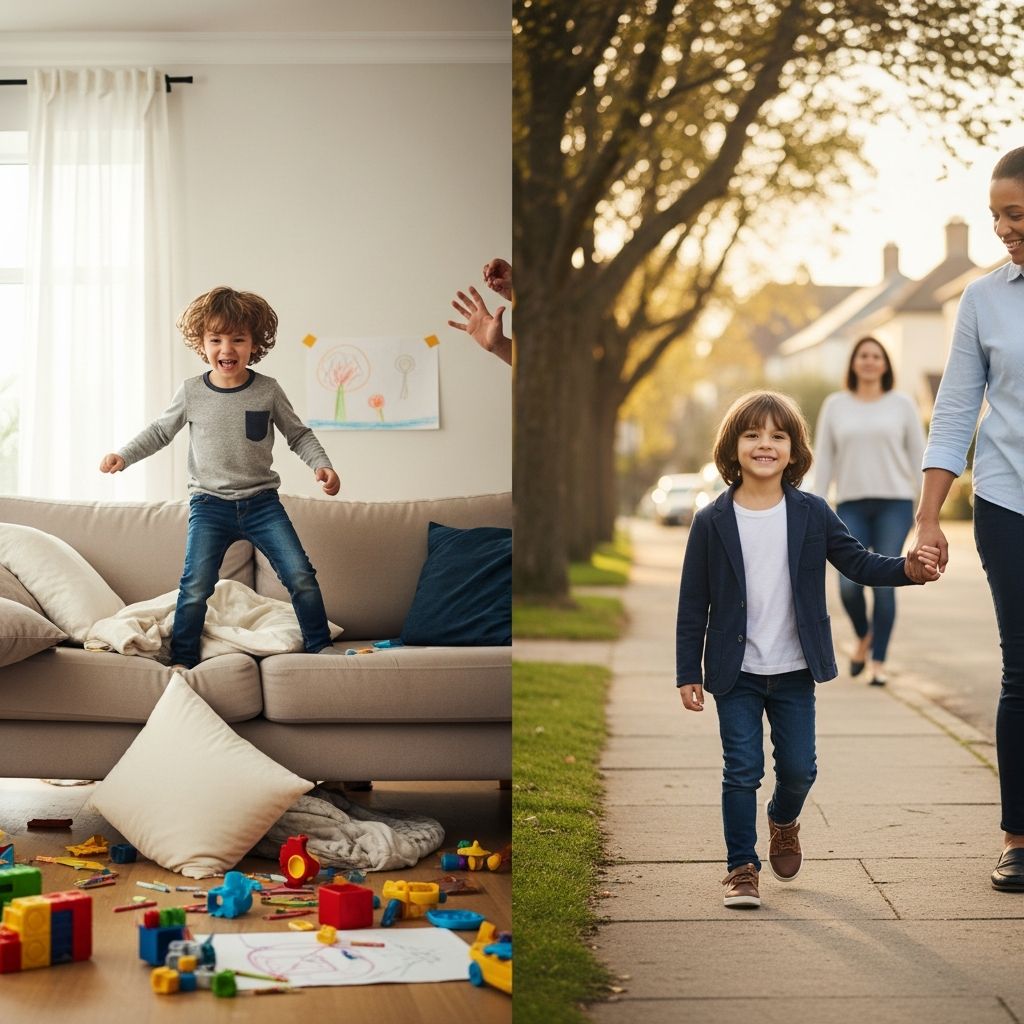
The phrase “house devil, street angel” describes a child who behaves beautifully for teachers, caregivers, relatives, and even strangers, but regularly melts down, talks back, or acts out at home. Parents often hear glowing reports from school and then wonder why they only seem to get the tears, yelling, and resistance.
This split can feel unfair, but it reveals an important truth: home is where kids feel safe enough to let down their guard and express the feelings they have been holding in all day. The more self-control they use in public, the more likely it is that the emotional bill comes due as soon as they walk through the door.
- “Street angel”: calm, cooperative, polite, and emotionally contained in public.
- “House devil”: explosive, whiny, oppositional, and emotionally intense at home.
- Core idea: the bigger the contrast, the more likely your child is using home as an emotional safety valve.
The Emotional Safety Valve Effect
Children spend much of the day managing rules, expectations, and social demands. They try to be liked, avoid getting in trouble, and keep up with schoolwork or activities. All of this creates emotional pressure. When they return home to the people they trust most, that pressure finally has somewhere to go.
This is known as the emotional safety valve effect: kids release pent-up frustration, fear, embarrassment, and anxiety where they feel most secure. In other words, they fall apart with the people they are sure will not leave them, even if their behavior is messy, loud, or irrational.
Signs Your Child Is Using You as a Safe Person
- They “hold it together” all day and unravel within minutes of getting home.
- Teachers or caregivers report few behavior problems, even when home is hard.
- Meltdowns are most intense with you and much milder with others.
- After a big outburst, your child often seeks comfort, cuddles, or closeness.
Why Being the “Safe Place” Is a Compliment
It may not feel flattering when your child screams at you for giving them the wrong color cup, but underneath the chaos is a powerful message: “You are my safe person. I trust you with my ugliest feelings.” Adults often reserve their emotional breakdowns for the people they are closest to. Children do the same.
When kids test limits, cry hard, or rage at home, they are showing that they believe your love is durable. They may unconsciously assume that even if they say hurtful words or express huge emotions, you will still be there. That trust is the foundation of a secure relationship.
How This Reflects on Your Parenting
- It suggests you have built enough connection that your child feels safe to be vulnerable.
- It means your child does not feel the need to constantly perform or impress you.
- It shows your home is the emotional “landing pad” after a demanding day.
Common Reasons Kids Are Angels Outside and Devils at Home
The contrast between public and private behavior rarely comes from “manipulation” or “two-faced” character. It usually reflects a combination of stress, temperament, developmental stage, and unspoken needs. Understanding these drivers can help you respond with empathy instead of just punishment or shame.
Key Contributing Factors
- Self-control fatigue: Holding in impulses all day leaves kids exhausted, so minor issues at home trigger big reactions.
- Desire to please others: Many children work hard to impress teachers or coaches, saving their unfiltered feelings for home.
- Sensitivity and anxiety: Highly sensitive kids absorb more sensory and emotional information and need a release later.
- Change and transitions: Moving between settings, especially after school, can be jarring and stir up misbehavior.
- Developmental leaps: Toddlers and teens, in particular, experience rapid growth that intensifies emotions.
House Devil vs. Street Angel: A Quick Overview
Seeing the differences between home and public behavior side by side can make the pattern easier to recognize. This contrast itself is a clue that your child has control over their behavior, even when home is their emotional “messy room.”
| Context | Street Angel Behaviors | House Devil Behaviors |
|---|---|---|
| Emotional expression | Holds in tears, rarely explodes, seems easygoing | Cries easily, yells, slams doors, intense meltdowns |
| Rule-following | Follows directions, waits their turn, respectful with adults | Argues over every request, tests boundaries repeatedly |
| Social behavior | Shares, smiles, appears cooperative with peers and teachers | Fights with siblings, refuses to share, demands attention |
| Energy level | Controlled, focused, able to sit still when expected | Restless, hyper, “bouncing off the walls” at home |
| Attachment signals | Polite distance, wants to appear capable and independent | Clingy one minute, rejecting the next, strong reactions to you |
How to Respond When Your Child Acts Like a “House Devil”
Recognizing that your child’s worst behavior is a sign of safety does not mean allowing hurtful or aggressive actions. The goal is to respond in a way that protects both your child’s emotional health and the rest of the family’s well-being. Calm, consistent limits teach them how to handle powerful emotions more constructively.
Think of yourself as both a sturdy wall and a soft landing: your boundaries are firm, but your presence is kind. You do not need to match your child’s intensity in order to be effective.
Practical Strategies for Tough Moments
- Keep your voice low and steady, even when your child is loud.
- State the limit briefly: “I won’t let you hit” or “We can talk when voices are calm.”
- Offer a safe outlet: a quiet space, a sensory tool, or a simple choice (“Do you want to cool down on the couch or in your room?”).
- Circle back later to talk about what happened once your child is regulated.
- Reinforce that all feelings are okay, but not all behaviors are.
Turning After-School Meltdowns Into Connection
The after-school window is one of the most common times for “house devil” behavior to show up. Kids may be hungry, overstimulated, socially drained, and trying to shift from school rules to home rules. Without structure and empathy, this can quickly become the hardest time of your day.
Building a predictable after-school routine can reduce blowups and help kids feel seen instead of scolded. Small changes in how you greet your child and what happens in the first 30 minutes at home can make a disproportionately big difference.
Helpful After-School Routine Ideas
- Start with a warm, low-demand greeting before asking about homework or behavior.
- Offer a snack and water as soon as possible to address basic needs.
- Allow 15–20 minutes of decompression: quiet play, reading, or outdoor time.
- Save questions about the day or corrections about behavior for later, when your child is calmer.
- Use simple visual schedules so kids know what to expect next.
Balancing Empathy With Boundaries
Understanding that your child’s behavior is rooted in safety and attachment is powerful, but empathy alone is not enough. Children also need clear, consistent limits to feel secure. When adults swing between being overly permissive and suddenly strict, kids feel less safe and behavior often worsens.
The healthiest approach combines validation of feelings with firm, predictable rules. You are not choosing between being loving and being in charge; being calmly in charge is a form of love.
Examples of Empathy + Limit
- “You are really angry that the iPad time is over. It’s okay to be mad. The iPad still needs to go away now.”
- “You had a long day and everything feels hard. I’m here with you. I can’t let you throw things, so I’m moving these away.”
- “You wish you could stay up late. It’s bedtime now. Do you want to hop like a frog to the bathroom or tiptoe like a cat?”
Supporting Your Own Emotions as a Parent
Being on the receiving end of your child’s hardest moments is exhausting. Feeling like everyone else gets the “angel” while you get the “devil” can stir up anger, resentment, or shame. Taking care of your own emotional health is not selfish; it is essential to showing up as the calm, sturdy presence your child needs.
Self-compassion, breaks, and support systems buffer you against burnout. When you feel less alone and less overwhelmed, you are better able to interpret your child’s outbursts as communication rather than personal attacks.
Small but Powerful Self-Support Steps
- Notice your own warning signs: clenched jaw, racing thoughts, or the urge to yell.
- Give yourself permission to pause before responding when you are triggered.
- Share honestly with trusted friends, partners, or professionals about how hard it feels.
- Celebrate small wins and moments of connection instead of only focusing on blowups.
FAQs About “House Devils” and “Street Angels”
1. Does this behavior mean my child is manipulating me?
Most of the time, no. Children rarely sit down and plan to treat you worse than they treat others. They are more likely releasing emotions they have been holding in all day because they finally feel safe enough to do so. That release can look like rudeness or defiance, but it is usually about overload, not calculated manipulation.
2. If my child can behave at school, shouldn’t they behave the same way at home?
The ability to hold it together at school shows that your child does have self-control and understands expectations. At home, though, they may be tired, overwhelmed, or flooded with feelings from the day. The goal is not to demand “perfect” public behavior at home, but to help them learn healthier ways to express what they really feel.
3. Am I a bad parent if my child only explodes with me?
No. In many cases, it points to a strong bond. Your child trusts that your relationship can handle their big emotions. That said, if the level of aggression or disrespect is harming family life, seeking guidance from a pediatrician, counselor, or parenting specialist can be a wise next step.
4. Should I tell teachers or caregivers about my child’s home behavior?
Yes, sharing patterns with adults in other settings can help everyone understand your child more fully. You do not need to list every meltdown, but letting them know your child often “keeps it together” at school and “lets it out” at home can lead to more empathy, flexibility, and support for your child’s emotional needs.
5. What if my child is a “devil” both at home and in public?
If challenging behavior appears across many settings and is intense or long-lasting, it may be helpful to look deeper. Factors like learning differences, anxiety, sensory processing issues, or other developmental needs can all show up in behavior. Professional input can help you understand the root causes and find tailored strategies.
Key Takeaways for Parents
Living with a child who is a “street angel” and a “house devil” can be frustrating and confusing, but it often carries a hidden message of safety and trust. Your home is where your child allows the mask to drop and their real, unfiltered feelings to surface.
- Your child’s worst behavior at home often signals secure attachment, not parenting failure.
- Seeing home outbursts as emotional communication helps you respond with empathy and limits instead of only punishment.
- Small shifts in routines, boundaries, and self-care can make everyday life calmer and more connected for both you and your child.