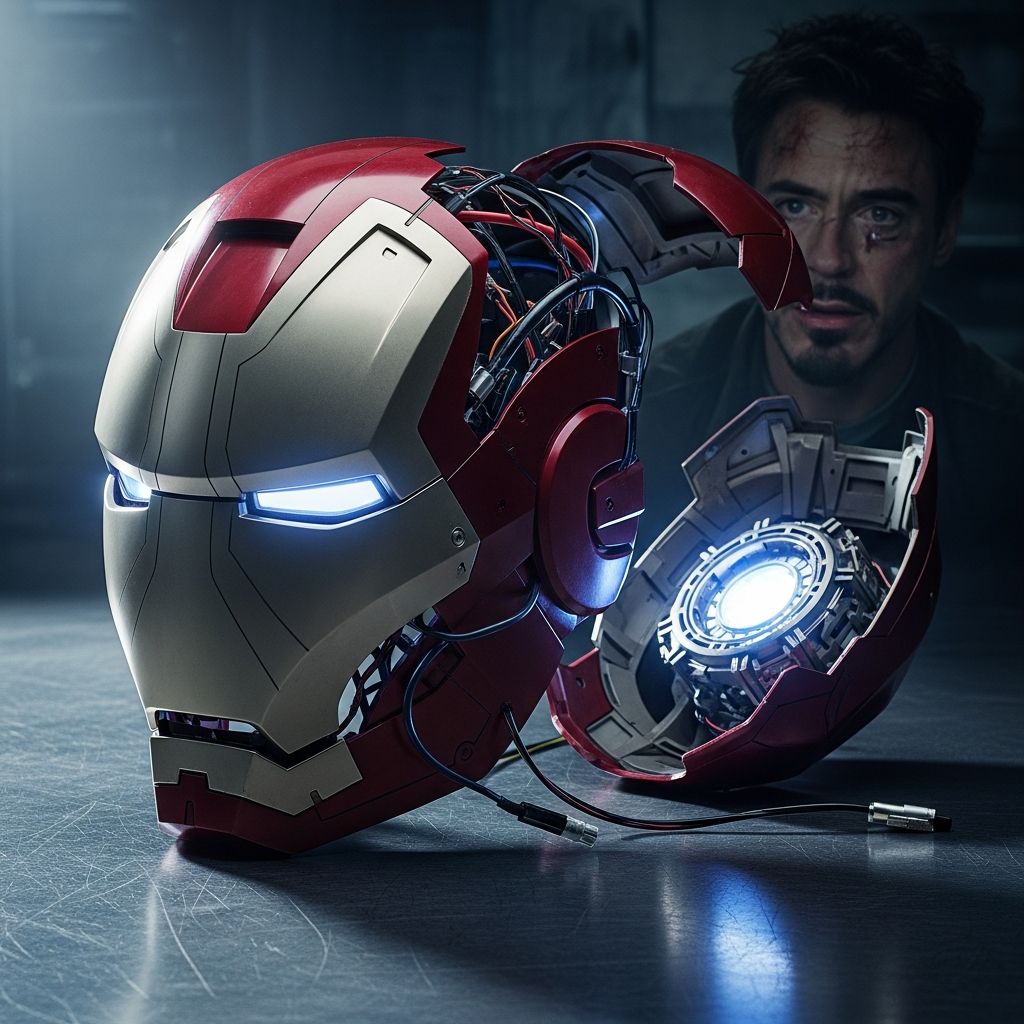
Iron Man 2 often gets remembered as a noisy, overstuffed sequel, but beneath the armor and explosions sits something far more uncomfortable: a superhero movie where the biggest danger is the hero himself. Tony Stark spends much of this film not as a triumphant savior, but as a walking red flag, spiraling in public while everyone else scrambles to contain the fallout. That messy, chaotic version of Tony is precisely why the film still matters.
This article takes an original, fresh look at Iron Man 2 as a story about ego, self-destruction, and reluctant growth. Rather than treating Tony’s worst behavior as a detour, it reads his recklessness as the point—an experiment in what happens when power, celebrity, and unresolved trauma collide in the same suit of armor.
The Superhero as Public Menace
In most superhero stories, the hero’s flaws are quirks: a bit of arrogance, a temper, a tendency to go rogue until the plot needs them to apologize. Iron Man 2 goes further. Tony isn’t just difficult; he is actively irresponsible with godlike technology, national security secrets, and the people who love him. His charm can’t hide the reality that he is, for much of the film, a danger to everyone around him.
From the first scenes, Tony treats being Iron Man like having front-row tickets to his own ego. The armor is not only a symbol of protection, but also a stage costume. He turns a weapons demo into a rock concert, leans into celebrity, and insists that his existence alone has “privatized” global peace. The line between heroic confidence and delusion is paper-thin, and he strides across it without slowing down.
Power Without Boundaries
One of the most striking elements of Iron Man 2 is that no one can actually make Tony do anything. He answers to no boss, no board, no government agency that he can’t ridicule in front of the cameras. The world is stuck with a man who owns weapons more advanced than any nation on Earth and also enjoys humiliating senators on live TV.
- He designs and controls a one-man arsenal without meaningful oversight.
- He decides when and how to intervene in global conflicts.
- He filters national security threats through his personal grudges and moods.
The film quietly asks a question that superhero tales often skip: What happens when a private individual holds more power than entire governments and chooses to answer only to himself? The unsettling answer is that the line between protector and bully depends entirely on his emotional stability on any given day.
The Slow Burn of Self-Destruction
Iron Man 2 is not only about external villains; it is about a man facing the realization that the device keeping him alive is also killing him. Tony’s body is quietly betraying him, and he responds not with vulnerability, but with overcompensation. His jokes get louder, his stunts more reckless, his decisions more impulsive. Instead of inviting help, he amplifies the performance.
The film treats self-destruction not as a single dramatic moment, but as a pattern of micro-choices: skipping honest conversations, dodging medical realities, hiding test results, and numbing fear with spectacle. The arc reactor glowing in his chest becomes a metaphor for unsustainable living—high-powered, visually impressive, and quietly toxic.
Garbage Behavior in a Designer Suit
Calling Tony Stark a “garbage person” in this phase is not about dismissing him as irredeemable, but about refusing to romanticize what he is doing. For a large chunk of Iron Man 2, Tony is terrible at basic human responsibilities. He is cruel to the people who rely on him, flaky as a leader, and shockingly indifferent to the emotional labor being done by others to keep his world from collapsing.
- He hands his company to Pepper without genuine support, dumping decades of corporate baggage on her while he disappears into self-pity and distraction.
- He uses humor as a shield to avoid accountability, turning every serious conversation into a bit.
- He treats the Iron Man armor like a toy at his own birthday party, endangering guests and forcing Rhodey to physically intervene.
These are not cute, roguish missteps; they are red-flag behaviors. The film’s willingness to sit in that discomfort—with a protagonist who is simultaneously brilliant, funny, and deeply selfish—gives it a strangely modern edge. It anticipates the current cultural skepticism toward powerful men who insist they are the only ones who can fix things while leaving wreckage in their wake.
How the People Around Tony Pay the Price
One of the clearest ways to measure a hero’s maturity is to watch what happens to the people in their orbit. In Iron Man 2, those people spend much of the film cleaning up Tony’s messes. Their frustration is not framed as them being killjoys; it reads as a chorus of exhausted colleagues who have reached their limit with genius-driven chaos.
Pepper Potts, James Rhodes, and the agents quietly watching from the shadows all show different survival strategies for dealing with Tony:
- Pepper steps into the CEO role yet must mother, manage, and negotiate around the man who handed her the job.
- Rhodey oscillates between loyalty and exasperation, until his only remaining option is to physically take one of the suits away from Tony.
- Nick Fury and Natasha operate like parents spying on a rebellious teenager, deciding how much rope to give Tony before someone really gets hurt.
Emotional Labor Table: Who Carries What?
| Character | Type of Labor | How It Shows Up |
|---|---|---|
| Pepper Potts | Administrative and emotional | Running the company, managing crises, absorbing Tony’s mood swings while expected to stay composed. |
| James Rhodes | Moral and physical | Confronting Tony’s abuse of the suit, intervening in dangerous scenes, serving as the conscience in uniform. |
| Nick Fury | Strategic | Calculating how Tony fits into larger plans while working around his unpredictability. |
| Natasha Romanoff | Covert | Gathering intel on Tony’s fitness for bigger responsibilities while blending into his world. |
The film may appear to focus on technology and villains, but much of its emotional core lies in this invisible labor—the work of propping up a man who claims to be single-handedly keeping the world safe.
Legacy, Daddy Issues, and Inherited Damage
Beneath Tony’s arrogance sits a quieter wound: he has built his adult life in the shadow of a father he experienced as cold, distant, and more invested in the future than in his son. Iron Man 2 confronts the idea that the technologies shaping the world are not neutral; they are extensions of the flawed humans who made them. Tony inherits not only a company, but also the enemies, moral blind spots, and unfinished business that come with being a Stark.
When Tony finally uncovers a more complete picture of his father’s hope for him, it does not erase the earlier damage, but it re-frames his inheritance. The message is not “you were perfect all along,” but rather “you were meant to build something better than I did.” That shift nudges Tony from performative genius toward a more grounded sense of purpose, even if the film only allows glimpses of that change.
Why Tony’s Worst Phase Strengthens His Arc
Many viewers treat Iron Man 2 as a speed bump between more coherent entries in the larger superhero saga, but its depiction of Tony at his worst serves an important narrative purpose. Without this fully visible crash-and-burn phase, his later growth would feel abstract—a claim told to us rather than earned on screen. Watching a hero spiral provides context for why restraint, humility, and collaboration later matter.
By showing Tony’s arrogance colliding with his mortality and his relationships, the film lays down raw material for future stories: a man who has seen what happens when he believes his own myth. The very sloppiness of Iron Man 2—its tonal swings between comedy, drama, and bombast—mirrors the instability of its protagonist. It feels messy because Tony is messy, and that mess becomes the soil where an actual arc can grow.
Iron Man 2 in a World of Cancelled Heroes
Viewed today, Iron Man 2 plays differently than it did on release. Audiences have watched real-world public figures crash under the weight of their own egos, scandals, and unchecked power. The idea of a charismatic man insisting that he alone can protect everyone while refusing accountability feels less like superhero fantasy and more like an uncomfortable mirror.
The film’s refusal to fully absolve Tony is one of its quiet strengths. It ends with him having made some strides—accepting help, addressing his immediate crisis—but it does not pretend he has transformed into a flawless guardian overnight. Instead, it acknowledges a more honest reality: people capable of great good are also capable of severe harm, and growth is not a single grand gesture but a long series of better choices.
What Iron Man 2 Teaches About Growth
Iron Man 2 ultimately suggests that heroism without introspection is just power in a different costume. The story is less interested in whether Tony can win a fight and more interested in whether he can stop treating his talent as a shield from self-examination. The moments that hint at a better version of Tony share a common thread: he stops performing long enough to listen, to learn, and to let someone else into the room.
- He allows others to critique him and, occasionally, lets that critique land.
- He learns to value collaboration not only for tactical advantage, but as a safeguard against his own blind spots.
- He begins to understand that being irreplaceable is not the goal; being responsible is.
These shifts are subtle, but they plant the seeds for a different kind of superhero mythology—one where saving the world eventually requires learning how not to be the center of it.
Key Takeaways for Modern Viewers
For audiences revisiting Iron Man 2, the film offers more than nostalgic action. It plays like a case study in what happens when society hands its hopes to a single gifted, deeply flawed man and then looks away. The movie is not a tidy morality tale; it is a snapshot of a person mid-course correction, still half-convinced that charisma and genius are enough.
Seen through that lens, Iron Man 2 becomes more than a sequel. It is a warning about unchecked power, a meditation on legacy, and an early attempt to ask whether a superhero story can hold space for ugly behavior without endorsing it. Tony Stark’s worst phase is not a narrative mistake; it is the uncomfortable middle chapter that makes his later growth feel earned.
Frequently Asked Questions
Is Tony Stark actually a “bad person” in Iron Man 2?
Tony’s behavior in Iron Man 2 is often selfish, reckless, and deeply inconsiderate, especially toward the people who care about him. The film, however, stops short of labeling him inherently bad. Instead, it frames him as a man with enormous potential whose worst habits are amplified by power, fear, and unresolved family baggage. The tension between what he does and what he could become is the heart of the story.
Why does Tony act so self-destructively if he knows he is in danger?
Psychologically, people often respond to looming mortality not with clarity but with denial and excess. Tony leans into spectacle because slowing down would force him to confront terror, regret, and vulnerability. His wild behavior is not only immaturity; it is also a misguided attempt to control the narrative of his own possible ending, making sure that if he burns out, he does it on his own terms.
Does Iron Man 2 make Tony less likable?
For some viewers, yes—and that is part of what makes the film interesting. By pushing Tony past the boundaries of charming arrogance into legitimately harmful behavior, the story tests how much bad conduct audiences will tolerate from a beloved character. The discomfort that creates is intentional, encouraging viewers to separate charisma from character and to recognize that entertainment value does not equal moral virtue.
What makes Iron Man 2 still relevant today?
The film anticipates modern conversations about power, celebrity, and accountability. In an era saturated with public figures who insist they are uniquely qualified to solve complex problems, Iron Man 2 offers a portrayal of what happens when that self-image goes unchecked. It reminds audiences that brilliance without boundaries is not heroism; it is a recipe for collateral damage.
Do you have to love Iron Man 2 to appreciate Tony’s arc?
Not at all. The film’s pacing, subplots, and tonal shifts are fair targets for critique. Yet even for viewers who find it structurally uneven, Iron Man 2 provides essential data about who Tony Stark is under pressure. Treating it as a messy, necessary chapter rather than a disposable one reveals a richer, more complicated journey from egotistical futurist to someone capable of genuine sacrifice.