Why Young Children Thrive Through Household Participation
Parents often wonder whether involving toddlers in household tasks is worth the extra time and effort. The answer is a resounding yes. Research demonstrates that children who participate in age-appropriate household responsibilities develop stronger self-worth, greater independence, and enhanced problem-solving abilities. An extensive 85-year Harvard study revealed that shared household responsibilities during childhood correlate strongly with professional success and overall life satisfaction in adulthood.
Beyond these long-term benefits, household participation offers immediate developmental advantages. When toddlers engage in meaningful tasks around the home, they gain practical exposure to responsibility, develop new motor capabilities, and build confidence in their ability to contribute meaningfully to their family unit. This sense of contribution transforms how children view themselves and their role within the household ecosystem.
Cognitive Development Through Purposeful Activity
Household responsibilities serve as powerful vehicles for cognitive development in young children. When toddlers engage in structured tasks, they practice planning, decision-making, and sequential thinking—all foundational components of executive function. These cognitive skills extend far beyond the immediate task at hand and influence academic performance throughout childhood.
Research indicates that children with consistent household responsibility experience an 18% higher grade point average and demonstrate 31% better task completion rates throughout their education. Additionally, participation in household and community work correlates with a 23% improvement in working memory, cognitive flexibility, and inhibitory control—the core elements of executive functioning. These measurable improvements highlight how seemingly simple household tasks create lasting cognitive benefits.
Beyond academic metrics, household responsibilities teach toddlers how to break complex tasks into manageable steps, anticipate consequences, and adjust their approach when obstacles arise. These metacognitive skills—thinking about thinking—become invaluable as children progress through school and eventually enter the workforce.
Physical Development and Motor Skill Enhancement
Household tasks provide natural opportunities for toddlers to develop and refine both gross and fine motor skills. Activities like wiping spills, putting toys away, and helping with laundry engage different muscle groups and coordination pathways essential for physical development.
Tasks involving “heavy work”—lifting, pushing, and pulling motions—offer additional regulatory benefits. These movements have a documented calming effect on the nervous system, improving attention span and mood regulation. For toddlers who seek sensory input or struggle with sustained focus, incorporating household responsibilities into daily routines provides short doses of beneficial physical engagement that positively affect overall behavior and emotional regulation.
Fine motor activities like sorting objects, wiping surfaces, and folding laundry strengthen hand coordination and dexterity. As toddlers master these movements, they develop greater body awareness and spatial reasoning—skills that support everything from handwriting development to athletic abilities later in childhood.
Language Development Through Practical Application
Household responsibilities create rich language-learning environments for toddlers. As children engage in tasks, they encounter new vocabulary in functional, concrete contexts. Words like “spray,” “wipe,” “broom,” “laundry,” and “sweep” gain meaning through direct experience rather than abstract instruction.
Beyond vocabulary acquisition, household tasks facilitate word combination development—a critical milestone in language progression. Toddlers naturally piece together nouns and verbs such as “wash clothes,” “towel wipes,” and “broom sweeps,” creating meaningful linguistic patterns. This structured, functional exposure to language development provides exposure in concrete ways that traditional learning environments cannot replicate.
Parents enhance this language-rich environment by narrating activities, asking questions, and encouraging toddlers to verbalize their steps and observations. This dialogue transforms routine household tasks into intentional language instruction sessions.
Building Self-Esteem and Personal Competence
One of the most profound benefits of household responsibility is its impact on self-esteem. Successfully completing tasks—regardless of imperfection—provides tangible evidence that toddlers can accomplish goals and contribute meaningfully. This internal confidence gradually expands to other areas of development.
Children who regularly engage in household responsibilities demonstrate higher self-esteem, increased responsibility, and greater resilience in facing frustration and adversity. They develop what researchers call “grit”—the ability to persist through challenges and maintain effort toward meaningful goals. These emotional and psychological benefits create a foundation for success across multiple life domains.
The key to building genuine self-esteem through household tasks lies in celebrating effort and progress rather than perfect outcomes. When parents acknowledge the process—”You worked so hard to organize those toys”—rather than fixating on results, children internalize messages about their capability and worth. This process-oriented praise builds intrinsic motivation, encouraging toddlers to participate not for external rewards but because they recognize their contribution matters.
Strengthening Family Bonds and Teamwork Skills
Household responsibilities create opportunities for quality time and meaningful interaction between parents and toddlers. Completing tasks together establishes routines, deepens connection, and models how families function as coordinated units.
Children who grow up participating in household responsibilities develop enhanced understanding of teamwork and collaboration. Research from business environments demonstrates that employees who completed household chores during childhood are more cooperative, complain less, work harder, and maintain better relationships with colleagues. These professional advantages stem from childhood experiences where they learned that household functioning depends on individual contributions and shared responsibility.
Family discussions about household tasks reinforce this collaborative mindset. When parents gather to address challenges, problem-solve obstacles, or celebrate completed work, they model how healthy teams communicate and work toward common goals.
Age-Appropriate Task Progression
Successful household participation requires matching task complexity to developmental capabilities. Toddlers thrive when responsibilities align with their physical abilities, cognitive capacities, and attention spans.
Toddler-Level Tasks (Ages 1-3)
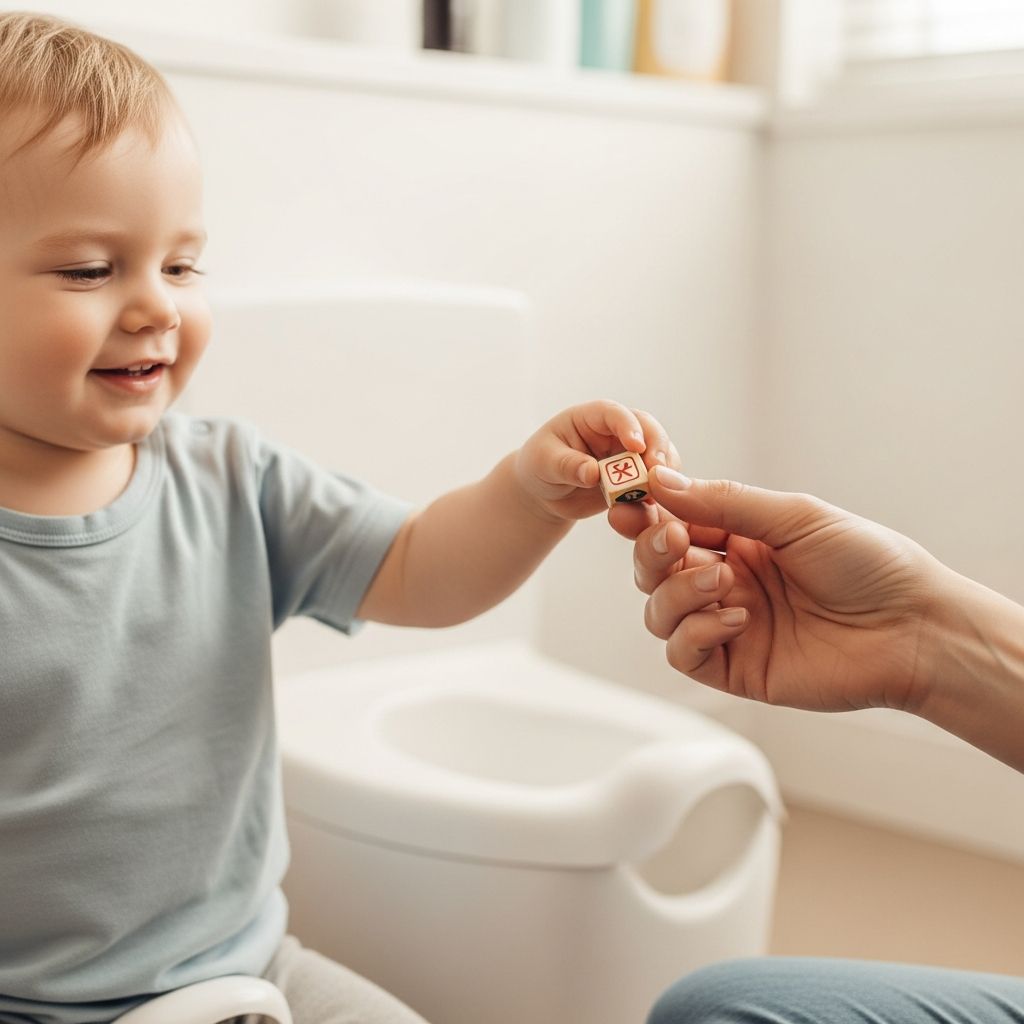
Young toddlers benefit from single-step, routine-based activities that build habit formation and positive associations with contributing to family functioning. Appropriate tasks include putting toys away, retrieving play items from shelves, turning lights off when leaving rooms, wiping spills, and sorting laundry by color. These activities develop basic motor skills while establishing foundational understanding that household maintenance requires everyone’s participation.
At this stage, parents should focus on tasks with one step or provide clear one-step-at-a-time instructions. The goal is building positive associations with participation rather than achieving perfect outcomes.
Preschool-Level Tasks (Ages 3-5)
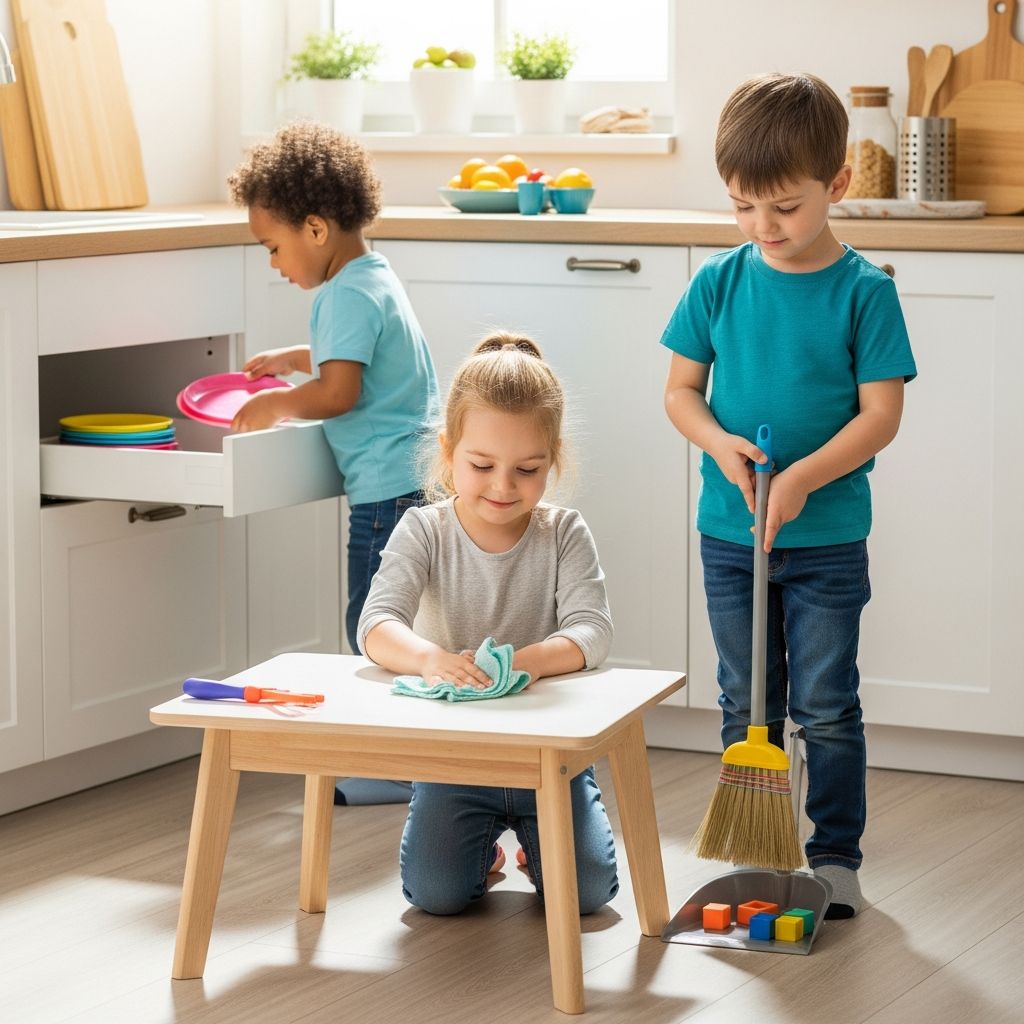
Preschoolers develop increasingly sophisticated memory and coordination capabilities, allowing for more complex responsibilities. Tasks like setting tables, clearing plates, wiping counters, folding laundry, and loading/unloading dishwashers become developmentally appropriate. These activities strengthen memory retention, increase task complexity, and build confidence through expanded responsibility.
At this age, parents can introduce multi-step tasks and encourage independent problem-solving. Providing clear initial instructions followed by opportunities for self-direction helps preschoolers develop autonomy while maintaining reasonable expectations for task completion.
Elementary School Expansion (Ages 6-11)
School-age children can handle responsibilities requiring more planning and execution complexity. Vacuuming, bed-making, meal preparation assistance, and trash removal become appropriate tasks. This age group benefits from age-appropriate consequences for incomplete tasks, which build accountability without creating punitive associations.
Strategies for Introducing Household Responsibility
Reframe Your Perspective on Child Capabilities
Parents often underestimate what toddlers can accomplish. Reframing household tasks as developmental opportunities rather than time-consuming obstacles shifts how adults introduce and support these activities. When parents view household participation as skill-building rather than task completion, they become more patient with imperfection and more focused on progress.
Implement Visual Schedules and Routine Systems
Young children benefit tremendously from visual representations of expected tasks and sequences. Charts displaying household responsibilities through pictures, symbols, or simple words create predictability and reduce verbal reminders. Visual schedules help toddlers understand task sequences, prepare for transitions, and independently recognize what comes next in their daily routine.
Model Healthy Attitudes Toward Household Maintenance
Parents serve as powerful models for how children view household responsibility. Sharing your own task lists, discussing preferences for completing activities, and expressing satisfaction when checking items off your list demonstrates that maintenance is normal, manageable, and even satisfying. However, modeling should also emphasize balance—showing children that a healthy task list doesn’t consume your entire day but rather fits purposefully into a balanced lifestyle.
Offer Meaningful Choices Within Boundaries
Whenever possible, provide toddlers with choices about how to complete their responsibilities. Asking “Would you like to put away toys before or after snack?” or “Do you prefer wiping with the blue cloth or the green cloth?” fosters ownership and agency. When children feel they have some control over their responsibilities, tasks feel less like burdens and more like collaborative family efforts.
Emphasize Effort Over Perfection
Parents should explicitly focus on process and effort rather than flawless outcomes. Celebrating how hard your toddler worked, acknowledging their problem-solving attempts, and appreciating their contribution builds genuine self-esteem grounded in realistic expectations. This approach also creates safe spaces where children feel comfortable attempting tasks despite inevitable mistakes and imperfect results.
Navigating Common Challenges
Managing Reluctant Participants
Not every child eagerly embraces household responsibilities. Some toddlers naturally resist participation. In these situations, parents can use incentive systems initially to establish routines, then gradually reduce reliance on external rewards as children internalize the importance of contribution. The ultimate goal is cooperation based on understanding family responsibility rather than reward-seeking behavior.
Balancing Expectations with Reality
Parents must remember they are not striving for perfection. When you have specific expectations about how tasks should look, consider saving those responsibilities for your own list. This ensures you celebrate your child’s effort and contribution rather than focusing excessively on imperfect results. Over time, as children develop greater capability, standards can gradually increase.
Addressing Obstacles Collaboratively
When toddlers struggle with assigned responsibilities, family discussions focused on problem-solving prove invaluable. Gathering together to discuss roadblocks, brainstorm solutions, and adjust approaches teaches children that challenges are normal and solvable through collaborative effort.
Long-Term Benefits Beyond Childhood
The advantages of early household participation extend well into adulthood. Adults who completed household responsibilities during childhood report 27% higher job satisfaction and are 40% more likely to achieve leadership positions by age 35. They demonstrate superior financial planning skills, are 25% more likely to maintain emergency savings, and show 42% higher likelihood of assuming leadership roles in professional and civic organizations.
These striking statistics reflect how household participation during childhood cultivates foundational attitudes about responsibility, planning, teamwork, and self-directed action. These early experiences literally reshape how individuals approach work, relationships, and personal development throughout life.
Getting Started This Week
Beginning a household responsibility program requires minimal preparation. Start by identifying one age-appropriate task that matches your toddler’s current capabilities. Keep expectations realistic and celebrate early attempts enthusiastically. Gradually expand responsibilities as your child demonstrates readiness and confidence.
Remember that household participation serves dual purposes: it genuinely helps your family function while simultaneously providing irreplaceable developmental opportunities for your child. These two benefits reinforce each other, creating a sustainable system where everyone benefits.
Frequently Asked Questions
Q: At what age can toddlers begin household responsibilities?
A: Research suggests benefits begin as early as age 3, though even younger toddlers can engage in very simple, single-step activities like putting toys in a basket or retrieving items from shelves.
Q: How much time should household responsibilities take?
A: Start with short, manageable tasks lasting 5-10 minutes. As children develop confidence and capability, gradually increase duration and complexity.
Q: What if my child refuses to participate?
A: Use initial incentives to establish routines, then gradually transition to intrinsic motivation. Focus on making tasks collaborative and emphasizing their contribution rather than forcing compliance.
Q: Does household responsibility interfere with playtime?
A: No. In fact, children who learn to balance work and play from early ages develop better time management and life skills. Responsibilities can be scheduled around ample playtime.
Q: Should I reward my child for completing chores?
A: Incentives can help establish initial routines, but gradually reduce dependence on external rewards. The goal is fostering intrinsic understanding that everyone contributes to household functioning.
References
- Chores for Toddlers and Preschoolers: What Are the Benefits of Chores — The Mentor Mom Blog. Accessed 2026-04-02. https://www.thementormomblog.com/blog/chores
- Surprising Benefits of Chores for Child Development — Novella Prep. Accessed 2026-04-02. https://novellaprep.com/blog/surprising-benefits-of-chores-for-child-development/
- The Benefits of Chores for Kids — Bright Horizons. Accessed 2026-04-02. https://www.brighthorizons.com/article/parenting/benefits-of-chores
- Chores and Children — American Academy of Child and Adolescent Psychiatry (AACAP). Updated June 2018. https://www.aacap.org/AACAP/Families_and_Youth/Facts_for_Families/FFF-Guide/Chores_and_Children-125.aspx
- How Chores Can Build Your Toddler’s Independence, Confidence and Language — My Toddler Talks. Published 2020-08-03. https://www.mytoddlertalks.com/kims-blog/2020/8/3/how-chores-can-build-your-toddlers-independence-confidence-and-language
- 5 Surprising Developmental Benefits of Chores for Kids — NAPA Center. Accessed 2026-04-02. https://napacenter.org/chores-for-kids/
- Age-Appropriate Chores for Kids — Cleveland Clinic Health Essentials. Accessed 2026-04-02. https://health.clevelandclinic.org/age-appropriate-chores
- Harvard: Key to Happy, Successful Kids? Chores. — UVWS. Accessed 2026-04-02. https://www.uvws.org/news/s94a63z7yun3fczjm80xh8fzivafkb