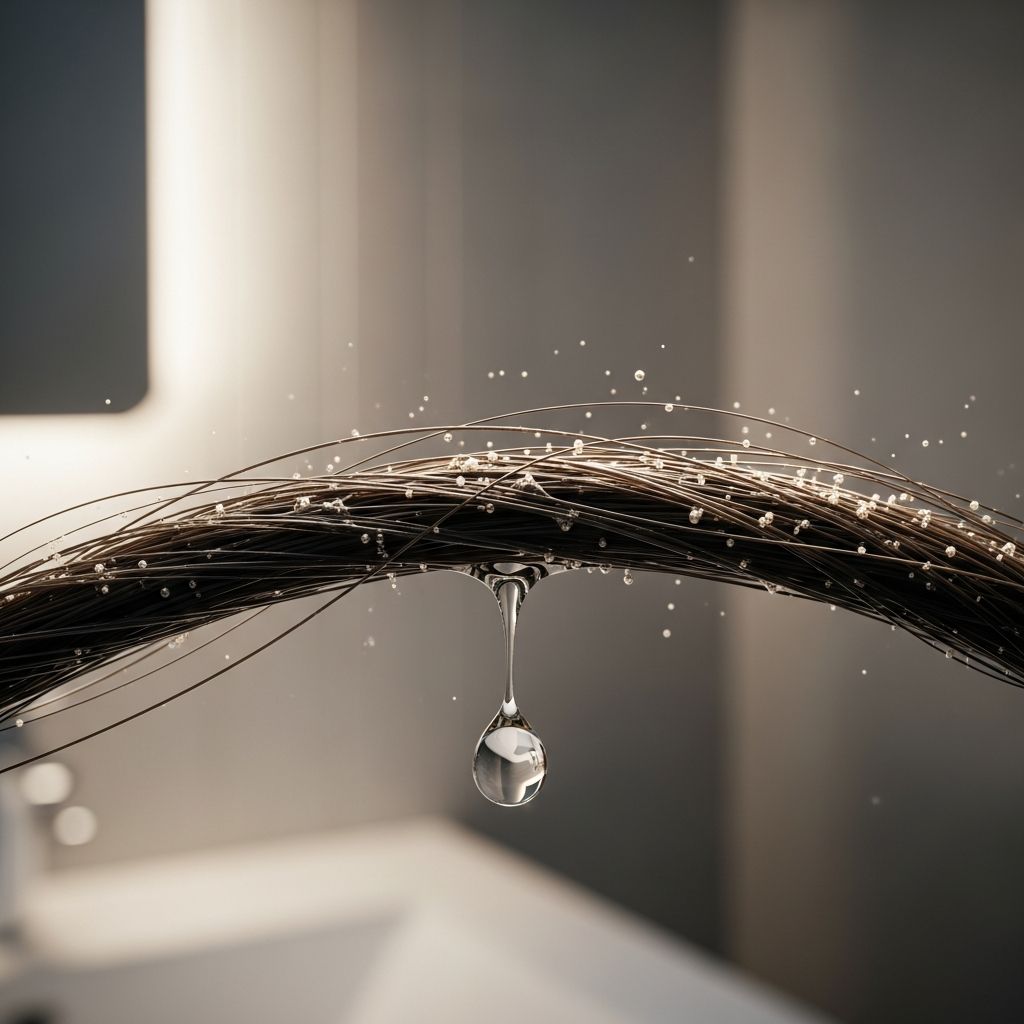
Few things are more frustrating than stepping out of the shower only to find your hair still looks limp, greasy, or coated. If you feel like you scrub, rinse, and repeat but your hair simply won’t get clean, the problem usually isn’t you being dirty – it’s a mismatch between your products, your technique, your scalp, and your environment.
Common Signs Your Hair Isn’t Really Clean
Before changing your entire routine, it helps to identify what “not clean” actually means for you. Different problems point to different solutions.
- Greasy roots within hours: Hair looks flat at the crown, clumps into pieces, and feels slick or slippery soon after washing.
- Waxy or coated mid-lengths: Strands feel like there is a thin film on them, almost as if there is product that never rinses out.
- Dry but dirty-feeling ends: Ends feel rough and tangle easily, yet still look dull or weighed down instead of light and bouncy.
- Flakes and itch: Scalp looks clean but feels tight, itchy, or flaky despite frequent shampooing.
- No lather or odd texture when you wash: Shampoo refuses to foam or feels sticky on the hair, even when you use a generous amount.
Each of these signs can trace back to a specific cause: product buildup, over-conditioning, hard water minerals, scalp imbalance, or even your styling habits.
The Hidden Culprits Behind Stubborn “Dirty” Hair
Hair that won’t feel clean is rarely about not washing enough. More often, it’s a combination of several subtle factors that build up over time.
1. Product Buildup From Everyday Styling
Modern styling products are designed to cling to the hair shaft so your style lasts longer. Over time, ingredients like polymers, silicones, waxes, and heavy butters can form layers that resist regular shampoo.
- Likely symptoms: Hair that feels slippery but not soft, dullness, and ends that refuse to curl or hold volume.
- Typical triggers: Daily use of hair sprays, texturizing sprays, dry shampoos, leave-in creams, and silicone-heavy serums without routine clarifying.
2. Over-Conditioning And Mismatched Products
Conditioners, masks, and leave-ins are meant to smooth and protect – but when their formulas don’t match your hair type, they can smother your strands instead.
- Fine hair: Easily overwhelmed by rich masks, oils, and buttery leave-ins that are best suited to thick or coily hair.
- Low-porosity hair: Naturally resists moisture, so heavy products tend to sit on top and make hair feel coated instead of nourished.
- Using too much product: Applying conditioner from root to tip or not rinsing thoroughly leaves a residue that mimics “dirty” hair.
3. Hard Water And Mineral Deposits
In many homes, tap water contains high levels of minerals like calcium and magnesium. These minerals bind to the hair surface and mix with shampoo residue, creating a stubborn film.
- Clues you may have hard water issues: Soap scum on your shower tiles, stiff laundry, and hair that feels rough yet coated no matter what products you use.
- Typical hair changes: Faded color, lack of shine, tangling, and shampoos that never seem to rinse clean.
4. Scalp Oil Imbalances
Sometimes your scalp is the real source of the problem. When the scalp is too oily or too dry, your hair will reflect it.
- Overactive oil production: Genetics, hormones, and overwashing can all push your scalp to produce more sebum, which then coats your roots fast.
- Dry, irritated scalps: Can flake and shed, leaving visible debris that makes hair appear unclean even when the hair itself is fine.
- Infrequent shampooing for your scalp type: While some scalps thrive with less frequent washing, others need regular cleansing to stay balanced.
5. Technique Problems: How You Wash Matters
Even with good products, rushed or incomplete washing can leave a surprising amount of residue behind.
- Not fully soaking your hair before shampooing, so the product never spreads evenly.
- Focusing shampoo on the lengths instead of the scalp, where oil and buildup actually accumulate.
- Skipping a second gentle lather, especially if you use styling products daily.
- Rinsing too quickly, particularly at the nape and behind the ears where residue often lingers.
A Simple Hair-Cleanliness Diagnostic Table
Use the table below to connect what you feel with the most likely cause and a starting point for change.
| What You Notice | Most Likely Cause | First Strategy To Try |
|---|---|---|
| Roots look oily the same day you wash | Overactive scalp oil, heavy conditioners at the roots | Shampoo the scalp twice, apply conditioner from ears down only |
| Hair feels waxy or coated when wet | Product buildup or hard water minerals | Add a weekly clarifying or chelating shampoo to your routine |
| Shampoo barely lathers | Heavy residue from styling products or oils | Use a pre-rinse and perform two light lathers instead of one heavy one |
| Ends are dry but still look dull | Overuse of leave-ins combined with heat damage | Trim damaged ends and switch to lighter, spray-based conditioners |
| Flakes and itch despite frequent washing | Irritated or dry scalp, possibly from harsh detergents | Rotate in a gentle, sulfate-free or scalp-soothing shampoo |
Step-By-Step Routine To Finally Get Truly Clean Hair
Once you understand the causes, you can build a routine that deeply cleanses without stripping. Think of this as a reset ritual you can do weekly or bi-weekly, then adapt for everyday care.
Step 1: Start With A Thorough Pre-Rinse
Before adding any product, stand under warm water for at least 60–90 seconds. The goal is to fully saturate your hair so that shampoo can spread more evenly and lift away surface oils and debris.
- Use your fingers to gently separate sections and let water flow all the way to the scalp.
- A proper pre-rinse can already remove a small portion of sweat, salt, and light product residue.
Step 2: Focus Shampoo On The Scalp, Not The Ends
Your scalp is where sebum and most styling products accumulate. Your lengths mostly need gentle cleansing from the suds that run down during rinsing.
- Pour a small amount of shampoo into your palm and emulsify with a splash of water until it spreads easily.
- Apply directly to the scalp: front hairline, crown, sides, and nape.
- Use fingertip pads (not nails) to massage in circular motions, lifting oils and residue.
- Let the lather travel down your hair as you rinse instead of scrubbing the ends aggressively.
Step 3: Use A Second Gentle Lather When Needed
If the first shampoo barely foamed or your hair still feels slick, a second lighter round can make the difference between almost-clean and truly fresh.
- Use half the amount of shampoo from your first wash.
- Distribute evenly on the scalp; you should notice more lather this time, indicating that surface oils are gone.
- Rinse thoroughly until hair feels “squeaky” at the roots but not rough or tangled through the lengths.
Step 4: Condition Strategically, Not Automatically
Conditioner is essential for slip and protection, but placement matters more than quantity if you want hair that feels clean.
- Squeeze excess water from your hair before applying conditioner so it does not just slide off.
- Start at the ends and work up to mid-lengths; avoid the root area unless your hair is very coarse or coily.
- Comb through with fingers or a wide-tooth comb to distribute evenly.
- Rinse until hair feels soft but no longer slippery or heavy.
Step 5: Rinse Cooler And Longer Than You Think
A cooler final rinse helps close the cuticle slightly and can decrease that coated feeling.
- Spend extra time rinsing the back of your head and behind the ears, where shampoo and conditioner often linger.
- Gradually lower the water temperature for the last 20–30 seconds to enhance shine and minimize frizz.
Weekly And Monthly Deep-Clean Strategies
For hair that has been feeling unclean for a long time, a one-off perfect wash may not be enough. Building a recurring detox habit keeps buildup and residue under control.
Clarifying And Chelating Shampoos
Clarifying shampoos are specially formulated to cut through stubborn styling polymers, heavy silicones, and oils. Chelating shampoos go a step further by targeting mineral deposits from hard water.
- How often: Use clarifying formulas about once every 1–2 weeks if you style frequently, or once a month if your routine is minimal.
- How to use: Replace your regular shampoo on that day, and always follow with a hydrating but not heavy conditioner.
- Warning: Avoid clarifying right before or after color services, as it can accelerate fading.
Scalp Scrubs And Exfoliating Toners
Just like facial skin, your scalp benefits from occasional exfoliation to remove dead skin cells, sebum plugs, and product residue.
- Use gentle, fine-grain scrubs or liquid exfoliants designed for the scalp, not DIY sugar scrubs that can scratch.
- Limit use to once a week or less to avoid irritation, especially if your scalp is sensitive.
Hard Water Helpers
If you suspect hard water, combining mechanical solutions with product choices can significantly improve how clean your hair feels.
- Install a shower filter designed to reduce mineral content and replace its cartridge regularly.
- Rotate in a chelating shampoo formulated for swimmers or hard water exposure.
- Consider using distilled or filtered water for a final rinse if buildup is severe.
Daily Habits That Keep Hair Fresher, Longer
Clean hair is not just about what happens on wash day. Small, daily tweaks make it easier for your shampoo to work and help you stretch time between washes without feeling grimy.
- Use the smallest effective amount of styling products: Start with less, then add if needed instead of layering multiple heavy formulas from the start.
- Choose lighter textures if your hair is fine or gets oily quickly: Opt for sprays, mists, and gels rather than thick creams or rich butters.
- Brush or detangle gently before showering: This loosens surface dust and residue so water and shampoo can reach your scalp more effectively.
- Change pillowcases regularly: Sweat, skin oils, and leftover face products can transfer to your hair overnight.
- Avoid constant touching: Running fingers through your hair all day spreads oil from roots to lengths and introduces extra dirt.
Adapting The Routine To Your Hair Type
There is no single “right” way to wash hair; the perfect routine depends on texture, density, and scalp behavior. Tailoring your approach helps you get that clean feeling without sacrificing moisture or definition.
Fine Or Thin Hair
Fine hair shows buildup faster because each individual strand is small and easily weighed down. The wrong conditioner or a missed rinse can make it appear dirty even when freshly washed.
- Wash more frequently if your scalp is oily – every other day or even daily is fine when using gentle formulas.
- Use lightweight, volumizing shampoos and avoid putting conditioner above your ears.
- Skip heavy oils and thick creams; rely on feather-light sprays or leave-in mists.
Thick, Coarse, Or Curly Hair
Richer products are often essential for curl definition and frizz control, which raises the risk of buildup. The goal is to balance moisture with occasional deeper cleansing.
- Rotate: one wash with a gentle moisturizing shampoo, then your next with a clarifying formula if you use lots of stylers.
- Apply conditioner generously on mid-lengths and ends, but still keep it off the scalp unless your curls are very dry.
- When using curl creams and gels, try not to layer more than two styling products at once.
Color-Treated Or Damaged Hair
Dyed and chemically processed hair is more porous and prone to dryness. While it still needs to feel clean, overly harsh cleansing can cause breakage and color fade.
- Use shampoos labeled for color protection as your daily go-to, reserving clarifying products for occasional resets.
- Follow clarifying days with a nourishing but not overly heavy mask, focusing on the most damaged areas.
- Use heat tools sparingly and always with a heat protectant to avoid compounding that rough, dirty-feeling texture.
Frequently Asked Questions About Hair That Won’t Get Clean
Why does my hair feel greasy right after I wash it?
This usually happens when shampoo never fully lifts away oil at the scalp, or when conditioner and styling products are applied too close to the roots. Try focusing shampoo on the scalp with two light lathers and keep conditioner only on the mid-lengths and ends.
Is washing my hair every day bad?
It depends on your scalp and products. Some very oily scalps tolerate daily washing well with a mild shampoo, while others do better with every-other-day cleansing. If hair feels stripped, dry, or irritated, reduce frequency or switch to a gentler formula rather than forcing strict rules.
How do I know if I have product buildup?
Common signs include hair that feels coated or waxy even when freshly washed, shampoos that refuse to lather, and styles that no longer hold the way they used to. If a clarifying shampoo makes your hair suddenly lighter and bouncier, buildup was probably the issue.
Can using oils make my hair feel dirty?
Yes, especially on fine or low-porosity hair. Oils are highly occlusive and can sit on top of the hair, attracting dust and mixing with natural scalp oils. If you love oils, use only a drop on damp ends and clarify regularly to prevent residue.
What if nothing seems to help?
If your hair still feels unclean despite changing products and techniques, consider other factors like water quality, medication, or scalp conditions. A stylist or dermatologist can check for mineral buildup, scalp disorders, or other issues and recommend tailored treatments.
Key Takeaways For Consistently Clean-Feeling Hair
Hair that never feels clean is usually sending a message about buildup, product mismatch, scalp imbalance, or water quality. By adjusting your technique, rotating in clarifying and scalp-focused products, and matching your routine to your hair type, you can shift from fighting greasy, coated strands to enjoying hair that actually feels light, fresh, and touchably clean after every wash.