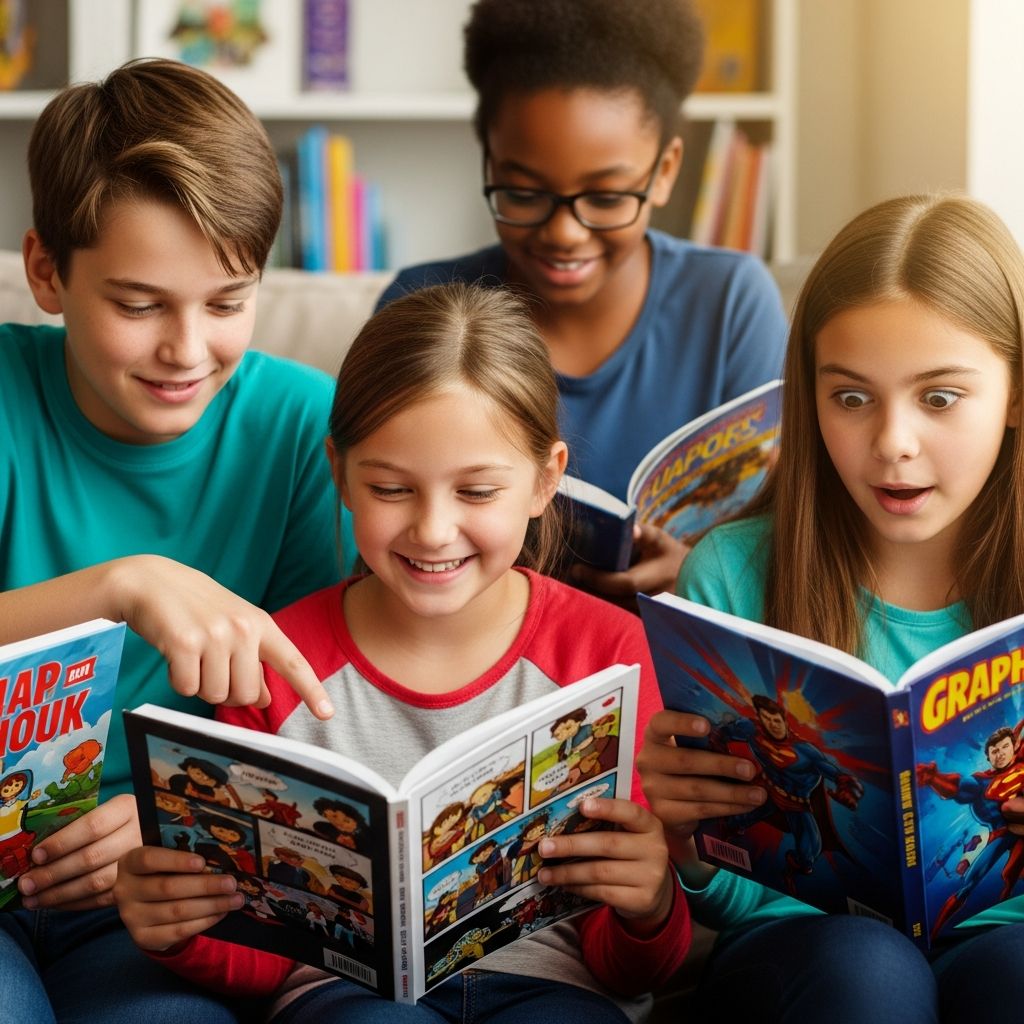
Many parents worry when their child avoids chapter books, drifts away during read-alouds, or insists that they “don’t like reading.” Yet for a growing number of kids, graphic novels are the gentle on-ramp that finally makes books feel fun instead of frustrating. Visual storytelling can meet kids where they are, honor their interests, and still build serious reading skills.
Why Some Kids Resist Reading
Reluctant readers are not necessarily weak readers. Some decode just fine but feel bored, anxious, or overwhelmed by dense pages of text. Others struggle with attention, working memory, or learning differences that make traditional novels feel like a chore instead of a pleasure.
- Long paragraphs and small print can feel visually and mentally exhausting.
- Kids may have had early experiences where reading felt like a series of failures, not successes.
- Assignments focused on test-style questions can make stories feel like worksheets instead of adventures.
When reading is constantly linked with stress, kids understandably push back. The goal then is not to force more of the same, but to offer a different doorway into the world of stories and information.
What Makes Graphic Novels So Appealing?
Graphic novels combine words with rich illustrations arranged in panels, speech bubbles, and visual cues. This format changes the entire reading experience, and for many hesitant kids, that change is liberating.
- Approachable pages: Fewer words per page make the book look less intimidating, even when the story itself is layered and nuanced.
- Immediate engagement: Color, facial expressions, and action scenes hook kids quickly, before they have a chance to zone out.
- Sense of progress: Turning pages quickly gives an early feeling of success—”I’m really reading a whole book.”
Once kids realize that reading can feel absorbing instead of exhausting, they are far more open to reading frequently and voluntarily—exactly what builds true skill and confidence.
How Graphic Novels Support Real Literacy Skills
Some adults worry that graphic novels are “cheating” or not as valuable as classic chapter books. In reality, well-chosen graphic novels can quietly nurture many of the same literacy skills teachers aim to build in school.
| Skill | How Graphic Novels Help |
|---|---|
| Comprehension | Kids integrate visual and verbal clues, track plot across panels, and infer what happens between frames. |
| Vocabulary | Words are embedded in clear, concrete contexts, helping meanings stick more easily. |
| Inference | Readers read between the panels to figure out unspoken actions, emotions, and motives. |
| Fluency | Fast-paced, dialogue-heavy pages encourage smooth, expressive reading. |
| Critical thinking | Complex themes, shifting timelines, and symbolism invite discussion and analysis. |
Graphic novels can also build visual literacy, a modern skill that involves interpreting symbols, angles, and design choices—a useful ability in a world full of infographics, video, and digital media.
Signs Your Child Might Benefit From Graphic Novels
Not every reluctant reader looks the same. Some are restless and vocal about their dislike of books; others are quiet and simply avoid reading quietly on their own. A graphic-novel-friendly approach can help when you notice patterns like these:
- Your child easily follows movies, comics, or video game narratives but loses the thread in text-heavy stories.
- They enjoy drawing, animation, or visual arts more than written assignments.
- They groan when handed a traditional novel but pore over manuals, maps, or illustrated guides.
- They understand stories well when they are read aloud but struggle when reading alone.
These kids often have strong narrative skills and imagination; they simply need a bridge that matches how their brain currently prefers to absorb information.
Choosing the Right Graphic Novels for Your Child
Not all graphic novels are equally helpful for every reader. Age-appropriateness, topic, and design matter. The right book should feel like a treat, not a lecture disguised as a comic.
Match the Reading Level, Stretch the Thinking
- Aim slightly below frustration level: If every second word requires help, the book will feel like work. The child should be able to read most of the text independently.
- Allow cognitive challenge: The story can tackle big ideas—friendship, fairness, courage, grief—even if the print itself looks simple.
- Check panel flow: Panels should be clearly ordered, with arrows or layout that makes sense to young readers.
Consider Genre and Interests
Graphic novels now cover nearly every style and topic, from silly adventures to quiet realistic stories and nonfiction explorations. Use your child’s existing passions as a compass.
- Animal stories, fantasy battles, and superheroes for action-driven kids.
- Friendship dramas and school stories for kids curious about social dynamics.
- Science, history, or how-things-work comics for fact-loving kids.
- Wordless or almost-wordless books for very hesitant readers who need a safe first step.
Letting your child help choose titles increases buy-in and sends a powerful message: their tastes matter.
Practical Ways to Use Graphic Novels at Home
Simply buying a stack of graphic novels is not enough; how you share them also matters. The aim is to build a reading habit, not check off a single success.
Create a Low-Pressure Reading Environment
- Keep graphic novels in easy reach—near the couch, in the car, by the bed.
- Offer them during transition moments: after school snack time, before bed, or lazy weekend mornings.
- Avoid quizzing. Instead of “What did you learn?”, try “What part did you like?” or “Which character feels most like you?”
Share the Reading Experience
- Buddy reading: Take turns reading panels or characters’ dialogue out loud, almost like performing a play.
- Talk about pictures: Pause to notice background details, facial expressions, and sound-effect words.
- Re-read favorites: Graphic novels reward rereading. Each pass can reveal new clues and deepen understanding.
When you treat these books as real literature worthy of attention, kids absorb that attitude too.
Partnering With Schools and Libraries
Some families still meet resistance from schools or relatives who see graphic novels as “less than.” Building allies can make a big difference, especially if your child receives reading support services or accommodations.
- Ask teachers or librarians which graphic novel series are popular and well-reviewed at your child’s age level.
- Share positive changes you notice at home—more independent reading, more talk about stories, better comprehension.
- Advocate gently for allowing graphic novels to count toward reading logs or independent reading time.
Many educators now recognize the serious learning potential of visual narratives and will gladly recommend high-quality titles once they know you are open to the format.
Helping Kids Transfer Skills to Other Texts
Parents often ask whether graphic novels will keep kids “stuck” in that format. In practice, sustained time with any kind of meaningful text tends to grow stamina and skill, making later transitions easier. Still, there are simple ways to deliberately connect graphic novels to more traditional reading.
Link Formats and Topics
- Find a prose novel, short story, or audiobook on a similar theme or with a similar setting.
- Read or listen together, then compare: How does the mood change without pictures? What does each format do better?
- Encourage kids to sketch a scene from a prose chapter as if it were part of a graphic novel.
Build Reading Stamina Gradually
- Alternate: one graphic novel, then a slightly more text-heavy illustrated book.
- Use short chapter books with wide spacing and occasional art as the next rung of the ladder.
- Celebrate every step: finishing a chapter, reading for ten minutes straight, or revisiting a book without prompting.
Over time, many children naturally diversify their reading, especially when they feel competent and respected in their choices.
Common Myths About Graphic Novels
Misunderstandings can hold families back from embracing a tool that might genuinely help. Clearing up these myths can free you to focus on what really matters: your child’s relationship with reading.
- Myth 1: “They don’t count as real reading.”
Reality: Graphic novels still require decoding, comprehension, and inference—plus an added layer of visual interpretation. - Myth 2: “They’re only for struggling readers.”
Reality: Strong readers also benefit from the complexity and artistry of quality graphic narratives. - Myth 3: “Kids will never move on to chapter books.”
Reality: When kids associate reading with enjoyment, they are more likely to explore new formats over time. - Myth 4: “They’re all superheroes and silliness.”
Reality: The range includes memoir, realistic fiction, poetry adaptations, science explanations, and thoughtful historical stories.
Fun Activities to Deepen Engagement
Hands-on activities built around graphic novels can help kids internalize story structure, point of view, and language, all while feeling like they are simply playing.
- Create a mini-comic: Fold a sheet of paper into a booklet. Invite your child to create a four- or six-panel story about their day, a favorite pet, or a made-up hero.
- Change the dialogue: Photocopy or sketch a panel, erase the words, and invent new speech bubbles. This builds understanding of character voice and mood.
- Storyboarding a novel: After reading a prose chapter, ask your child to draw three panels that capture the most important moments.
- Sound effect hunt: Look for sound words (“BAM,” “swish,” “click”) and talk about how they change the feel of the scene.
These simple exercises help kids become active creators of stories, not just passive consumers.
Sample Weekly Plan for a Reluctant Reader
Every child is different, but it can help to see how graphic novels might fit into a typical week. Here is an example rhythm you can adapt, not a rigid schedule.
| Day | Activity |
|---|---|
| Monday | Visit the library or bookshop together; choose one new graphic novel and one familiar favorite. |
| Tuesday | Buddy read one chapter or section aloud, taking turns with dialogue. |
| Wednesday | Independent reading for 10–15 minutes; later, casually ask which part was funniest or most surprising. |
| Thursday | Draw a three-panel comic of a scene from the book or from your child’s own life. |
| Friday | Family read-aloud night: older sibling or adult reads the book dramatically while younger kids follow along. |
| Weekend | Revisit favorite pages, focus on background details, or try a related audiobook or short text-based story. |
This kind of gentle, repeatable pattern shows kids that reading is part of normal family life, not just something demanded by school.
FAQs: Parents’ Most Common Questions
1. At what age can kids start reading graphic novels?
There are wordless or near-wordless comics suitable even for preschoolers, as well as early-reader graphic novels with simple text. The key is to ensure the content matches your child’s emotional maturity and life experience. Always skim new books first to check for themes, jokes, or images you would prefer to discuss together or avoid altogether.
2. Will my child’s reading level fall behind if they only read graphic novels?
If a child truly only reads one very narrow type of text for years, their exposure to different sentence structures and vocabulary could be limited. However, for most reluctant readers, graphic novels dramatically increase total reading time, which matters more than sticking to a rigid format. Over time, you can gently introduce other materials—magazines, short stories, informational texts—while keeping graphic novels in the mix.
3. How can I explain to skeptical relatives or teachers that these books are valuable?
You might emphasize that graphic novels demand both verbal and visual comprehension, often tackle complex themes, and can be as challenging as many traditional novels. You can also point out your child’s improvements: greater willingness to read, longer attention spans, stronger recall of story details, or growing vocabulary. Concrete changes in your child are often more persuasive than abstract arguments.
4. Are digital comics as effective as print graphic novels?
Some children love the interactivity and zoom features of digital comics, while others are more focused with a physical book in hand. Print can reduce distractions from notifications or other apps, but digital formats can be especially helpful for kids who benefit from adjustable text size or built-in dictionaries. The most important question is whether the format helps your child stay engaged and understand what they read.
5. What if my child only rereads the same graphic novel over and over?
Rereading is not a sign of laziness; it is often a sign of comfort and mastery. Each reread lets your child notice new visual details, subtler jokes, or deeper emotional beats. You can support growth by adding fresh options nearby—another volume from the same series, a spin-off, or a different book with a similar tone—while still respecting their attachment to the familiar favorite.
Embracing Graphic Novels as a Legitimate Reading Path
Ultimately, the goal for reluctant readers is not to check a box labeled “finished one classic novel” but to build a lasting identity as someone who reads. Graphic novels offer an accessible, exciting path toward that identity. When families honor this format, celebrate small successes, and stay curious about what their children enjoy, reading can transform from a constant tug-of-war into a shared, joyful habit.