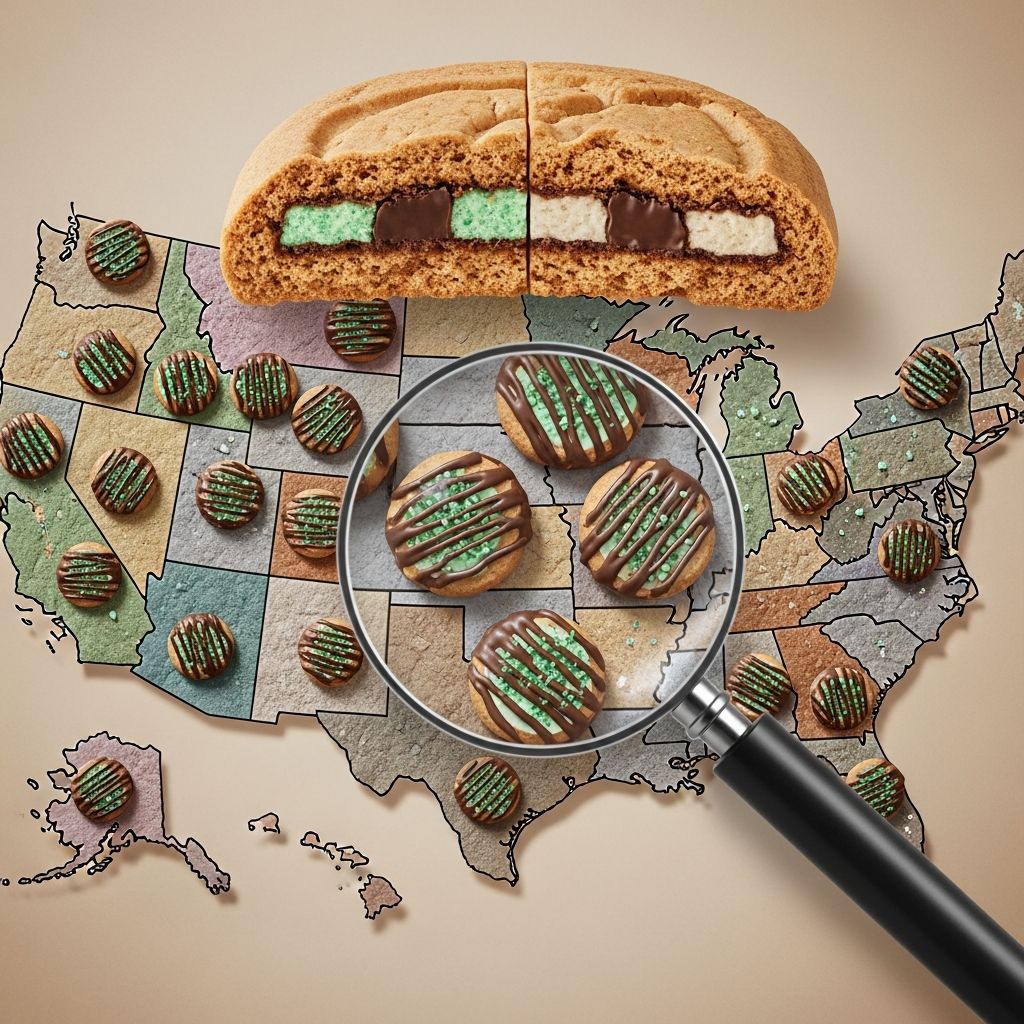
Ask almost anyone in the United States about Girl Scout Cookies, and you will hear a confident answer about a favorite flavor—and probably a strong opinion about how it should taste. Yet many fans are surprised to learn that the cookies they swear by may be subtly (or not so subtly) different just a few states away.
The reason is simple but fascinating: Girl Scout Cookies are baked by two different commercial bakeries, each with its own recipes, naming conventions, and style, creating a quiet but very real regional divide in America’s most beloved seasonal treats.
How One Brand Ended Up With Two Bakeries
Girl Scout Cookies might look like a single national product line, but behind the scenes the Girl Scouts of the USA rely on a pair of licensed bakeries to supply every local council in the country. Each bakery follows national guidelines but develops its own formulations and branding for the cookie lineup.
Local Girl Scout councils choose which bakery to work with, so geography—rather than individual customer preference—usually determines which set of cookies appears at booths outside your grocery store or on your neighborhood doorstep.
The Two Official Cookie Makers
The two authorized bakeries are commonly known as ABC Bakers and Little Brownie Bakers. Both produce an overlapping core of classic flavors, but they do not operate as interchangeable factories. Each brings its own approach to texture, sweetness, chocolate coatings, and even marketing style.
Over time, these differences have created distinct regional identities for certain cookies, turning seemingly minor variations into serious talking points among cookie superfans.
Same Cookie, Different Name (and Sometimes a Different Bite)
Many of the best-known Girl Scout Cookies exist in parallel versions. The familiar chocolate-mint wafers, caramel-coconut rings, and peanut butter favorites share a common concept but diverge in naming and fine details depending on which bakery produced them.
This leads to amusing moments when people move, travel, or compare notes online and discover that what they thought was a single national product is actually a family of related but slightly different cookies.
Popular Cookies and Their Dual Identities
| Flavor concept | Name from one bakery | Name from the other bakery | Typical differences |
|---|---|---|---|
| Chocolate-covered mint wafer | Thin Mints | Thin Mints | Differences in crunch, chocolate thickness, and mint intensity. |
| Caramel, coconut, and chocolate ring | Samoas | Caramel deLites | Dark vs. milkier chocolate, level of caramel, and coconut toastiness. |
| Peanut butter cookie in chocolate | Tagalongs | Peanut Butter Patties | Peanut butter layering and presence of a vanilla layer. |
| Plain shortbread trefoil | Trefoils | Shortbread | Subtle shifts in sweetness and buttery flavor. |
| Peanut butter sandwich cookie | Do-si-dos | Peanut Butter Sandwich | Variations in crunch, filling thickness, and sweetness. |
Even when the name stays the same, such as with the iconic mint cookie, side-by-side comparisons often reveal a different texture or balance between chocolate and mint. This can be jarring for a fan who has built memories around a very specific version.
Why States Don’t All Get the Same Cookies
The United States is divided into Girl Scout councils, each covering a defined region. These councils negotiate and sign contracts with one of the two bakeries, usually taking into account factors like pricing, logistics, and existing relationships.
As a result, the country forms a patchwork map: one state may be dominated by a single bakery, while another is split internally, with different councils—and therefore different cookies—serving neighboring cities or even adjacent suburbs.
How Council Decisions Shape Your Cookie Box
- Each council chooses a bakery, usually for multi-year stretches.
- Residents rarely have a say in this choice, even though it controls which recipes reach them.
- When councils merge or change bakeries, communities can suddenly see their familiar cookies replaced by new versions.
- Online sales and shipping have started to blur these boundaries, but local booths still reflect that original council-bakery decision.
What Actually Tastes Different?
To a casual snacker, some of the differences are subtle. To a dedicated fan, they are dramatic. Texture is often the first giveaway: one version of a cookie might feel crisper and lighter, while the other leans softer or more cookie-like under the chocolate coating.
Flavor balance is another key area. One bakery might push a strong mint aroma or a deeply toasted coconut note, while the other prioritizes sweetness or creaminess. Those priorities define what “the real thing” tastes like to people who grew up with that version.
Typical Differences Cookie Lovers Notice
- Chocolate: thickness of coating, level of cocoa flavor, and whether it leans dark or milk-chocolate-like.
- Mint: sharper peppermint vs. a milder, sweeter mint profile.
- Caramel: gooey and prominent vs. a thinner, more integrated layer.
- Coconut: heavily toasted and aromatic vs. lightly toasted and more subtle.
- Overall sweetness: some versions feel more like a candy bar, others like a classic biscuit.
Beyond Taste: Packaging, Branding, and Experience
Differences between bakeries extend beyond what is inside the box. Cookie packaging often features distinct color tones, photography, and design motifs, even for versions that represent the same basic flavor. For collectors and longtime supporters, those visual details become part of the nostalgia.
The marketing language, nutritional labeling layout, and even box shape can vary by bakery. While these details do not affect a cookie dunked in milk, they do contribute to the impression that “something is different here,” especially when people compare boxes from two regions side by side.
Regional Identity and Cookie Loyalty
Because these cookies are sold through local troops, they are tightly woven into community life—school entrances, office break rooms, neighborhood events. Over time, that creates a sense of ownership: people associate a certain recipe and name with their hometown and childhood.
When someone relocates and encounters alternate names or recipes, it can feel almost like a challenge to their taste memory. Debates over which version is “better” often double as friendly rivalries between regions or even between childhood and adulthood homes.
How People React When They Discover the Differences
- Surprise that a national brand allows such visible variation.
- Curiosity about trying the “other side” to compare versions.
- Nostalgia for long-gone recipes after a council switches bakeries.
- Good-natured arguments over which recipe represents the “true” taste of a famous cookie.
Fundraising First, Cookie Fetish Second
Underneath all the excitement about flavors, the cookie program exists to fund local Girl Scout activities. Troops earn money for camps, community service projects, leadership experiences, and travel. The cookies are a means to support that mission, not the mission itself.
Both bakeries work within guidelines set by the national organization, but councils are allowed to choose the partner and product lineup that best supports their fundraising goals. Variation is, in a sense, a by-product of decentralized decision-making designed to keep the program responsive and sustainable at the local level.
How to Try Cookies From Other Regions
For cookie enthusiasts who want to experience the full breadth of Girl Scout Cookie variety, geography is less of a barrier than it used to be. Many councils now support online ordering, shipping, or digital storefronts run by individual scouts during cookie season.
With a bit of planning and networking, it is possible to arrange a cookie swap between friends in different regions or to order from multiple councils to sample both bakery lineups in a single season.
Tips for Building Your Own Cross-Country Cookie Tasting
- Find out which bakery your local council uses, then seek out a council that uses the other bakery.
- Coordinate timing so that all orders arrive close together for fresher comparisons.
- Set up side-by-side tastings, labeling plates by bakery and flavor concept rather than brand name.
- Take notes on texture, sweetness, and aftertaste to capture subtle differences.
Special Diets and Limited-Run Flavors
Over the years, both bakeries have expanded their offerings to include options such as gluten-free or nut-focused cookies and to experiment with new flavors. Not every innovation appears in both bakeries’ lineups, and availability can change from season to season.
This means that a cookie fan in one region might consider a certain variety a seasonal must-have, while people elsewhere have never even seen that flavor on a sign or order form. The cookie map keeps shifting slightly as new varieties are introduced and older ones rotate out.
What This Teaches About Food and Place
The existence of two parallel Girl Scout Cookie systems says a lot about how food, memory, and place intertwine. People assume national brands are identical everywhere, but even something as standardized as a fundraiser cookie can carry local fingerprints.
The result is a subtle lesson in regional culture: the cookies you grew up with reflect not just your personal taste but also the decisions of a council office you may never have visited and a bakery hundreds of miles away that you will probably never see.
Frequently Asked Questions
Do both bakeries sell the exact same flavors?
No. The bakeries share several core concepts, like a mint wafer and a caramel-coconut ring, but each maintains its own recipe and may offer additional varieties that the other does not. Some cookies appear under different names while closely matching one another, and others exist only in a single bakery’s catalog.
Why don’t the Girl Scouts standardize all cookie names and recipes?
The organization emphasizes flexibility at the council level and long-standing relationships with both bakeries. Maintaining two suppliers offers logistical and financial advantages, while allowing each bakery some creative and branding freedom. That structure naturally produces variation, which has become part of the cookie program’s character.
Can I choose which bakery my local troop uses?
Individual customers and even individual troops do not select the bakery. The choice is made by the council that oversees a region, typically after considering factors such as cost, delivery infrastructure, and long-term contracts. Changing bakeries is a large administrative decision that affects every troop under that council.
Is one bakery’s version healthier than the other?
Nutritional details vary a bit from cookie to cookie, including serving size, sugar content, and fat levels, but the differences are usually modest. Girl Scout Cookies are designed as occasional treats and, regardless of bakery, are best enjoyed in moderation as part of a balanced diet.
Will online sales eventually erase regional differences?
Digital ordering and shipping make it easier than ever to access cookies baked outside your local area, so dedicated fans can sample a wider range of varieties. However, as long as councils continue to contract with different bakeries, local booths and door-to-door sales will keep reflecting that split, preserving the regional cookie identities that spark so many conversations.
The next time someone declares their undying loyalty to a particular Girl Scout Cookie, remember that they may be talking about a version you have never tasted. Behind that single word—Thin Mints, Samoas, Tagalongs—lies an entire map of regional decisions, small recipe tweaks, and local traditions that quietly shape what comes out of every brightly colored box.